In echtem Maßstab anzeigen
 Versenden als Grußkarte
 Teilen
 Details anzeigen
 Leitfaden öffnen

 Herunterladen
 Ähnliche Objekte
 Röntgenaufnahme
 Diashow
 Besucherstatistiken
Ansicht von Auvers-sur-Oise
 Öl auf Leinwand
- Wandkunst
- Post-Impressionism
 1873
1873- 19. Jahrhundert
 44.0 x 34.0 cm
 Mehr anzeigen
Handgefertigte Ölreproduktion
Handgemaltes Ölgemälde auf Leinwand in Ihrer Wunschgröße und mit Rahmen, auf Bestellung von unseren Künstlern angefertigt. ( Zum Druck wechseln Zum digitalen Bild wechseln)




P118B €10

P118H €10

P118W €10

P438Z €10

P508JH €12

P508YH €12

P805H €10

P805Z €10

P919BZ €10

P919G €10

P919XJ €10

P959ZH €10

P968JZ €12

W106C €8

W218G €10

W218JH €8

W218Y €10

W307PJ €10

W316G €10

W316PJ €8

W316Y €10

W398PJ €8

W4111J €10

W500HY €15

W500JH €15

W692G €12

W849H €8

W940BG €15

W953PJ €8




Wählen Sie aus unseren vordefinierten Formaten, die den ursprünglichen Proportionen des Kunstwerks entsprechen.

Geben Sie die Breite und die Höhe an, die Sie für Ihren Rahmen oder Ihre Wand benötigen. Da dieses Werk handgemalt ist, kann der Künstler bei einer anderen Form etwas mehr um das Bild herum malen oder etwas abschneiden – Sie entscheiden. Wir senden Ihnen ein digitales Mockup zur Freigabe, bevor mit dem Malen begonnen wird. Das auf dieser Seite gezeigte Bild stellt nicht das tatsächliche Ergebnis dar – dies tut nur das Mockup.
Nach der Bestellung wird das OriginalUniqueArt.com-Team dem Kunden Anweisungen per E-Mail zusenden und eine Mockup-Vorschau bereitstellen.
Weltweiter Versand () in nur 3 bis 4 Wochen statt der üblichen 5 Wochen. (24 Oktober). Keine Kompromisse bei der Qualität.

Kostenloser weltweiter Expressversand

Hochwertige Leinenleinwand

Vollständiger Versicherungsschutz beim Versand

Zollgebühren-Rückerstattungsgarantie

Garantie für exakte Farbtreue

100-tägiges Rückgaberecht (nur bei Mängeln)

100% Geld-zurück-Garantie

Angebot für Mengenrabatt
 Die Glasoption ist nur für Größen unter 110 cm verfügbar.

Ansicht von Auvers-sur-Oise
Reproduktionsmedium
Format der Reproduktion
-


Gesamtpreis
€ 263
Paul Cézanne’s “View of Auvers-sur-Oise”: A Window into the Soul of Provence
Paul Cézanne's "View of Auvers-sur-Oise" isn't merely a landscape painting; it’s a profound meditation on perception, light, and the very essence of being. Completed in 1879-80 during his sojourn in the small Provençal village that would tragically become the backdrop to Vincent van Gogh’s final days, this work represents a pivotal moment in Cézanne's artistic evolution – a bridge between the fleeting impressions of Impressionism and the nascent explorations of Cubism. The painting captures a deceptively simple scene: a cluster of houses nestled amongst rolling hills beneath a vast, azure sky, yet within its quiet composition lies an astonishing depth of observation and a revolutionary approach to depicting reality.
Cézanne’s genius lay not in replicating the visual world with photographic accuracy, but rather in distilling it into its fundamental forms. He sought to capture the *feeling* of a place, the way light interacts with surfaces, and the underlying structure that gives form to everything we see. This is immediately evident in "View of Auvers-sur-Oise." The houses aren’t rendered as individual buildings; instead, they are suggested through blocks of color and geometric shapes – rectangles, squares, and triangles – arranged in a way that evokes their presence without explicitly defining them. The trees, too, are simplified, reduced to essential brushstrokes that convey their volume and texture rather than meticulously detailing every branch or leaf. This technique, heavily influenced by Japanese prints he’d studied extensively, demonstrates Cézanne's deliberate rejection of traditional perspective and his embrace of a more subjective, internalized way of seeing.
- Color Palette: The painting is dominated by muted earth tones – ochres, browns, greens – punctuated by flashes of blue and white. These colors aren’t blended smoothly; instead, they are applied in distinct strokes, creating a sense of vibrancy and immediacy.
- Brushwork: Cézanne's characteristic “broken brushstroke” is particularly evident here. He used short, individual strokes of paint to build up layers of color and texture, giving the surface of the canvas a palpable physicality. This technique creates an illusion of movement and depth, as if the landscape itself is shimmering in the sunlight.
- Composition: The painting’s composition is carefully balanced, with the houses arranged along a gentle slope that draws the eye into the distance. The use of atmospheric perspective – where distant objects appear paler and less distinct – further enhances the sense of depth and space.
A Village Under Observation: Context and Influences
To understand “View of Auvers-sur-Oise,” it’s crucial to consider the artist's personal circumstances at the time. Cézanne had moved to Auvers in 1879, seeking respite from the bustling art scene of Paris and a chance to reconnect with his roots in Provence. The village itself held a particular significance for him – it was where he would later spend his final months, tragically succumbing to illness under Van Gogh’s care. This period of intense introspection profoundly shaped Cézanne's artistic vision, leading him to explore themes of memory, time, and the relationship between the artist and nature.
Cézanne’s artistic journey was marked by a gradual shift away from Impressionism towards a more structured and analytical approach. Early influences included Romantic landscape painters like Jean-Baptiste Millet, whose depictions of rural life emphasized the dignity and simplicity of peasant labor. He also drew inspiration from Realist artists such as Gustave Courbet, who sought to represent the world with unflinching honesty. However, it was his encounter with Japanese prints – particularly those depicting landscapes and water scenes – that proved to be a transformative experience. These prints taught him to see space not as a linear perspective but as a series of overlapping planes, a concept he would later apply to his own work.
Symbolism and Emotional Resonance
While seemingly straightforward, “View of Auvers-sur-Oise” is rich in symbolic meaning. The village itself represents a retreat from the complexities of modern life, a return to a simpler, more authentic existence. The rolling hills evoke a sense of timelessness and tranquility, while the vast sky suggests an infinite expanse beyond human comprehension. The presence of people – though largely indistinct – hints at the vitality and community that define rural life.
More profoundly, the painting embodies Cézanne’s own struggle to reconcile his artistic ambitions with his personal demons. The quiet solitude of Auvers-sur-Oise mirrored his internal turmoil, as he grappled with questions of identity, mortality, and the nature of art itself. "View of Auvers-sur-Oise" is not simply a depiction of a place; it’s a visual expression of an artist's soul – a testament to his unwavering commitment to capturing the essence of reality through innovative techniques and profound observation.
Reproductions and Legacy
OriginalUniqueArt offers meticulously crafted, hand-painted oil painting reproductions of Paul Cézanne’s “View of Auvers-sur-Oise,” allowing art enthusiasts to experience this iconic masterpiece in stunning detail. Our skilled artisans painstakingly recreate Cézanne's broken brushstrokes, vibrant color palette, and unique compositional techniques, ensuring that each reproduction captures the spirit and emotional depth of the original painting. Whether you’re a seasoned collector or simply seeking to bring a touch of Provençal beauty into your home, our reproductions provide an authentic and affordable way to connect with one of art history's most influential figures.
Explore our collection today and discover the timeless allure of “View of Auvers-sur-Oise” – a painting that continues to inspire and captivate viewers around the world. View of Auvers by Paul Cézanne – a window into the soul of Provence.
Fragen & Antworten
Unter welchen Pseudonymen oder Alternativnamen ist Paul Cézanne bekannt?
Weitere unter denen Paul Cézanne, Schöpfer von „Ansicht von Auvers-sur-Oise“, bekannt ist, umfassen Paul Cezanne.
In welche Farbtönung tendiert "Ansicht von Auvers-sur-Oise"?
Ein Spektrum von Grün bis Violett Farbton durchzieht "Ansicht von Auvers-sur-Oise" von Paul Cézanne.
Was erklärt die urheberrechtliche Situation von "Ansicht von Auvers-sur-Oise" von Paul Cézanne?
"Ansicht von Auvers-sur-Oise" von Paul Cézanne ist gemeinfrei – das Urheberrecht ist abgelaufen. Die Urheberrechtsfristen werden ab dem Todesjahr des Künstlers berechnet, und Paul Cézanne verstarb im Jahr 1906.
Biografie des Künstlers
frühes Leben und Einflüsse
Paul Cézanne, ein französischer Post-Impressionist-Maler, wurde am 19. Januar 1839 in Aix-en-Provence, Frankreich, geboren. Sein frühes Leben war geprägt von einer starken Verbindung zu seiner Familie’s Bankgeschäft, das ihm finanzielle Sicherheit verschaffte. Dies ermöglichte es ihm, sich ohne finanziellen Druck auf seine künstlerischen Bestrebungen zu konzentrieren. Les Nabis, Neo-Impressionismus und Symbolismus beeinflussten Cézannes frühe Arbeit, die sich durch seinen Schwerpunkt auf geometrische Formen und eine reduzierte Farbpalette auszeichnete. Sein Interesse an den Werken von Paul Gauguin und Georges Seurat festigte seinen Post-Impressionismusstil.Künstlerischer Stil und Techniken
Cézannes innovative Verwendung von Farbflächen und kleinen, sich wiederholenden Pinselstrichen schuf komplexe Felder, die seine intensive Beschäftigung mit den Motiven widerspiegelten. Sein oft explorativer Ansatz in der Kunst führte zur Entwicklung einer neuen bildlichen Sprache, die die zugrunde liegende Struktur von Objekten in einer Komposition betonte.- Schlüsselmerkmale:
- Geometrische Formen und Facetten
- Reduzierte Farbpalette
- Betonung der konstruktiven Essenz der physischen Welt
- Mehrere Perspektiven und Simultaneität
- Einflussreiche Werke:
- The Pond at Jas de Bouffan (1880)
- Portrait of Emile Zola (1866)
- Wald (1892)
- Museen mit Cézannes Werken:
- Musée Marmottan Monet in Paris, Frankreich
- The Museum of Fine Arts in Houston, Vereinigte Staaten
Vermächtnis und Einfluss
Cézannes bahnbrechende Arbeit im Post-Impressionismus ebnete den Weg für verschiedene Avantgarde-Bewegungen, darunter Kubismus, Fauvismus und Surrealismus. Sein Einfluss ist in den Werken von Pablo Picasso, Henri Matisse und Georges Braque zu sehen. Cézannes Vermächtnis inspiriert weiterhin Künstler und Kunstinteressierte gleichermaßen und festigt seinen Platz als eine zentrale Figur in der Geschichte der modernen Kunst.- Verwandte Kunstbewegungen:
- Betrachten Sie Cézannes Werke:
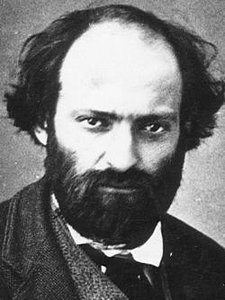
Paul Cézanne
1839 - 1906 , Frankreich
Eckdaten zum Künstler
- Beeinflusste Künstler:
- Paul Gauguin
- Georges Seurat
- Bemerkenswerte Werke:
- Der Teich in Jas de Bouffan
- Porträt von Émile Zola
- Wald
- Mont Sainte-Victoire
- Geburtsdatum: 19. Januar 1839
- Geburtsort: Aix-en-Provence, Frankreich
- Künstlerische Bewegung: Postimpressionismus
- Nationalität: Französisch
- Sterbedatum: 1906
- Vollständiger Name: Paul Cézanne
- Von Ihm Beeinflusste Künstler:
- Pablo Picasso
- Henri Matisse
- Georges Braque
Verwandte Artikel
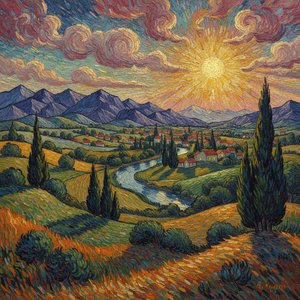
Beyond Impressionism: The Emotional Depth and Vibrant Evolution of Post-Impressionist Landscapes
Explore the profound evolution of Post-Impressionist landscapes. From Van Gogh's emotional brushwork to Cézanne's structural mastery, discover how these visionaries redefined art history through color and form in this expert guide for fine art enthusiasts.

Impressionistische Landschaften: Die 10 Meisterwerke, die eine Epoche prägten | OriginalUniqueArt
Entdecken Sie die 10 Meisterwerke des Impressionismus! Von Monet bis Renoir – erleben Sie die Geschichte, Technik und zeitlose Schönheit ikonischer Landschaftsbilder. Hochwertige Kunstdrucke auf OriginalUniqueArt.com. Jetzt entdecken!

Paul Cézanne: Die 25 Meisterwerke des Impressionismus | OriginalUniqueArt
Entdecken Sie die 25 Meisterwerke von Paul Cézanne! Tauchen Sie ein in die Welt des Impressionismus und Postimpressionismus. Erfahren Sie mehr über seine Stillleben, Landschaften & berühmten Gemälde – jetzt hochwertige Kunstdrucke auf OriginalUniqueArt.com.
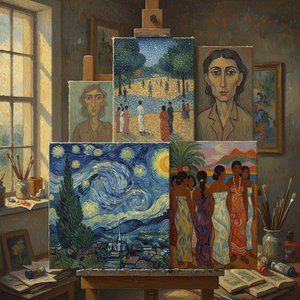
Jenseits des Impressionismus: Die emotionale Tiefe der postimpressionistischen Malerei
Entdecken Sie die emotionale Tiefe des Postimpressionismus! Analysieren Sie Cézanne, van Gogh, Gauguin & Seurat. Expertenwissen über Kunstgeschichte und Einfluss auf die Moderne.

Impressionismus Meisterwerke: Die Top 10 Kunstwerke für Ihr Zuhause | OriginalUniqueArt
Entdecken Sie die Top 10 Meisterwerke des Impressionismus! Von Monet bis Renoir – erfahren Sie die Geschichten hinter berühmten Gemälden, Techniken & Farben. Hochwertige Kunstdrucke auf OriginalUniqueArt.com.