

 Vorschau anzeigen
 Versenden
 Teilen
 Details anzeigen

 Herunterladen
 Ähnliche Objekte
 Röntgenaufnahme
 Diashow
Morphine Addicts
 Acrylic On Canvas
- WallArt
- Impressionism
 1887
1887 24.0 x 37.0 cm
 Metropolitan Museum of Art
 Weiterlesen
Handgefertigte Ölreproduktion
Handgemaltes Ölgemälde auf Leinwand in Ihrer Wunschgröße und mit Rahmen, auf Bestellung von unseren Künstlern angefertigt. ( Druck bestellen Bild kaufen)




P118B $10

P118H $10

P118W $10

P438Z $10

P508JH $12

P508YH $12

P805H $10

P805Z $10

P919BZ $10

P919G $10

P919XJ $10

P959ZH $10

P968JZ $12

W106C $8

W218G $10

W218JH $8

W218Y $10

W307PJ $10

W316G $10

W316PJ $8

W316Y $10

W398PJ $8

W4111J $10

W500HY $15

W500JH $15

W692G $12

W849H $8

W940BG $15

W953PJ $8




Wählen Sie aus unseren vordefinierten Formaten, die den ursprünglichen Proportionen des Kunstwerks entsprechen.

Sie können Ihre eigenen Maße eingeben, um einen bestimmten Rahmen oder Platz auszufüllen. Wenn die gewählte Größe nicht den Proportionen des Originalbildes entspricht, werden wir das Kunstwerk entweder beschneiden oder das Gemälde durch zusätzliche, handgemalte Elemente erweitern. Ein digitales Mockup wird Ihnen zur Genehmigung zugesandt, bevor die Produktion beginnt.
Bitte beachten Sie, dass die Bildschirmvorschau nicht die tatsächliche Beschneidung oder Erweiterung widerspiegelt. Nur das Mockup zeigt die endgültige Komposition exakt an.
Obwohl Sondermaße verfügbar sind, empfehlen wir, eine Größe aus der vordefinierten Liste zu wählen, um die ursprünglichen Proportionen beizubehalten.
Nach der Bestellung wird das OriginalUniqueArt.com-Team dem Kunden Anweisungen per E-Mail zusenden und eine Mockup-Vorschau bereitstellen.
Weltweiter Versand () in nur 3 bis 4 Wochen statt der üblichen 5 Wochen. (7 September). Keine Kompromisse bei der Qualität.

Kostenloser weltweiter Expressversand

Hochwertige Leinenleinwand

Umfassender Versicherungsschutz beim Versand

Zollgebühren-Rückerstattungsgarantie

Garantie für exakte Farbtreue

100-Tage-Rückgaberecht (nur bei Mängeln)

100% Geld-zurück-Garantie

Mengenrabatt verfügbar
 Die Glasoption ist nur für Größen unter 110 cm verfügbar.

Morphine Addicts
Art der Reproduktion
Format der Reproduktion
-


Gesamtpreis
$ 325
Paul Albert Besnard - Morphine Addicts
Paul Albert Besnard (1849-1934) stands as a singular figure in French art of the late nineteenth and early twentieth centuries—a painter who stubbornly resisted categorization while simultaneously achieving remarkable success across diverse artistic mediums. Born in Paris, he possessed an innate talent nurtured by formal training at the École des Beaux-Arts under Jean Bremond and profoundly shaped by the pioneering spirit of Alexandre Cabanel, whose meticulous realism served as a cornerstone for Besnard’s initial artistic explorations. His academic grounding provided a disciplined foundation upon which he would later forge his own distinctive path, one characterized by an unwavering fascination with color and light—concepts championed by the Impressionists. Despite eschewing the overtly dramatic aesthetic favored by his contemporaries, Besnard skillfully adapted Impressionistic techniques to monumental decorative pro Besnard’s oeuvre is marked by a profound sensitivity to human emotion and psychological nuance, particularly evident in his portraits of women – figures rendered with exquisite detail and imbued with an aura of melancholy. “Morphine Addicts,” completed in 1887, exemplifies this artistic approach, presenting two women presented in a starkly lit laboratory setting—a juxtaposition that immediately invites contemplation on themes of illness, addiction, and the complexities of human experience. The artist’s masterful command of etching technique contributes significantly to the artwork's expressive power, capturing subtle tonal variations and textural nuances with remarkable precision. The composition itself is deliberately restrained, focusing intently on the faces and upper bodies of the subjects—a stylistic choice that underscores Besnard’s commitment to realism while simultaneously conveying a sense of intimacy. The figures are positioned slightly off-center, creating visual balance and drawing the viewer's gaze towards their expressive eyes. A table laden with scientific glassware serves as a grounding element, anchoring the scene within its clinical context and subtly hinting at the underlying narrative. Besnard’s meticulous hatching and crosshatching techniques—inherited from Cabanel’s influence—are employed to build up areas of shadow, enhancing depth and creating an atmosphere of quiet contemplation. Color plays a crucial role in conveying emotion, though Besnard eschews vibrant hues characteristic of Impressionism, opting instead for a monochrome palette dominated by shades of grey and white. This tonal scheme amplifies the artwork’s melancholic mood, emphasizing the vulnerability of the subjects and fostering a connection with the viewer on an emotional level. The artist skillfully utilizes light and shadow to sculpt the forms of the women's faces, highlighting their expressions and conveying subtle nuances of emotion—a testament to Besnard’s artistic prowess. Ultimately, “Morphine Addicts” transcends mere visual representation; it functions as a poignant meditation on human suffering and resilience. Besnard’s stylistic blend of academic realism with Impressionistic sensibilities captures the essence of his era—a period marked by intellectual curiosity and an exploration of psychological states. The artwork's enduring appeal lies in its ability to provoke reflection on themes of addiction, vulnerability, and the profound beauty found within moments of quiet introspection. It remains a compelling example of Besnard’s artistic vision and a testament to the power of art to communicate complex emotions with grace and subtlety.Über den Künstler
Das leuchtende Erbe von Paul Albert Besnard
Paul Albert Besnard (1849-1934) nimmt eine singuläre Stellung im Geflecht der französischen Kunst ein – ein Maler, der die wechselnden Gezeiten des späten neunzehnten und frühen zwanzigsten Jahrhunderts mit einer einzigartigen, unklassifizierbaren Anmut durchschritt. Geboren in Paris, begann seine künstlerische Reise innerhalb der strengen Grenzen der École des Beaux-Arts, wo er unter Jean Bremond studierte. Seine frühe Entwicklung wurde tiefgreifend vom akribischen Realismus Alexandre Cabanels geprägt, ein Einfluss, der Besnard ein diszipliniertes akademisches Fundament verlieh. Doch unter dieser klassischen Ausbildung schlug das Herz eines Modernisierers, eines Künstlers, der sich schließlich über die starren Grenzen der Tradition hinauswagen würde, um die vergängliche Schönheit von Licht und Atmosphäre zu umarmen.
Mit fortschreitender Reife seiner Karriere begann Besnard, die Kluft zwischen der strukturierten Welt der akademischen Malerei und den lebendigen, sinnlichen Erkundungen des Impressionismus zu überbrücken. Obwohl er die Form nicht zugunsten reiner Abstraktion gänzlich aufgab, wurde er zu einem Meister der Farbe und nutzte eine Palette, die sowohl leuchtend als auch tief emotional wirkte. Sein Werk zeichnet sich durch eine unerschütterliche Faszination dafür aus, wie das Licht mit Oberflächen interagiert – sei es die zarte Haut in einem Porträt oder die weiten architektonischen Ausmaße seiner größten Aufträge. Diese Fähigkeit, das Monumentale mit dem Intimen zu vereinen, erlaubte es ihm, die Etiketten seiner Ära zu transzendieren und einen Stil zu schaffen, der sich sowohl zeitlos als auch auffallend modern anfühlte.
Ein Meister von Maßstab und Geist
Besnards wahres Genie zeigte sich vielleicht am deutlichsten in seiner Fähigkeit, moderne Sensibilitäten auf eine großformatige, dekorative Ebene zu übertragen. Er malte nicht bloß Bilder; er transformierte Räume. Seine ehrgeizigen Fresken, die einige der prestigeträchtigsten Institutionen Frankreichs schmücken, dienen als Zeugnis seiner Vision von Kunst als einem öffentlichen, immersiven Erlebnis. Diese Werke finden sich an Orten wie:
- Der Sorbonne, wo seine Pinselführung akademische Pracht mit Leben füllt.
- , die seine Fähigkeit zeigt, Kunst in funktionale Architektur zu integrieren.
- , ein Triumph dekorativen Geschichtenerzählens.
- , das den bürgerlichen Stolz und die ästhetische Raffinesse von Paris widerspiegelt.
- , wo seine Stationen des Kreuzweges religiöse Ikonografie durch eine moderne, humanistische Linse neu interpretierten.
In diesen gewaltigen Unternehmungen verzichtete Besnard auf die übermäßig dramatische oder theatralische Ästhetik, wie sie viele seiner Zeitgenossen bevorzugten. Stattdessen nutzte er einen subtileren, atmosphärischen Ansatz, der das Licht das Auge des Betrachters leiten ließ und sicherstellte, dass selbst die massivsten Kompositionen ein Gefühl von poetischer Intimität und spiritueller Tiefe bewahrten.
Porträtkunst und die Intimität der Form
Jenseits der weiten Panoramen seiner Fresken war Besnard ein produktiver Schöpfer weitaus persönlicherer Werke. Er besaß die außergewöhnliche Fähigkeit, das psychologische Wesen seiner Motive durch Öl, Aquarell, Pastell und Radierung einzufangen. Seine Porträts werden nicht nur für ihre technische Präzision gefeiert, sondern auch für ihre tiefe emotionale Resonanz. In seiner Darstellung von Madame Georges Rodenbach findet man eine kühne Erkundung der Schönheit, die konventionelle Normen herausfordert und sein Geschick zeigt, Textur und Charakter mit gleicher Leidenschaft darzustellen.
Seine Vielseitigkeit als Grafiker und Zeichner erlaubte es ihm, mit dem Zusammenspiel von Schatten und Licht auf einer viel feineren Ebene zu experimentieren. Ob er die königliche Präsenz des Königspaares von Belgien oder die Stille einer Landschaft einfing – Besnards Werk bleibt in einem Einfluss verwurzelt, der an Thomas Gainsborough erinnert: eine gewisse Eleganz und ein rhythmischer Fluss, der das Sujet veredelt. Letztendlich liegt die Bedeutung Paul Albert Besnards genau in dieser Dualität: Er war ein Künstler, der die größten Hallen Frankreichs beherrschen konnte, während er gleichzeitig das flüchtigste, zarteste Flüstern des Lichts einfing.
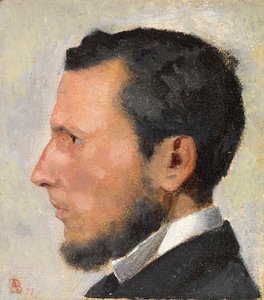
Paul Albert Besnard
1849 - 1934 , Frankreich
Kurzinfos
- Artistic Movement Or Style: Impressionismus
- Artists Who Influenced This Artist:
- Alexandre Cabanel
- Thomas Gainsborough
- Date Of Birth: Paris, Frankreich (1849)
- Date Of Death: 1934
- Full Name: Paul Albert Besnard
- Nationality: Französisch
- Notable Artworks:
- Death of Timophanes
- Peace by arbitration
- Portrait de Madame Georges Rodenbach
- Place Of Birth: Paris
Ähnliche Artikel

Paul Klee: Die 25 Meisterwerke des Abstrakten – Kunst für Ihr Zuhause | OriginalUniqueArt
Entdecken Sie die 25 Meisterwerke von Paul Klee! Tauchen Sie ein in seine abstrakte Welt, voller Expressionismus und Bauhaus-Einflüsse. Hochwertige Kunst für Ihr Zuhause – jetzt bei OriginalUniqueArt entdecken!

Paul Cézanne: Die 25 Meisterwerke des Impressionismus | OriginalUniqueArt
Entdecken Sie die 25 Meisterwerke von Paul Cézanne! Tauchen Sie ein in die Welt des Impressionismus und Postimpressionismus. Erfahren Sie mehr über seine Stillleben, Landschaften & berühmten Gemälde – jetzt hochwertige Kunstdrucke auf OriginalUniqueArt.com.
Die 10 legendärsten Radierungen: Meisterwerke, die Kunstgeschichte schrieben | OriginalUniqueArt
Entdecken Sie die 10 legendärsten Radierungen von Rembrandt, Dürer & Goya! Erfahren Sie die Geschichten hinter diesen Meisterwerken der Kunstgeschichte und lassen Sie sich für Ihre Wohnräume inspirieren. Hochwertige Kunstdrucke auf OriginalUniqueArt.com.

Romantic Realism's Finest: 10 Masterpieces for Your Home | OriginalUniqueArt
Explore 10 defining masterpieces of Romantic Realism! Discover Courbet, Millet & Daumier's powerful paintings—capturing emotion and social realities. Find museum-quality reproductions for your home at OriginalUniqueArt.com.

Etching: A Historical Survey of Technique, Aesthetic Qualities & Enduring Artistic Significance
Explore the rich history of etching, from its origins to Rembrandt's masterful innovations. Discover the technique, aesthetic qualities & enduring legacy of this captivating art form. Expert insights for collectors and enthusiasts.