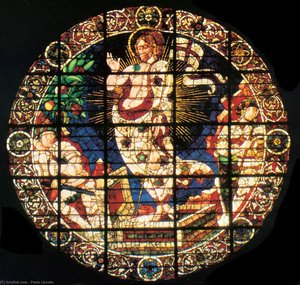
Vorschau anzeigen
 Versenden
 Teilen
 Details anzeigen
 Leitfaden

 Herunterladen
 Ähnliche Objekte
 Röntgenaufnahme
 Diashow
 Statistiken
Fortitude


 Weiterlesen
Giclée / Kunstdruck
Giclée- oder Leinwanddruck in Museumsqualität mit schneller Produktion und flexiblen Veredelungsoptionen. ( Handgemalte Reproduktion bestellen Zum digitalen Bild wechseln)




P118B €10

P118H €10

P118W €10

P438Z €10

P508JH €12

P508YH €12

P805H €10

P805Z €10

P919BZ €10

P919G €10

P919XJ €10

P959ZH €10

P968JZ €12

W106C €8

W218G €10

W218JH €8

W218Y €10

W307PJ €10

W316G €10

W316PJ €8

W316Y €10

W398PJ €8

W4111J €10

W500HY €15

W500JH €15

W692G €12

W849H €8

W940BG €15

W953PJ €8




Wählen Sie aus unseren vordefinierten Formaten, die den ursprünglichen Proportionen des Kunstwerks entsprechen.

Geben Sie die benötigte Breite und Höhe an, damit der Druck perfekt in Ihren Rahmen oder an Ihre Wand passt. Ein Druck kann nur beschnitten, aber niemals größer als das Originalbild angefertigt werden; daher verliert ein Format mit anderen Proportionen einen Teil des Bildes. Wir senden Ihnen ein digitales Mockup zur Freigabe, bevor wir den Druck ausführen. Das auf dieser Seite gezeigte Bild zeigt nicht den tatsächlichen Beschnitt – dies ist nur im Mockup ersichtlich.
Weltweiter Versand () innerhalb von 2 Wochen statt der üblichen 4/5 Wochen. (28 Oktober)

Kostenloser weltweiter Expressversand

Hochwertige Leinenleinwand

Umfassender Versicherungsschutz beim Versand

Zollgebühren-Rückerstattungsgarantie

Garantie für exakte Farbtreue

100 Tage Rückgaberecht (nur bei Mängeln)

100% Geld-zurück-Garantie

Mengenrabatt verfügbar
 Die Glasoption ist nur für Größen unter 110 cm verfügbar.

Fortitude
Giclée / Kunstdruck
Format der Reproduktion
-


Endpreis
€ 71
Fortitude: A Renaissance Emblem of Strength and Faith
Paolo Uccello’s “Fortitude,” painted circa 1435, stands as a remarkable testament to the burgeoning artistic spirit of Florence during the Early Renaissance. More than just a depiction of a woman holding a shield—a symbol universally recognized for protection—the painting embodies a profound philosophical inquiry into visual representation itself, reflecting Uccello’s groundbreaking experimentation with linear perspective.
The artwork portrays a serene female figure positioned centrally against a muted backdrop. Her gaze is direct and unwavering, conveying an aura of composure amidst what might be perceived as vulnerability. The shield she cradles isn't merely an object; it’s meticulously rendered using Uccello’s innovative perspective system—a technique he painstakingly developed over years of observation and mathematical calculation. This meticulous attention to detail underscores his conviction that art could accurately capture the illusion of three-dimensional space, a revolutionary concept at the time.
Adding to the painting's intellectual depth are two books flanking the central figure on the left side. These aren’t simply decorative elements; they represent knowledge and wisdom—concepts considered paramount virtues during the Renaissance humanist movement. Their presence reinforces the overarching theme of fortitude, suggesting that true strength resides not only in physical defense but also in intellectual understanding.
Uccello's masterful use of color contributes to the painting’s emotional resonance. The palette is restrained, favoring earthy tones—ochre and umber—which lend an air of solemnity and dignity to the scene. Light plays a crucial role, illuminating the woman’s face and highlighting the texture of the shield, creating a palpable sense of realism that distinguishes Uccello's work from earlier artistic conventions.
“Fortitude” is attributed to Uccello’s workshop, though scholars debate whether he personally executed this piece. Regardless of authorship attribution, it exemplifies Uccello’s dedication to elevating art beyond mere imitation; instead, he sought to harness the power of mathematics and observation to achieve a profound visual truth—a pursuit that cemented his legacy as one of the foremost innovators of the Renaissance.
- Artist: Paolo Uccello (1397-1475)
- Date: Circa 1435
- Medium: Tempera on Panel
- Style: Early Renaissance, Perspective Innovation
- Location: Prato Cathedral (Ceiling Frescoes)
This stunning reproduction captures the essence of Uccello’s artistic vision—a celebration of virtue and a triumph over illusion. Ideal for enhancing any interior space with its timeless elegance and intellectual significance.
Fragen & Antworten
Kann "Fortitude" in Augmented Reality vorab betrachtet werden?
Auf der AR-Vorschau-Seite von "Fortitude" von Paolo Uccello können Sie das Kunstwerk mithilfe von Augmented Reality auf einem kompatiblen Gerät direkt in Ihren eigenen Räumlichkeiten erleben.
In welchem Alter schuf Paolo Uccello „Fortitude"?
Als "Fortitude" im Jahr 1435 entstand, war Paolo Uccello – geboren 1397 – 38 Jahre alt.
Wo finde ich Statistiken zu "Fortitude" von Paolo Uccello?
Die Seite Besucherzahlen von "Fortitude" von Paolo Uccello präsentiert öffentliche Besucherstatistiken: die monatlichen Aufrufe dieses Kunstwerks, einen Vergleich mit den meistbesuchten Werken des Künstlers sowie die Herkunft der Besucher.
Künstlerbiografie
frühes Leben und Ausbildung
Paolo Uccello, geboren Paolo di Dono, war ein angesehener italienischer Maler und Mathematiker aus Florenz. Er war bekannt für seine bahnbrechende Arbeit an der visuellen Perspektive in der Kunst. Geboren im Jahr 1397, ist das frühe Leben von Uccello nicht gut dokumentiert, aber es ist bekannt, dass er ab 1412 bis 1416 die berühmte Bildhauerin Lorenzo Ghiberti als Lehrling hatte.Karriere und bedeutende Werke
Uccellos Karriere erstreckte sich über vier Jahrzehnte, in denen er zahlreiche Kunstwerke produzierte, darunter Gemälde, Fresken und Altäre. Zu seinen bekanntesten Werken gehören:- Geburt der Jungfrau (Frührenaissance, Öl), ein Gemälde, das seine Verwendung der Perspektive zur Schaffung eines Gefühls von Tiefe demonstriert.
- Fresken San Miniato al Monte 03 (Frührenaissance, Öl), eine Fresko, die seine innovative Verwendung von Farbe und Licht demonstriert.
- Anbetung des Kindes (Frührenaissance, Öl), ein Gemälde mit einer detaillierten und naturalistischen Darstellung der menschlichen Form.
- Studio di Cavaliere (Frührenaissance, Öl), ein Selbstporträt, das seine selbstbewusste Verwendung autonomer Themen in der Kunst demonstriert.
Einfluss und Vermächtnis
Uccellos Werk hatte einen bedeutenden Einfluss auf die Entwicklung der Renaissancekunst. Seine Verwendung der Perspektive und sein Schwerpunkt auf die Schaffung eines Gefühls von Tiefe in seinen Gemälden beeinflussten zahlreiche Künstler, darunter Albrecht Dürer, der ebenfalls für seine bahnbrechende Arbeit im Bereich der Perspektive bekannt war. Wichtige Kunstbewegungen:- Die Frührenaissancekunstbewegung
- Italienische Renaissance
- Spätes Gotik
- Paolo Uccello (1397-1475)
- Albrecht Dürer (1471-1528)
- Lorenzo Ghiberti (1379-1455)
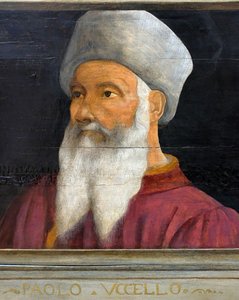
Paolo Uccello
1397 - 1475 , Italien
Kurzinfos
- Beeinflusste Künstler: ['Albrecht Dürer']
- Bemerkenswerte Werke:
- Schlacht von San Romano
- Geburt der Jungfrau
- St. Georg und Drache
- Geburtsdatum: 1397
- Geburtsort: Pratovecchio, Italien
- Künstlerische Bewegung: Frührenaissance
- Künstlerische Einflüsse:
- Lorenzo Ghiberti
- Donatello
- Nationalität: Italienisch
- Todatum: 1475
- Vollständiger Name: Paolo Uccello
Ähnliche Artikel
Paolo Uccello: Pionier der Perspektive und die Renaissance-Suche nach visueller Wahrheit
Entdecken Sie Paolo Uccello, einen Pionier der Renaissance und seine revolutionären Perspektivtechniken. Erfahren Sie mehr über sein Leben, ikonische Werke wie die 'Schlacht von San Romano' und seinen Einfluss auf die Kunstgeschichte.
Epic Battles on Canvas: A Visual Journey Through Art History's Most Powerful War Paintings
Embark on a visual journey through history's most powerful war paintings. Explore the dramatic mastery of Romanticism and Realism through expert analysis of epic battle scenes on canvas, celebrating the profound emotion and artistry behind art history's greatest military masterpieces.
Die 25 Meisterwerke der Uffizien: Kunstgeschichte für Ihr Zuhause | OriginalUniqueArt
Entdecken Sie die 25 berühmtesten Meisterwerke der Uffizien, Florenz! Von Botticelli bis Leonardo da Vinci – Kunstgeschichte erleben. Hochwertige Reproduktionen & Inspiration für Ihr Zuhause auf OriginalUniqueArt.com.
Renaissance Meisterwerke: Die 10 prägendsten Kunstwerke für Ihr Zuhause |
Entdecken Sie die 10 prägendsten Meisterwerke der Renaissance! Erfahren Sie die Geschichten von Leonardo da Vinci, Michelangelo & Raffael. Hochwertige Kunst Reproduktionen für Ihr Zuhause – jetzt auf entdecken.
Paolo Veronese: Farbe, Komposition und venezianische Pracht eines Renaissance-Meisters
Entdecken Sie das beeindruckende Werk von Paolo Veronese! Erfahren Sie mehr über seine Farbenpracht, monumentalen Kompositionen und seinen Einfluss auf die venezianische Renaissance. Kunstgeschichte für Kenner.