Vorschau anzeigen
 Versenden
 Teilen
 Details anzeigen

 Herunterladen
 Ähnliche Objekte
 Röntgenaufnahme
 Diashow
 Statistiken
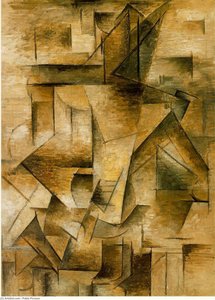
Sitzende Nacktheit


 Weiterlesen
Handgefertigte Ölreproduktion
Handgemaltes Ölgemälde auf Leinwand in Ihrer Wunschgröße und mit Rahmen, auf Bestellung von unseren Künstlern angefertigt. ( Zu Druck wechseln Zum digitalen Bild wechseln)




P118B $10

P118H $10

P118W $10

P438Z $10

P508JH $12

P508YH $12

P805H $10

P805Z $10

P919BZ $10

P919G $10

P919XJ $10

P959ZH $10

P968JZ $12

W106C $8

W218G $10

W218JH $8

W218Y $10

W307PJ $10

W316G $10

W316PJ $8

W316Y $10

W398PJ $8

W4111J $10

W500HY $15

W500JH $15

W692G $12

W849H $8

W940BG $15

W953PJ $8




Wählen Sie aus unseren vordefinierten Formaten, die den ursprünglichen Proportionen des Kunstwerks entsprechen.

Sie können Ihre eigenen Maße eingeben, um einen bestimmten Rahmen oder Platz auszufüllen. Wenn die gewählte Größe nicht den Proportionen des Originalbildes entspricht, werden wir das Kunstwerk entweder beschneiden oder das Gemälde durch zusätzliche, handgemalte Elemente erweitern. Ein digitales Mockup wird Ihnen zur Genehmigung zugesandt, bevor die Produktion beginnt.
Bitte beachten Sie, dass die Bildschirmvorschau nicht die tatsächliche Beschneidung oder Erweiterung widerspiegelt. Nur das Mockup zeigt die endgültige Komposition exakt an.
Obwohl Sondermaße verfügbar sind, empfehlen wir, eine Größe aus der vordefinierten Liste zu wählen, um die ursprünglichen Proportionen beizubehalten.
Nach der Bestellung wird das OriginalUniqueArt.com-Team dem Kunden Anweisungen per E-Mail zusenden und eine Mockup-Vorschau bereitstellen.
Weltweiter Versand () in nur 3 bis 4 Wochen statt der üblichen 5 Wochen. (12 September). Keine Kompromisse bei der Qualität.

Kostenloser weltweiter Expressversand

Hochwertige Leinenleinwand

Umfassender Versicherungsschutz beim Versand

Zollgebühren-Rückerstattungsgarantie

Garantie für exakte Farbtreue

100-Tage-Rückgaberecht (nur bei Mängeln)

100% Geld-zurück-Garantie

Mengenrabatt verfügbar
 Die Glasoption ist nur für Größen unter 110 cm verfügbar.

Sitzende Nacktheit
Art der Reproduktion
Format der Reproduktion
-


Gesamtpreis
$ 300
A Pivotal Moment in Modern Art: Exploring Picasso’s 1910 “Seated Nude”
This striking work by Pablo Picasso, painted in 1910, represents a crucial juncture in the artist's revolutionary development towards Cubism. More than simply a depiction of the human form, it embodies a deliberate departure from traditional representation and an embrace of fragmented perspectives – a visual manifesto signaling the dawn of modern art.
Deconstructing Form: Style & Technique
The painting features a female nude seated on a chair, her hands clasped delicately before her face in a gesture that simultaneously conveys introspection and vulnerability. A simple necklace provides a subtle focal point within the evolving abstraction. Picasso doesn’t offer conventional beauty; instead, he begins to deconstruct the figure, subtly shifting planes and angles. To the right, another partially obscured figure hints at spatial complexity. A bowl in the lower left anchors the composition, contributing to an intimate, observed atmosphere.
Executed with a limited palette of black and white, Picasso emphasizes form over color, intensifying the intellectual engagement with the subject matter. The brushwork is deliberate yet varied – areas are smoothly blended while others retain visible strokes, adding texture and depth. This technique underscores the painting’s exploration of perception and representation.
Proto-Cubism & Influences
Painted during Picasso's “proto-Cubist” period (roughly 1907-1912), this work marks a clear break from Post-Impressionism. This phase is characterized by simplification and geometricization of form, heavily influenced by Paul Cézanne’s emphasis on underlying geometric structures in nature. Picasso wasn't merely copying what he saw; he was analyzing it, breaking it down into its constituent parts, and reassembling them on the canvas.
1910 was a particularly fertile year for Picasso. His engagement with African sculpture further encouraged him to move away from realistic representation towards more abstracted forms. This exploration of non-Western art profoundly impacted the development of Cubism, challenging conventional Western artistic traditions.
Symbolism & Emotional Resonance
The clasped hands before the face are often interpreted as a symbol of self-reflection or perhaps even a veiled expression of anxiety. The fragmented form doesn’t diminish the figure's humanity; rather, it invites viewers to consider multiple perspectives simultaneously. It isn’t about seeing a nude woman, but about experiencing her presence in a new and intellectually stimulating way.
The painting evokes a sense of quiet contemplation and psychological depth. The austerity of the palette and composition focuses attention on the underlying structure and emotional weight of the subject matter.
Display & Interior Design Considerations
- Setting: A minimalist space with neutral tones will allow the painting’s subtle complexities to shine. Avoid overly busy backgrounds that might distract from its impact.
- Lighting: Soft, diffused lighting is ideal to avoid harsh shadows and highlight the nuances of the black and white composition. Consider directional lighting to emphasize texture.
- Companion Pieces: Pair this work with other examples of proto-Cubist paintings or drawings by Picasso, or works by Cézanne that demonstrate similar explorations of form. Abstract sculptures can also complement its aesthetic.
- Framing: A simple, elegant frame in a dark wood or metal will complement the painting without overpowering it. Consider a floating frame for a contemporary look.
Owning a reproduction of Seated Nude is an investment in artistic legacy – a testament to the power of innovation and the enduring influence of Pablo Picasso, bringing a touch of modern art history into your space.
Photo Description: --Overall Impression-- The image presents a photograph of Pablo Picasso's "Seated Nude," painted in 1910. It’s a black and white composition depicting a seated female figure with a fragmented, Cubist style. The subject is rendered through geometric shapes and planes, breaking down the traditional representation of the human form. --Composition-- The painting features a central figure of a woman seated on a chair. Her hands are clasped before her face, creating a sense of introspection or vulnerability. To the right, another partially obscured figure suggests spatial complexity. A bowl is positioned in the lower left corner, anchoring the composition and contributing to an intimate atmosphere. The overall arrangement feels deliberate and structured. --Color Palette-- The artwork utilizes a limited palette of black and white, emphasizing form over color. Shades of grey are prevalent throughout the image, creating tonal variations and depth. --Use of Lines & Shapes-- Sharp, angular lines dominate the composition, defining the fragmented planes that make up the figure and surrounding objects. Geometric shapes – triangles, rectangles, and trapezoids – are used to deconstruct and reassemble the subject matter. The lines are not smooth or flowing; instead, they create a sense of dynamism and visual tension. --Textures-- While primarily monochromatic, variations in brushwork contribute to textural interest. Some areas appear smoothly blended, while others retain visible strokes, adding depth and dimension. --Lighting-- The lighting appears diffused and even, without strong highlights or shadows. This contributes to the painting’s overall sense of quiet contemplation. --Perspective & Depth-- Traditional perspective is abandoned in favor of multiple viewpoints presented simultaneously, a hallmark of Cubism. Depth is created through overlapping planes and tonal variations rather than linear recession. --Subject Matter-- The primary subject is a seated nude female figure, depicted in a fragmented and abstracted style. Secondary elements include a chair, a necklace, another partially visible figure, and a bowl. --Symbolic/Emotional Elements-- The clasped hands before the face suggest introspection or anxiety. The fragmentation of the form invites viewers to consider multiple perspectives simultaneously, challenging conventional notions of representation. --Style & Technique-- The painting exemplifies Picasso’s proto-Cubist style, characterized by simplification, geometricization, and a departure from realistic representation. The technique involves breaking down forms into their constituent parts and reassembling them on the canvas. --Materials Used-- Based on the description, the artwork was likely executed using oil paints on canvas. Size: Unknown Date: 1910Über den Künstler
Pablo Picasso: Ein revolutionärer Künstler
Frühes Leben und Ausbildung (1881-1904)
- Geboren am 25. Oktober 1881 in Málaga, Spanien, zeigte Pablo Ruiz y Picasso von sehr jungem an sein künstlerisches Talent.
- Sein Vater, José Ruiz y Blasco, war Kunstlehrer und gab seinem Sohn eine frühe Ausbildung. Es heißt, Picassos erste Worte waren “piz, piz” – ein Versuch, ‘Bleistift’ zu sagen.
- Picasso übertraf seine Vaters Fähigkeiten schnell und zeigte bemerkenswerte Begabung in naturalistischen Darstellungen.
- Die Familie zog nach A Coruña und später nach Barcelona nach dem tragischen Verlust Picassos Schwester.
- In Barcelona besuchte er die Kunsthochschule, störte sich aber oft an der traditionellen akademischen Lehre. Er studierte kurzzeitig an der Königlichen Akademie San Fernando in Madrid und fand es beengend, bevorzugte aber das unabhängige Studium von Meistern wie Velázquez und Goya.
Die Blauen und Rosafarbenen Perioden (1901-1906)
- Die Blaue Periode (ungefähr 1901-1904) ist durch düstere Gemälde geprägt, die von Blautönen und Blaugrün dominiert werden.
- Diese Werke stellen oft marginalisierte Figuren dar – Bettler, blinde Menschen, Prostituierte – und spiegeln Melancholie und sozialen Kommentar wider. Wichtige Beispiele sind La Vie (1903) und Der alte Gitarrist (1903-1904).
- Nachfolgend entstand die Rosafarbene Periode (1904-1906) mit wärmeren Tönen – Rosa-, Orange- und Rottönen.
- Diese Periode spiegelt eine optimistischere Sichtweise wider und stellt oft Zirkusclowns, Harlekinen und Akrobaten dar. Familie der Saltimbanques (1905) ist ein Beispiel dafür.
Die revolutionären Jahre: Kubismus und darüber hinaus (1907-1919)
- 1907 markierte einen Wendepunkt mit Les Demoiselles d'Avignon, der von iberischer Skulptur und afrikanischen Masken beeinflusst wurde. Dieses Gemälde zerstörte die traditionelle Perspektive und ebnete den Weg für den Kubismus.
- Picasso arbeitete eng mit Georges Braque zusammen und gründete den Kubismus, der die Art und Weise, wie Künstler Realität darstellten, grundlegend veränderte.
- Analytischer Kubismus (1909-1912) zeichnete sich durch fragmentierte Formen, gedämpfte Farben und die Zerlegung von Objekten in geometrische Formen aus.
- Synthetischer Kubismus (1912-1919) integrierte Collagen – Zeitungsartikel, Stoffreste – um texturierte Oberflächen und neue visuelle Schichten zu schaffen.
Neoklassizismus und Surrealismus (1920er - 1930er Jahre)
- In den 1920er Jahren erkundete Picasso neoklasische Stile mit monumentalen Figuren, die klassische Formen betonten.
- Er beschäftigte sich auch mit dem Surrealismus, obwohl er sich nie vollständig mit dessen Prinzipien identifizierte. Seine Werke vermischten frühere Stile mit surrealistischer Bildsprache und verzerrten Perspektiven.
Spätere Jahre und Vermächtnis (1940-1973)
- Während des Zweiten Weltkriegs blieb Picasso in Frankreich und produzierte kraftvolle Antikriegserklärungen wie Guernica (1937), eine wirkliche Reaktion auf den Angriff auf Guernica während des Spanischen Bürgerkriegs.
- Guernica wurde zu einem bleibenden Symbol der Schrecken des Krieges und gilt als eines seiner bekanntesten Werke.
- In den 1950er und 60er Jahren experimentierte Picasso weiterhin mit verschiedenen Medien – Keramik, Skulptur, Druckgrafik – und demonstrierte bemerkenswerte Vielseitigkeit.
- Er heiratete Jacqueline Roque im Jahr 1961. Er starb am 8. April 1973 in Mougins, Frankreich.
Einflüsse und historische Bedeutung
- Picassos künstlerische Entwicklung wurde von spanischen Meistern wie Velázquez und Goya, iberischer Skulptur, afrikanischer Kunst und Henri Matisse geprägt.
- Sein Einfluss auf die Kunst des 20. Jahrhunderts ist unermesslich. Er gründete den Kubismus, pionierte Collagen und konstruktive Skulpturen und stellte traditionelle künstlerische Konventionen kontinuierlich in Frage.
- Picassos unerbittliche Experimentierfreude definierte die moderne Kunst neu und inspiriert Künstler bis heute.
- Seine fruchtbare Produktion – geschätzt auf über 50.000 Werke – festigt seine Position als einer der wichtigsten und einflussreichsten Künstler in der Geschichte.

Pablo Picasso
1881 - 1973 , Spanien
Kurzinfos
- Beeinflusste Künstler:
- Velázquez
- Goya
- Henri Matisse
- Bemerkenswerte Werke:
- Les Demoiselles d'Avignon
- Guernica
- Der alte Gitarrist
- Familie der Saltimbanques
- Geburtsdatum: 25. Oktober 1881
- Geburtsort: Málaga, Spanien
- Künstlerische Richtung: Kubismus, Surrealismus
- Nationalität: Spanisch
- Sterbedatum: 8. April 1973
- Vollständiger Name: Pablo Picasso
- Von Künstlern Beeinflusst:
- Iberische Skulptur
- Afrikanische Kunst
Ähnliche Artikel
Kubismus: Die 10 Meisterwerke, die eine Revolution definierten | OriginalUniqueArt
Entdecken Sie die 10 Meisterwerke des Kubismus! Von Picasso bis Braque – erleben Sie die Revolution abstrakter Kunst. Kunstdrucke & Wandbilder für Ihr Zuhause auf OriginalUniqueArt.com.

Die Top 10 berühmter Gemälde im Reich der dunklen Töne |
Entdecken Sie die Top 10 berühmter Gemälde, beherrscht von dunklen Tönen! Von Caravaggio bis Manet – erfahren Sie die Geschichten hinter Meisterwerken der Kunstgeschichte. Finden Sie Ihre perfekte Reproduktion auf .
Die 10 Meisterwerke des Kubismus: Kunst für Ihr Zuhause | OriginalUniqueArt
Entdecken Sie die 10 bedeutendsten Meisterwerke des Kubismus von Picasso, Braque & Gris! Erfahren Sie mehr über Kunstgeschichte, Techniken und Farben. Hochwertige Kunstdrucke auf OriginalUniqueArt.com – für stilvolle Wandgestaltung.
Die 10 Meisterwerke des Kubismus: Revolutionäre Porträts für Ihr Zuhause | OriginalUniqueArt
Entdecken Sie die 10 revolutionärsten kubistischen Porträts von Picasso, Braque & Co.! Erfahren Sie die Geschichten hinter Meisterwerken der Moderne und lassen Sie sich für Ihre Wohnraumgestaltung inspirieren. Museum-Qualität bei OriginalUniqueArt.
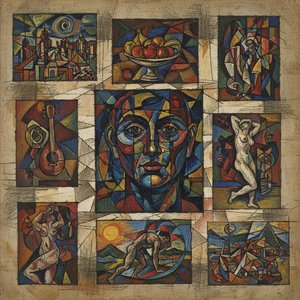
Kubistischer Expressionismus: Die 10 Meisterwerke, die eine Kunstrevolution prägten | OriginalUniqueArt
Entdecken Sie die 10 prägendsten Meisterwerke des Kubismus & Expressionismus! Erfahren Sie die Geschichten von Picasso, Braque und mehr. Kunstdrucke in Museumsqualiät für Ihr Zuhause – jetzt auf OriginalUniqueArt.com!