Vorschau anzeigen
 Versenden
 Teilen
 Details anzeigen

 Herunterladen
 Ähnliche Objekte
 Röntgenaufnahme
 Diashow
 Statistiken
Sitzende Frau 9


 Weiterlesen
Giclée / Kunstdruck
Giclée- oder Leinwanddruck in Museumsqualität mit schneller Produktion und flexiblen Veredelungsoptionen. ( Handgemalte Reproduktion bestellen Zum digitalen Bild wechseln)




P118B $10

P118H $10

P118W $10

P438Z $10

P508JH $12

P508YH $12

P805H $10

P805Z $10

P919BZ $10

P919G $10

P919XJ $10

P959ZH $10

P968JZ $12

W106C $8

W218G $10

W218JH $8

W218Y $10

W307PJ $10

W316G $10

W316PJ $8

W316Y $10

W398PJ $8

W4111J $10

W500HY $15

W500JH $15

W692G $12

W849H $8

W940BG $15

W953PJ $8




Wählen Sie aus unseren vordefinierten Formaten, die den ursprünglichen Proportionen des Kunstwerks entsprechen.

Sie können Ihre eigenen Maße eingeben, um ein bestimmtes Format oder einen speziellen Platz einzupassen. Wenn das von Ihnen gewählte Format nicht den Proportionen des Originalbildes entspricht, werden wir das Kunstwerk entweder beschneiden oder das Bild mit einem gespiegelten oder einfarbigen Rand erweitern. Ein digitaler Entwurf wird Ihnen zur Genehmigung zugesandt, bevor die Produktion beginnt.
Bitte beachten Sie, dass die Vorschau auf dem Bildschirm nicht den tatsächlichen Zuschnitt oder die Erweiterung widerspiegelt. Nur der Entwurf zeigt die endgültige Komposition präzise an.
Obwohl Sondermaße verfügbar sind, empfehlen wir die Auswahl eines Maßes aus der vordefinierten Liste, um die ursprünglichen Proportionen zu bewahren.
Weltweiter Versand () innerhalb von 2 Wochen statt der üblichen 4/5 Wochen. (13 September)

Kostenloser weltweiter Expressversand

Hochwertige Leinenleinwand

Umfassender Versicherungsschutz beim Versand

Zollgebühren-Rückerstattungsgarantie

Garantie für exakte Farbtreue

100-Tage-Rückgaberecht (nur bei Mängeln)

100% Geld-zurück-Garantie

Mengenrabatt verfügbar
 Die Glasoption ist nur für Größen unter 110 cm verfügbar.

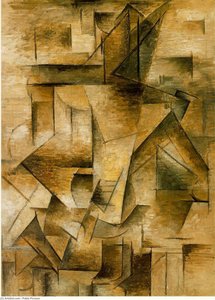
Sitzende Frau 9
Giclée / Kunstdruck
Format der Reproduktion
-


Gesamtpreis
$ 80
A Revolutionary Vision: Deconstructing Form in Picasso’s “Seated Woman 9”
Pablo Ruiz Picasso, born in Málaga, Spain, in 1881, stands as one of the most influential figures in twentieth-century art. His artistic journey began with rigorous academic training under his father, José Ruiz y Blasco, mastering realistic depiction from a young age—a foundation that would soon be challenged by an unwavering desire to explore new frontiers of visual expression. This early mastery wasn’t merely technical; it foreshadowed an intellectual curiosity and a rebellious spirit that propelled him toward groundbreaking innovations. The family’s subsequent relocations to A Coruña and Barcelona exposed Picasso to vibrant cultural currents where he honed his skills and began to formulate his distinctive artistic vision.- The Artwork: “Seated Woman 9” is a seminal Cubist portrait executed in 1927, showcasing Picasso’s masterful manipulation of form and color during his pivotal period of experimentation.
- Cubism's Core Principles: At its heart lies Cubism—a revolutionary movement that rejected traditional perspective and embraced multiple viewpoints simultaneously. Picasso sought to capture the totality of reality rather than merely replicating what he saw, mirroring Cézanne’s influence and drawing inspiration from African masks and Iberian sculpture.
Decoding the Language of Cubism
The artwork exemplifies Cubist aesthetics through its bold geometric shapes—primarily triangles, rectangles, and intersecting curves—which dismantle conventional spatial representation. Picasso doesn't aim for illusionistic depth but rather to convey a sense of simultaneity—how the mind perceives form from various angles concurrently. The figures are fragmented into angular planes, meticulously reconstructed in a way that defies traditional notions of space. This analytical approach, championed by Georges Braque, prioritizes intellectual understanding over visual realism. The deliberate flatness of the composition contributes to an unsettling yet captivating atmosphere.Palette & Technique: A Symphony of Color and Texture
A vibrant color palette dominates “Seated Woman 9,” featuring intense yellows, reds, blacks, and whites—choices that amplify emotional resonance rather than adhering to naturalistic hues. Picasso’s technique involves layering paint on canvas with remarkable precision, building volume within the flattened planes while maintaining a palpable textural variation. The application of pigment is considered carefully, reflecting his profound knowledge of color theory. Executed in oil paints, the artwork captures the richness and luminosity characteristic of this medium. Muted grays and browns serve as grounding elements, subtly contrasting with the energetic foreground figures.Picasso & The Birth of Cubism: A Historical Perspective
Picasso’s artistic trajectory began with unwavering dedication to academic training—a commitment that would soon clash with his burgeoning desire for artistic liberation. Inspired by Post-Impressionists like Cézanne and profoundly affected by African art forms encountered at the Trocadéro Museum in Paris, Picasso embarked on a transformative journey toward Cubism around 1907. This movement challenged the Renaissance ideal of representing the world from a single viewpoint—a stance that Picasso vehemently rejected—and ushered in an era of unprecedented artistic innovation. The artwork stands as testament to Picasso’s enduring legacy and his pivotal role in reshaping modern art history.Symbolism & Emotional Resonance
The symbolism within “Seated Woman 9” remains open to interpretation, mirroring the inherent ambiguity found in Cubist masterpieces. However, the fragmentation of the figures can be seen as reflecting anxieties surrounding modernity—the breakdown of established social structures and a pervasive sense of uncertainty. The angularity of the shapes contributes to an unsettling yet intellectually stimulating experience, hinting at complex inner lives within the subjects. This is not merely a portrait; it’s a profound meditation on perception, identity, and the human condition in a rapidly evolving world—a timeless exploration that continues to captivate audiences today.A Statement Piece for Contemporary Spaces
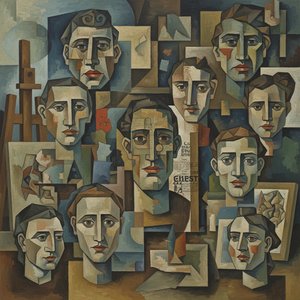
“Seated Woman 9” would serve as an exceptional focal point within any modern or contemporary interior. Its bold colors and dynamic composition demand attention, sparking conversation and elevating the aesthetic quality of a space. The artwork’s abstract nature complements diverse design styles—from minimalist to eclectic—making it a versatile choice for discerning collectors and decorators alike. A high-quality reproduction captures the essence of Picasso’s genius, bringing a piece of art history into your home or office. Consider pairing it with neutral tones to allow the artwork's vibrancy to truly shine. This captivating image embodies Picasso’s revolutionary spirit—a legacy that continues to inspire artists and admirers worldwide. Photo Description: --Overall Impression-- The artwork is a Cubist portrait of two figures presented in an abstracted and fragmented manner. It’s dominated by bold, geometric shapes and a vibrant color palette. The composition is dynamic and slightly unsettling due to the disjointed representation of the subjects. The figures are broken down into planes and angles, creating a sense of depth through overlapping forms rather than traditional perspective. Lines are angular and sharply defined, contributing to the Cubist style. Shapes include triangles, rectangles, and curved lines, all intersecting and interacting with each other. The color palette is intensely bright and contrasting – primarily featuring yellows, reds, blacks, and whites. Texture appears flat, typical of this style, suggesting a two-dimensional representation despite the illusion of depth. The subject matter is clearly human figures, but their identity is obscured by the abstraction. There's an emotional quality conveyed through the intensity of color and the fragmented form, hinting at tension or perhaps a commentary on modern life. The technique involves layering paint to create the illusion of volume within the flat planes. Materials used are likely oil paints on canvas. Size: Unknown Date: Unknown ARTIST INFORMATION: ================== Artist: Pablo Ruiz Picasso Birth Year: 1881 Death Year: 1973 Birth City: Malaga Birth Country: Spain Biography:A Revolutionary Spirit: The Life and Art of Pablo Picasso
Pablo Ruiz Picasso, a name that resonates through the annals of art history, was born in Málaga, Spain, in 1881—a nation poised on the cusp of profound change. His life, spanning nearly a century, became an extraordinary mirror reflecting this transformation—a relentless exploration of form, perspective, and the very essence of human experience. From his earliest artistic training under his father, José Ruiz y Blasco, Picasso displayed a precocious talent that quickly surpassed even his mentor’s abilities. This early mastery wasn't merely technical; it hinted at an insatiable curiosity and a willingness to challenge convention—qualities destined to define his entire career. The family’s subsequent moves to A Coruña and then Barcelona immersed the young artist in vibrant cultural environments where he honed his skills and began to forge hiÜber den Künstler
Pablo Picasso: Ein revolutionärer Künstler
Frühes Leben und Ausbildung (1881-1904)
- Geboren am 25. Oktober 1881 in Málaga, Spanien, zeigte Pablo Ruiz y Picasso von sehr jungem an sein künstlerisches Talent.
- Sein Vater, José Ruiz y Blasco, war Kunstlehrer und gab seinem Sohn eine frühe Ausbildung. Es heißt, Picassos erste Worte waren “piz, piz” – ein Versuch, ‘Bleistift’ zu sagen.
- Picasso übertraf seine Vaters Fähigkeiten schnell und zeigte bemerkenswerte Begabung in naturalistischen Darstellungen.
- Die Familie zog nach A Coruña und später nach Barcelona nach dem tragischen Verlust Picassos Schwester.
- In Barcelona besuchte er die Kunsthochschule, störte sich aber oft an der traditionellen akademischen Lehre. Er studierte kurzzeitig an der Königlichen Akademie San Fernando in Madrid und fand es beengend, bevorzugte aber das unabhängige Studium von Meistern wie Velázquez und Goya.
Die Blauen und Rosafarbenen Perioden (1901-1906)
- Die Blaue Periode (ungefähr 1901-1904) ist durch düstere Gemälde geprägt, die von Blautönen und Blaugrün dominiert werden.
- Diese Werke stellen oft marginalisierte Figuren dar – Bettler, blinde Menschen, Prostituierte – und spiegeln Melancholie und sozialen Kommentar wider. Wichtige Beispiele sind La Vie (1903) und Der alte Gitarrist (1903-1904).
- Nachfolgend entstand die Rosafarbene Periode (1904-1906) mit wärmeren Tönen – Rosa-, Orange- und Rottönen.
- Diese Periode spiegelt eine optimistischere Sichtweise wider und stellt oft Zirkusclowns, Harlekinen und Akrobaten dar. Familie der Saltimbanques (1905) ist ein Beispiel dafür.
Die revolutionären Jahre: Kubismus und darüber hinaus (1907-1919)
- 1907 markierte einen Wendepunkt mit Les Demoiselles d'Avignon, der von iberischer Skulptur und afrikanischen Masken beeinflusst wurde. Dieses Gemälde zerstörte die traditionelle Perspektive und ebnete den Weg für den Kubismus.
- Picasso arbeitete eng mit Georges Braque zusammen und gründete den Kubismus, der die Art und Weise, wie Künstler Realität darstellten, grundlegend veränderte.
- Analytischer Kubismus (1909-1912) zeichnete sich durch fragmentierte Formen, gedämpfte Farben und die Zerlegung von Objekten in geometrische Formen aus.
- Synthetischer Kubismus (1912-1919) integrierte Collagen – Zeitungsartikel, Stoffreste – um texturierte Oberflächen und neue visuelle Schichten zu schaffen.
Neoklassizismus und Surrealismus (1920er - 1930er Jahre)
- In den 1920er Jahren erkundete Picasso neoklasische Stile mit monumentalen Figuren, die klassische Formen betonten.
- Er beschäftigte sich auch mit dem Surrealismus, obwohl er sich nie vollständig mit dessen Prinzipien identifizierte. Seine Werke vermischten frühere Stile mit surrealistischer Bildsprache und verzerrten Perspektiven.
Spätere Jahre und Vermächtnis (1940-1973)
- Während des Zweiten Weltkriegs blieb Picasso in Frankreich und produzierte kraftvolle Antikriegserklärungen wie Guernica (1937), eine wirkliche Reaktion auf den Angriff auf Guernica während des Spanischen Bürgerkriegs.
- Guernica wurde zu einem bleibenden Symbol der Schrecken des Krieges und gilt als eines seiner bekanntesten Werke.
- In den 1950er und 60er Jahren experimentierte Picasso weiterhin mit verschiedenen Medien – Keramik, Skulptur, Druckgrafik – und demonstrierte bemerkenswerte Vielseitigkeit.
- Er heiratete Jacqueline Roque im Jahr 1961. Er starb am 8. April 1973 in Mougins, Frankreich.
Einflüsse und historische Bedeutung
- Picassos künstlerische Entwicklung wurde von spanischen Meistern wie Velázquez und Goya, iberischer Skulptur, afrikanischer Kunst und Henri Matisse geprägt.
- Sein Einfluss auf die Kunst des 20. Jahrhunderts ist unermesslich. Er gründete den Kubismus, pionierte Collagen und konstruktive Skulpturen und stellte traditionelle künstlerische Konventionen kontinuierlich in Frage.
- Picassos unerbittliche Experimentierfreude definierte die moderne Kunst neu und inspiriert Künstler bis heute.
- Seine fruchtbare Produktion – geschätzt auf über 50.000 Werke – festigt seine Position als einer der wichtigsten und einflussreichsten Künstler in der Geschichte.

Pablo Picasso
1881 - 1973 , Spanien
Kurzinfos
- Beeinflusste Künstler:
- Velázquez
- Goya
- Henri Matisse
- Bemerkenswerte Werke:
- Les Demoiselles d'Avignon
- Guernica
- Der alte Gitarrist
- Familie der Saltimbanques
- Geburtsdatum: 25. Oktober 1881
- Geburtsort: Málaga, Spanien
- Künstlerische Richtung: Kubismus, Surrealismus
- Nationalität: Spanisch
- Sterbedatum: 8. April 1973
- Vollständiger Name: Pablo Picasso
- Von Künstlern Beeinflusst:
- Iberische Skulptur
- Afrikanische Kunst
Ähnliche Artikel
Cubist Expression: A Professional Guide to Integrating Geometric Abstraction into Modern Hospitality Design
Elevate hospitality interiors with Cubist art. Our expert guide explores integrating geometric abstraction into hotel design through high-quality, large-scale oil reproductions and custom multi-panel commissions tailored for professional designers and procurement managers.

Geometrische Abstraktion: Die 10 Meisterwerke, die Kunstgeschichte prägten | OriginalUniqueArt.com
Entdecken Sie die 10 Meisterwerke der geometrischen Abstraktion! Von Kandinsky bis Mondrian – erleben Sie die Geschichte, Farben & Formen dieser revolutionären Kunstrichtung. Hochwertige Kunstreproduktionen auf OriginalUniqueArt.com
Die 10 Meisterwerke des Kubismus: Kunst für Ihr Zuhause | OriginalUniqueArt
Entdecken Sie die 10 bedeutendsten Meisterwerke des Kubismus von Picasso, Braque & Gris! Erfahren Sie mehr über Kunstgeschichte, Techniken und Farben. Hochwertige Kunstdrucke auf OriginalUniqueArt.com – für stilvolle Wandgestaltung.
Kubismus: Die 10 Meisterwerke, die eine Revolution definierten | OriginalUniqueArt
Entdecken Sie die 10 Meisterwerke des Kubismus! Von Picasso bis Braque – erleben Sie die Revolution abstrakter Kunst. Kunstdrucke & Wandbilder für Ihr Zuhause auf OriginalUniqueArt.com.
Die 10 Meisterwerke des Kubismus: Revolutionäre Porträts für Ihr Zuhause | OriginalUniqueArt
Entdecken Sie die 10 revolutionärsten kubistischen Porträts von Picasso, Braque & Co.! Erfahren Sie die Geschichten hinter Meisterwerken der Moderne und lassen Sie sich für Ihre Wohnraumgestaltung inspirieren. Museum-Qualität bei OriginalUniqueArt.