Vorschau anzeigen
 Versenden
 Teilen
 Details anzeigen
 Leitfaden

 Herunterladen
 Ähnliche Objekte
 Röntgenaufnahme
 Diashow
 Fragen & Antworten
 Statistiken
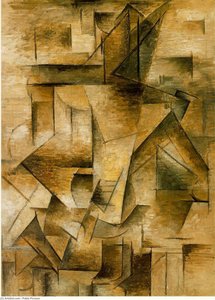
Kopf eines Mannes mit Hut

- 62.0 x 47.0 cm


 Weiterlesen
Die auf dieser Seite dargestellten Kunstwerke sind urheberrechtlich geschützt, was bedeutet, dass wir keine identische Reproduktion rechtmäßig erstellen oder verkaufen dürfen. Dieser Schutz wird durch internationale Abkommen wie die Berner Übereinkunft und durch nationale Gesetze, einschließlich derer, die von den US-Urheberrecht – Titel 17.
Diese Methode entspricht vollumfänglich den Urheberrechtsbestimmungen, da sie keine Kopie oder Vervielfältigung des geschützten Kunstwerks darstellt. Stattdessen handelt es sich um eine kreative Neuinterpretation – ein neues Gemälde, das vom Original inspiriert, aber nicht identisch mit ihm ist.
Giclée / Kunstdruck
Giclée- oder Leinwanddruck in Museumsqualität mit schneller Produktion und flexiblen Veredelungsoptionen. ( Handgemalte Reproduktion bestellen Zum digitalen Bild wechseln)




P118B €10

P118H €10

P118W €10

P438Z €10

P508JH €12

P508YH €12

P805H €10

P805Z €10

P919BZ €10

P919G €10

P919XJ €10

P959ZH €10

P968JZ €12

W106C €8

W218G €10

W218JH €8

W218Y €10

W307PJ €10

W316G €10

W316PJ €8

W316Y €10

W398PJ €8

W4111J €10

W500HY €15

W500JH €15

W692G €12

W849H €8

W940BG €15

W953PJ €8




Wählen Sie aus unseren vordefinierten Formaten, die den ursprünglichen Proportionen des Kunstwerks entsprechen.

Geben Sie die benötigte Breite und Höhe an, damit der Druck perfekt in Ihren Rahmen oder an Ihre Wand passt. Ein Druck kann nur beschnitten, aber niemals größer als das Originalbild angefertigt werden; daher verliert ein Format mit anderen Proportionen einen Teil des Bildes. Wir senden Ihnen ein digitales Mockup zur Freigabe, bevor wir den Druck ausführen. Das auf dieser Seite gezeigte Bild zeigt nicht den tatsächlichen Beschnitt – dies ist nur im Mockup ersichtlich.
Weltweiter Versand () innerhalb von 2 Wochen statt der üblichen 4/5 Wochen. (8 November)

Kostenloser weltweiter Expressversand

Hochwertige Leinenleinwand

Umfassender Versicherungsschutz beim Versand

Zollgebühren-Rückerstattungsgarantie

Garantie für exakte Farbtreue

100 Tage Rückgaberecht (nur bei Mängeln)

100% Geld-zurück-Garantie

Mengenrabatt verfügbar
 Die Glasoption ist nur für Größen unter 110 cm verfügbar.

Kopf eines Mannes mit Hut
Giclée / Kunstdruck
Format der Reproduktion
-


Endpreis
€ 72
Pablo Picasso’s ‘Head of a Man with Hat’: A Fragmented Portrait of Modernity
The charcoal drawing “Head of a Man with Hat” by Pablo Picasso, created in 1912 during his Synthetic Cubist period, offers a captivating glimpse into the artist's evolving vision and the turbulent spirit of early 20th-century Europe. This seemingly simple depiction—a man’s head partially obscured by a wide-brimmed hat—is far more complex than it initially appears. It’s not merely a portrait; it’s a carefully constructed puzzle, a fragmented representation of identity and the anxieties of a rapidly changing world. The drawing itself, executed on paper with cut-and-pasted newspaper fragments and colored paper alongside charcoal and ink, immediately speaks to Picasso's innovative approach – a deliberate rejection of traditional single-image representation in favor of a multi-layered, collage-like construction.
Picasso’s Synthetic Cubism marked a significant shift from the Analytical Cubism that preceded it. While Analytical Cubism focused on dissecting objects into their component forms and presenting them simultaneously from multiple viewpoints, Synthetic Cubism embraced a more decorative and symbolic approach. Here, Picasso utilizes fragments of newsprint – a deliberate choice reflecting the pervasive influence of mass media in this era – to build up the figure’s form. The newspaper pieces aren't simply pasted on; they are integrated into the drawing, creating an unsettling sense of depth and blurring the boundaries between reality and illusion. The blue hue of the man’s nose adds a subtle melancholic note, hinting at underlying sadness or perhaps even disillusionment – a common theme in Picasso’s work during this period.
A Window into the Artist's Process & the Zeitgeist
Created shortly after the devastating bombing of Guernica, a Basque town in Spain, by Nazi German and Fascist Italian air forces, the drawing carries an undeniable undercurrent of social commentary. The event, which shocked the world, profoundly impacted Picasso, fueling his anti-war sentiments and solidifying his commitment to using art as a vehicle for protest. While “Head of a Man with Hat” isn’t directly related to Guernica in terms of imagery, it embodies the broader sense of chaos, destruction, and human suffering that permeated Europe at the time. The fragmented nature of the portrait mirrors the shattered state of society following the war – a world struggling to rebuild itself amidst violence and uncertainty.
Interestingly, this work was part of a larger stock of drawings held by Tristan Tzara, a prominent figure in the Dada movement, known for its rejection of logic and reason. The fact that it surfaced through the Kahnweiler collection suggests a connection to these avant-garde circles, who were actively experimenting with new forms of artistic expression and challenging traditional notions of beauty and representation. The use of newspaper fragments also aligns with the Dadaist interest in incorporating everyday materials into art, elevating the mundane to the level of high art.
Symbolism & Artistic Technique
Despite its fragmented appearance, “Head of a Man with Hat” is remarkably controlled in its execution. Picasso masterfully manipulates line and shadow to create a sense of volume and form. The hat, rendered with sharp, angular lines, dominates the composition, casting a shadow over the man’s face and suggesting a degree of concealment or anonymity. The use of charcoal provides a stark contrast to the vibrant colors of the newspaper fragments, further emphasizing the drawing's dynamic energy. Note how Picasso uses negative space – the areas around the figure – to create visual interest and guide the viewer’s eye.
Furthermore, consider the deliberate ambiguity of the portrait. We don’t know who this man is or what he’s thinking. This lack of specificity allows us to project our own emotions and interpretations onto the image, making it a deeply personal experience for each viewer. It's a testament to Picasso's genius that he could create such a powerful and evocative work from seemingly disparate elements.
A Timeless Masterpiece – Reproduction & Beyond
OriginalUniqueArt offers meticulously crafted hand-painted reproductions of “Head of a Man with Hat,” allowing art enthusiasts to bring this iconic piece into their homes or offices. Our skilled artists faithfully recreate Picasso’s innovative techniques and nuanced symbolism, ensuring that the reproduction captures the essence of the original drawing. Whether you're an avid collector, an interior designer seeking to add a touch of artistic flair, or simply someone who appreciates the beauty of modern art, our reproductions provide a stunning and authentic representation of this remarkable work. Explore our collection today and discover the enduring legacy of Pablo Picasso.
Fragen & Antworten
Welche Gemeinsamkeiten weist "Kopf eines Mannes mit Hut" mit dem restlichen Werk von Pablo Picasso auf?
"Kopf eines Mannes mit Hut" teilt mit anderen Werken von Pablo Picasso den Stil der Synthetic Cubism sowie die wiederkehrenden Themen: cubism, fragmentation, modernity, war, suffering, protest, spanish civil war, guernica.
Wie spiegeln sich Stilrichtung und Epoche in "Kopf eines Mannes mit Hut" von Pablo Picasso wider?
"Kopf eines Mannes mit Hut" von Pablo Picasso lässt sich der Strömung des Synthetic Cubism innerhalb der Moderne-Ära seines Schöpfers zuordnen.
Was stellt "Kopf eines Mannes mit Hut" von Pablo Picasso dar und welche Stimmung vermittelt es?
"Kopf eines Mannes mit Hut" von Pablo Picasso verbindet man, head, hat, sketch, charcoal, study, blackwhite, picasso mit einer Gelassenheit Atmosphäre.
Künstlerbiografie
Pablo Picasso: Ein revolutionärer Künstler
Frühes Leben und Ausbildung (1881-1904)
- Geboren am 25. Oktober 1881 in Málaga, Spanien, zeigte Pablo Ruiz y Picasso von sehr jungem an sein künstlerisches Talent.
- Sein Vater, José Ruiz y Blasco, war Kunstlehrer und gab seinem Sohn eine frühe Ausbildung. Es heißt, Picassos erste Worte waren “piz, piz” – ein Versuch, ‘Bleistift’ zu sagen.
- Picasso übertraf seine Vaters Fähigkeiten schnell und zeigte bemerkenswerte Begabung in naturalistischen Darstellungen.
- Die Familie zog nach A Coruña und später nach Barcelona nach dem tragischen Verlust Picassos Schwester.
- In Barcelona besuchte er die Kunsthochschule, störte sich aber oft an der traditionellen akademischen Lehre. Er studierte kurzzeitig an der Königlichen Akademie San Fernando in Madrid und fand es beengend, bevorzugte aber das unabhängige Studium von Meistern wie Velázquez und Goya.
Die Blauen und Rosafarbenen Perioden (1901-1906)
- Die Blaue Periode (ungefähr 1901-1904) ist durch düstere Gemälde geprägt, die von Blautönen und Blaugrün dominiert werden.
- Diese Werke stellen oft marginalisierte Figuren dar – Bettler, blinde Menschen, Prostituierte – und spiegeln Melancholie und sozialen Kommentar wider. Wichtige Beispiele sind La Vie (1903) und Der alte Gitarrist (1903-1904).
- Nachfolgend entstand die Rosafarbene Periode (1904-1906) mit wärmeren Tönen – Rosa-, Orange- und Rottönen.
- Diese Periode spiegelt eine optimistischere Sichtweise wider und stellt oft Zirkusclowns, Harlekinen und Akrobaten dar. Familie der Saltimbanques (1905) ist ein Beispiel dafür.
Die revolutionären Jahre: Kubismus und darüber hinaus (1907-1919)
- 1907 markierte einen Wendepunkt mit Les Demoiselles d'Avignon, der von iberischer Skulptur und afrikanischen Masken beeinflusst wurde. Dieses Gemälde zerstörte die traditionelle Perspektive und ebnete den Weg für den Kubismus.
- Picasso arbeitete eng mit Georges Braque zusammen und gründete den Kubismus, der die Art und Weise, wie Künstler Realität darstellten, grundlegend veränderte.
- Analytischer Kubismus (1909-1912) zeichnete sich durch fragmentierte Formen, gedämpfte Farben und die Zerlegung von Objekten in geometrische Formen aus.
- Synthetischer Kubismus (1912-1919) integrierte Collagen – Zeitungsartikel, Stoffreste – um texturierte Oberflächen und neue visuelle Schichten zu schaffen.
Neoklassizismus und Surrealismus (1920er - 1930er Jahre)
- In den 1920er Jahren erkundete Picasso neoklasische Stile mit monumentalen Figuren, die klassische Formen betonten.
- Er beschäftigte sich auch mit dem Surrealismus, obwohl er sich nie vollständig mit dessen Prinzipien identifizierte. Seine Werke vermischten frühere Stile mit surrealistischer Bildsprache und verzerrten Perspektiven.
Spätere Jahre und Vermächtnis (1940-1973)
- Während des Zweiten Weltkriegs blieb Picasso in Frankreich und produzierte kraftvolle Antikriegserklärungen wie Guernica (1937), eine wirkliche Reaktion auf den Angriff auf Guernica während des Spanischen Bürgerkriegs.
- Guernica wurde zu einem bleibenden Symbol der Schrecken des Krieges und gilt als eines seiner bekanntesten Werke.
- In den 1950er und 60er Jahren experimentierte Picasso weiterhin mit verschiedenen Medien – Keramik, Skulptur, Druckgrafik – und demonstrierte bemerkenswerte Vielseitigkeit.
- Er heiratete Jacqueline Roque im Jahr 1961. Er starb am 8. April 1973 in Mougins, Frankreich.
Einflüsse und historische Bedeutung
- Picassos künstlerische Entwicklung wurde von spanischen Meistern wie Velázquez und Goya, iberischer Skulptur, afrikanischer Kunst und Henri Matisse geprägt.
- Sein Einfluss auf die Kunst des 20. Jahrhunderts ist unermesslich. Er gründete den Kubismus, pionierte Collagen und konstruktive Skulpturen und stellte traditionelle künstlerische Konventionen kontinuierlich in Frage.
- Picassos unerbittliche Experimentierfreude definierte die moderne Kunst neu und inspiriert Künstler bis heute.
- Seine fruchtbare Produktion – geschätzt auf über 50.000 Werke – festigt seine Position als einer der wichtigsten und einflussreichsten Künstler in der Geschichte.

Pablo Picasso
1881 - 1973 , Spanien
Kurzinfos
- Beeinflusste Künstler:
- Velázquez
- Goya
- Henri Matisse
- Bemerkenswerte Werke:
- Les Demoiselles d'Avignon
- Guernica
- Der alte Gitarrist
- Familie der Saltimbanques
- Geburtsdatum: 25. Oktober 1881
- Geburtsort: Málaga, Spanien
- Künstlerische Richtung: Kubismus, Surrealismus
- Nationalität: Spanisch
- Sterbedatum: 8. April 1973
- Vollständiger Name: Pablo Picasso
- Von Künstlern Beeinflusst:
- Iberische Skulptur
- Afrikanische Kunst
Ähnliche Artikel
Die 10 Meisterwerke des Kubismus: Kunst für Ihr Zuhause | OriginalUniqueArt
Entdecken Sie die 10 bedeutendsten Meisterwerke des Kubismus von Picasso, Braque & Gris! Erfahren Sie mehr über Kunstgeschichte, Techniken und Farben. Hochwertige Kunstdrucke auf OriginalUniqueArt.com – für stilvolle Wandgestaltung.
Die 10 Meisterwerke des Kubismus: Revolutionäre Porträts für Ihr Zuhause | OriginalUniqueArt
Entdecken Sie die 10 revolutionärsten kubistischen Porträts von Picasso, Braque & Co.! Erfahren Sie die Geschichten hinter Meisterwerken der Moderne und lassen Sie sich für Ihre Wohnraumgestaltung inspirieren. Museum-Qualität bei OriginalUniqueArt.
Cubism Unveiled: How Picasso and Braque Redefined Reality Through Geometric Abstraction
Explore the revolutionary world of Cubism. Discover how masters Pablo Picasso and Georges Braque dismantled reality through geometric abstraction to redefine modern art history.
Kubismus: Die 10 Meisterwerke, die eine Revolution definierten | OriginalUniqueArt
Entdecken Sie die 10 Meisterwerke des Kubismus! Von Picasso bis Braque – erleben Sie die Revolution abstrakter Kunst. Kunstdrucke & Wandbilder für Ihr Zuhause auf OriginalUniqueArt.com.
Pablo Picasso: Eine revolutionäre Vision – Kubismus, Symbolik und bleibendes Erbe
Entdecken Sie Pablo Picassos revolutionäres Werk! Analysen zu Kubismus, Symbolik und seinem bleibenden Einfluss auf die moderne Kunst. Wertvolle Einblicke für Sammler & Kenner.