In echtem Maßstab anzeigen
 Versenden als Grußkarte
 Teilen
 Details anzeigen
 Leitfaden öffnen

 Herunterladen
 Ähnliche Objekte
 Röntgenaufnahme
 Diashow
 Besucherstatistiken
Madonna
 Oil On Canvas
- WallArt
- Baroque
 Early Modern
 131.0 x 91.0 cm
 Galleria Nazionale d’Arte Antica
 Mehr anzeigen
Giclée / Kunstdruck
Giclée- oder Leinwanddruck in Museumsqualität mit schneller Produktion und flexiblen Veredelungsoptionen. ( Handgemalte Reproduktion kaufen Zum digitalen Bild wechseln)




P118B $10

P118H $10

P118W $10

P438Z $10

P508JH $12

P508YH $12

P805H $10

P805Z $10

P919BZ $10

P919G $10

P919XJ $10

P959ZH $10

P968JZ $12

W106C $8

W218G $10

W218JH $8

W218Y $10

W307PJ $10

W316G $10

W316PJ $8

W316Y $10

W398PJ $8

W4111J $10

W500HY $15

W500JH $15

W692G $12

W849H $8

W940BG $15

W953PJ $8




Wählen Sie aus unseren vordefinierten Formaten, die den ursprünglichen Proportionen des Kunstwerks entsprechen.

Sie können Ihre eigenen Maße eingeben, um ein bestimmtes Format oder einen speziellen Platz einzupassen. Wenn das von Ihnen gewählte Format nicht den Proportionen des Originalbildes entspricht, werden wir das Kunstwerk entweder beschneiden oder das Bild mit einem gespiegelten oder einfarbigen Rand erweitern. Ein digitaler Entwurf wird Ihnen zur Genehmigung zugesandt, bevor die Produktion beginnt.
Bitte beachten Sie, dass die Vorschau auf dem Bildschirm nicht den tatsächlichen Zuschnitt oder die Erweiterung widerspiegelt. Nur der Entwurf zeigt die endgültige Komposition präzise an.
Obwohl Sondermaße verfügbar sind, empfehlen wir die Auswahl eines Maßes aus der vordefinierten Liste, um die ursprünglichen Proportionen zu bewahren.
Weltweiter Versand () innerhalb von 2 Wochen statt der üblichen 4/5 Wochen. (26 September)

Kostenloser weltweiter Expressversand

Hochwertige Leinenleinwand

Vollständiger Versicherungsschutz beim Versand

Zollgebühren-Rückerstattungsgarantie

Garantie für exakte Farbtreue

100-tägiges Rückgaberecht (nur bei Mängeln)

100% Geld-zurück-Garantie

Angebot für Mengenrabatt
 Die Glasoption ist nur für Größen unter 110 cm verfügbar.

Madonna
Giclée / Kunstdruck
Format der Reproduktion
-


Gesamtpreis
$ 80
A Divine Encounter in Shadow and Light
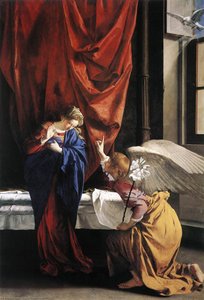
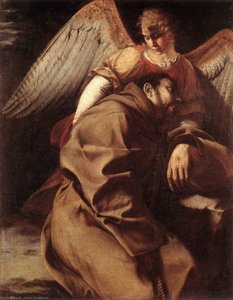
In the quietude of Orazio Gentileschi’s Madonna, we find ourselves standing at the threshold of a transformative era in art history. This masterpiece, painted around 1604, serves as a breathtaking bridge between the elegant, often artificial complexities of Mannerism and the raw, visceral drama of the Baroque. The composition centers on the Virgin Mary, whose presence is both profoundly human and ethereally divine. Clad in a somber brown robe trimmed with delicate white, her face radiates a serene, contemplative grace. As she gazes downward, her eyes hold a depth of maternal tenderness that transcends the canvas, inviting the viewer into a moment of silent prayer. Beside her, the Christ Child, swathed in a vibrant yellow garment, looks outward toward us, creating an immediate and piercing emotional connection that bridges the gap between the sacred subject and the earthly observer.
The technical brilliance of this work lies in Gentileschi’s masterful command of chiaroscuro, a technique heavily influenced by his contemporary, Caravaggio. By plunging the background into a deep, impenetrable darkness, the artist forces our focus onto the luminous skin and rich textures of the central figures. This stark contrast does more than create depth; it sculptively carves the Madonna from the shadows, lending her a physical weight and presence that feels startlingly real. The light does not merely illuminate; it caresses the folds of the fabric and the soft contours of the infant's cheek, imbuing the scene with a sense of living breath. For the discerning collector or interior designer, this interplay of light and shadow offers a sophisticated focal point that can anchor a room with both gravity and elegance.
Symbolism and the Soul of the Baroque
Beyond its visual splendor, the Madonna is rich with the symbolic language of the early 17th century. The choice of colors—the earthy browns of the Virgin’s attire contrasted against the celestial yellow of the Child—speaks to the intersection of the terrestrial and the divine. The Madonna represents the stability of faith and the nurturing strength of the Church, while the radiant child symbolizes the light of hope entering a dark world. Every brushstroke is an exercise in humanist sensibility, where the divine is not depicted as a distant, untouchable entity, but as something intimately connected to the human experience through emotion, touch, and gaze.
To possess a reproduction of this work is to bring a piece of the Italian Renaissance's twilight and the Baroque's dawn into one's personal space. It is an invitation to contemplate the eternal themes of motherhood, devotion, and the beauty found in stillness. Whether placed in a curated gallery setting or as a soulful addition to a classically styled study, this painting offers more than mere decoration; it provides a window into a period of unparalleled artistic courage, where masters like Gentileschi dared to find the extraordinary within the shadows of the ordinary.
Biografie des Künstlers
Frühes Leben und Ausbildung
- Geboren: Toskana, Italien (1563)
- Gestorben: 1639
- Orazio Gentileschi begann seine Karriere in Rom, wo er im Manierismus-Stil malte. Ein Großteil seiner frühen Arbeit bestand darin, Figuren innerhalb dekorativer Gestaltungsschemata anderer Künstler zu malen.
- Er wurde vom umbrischen Maler Cola dell'Amata ausgebildet.
- Gentileschi wurde auch von der Arbeit des Architekten und Bildhauers Francesco da Sangallo beeinflusst.
Künstlerischer Stil und Einflüsse
- Sein Stil zeichnete sich durch leuchtende Farben und dramatische Kompositionen aus.
- Nach 1600 geriet er unter den Einfluss des naturalistischen Stils von Caravaggio und übernahm diesen.
- Gentileschis Gemälde zeigten oft biblische Szenen und mythologische Themen.
- Wichtige Einflüsse: Manierismus, Caravaggio
Hauptwerke und Errungenschaften
- "Danae": Gilt als eines seiner wichtigsten Werke und zeigt sein Können bei der Darstellung des Wesens mythologischer Geschichten.
- "Die Verkündigung": Befindet sich in der Galleria Borghese in Rom.
- "Die Jungfrau Maria": Ebenfalls in der Galleria Borghese in Rom.
- Seine Fresken und Mosaike für Kirchen wie Santa Maria Maggiore und San Giovanni Laterano demonstrieren seine Meisterschaft in großflächiger dekorativer Malerei.
Entwicklung und Evolution
- Er arbeitete zunächst im Manierismus-Stil, übernahm aber allmählich Elemente des Caravaggismo.
- Er entwickelte eine weichere, verfeinerte Version des dramatischen Stils von Caravaggio, die sich durch eine hellere Palette und präzise Details auszeichnete.
- Seine späteren Werke zeigten einen eleganten und höfischen Stil, der seine Förderung am Hof von Marie de' Medici in Paris und Karl I. in London widerspiegelte.
Historische Bedeutung und Vermächtnis
- Gentileschis Einsatz leuchtender Farben und dramatischer Kompositionen beeinflusste die Entwicklung der Barockkunst.
- Er war einer der ersten Vertreter des Caravaggismo in England und hatte damit einen bedeutenden Einfluss auf das dortige Kunstgeschehen.
- Seine Tochter Artemisia Gentileschi wurde zu einer renommierten Künstlerin ihres eigenen Rechts, setzte sein Vermächtnis fort und entwickelte die künstlerische Tradition der Familie weiter.
- Seine Werke sind in prominenten Museen und Galerien auf der ganzen Welt zu finden, darunter die Uffizien in Florenz und die Galleria dell'Accademia in Venedig.

Orazio Gentileschi
1563 - 1639 , Italien
Eckdaten zum Künstler
- Beeinflusste Künstler:
- Cola dell'Amata
- Francesco da Sangallo
- Bemerkenswerte Werke:
- Danae
- Ankündigung
- Jungfrau Maria
- Geburtsdatum: 9. Juli 1563 (getauft)
- Geburtsort: Toskana, Italien
- Künstlerischer Stil: Barockmalerei
- Nationalität: Italiener
- Sterbedatum: 7. Februar 1639
- Vollständiger Name: Orazio Gentileschi
- Von Künstlern Beeinflusst: ['Caravaggio']
Verwandte Artikel

Barocke Pracht: Wie Sie Opulenz und Emotionen in zeitgenössische Innenräume bringen
Entdecken Sie die Pracht des Barock! Expertenratgeber für luxuriöse Innenräume mit barocken Elementen. Inspiration, Tipps & hochwertige Kunst bei .

Barock Meisterwerke: Die 10 prägendsten Kunstwerke für Ihr Zuhause |
Entdecken Sie die 10 prägendsten Meisterwerke des Barock! Caravaggio, Rembrandt & Co. – Erfahren Sie die Geschichten hinter ikonischen Gemälde und finden Sie hochwertige Kunst Reproduktionen für Ihr Zuhause auf .

Drama and Light: A Definitive Guide to the Italian Baroque Masterpieces and the Revolution of Chiaroscuro
Explore the dramatic world of Italian Baroque art. Discover how masters like Caravaggio used chiaroscuro and tenebrism to revolutionize painting through light, shadow, and profound realism. A definitive guide for history lovers and art collectors.

Italian Baroque Unlocked: High-Drama Art That Hits Hard
Dive into the high-drama world of Italian Baroque art. Discover how chiaroscuro, intense emotion, and theatrical lighting redefined aesthetics. Explore the visceral power of the Counter-Reformation through a modern lens with expert insights from OriginalUniqueArt.com.
Simon Vouet: Vom italienischen Barock zum französischen Klassizismus – Eine künstlerische Reise
Entdecken Sie das Leben und Werk von Simon Vouet, dem Pionier des italienischen Barock in Frankreich! Erfahren Sie mehr über seinen künstlerischen Werdegang, seine wichtigsten Gemälde und seinen nachhaltigen Einfluss auf die französische Malerei. Jetzt lesen!