

 In echtem Maßstab anzeigen
 Versenden als Grußkarte
 Teilen
 Details anzeigen
 Leitfaden öffnen

 Herunterladen
 Ähnliche Objekte
 Röntgenaufnahme
 Diashow
 Besucherstatistiken
Hichiko Happo
 Acrylic On Canvas
- WallArt
- Contemporary Performance Art
 2014
2014 200.0 x 100.0 cm
 Guggenheim-Museum Bilbao
 Mehr anzeigen
Die auf dieser Seite dargestellten Kunstwerke sind urheberrechtlich geschützt, was bedeutet, dass wir keine identische Reproduktion rechtmäßig erstellen oder verkaufen dürfen. Dieser Schutz wird durch internationale Abkommen wie die Berner Übereinkunft und durch nationale Gesetze, einschließlich derer, die von den ... festgelegt wurden US-Urheberrecht – Titel 17.
Diese Methode entspricht vollumfänglich den Urheberrechtsbestimmungen, da sie keine Kopie oder Vervielfältigung des geschützten Kunstwerks darstellt. Stattdessen handelt es sich um eine kreative Neuinterpretation – ein neues Gemälde, das vom Original inspiriert, aber nicht identisch mit ihm ist.
Giclée / Kunstdruck
Giclée- oder Leinwanddruck in Museumsqualität mit schneller Produktion und flexiblen Veredelungsoptionen. ( Handgemalte Reproduktion kaufen Zum digitalen Bild wechseln)




P118B €10

P118H €10

P118W €10

P438Z €10

P508JH €12

P508YH €12

P805H €10

P805Z €10

P919BZ €10

P919G €10

P919XJ €10

P959ZH €10

P968JZ €12

W106C €8

W218G €10

W218JH €8

W218Y €10

W307PJ €10

W316G €10

W316PJ €8

W316Y €10

W398PJ €8

W4111J €10

W500HY €15

W500JH €15

W692G €12

W849H €8

W940BG €15

W953PJ €8




Wählen Sie aus unseren vordefinierten Formaten, die den ursprünglichen Proportionen des Kunstwerks entsprechen.

Geben Sie die Breite und die Höhe an, die Sie benötigen, damit der Druck perfekt in Ihren Rahmen oder an Ihre Wand passt. Ein Druck kann nur beschnitten werden und niemals größer als das Originalbild gemacht werden; daher verliert ein Format mit einer anderen Proportion einen Teil des Bildes. Wir senden Ihnen ein digitales Mockup zur Freigabe, bevor wir den Druck ausführen. Das auf dieser Seite gezeigte Bild zeigt nicht den tatsächlichen Beschnitt – dies ist nur im Mockup ersichtlich.
Weltweiter Versand () innerhalb von 2 Wochen statt der üblichen 4/5 Wochen. (24 Oktober)

Kostenloser weltweiter Expressversand

Hochwertige Leinenleinwand

Vollständiger Versicherungsschutz beim Versand

Zollgebühren-Rückerstattungsgarantie

Garantie für exakte Farbtreue

100-tägiges Rückgaberecht (nur bei Mängeln)

100% Geld-zurück-Garantie

Angebot für Mengenrabatt
 Die Glasoption ist nur für Größen unter 110 cm verfügbar.

Hichiko Happo
Giclée / Kunstdruck
Format der Reproduktion
-


Gesamtpreis
€ 70
The Genesis of a Gesture
Yoko Ono’s Hichiko Happo isn't merely a painting; it’s an invocation, a captured moment of pure action translated onto canvas. Created in 2014 as part of her ambitious “Action Painting” series, this work emerged from a retrospective at the Guggenheim Museum Bilbao – a space already steeped in the legacy of groundbreaking performance and conceptual art. The piece represents a deliberate reversal of fortune, a joyful counterpoint to the samurai’s stoic endurance of suffering. Ono sought not hardship, but happiness, weaving a narrative of optimism into the very fabric of her artistic process.
The genesis lies in an ancient Japanese tale – the story of Yamanaka Shikanosuke, a warrior who vowed to endure “seven misfortunes and eight sufferings” to protect his city. Ono, deeply moved by this act of selfless sacrifice, flipped the script, embracing positivity and applying it to her own life experience. This shift is powerfully embodied in the work’s title itself: Hichiko Happo – a phrase suggesting “seven happinesses and eight treasures.” The deliberate choice of Japanese calligraphy underscores this intentionality, connecting the piece to centuries-old traditions of artistic expression and spiritual contemplation.
A Symphony of Black Ink
At first glance, Hichiko Happo presents a deceptively simple composition: nine horizontal brushstrokes arranged in a linear row across a stark white background. However, this minimalism belies an intricate process and profound depth. Each stroke is not merely a line; it’s a carefully considered gesture, meticulously rendered with sumi ink – a traditional Japanese pigment known for its rich, velvety texture and ability to shift subtly with the application of water. The varying thicknesses and fluidity of each line create a dynamic interplay of form and movement, suggesting a continuous flow, almost like a visual score.
- The Gesture of Writing: Each stroke directly represents the act of writing or drawing – a fundamental human impulse to communicate and record experience.
- Sequential Progression: The arrangement of the strokes creates a clear sequence, inviting the viewer to trace the artist’s hand across the canvas, experiencing the process of creation itself.
- Subtle Texture: The slight variations in ink density and flow introduce subtle textural nuances, adding depth and dimensionality to what could have been a flat composition.
Decoding Symbolism and Emotion
Beyond its technical execution, Hichiko Happo resonates with layers of symbolic meaning. The monochromatic palette – solely shades of black against white – evokes a sense of austerity and introspection, mirroring the samurai’s initial burden of suffering. Yet, the deliberate use of positive words in the title transforms this darkness into an invitation to joy and abundance. The brushstrokes themselves can be interpreted as symbols of creativity, communication, and perhaps even the very act of artistic expression – a testament to Ono's belief in the power of imagination.
Furthermore, the work’s connection to Japanese calligraphy—a tradition deeply rooted in Zen Buddhism—adds another layer of significance. The emphasis on control, precision, and a connection to nature aligns with the core principles of this ancient art form. Hichiko Happo isn't simply a visual representation; it’s an embodiment of a philosophical concept – a celebration of resilience, optimism, and the transformative power of shifting one’s perspective.
A Legacy in Motion
Created during her “Action Painting” series, Hichiko Happo exemplifies Ono's ongoing exploration of performance art and conceptual ideas. Each iteration of this series developed unique visual qualities, reflecting the dynamic nature of her artistic process and the specific context of each presentation. Reproductions offer a tangible connection to this powerful work, allowing viewers to experience its beauty, complexity, and emotional resonance within their own spaces. It’s an invitation to contemplate not just the image itself, but also the profound story it tells – a story of transformation, resilience, and the enduring pursuit of happiness.
Fragen & Antworten
Wie gesättigt ist die Farbpalette von "Hichiko Happo"?
Die Farben von "Hichiko Happo" von Ono Yōko weisen eine Muted Sättigung auf. Die Sättigung beschreibt, wie lebhaft oder gedämpft die Farben sind.
Für welchen Raum wird "Hichiko Happo" von Ono Yōko empfohlen?
Der empfohlene Raum für "Hichiko Happo" von Ono Yōko ist ein Living Room. Dieser Vorschlag kann natürlich an Ihr Interieur angepasst werden.
Was ist das Entstehungsdatum von "Hichiko Happo" von Ono Yōko?
"Hichiko Happo" von Ono Yōko entstand im Jahr 2014.
Biografie des Künstlers
Yoko Ono: Leben und Vermächtnis
Frühes Leben und künstlerische Anfänge
- Yoko Ono wurde 1933 in Tokio, Japan, geboren und wuchs innerhalb einer aristokratischen Familie in einem privilegierten Umfeld auf.
- Ihr frühes Leben wurde durch den Zweiten Weltkrieg gestört, was zu Umsiedlungen und Schwierigkeiten führte. Diese Erfahrung prägte ihre Weltanschauung und ihren späteren künstlerischen Ausdruck nachhaltig.
- Ono begann bereits im jungen Alter Klavier zu studieren und zeigte frühzeitig Talent für kreative Tätigkeiten.
- Im Jahr 1952 zog sie mit ihrer Familie nach New York City, wo sie ihre Ausbildung fortsetzte, zunächst an der Sarah Lawrence College.
Künstlerische Entwicklung und Einflüsse
- Ono tauchte schnell in die lebendige Kunstszene von 1960er New York City ein.
- Sie wurde mit der Fluxus-Bewegung assoziiert, einer radikalen Avantgarde-Gruppe, die traditionelle künstlerische Grenzen herausforderte.
- Wichtige Einflüsse in dieser Zeit waren Komponisten wie John Cage und Künstler wie La Monte Young, die Experimentalismus und konzeptuelle Ansätze in der Kunst betonten.
- Ihre frühen Werke umfassten oft Performance-Stücke und Happenings, die die Grenzen dessen, was als “Kunst” gilt, ausloteten. Diese wurden durch Publikumspartizipation und den Fokus auf Ideen statt traditioneller Ästhetik geprägt.
Wichtige künstlerische Beiträge
- Ono’s Werk erstreckt sich über verschiedene Disziplinen, darunter konzeptuelle Kunst, Performance-Kunst, Musik, Filmemachen und Friedensaktivismus.
- Ihre anleitenden Stücke, oft als schriftliche Anweisungen oder Scores präsentiert, luden das Publikum ein, aktiv an der Schaffung des Kunstwerks teilzunehmen. Beispiele hierfür sind “Grapefruit”, eine Sammlung solcher Anweisungen.
- Installationen wie “Liverpool Skyladders” demonstrieren ihr Engagement für die Schaffung öffentlicher Kunst, die mit Raum und Gemeinschaft interagiert.
- Die Wish Tree-Reihe, bei der Besucher Wünsche auf Tags schreiben und sie an Äste binden, verkörpert Themen von Hoffnung, Frieden und kollektiver Absicht.
Zusammenarbeit mit John Lennon und musikalische Karriere
- Ono’s Beziehung zu John Lennon, die 1966 begann, hatte einen erheblichen Einfluss auf ihr gemeinsames Leben und ihre künstlerischen Karrieren.
- Ihre Heirat im Jahr 1969 zog erhebliche Medienaufmerksamkeit auf sich und löste Kontroversen aus.
- Gemeinsam nutzten sie ihre Plattform, um für Frieden zu werben, darunter Proteste gegen den Vietnamkrieg, einschließlich ihrer berühmten “Bed-Ins for Peace”.
- Sie gründeten die Plastic Ono Band, veröffentlichten hochgelobte Alben wie “Wedding Album” und “Double Fantasy”, die 1980 mit einem Grammy Award für Album of the Year ausgezeichnet wurden.
Vermächtnis und historische Bedeutung
- Nach John Lennons tragischem Tod im Jahr 1980 widmete sich Ono der Bewahrung seines Erbes durch Initiativen wie Strawberry Fields in Central Park und den Imagine Peace Tower in Island.
- Sie setzt ihre künstlerische Tätigkeit und ihren Einsatz für Frieden, ökologische Nachhaltigkeit und Menschenrechte fort.
- Ono’s bahnbrechende Arbeit hat Generationen von Künstlern in verschiedenen Disziplinen nachhaltig beeinflusst.
- Ihr Fokus auf Konzeptkunst, Publikumspartizipation und gesellschaftliches Engagement ist auch heute noch hochrelevant für die zeitgenössische Kunstpraxis.
- Sie wird als eine wegweisende Figur anerkannt, die konventionelle künstlerische Normen herausforderte und ihre Plattform zur Förderung positiver Veränderungen nutzte.

Ono Yōko
1933 - , Japan
Eckdaten zum Künstler
- Artistic Movement Or Style: Konzeptkunst, Fluxus
- Artists Or Movements Influenced By This Artist: ['Performance Kunst']
- Artists Who Influenced This Artist:
- John Cage
- La Monte Young
- Date Of Birth: 18. Februar 1933
- Full Name: Yoko Ono
- Nationality: Japanisch
- Notable Artworks:
- Grapefruit
- Liverpool Skyladders
- Wish Tree
- Place Of Birth: Tokio, Japan
Verwandte Artikel

Katsushika Hokusai: Die 25 Meisterwerke des Ukiyo-e – Kunst für Ihr Zuhause | OriginalUniqueArt
Entdecken Sie die 25 Meisterwerke von Katsushika Hokusai! Tauchen Sie ein in die Welt des Ukiyo-e, berühmte Holzschnitte wie 'Die große Welle' & Fuji-Ansichten. Hochwertige Kunstdrucke für Ihr Zuhause – jetzt auf OriginalUniqueArt.com!

Die Top 10 berühmter Gemälde im Reich der dunklen Töne |
Entdecken Sie die Top 10 berühmter Gemälde, beherrscht von dunklen Tönen! Von Caravaggio bis Manet – erfahren Sie die Geschichten hinter Meisterwerken der Kunstgeschichte. Finden Sie Ihre perfekte Reproduktion auf .
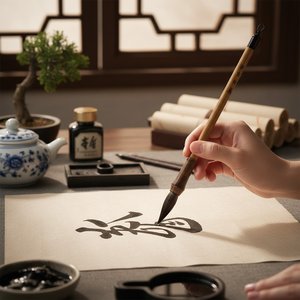
The Timeless Beauty of Chinese Calligraphy: An Exploration of Ink, Spirit, and the Art of the Brush
Embark on a profound journey through the soul of Chinese calligraphy. Explore the historical mastery of ink, brush, and script, from ancient Zhuanshu to elegant running script, and discover how this timeless art form reflects the enduring spirit of classical East Asian aesthetics.

Mastering Ink on Paper: The Timeless Art of Precision, Flow, and Calligraphic Heritage
Explore the profound mastery of ink on paper. From Japanese haiku traditions to Ming Dynasty calligraphy, discover the delicate balance of precision and flow that defines this timeless art form through an expert historical lens.
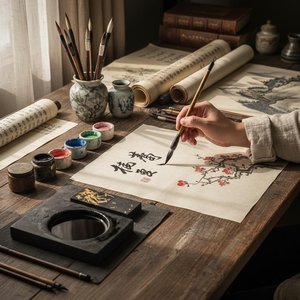
The Alchemy of Ink: Mastering the Timeless Beauty and Art History of Paper and Brush
Embark on a sophisticated exploration of ink wash painting and Sumi-e. Uncover the profound historical lineages, Zen philosophies, and technical mastery behind this timeless medium in our authoritative guide for fine art enthusiasts.


