In echtem Maßstab anzeigen
 Versenden als Grußkarte
 Teilen
 Details anzeigen
 Leitfaden öffnen

 Herunterladen
 Ähnliche Objekte
 Röntgenaufnahme
 Diashow
 Besucherstatistiken
St Cecilia
 Acryl auf Leinwand
- Wandkunst
- Baroque Kunst
 1627
1627- Renaissance
 118.0 x 88.0 cm
 Museo del Prado
 Mehr anzeigen
Handgefertigte Ölreproduktion
Handgemaltes Ölgemälde auf Leinwand in Ihrer Wunschgröße und mit Rahmen, auf Bestellung von unseren Künstlern angefertigt. ( Zum Druck wechseln Zum digitalen Bild wechseln)




P118B €10

P118H €10

P118W €10

P438Z €10

P508JH €12

P508YH €12

P805H €10

P805Z €10

P919BZ €10

P919G €10

P919XJ €10

P959ZH €10

P968JZ €12

W106C €8

W218G €10

W218JH €8

W218Y €10

W307PJ €10

W316G €10

W316PJ €8

W316Y €10

W398PJ €8

W4111J €10

W500HY €15

W500JH €15

W692G €12

W849H €8

W940BG €15

W953PJ €8




Wählen Sie aus unseren vordefinierten Formaten, die den ursprünglichen Proportionen des Kunstwerks entsprechen.

Geben Sie die Breite und die Höhe an, die Sie für Ihren Rahmen oder Ihre Wand benötigen. Da dieses Werk handgemalt ist, kann der Künstler bei einer anderen Form etwas mehr um das Bild herum malen oder etwas abschneiden – Sie entscheiden. Wir senden Ihnen ein digitales Mockup zur Freigabe, bevor mit dem Malen begonnen wird. Das auf dieser Seite gezeigte Bild stellt nicht das tatsächliche Ergebnis dar – dies tut nur das Mockup.
Nach der Bestellung wird das OriginalUniqueArt.com-Team dem Kunden Anweisungen per E-Mail zusenden und eine Mockup-Vorschau bereitstellen.
Weltweiter Versand () in nur 3 bis 4 Wochen statt der üblichen 5 Wochen. (18 Oktober). Keine Kompromisse bei der Qualität.

Kostenloser weltweiter Expressversand

Hochwertige Leinenleinwand

Vollständiger Versicherungsschutz beim Versand

Zollgebühren-Rückerstattungsgarantie

Garantie für exakte Farbtreue

100-tägiges Rückgaberecht (nur bei Mängeln)

100% Geld-zurück-Garantie

Angebot für Mengenrabatt
 Die Glasoption ist nur für Größen unter 110 cm verfügbar.

St Cecilia
Reproduktionsmedium
Format der Reproduktion
-


Gesamtpreis
€ 261
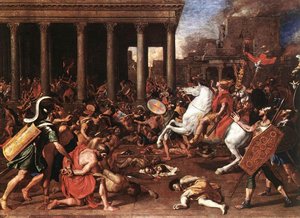
St Cecilia: A Symphony of Classical Grace
Nicolas Poussin’s St. Cecilia transcends mere depiction; it embodies the very essence of Neoclassical idealism—a testament to Poussin’s unparalleled ability to distill complex theological concepts into breathtaking visual harmony.
Painted in 1627 during his formative years in Rome, this monumental oil on canvas resides within the hallowed halls of Museo del Prado, Madrid, where it continues to captivate viewers with its serene beauty and profound spiritual resonance. The painting’s enduring fame stems not only from its artistic merit but also from its place within a broader narrative of European art history.
The Composition: Balance and Narrative
At first glance, St. Cecilia presents a meticulously crafted scene—Saint Cecilia, the patron saint of musicians and composers, is portrayed playing an organ while surrounded by children. This seemingly simple arrangement serves as a cornerstone for Poussin’s masterful storytelling.
The artist employs a pyramidal composition, anchoring St. Cecilia at its apex and distributing the supporting figures—the children—across the base. This deliberate structuring reinforces the sense of stability and grandeur characteristic of Neoclassical art, mirroring the architectural principles prevalent during the period. The organ itself dominates the visual space, symbolizing St. Cecilia’s devotion and artistic vocation.
Artistic Significance: Classical Idealization
Poussin's stylistic approach distinguishes him from his contemporaries—a deliberate rejection of Baroque exuberance in favor of clarity and restraint. He achieves this through a technique rooted in disegno, the Italian concept of “drawing,” prioritizing careful observation and idealized representation.
The artist skillfully blends realism with classical ideals, capturing the textures of drapery and skin with remarkable accuracy while simultaneously elevating figures to an ethereal beauty reminiscent of ancient sculptures. The muted palette—dominated by earthy tones—contributes to the painting’s contemplative mood, inviting viewers into a realm of spiritual contemplation.
Contextualizing St Cecilia: Poussin's Wider Legacy
To fully appreciate St. Cecilia’s significance, it is crucial to consider Poussin's broader artistic output—particularly his monumental frescoes adorning the Panthéon in Paris and his depiction of Apollo and Vulcan.
These works demonstrate Poussin’s unwavering commitment to classical themes and stylistic conventions—a legacy that profoundly influenced subsequent generations of artists, including David and Cézanne. Like Velázquez's masterpieces, Las Meninas and Coronation of the Virgin exemplify Poussin’s meticulous attention to detail and compositional balance—qualities that continue to inspire admiration today.
OriginalUniqueArt.com offers exceptional reproductions of St. Cecilia—allowing art enthusiasts to experience the sublime beauty and intellectual depth of this iconic artwork firsthand. Explore more of Poussin’s oeuvre at Nicolas Poussin: St. Cecilia and Nicolas Poussin: Parnasus.
Fragen & Antworten
Welche Reproduktionsgröße wird für "St Cecilia" von Nikolaus Poussin empfohlen?
Die empfohlene Druckgröße für "St Cecilia" von Nikolaus Poussin ist Großformatig.
Welcher Künstler und welcher Stil stehen hinter "St Cecilia"?
Nikolaus Poussin schuf „St Cecilia“ im Rahmen der Baroque Kunst-Bewegung.
Wie intensiv sind die Farben von "St Cecilia"?
"St Cecilia" von Nikolaus Poussin ist mit einer Sättigung von Klare Farbsättigung und einer Intensität von Ausgewogen festgehalten.
Biografie des Künstlers
frühes Leben und Ausbildung
Nikos Poussin, geboren im Juni 1594, war die Quintessenz der französischen Barockmalerei des Klassikers. Obwohl er den Großteil seiner Karriere in Rom verbrachte, blieb er tief in den französischen künstlerischen Traditionen verwurzelt. Seine frühen Tage als Maler waren von Unsicherheit umhüllt, aber bereits im Jahr 1612 hatte er formale Studien in Paris begonnen und sich von weniger bekannten Künstlern beeinflussen lassen, bevor er 1624 nach Rom zog.Künstlerischer Stil und Einflüsse
Poussins Ästhetik, die für ihre kohärente Komposition und Priorisierung der Linearität bekannt ist, legte einen Präzedenzfall fest, der Meister wie Jacques-Louis David und Paul Cézanne noch bis ins 20. Jahrhundert beeinflusste. Sein unverwechselbarer Stil kristallisierte sich in herausragenden Werken wie Der Tod des Germanikers und seiner einflussreichen Sieben Sakramente-Serie.Bekannte Werke und Museen
- Nikos Poussin: Selbstporträt 1 (Barock, Öl), ein Beweis für seine Meisterschaft in der Technik.
- Bacchanten vor einem Tempel (74 x 101 cm, Legion of Honor, San Francisco, USA, Öl auf Leinwand), das seine Fähigkeit zur Balance von Komposition und Erzählung demonstriert.
- Das Musée des Beaux-Arts de Carcassonne, ein Muss für Kunstliebhaber, beherbergt eine beeindruckende Sammlung westlicher Gemälde vom 17. bis zum 20. Jahrhundert.
Vermächtnis und Einfluss
Poussins Loyalität blieb Rom, wo er schließlich darauf konzentrierte sich, weitreichende Landschaften in seine Kunst zu integrieren. Seine Reife als Künstler wird in Werken wie Orion, der von der Sonne geblendet sucht und Die Jahreszeiten verkörpert, die eine Ära strenger Komposition einleitet, die von der ruhigen Schönheit der Natur durchdrungen ist.Erfahren Sie mehr mit OriginalUniqueArt.com
Entdecken Sie die Meisterwerke des Musée France und tauchen Sie ein in die Welt der französischen Barockmalerei mit Musée Picasso, Musée des Beaux-Arts de Carcassonne und anderen bemerkenswerten Museen. Besuchen Sie Nikos Poussins Seite auf OriginalUniqueArt.com, um mehr über seine Werke zu erfahren und den Kontext, in dem sie entstanden sind.Referenzen

Nikolaus Poussin
1594 - 1665 , Frankreich
Eckdaten zum Künstler
- Bemerkenswerte Werke:
- Der Tod des Germanicus
- Die Sieben Sakramente
- Eine römische Straße
- Orion auf der Suche nach der Sonne
- Die Jahreszeiten
- Geburtsdatum: Juni 1594
- Geburtsort: Le Havre, Frankreich
- Künstler, Die Ihn Beeinflussten:
- Raphael
- Titian
- Künstlerische Bewegung: Barock
- Nationalität: Französisch
- Todatum: 1665
- Vollständiger Name: Nicolas Poussin
- Von Ihm Beeinflusste Künstler:
- Jacques-Louis David
- Paul Cézanne
Verwandte Artikel
Baroque Classicism: Reconciling Drama & Order in 17th-Century Art
Explore the captivating world of Baroque Classicism! Discover its history, key artists like Caravaggio & Rubens, and defining characteristics. Expert insights & high-quality reproductions at OriginalUniqueArt.

El Greco: Die 25 Meisterwerke – Kunst für Ihr Zuhause | OriginalUniqueArt
Entdecken Sie die 25 bedeutendsten Meisterwerke von El Greco! Erleben Sie die spirituelle Tiefe und den dramatischen Stil des griechischen Malers. Hochwertige Kunstdrucke & Inspiration für Ihr Zuhause auf OriginalUniqueArt.com.
Barocke Meisterwerke: Die 10 Gemälde, die eine Epoche prägten | OriginalUniqueArt
Entdecken Sie die 10 prägendsten Meisterwerke des Barock! Von Caravaggio bis Rembrandt – erleben Sie die Dramatik, Pracht & Emotionen dieser Epoche. Hochwertige Reproduktionen auf OriginalUniqueArt.com.
Museo del Prado: Die 25 Meisterwerke – Kunst für Ihr Zuhause | OriginalUniqueArt
Entdecken Sie die 25 Meisterwerke des Museo del Prado! Von Velázquez bis Goya – Kunstgeschichte, Techniken & Geschichten berühmter Gemälde. Finden Sie hochwertige Reproduktionen für Ihr Zuhause auf OriginalUniqueArt.com.
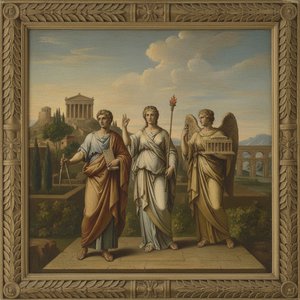
Nicolas Poussin: Klassizismus, Allegorie und Ordnung in der französischen Malerei des 17. Jahrhunderts
Entdecken Sie Nicolas Poussins Meisterwerke und seinen Einfluss auf den französischen Klassizismus. Analyse von Allegorie, Komposition und der Bedeutung seiner Kunst im 17. Jahrhundert.