
 Vorschau anzeigen
 Versenden
 Teilen
 Details anzeigen

 Herunterladen
 Ähnliche Objekte
 Röntgenaufnahme
 Diashow
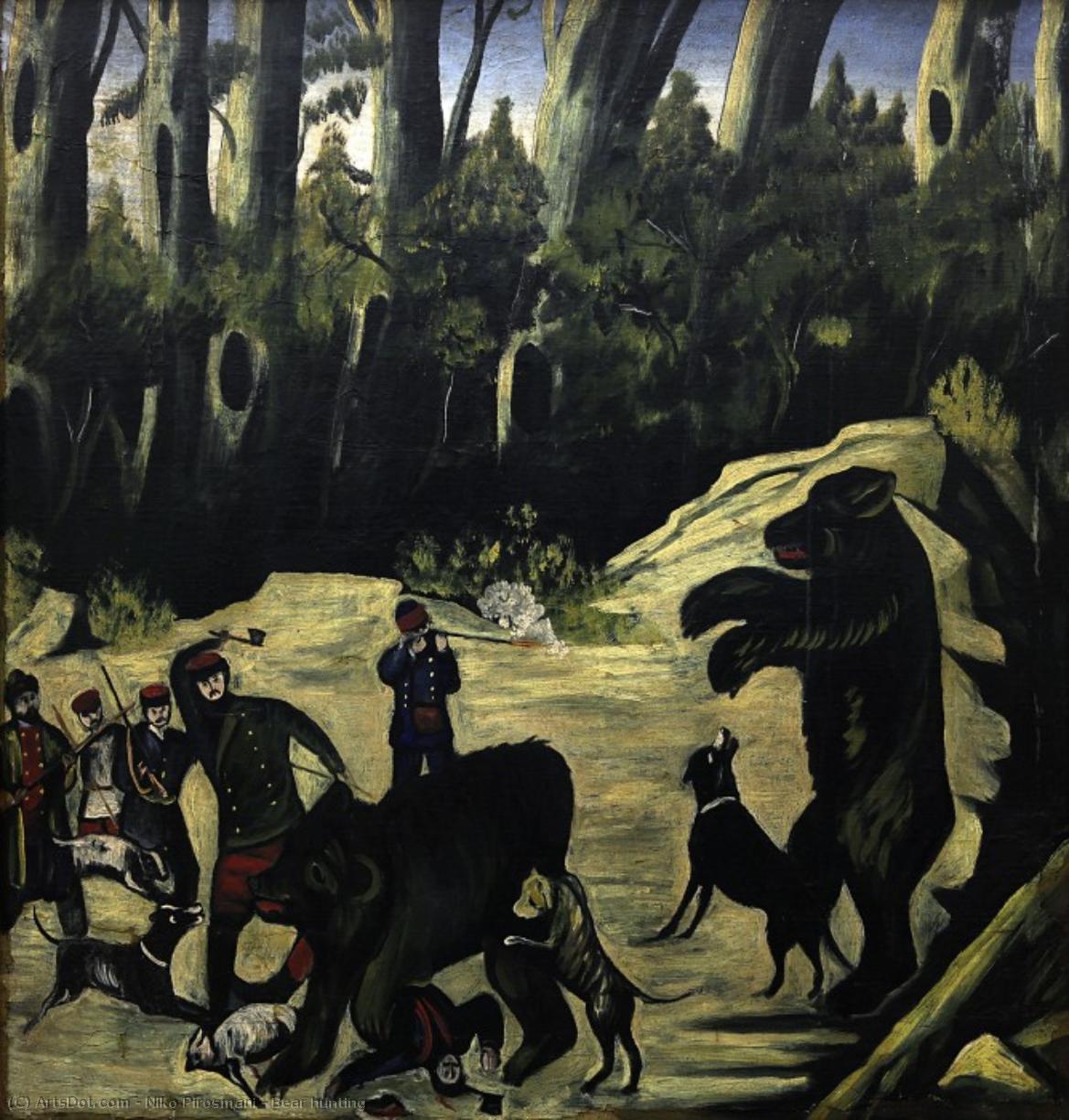
Bear hunting
 Oil On Canvas
- WallArt
- Primitivism
 107.0 x 57.0 cm
 Kunstmuseum Georgiens
 Weiterlesen
Handgefertigte Ölreproduktion
Handgemaltes Ölgemälde auf Leinwand in Ihrer Wunschgröße und mit Rahmen, auf Bestellung von unseren Künstlern angefertigt. ( Druck bestellen Bild kaufen)




P118B $10

P118H $10

P118W $10

P438Z $10

P508JH $12

P508YH $12

P805H $10

P805Z $10

P919BZ $10

P919G $10

P919XJ $10

P959ZH $10

P968JZ $12

W106C $8

W218G $10

W218JH $8

W218Y $10

W307PJ $10

W316G $10

W316PJ $8

W316Y $10

W398PJ $8

W4111J $10

W500HY $15

W500JH $15

W692G $12

W849H $8

W940BG $15

W953PJ $8




Wählen Sie aus unseren vordefinierten Formaten, die den ursprünglichen Proportionen des Kunstwerks entsprechen.

Sie können Ihre eigenen Maße eingeben, um einen bestimmten Rahmen oder Platz auszufüllen. Wenn die gewählte Größe nicht den Proportionen des Originalbildes entspricht, werden wir das Kunstwerk entweder beschneiden oder das Gemälde durch zusätzliche, handgemalte Elemente erweitern. Ein digitales Mockup wird Ihnen zur Genehmigung zugesandt, bevor die Produktion beginnt.
Bitte beachten Sie, dass die Bildschirmvorschau nicht die tatsächliche Beschneidung oder Erweiterung widerspiegelt. Nur das Mockup zeigt die endgültige Komposition exakt an.
Obwohl Sondermaße verfügbar sind, empfehlen wir, eine Größe aus der vordefinierten Liste zu wählen, um die ursprünglichen Proportionen beizubehalten.
Nach der Bestellung wird das OriginalUniqueArt.com-Team dem Kunden Anweisungen per E-Mail zusenden und eine Mockup-Vorschau bereitstellen.
Weltweiter Versand () in nur 3 bis 4 Wochen statt der üblichen 5 Wochen. (18 August). Keine Kompromisse bei der Qualität.

Kostenloser weltweiter Expressversand

Hochwertige Leinenleinwand

Umfassender Versicherungsschutz beim Versand

Zollgebühren-Rückerstattungsgarantie

Garantie für exakte Farbtreue

60 Tage Rückgaberecht (nur bei Mängeln)

100% Geld-zurück-Garantie

Mengenrabatt verfügbar
 Die Glasoption ist nur für Größen unter 110 cm verfügbar.

Bear hunting
Art der Reproduktion
Format der Reproduktion
-


Gesamtpreis
$ 400
Beschreibung des Kunstwerks
A Savage Symphony in Oilcloth: Niko Pirosmani’s “Bear Hunting”
Niko Pirosmani, a largely forgotten titan of Georgian art, possessed an extraordinary ability to distill the essence of rural life and primal emotion onto humble oilcloth canvases. His work, often dismissed as naive or primitive during his lifetime, now stands as a testament to raw honesty and a uniquely captivating vision. “Bear Hunting,” painted in the 1890s, is arguably Pirosmani’s most dramatic and compelling piece – a visceral depiction of a hunting expedition that transcends mere representation, plunging the viewer directly into the heart of Georgian wilderness and the brutal beauty of its traditions.
The scene unfolds within a dense, almost claustrophobic forest. A group of French chasseurs, clad in meticulously rendered uniforms of dark blue and brown, pursue a colossal bison – an animal rendered with astonishing power and scale. The composition is deliberately chaotic; figures are crammed together, limbs tangle, and the bison dominates the frame, its immense form dwarfing the hunters below. Pirosmani eschews traditional perspective, favoring instead a flattened, frontal approach that intensifies the drama and immediacy of the action. Lines are bold and directional, guiding the eye relentlessly across the canvas, mirroring the hunters’ desperate pursuit.
The Primitivist Palette: Color and Texture
Pirosmani's distinctive style is immediately recognizable through his masterful use of color and texture. He employs a restricted palette dominated by deep greens, earthy browns, and muted blues – colors that evoke the dampness and shadow of the forest floor. These somber tones are punctuated by flashes of brighter hues—the crimson of blood (implied), the ochre of the bison’s hide, and the occasional splash of yellow or white to highlight key figures. Crucially, Pirosmani worked on oilcloth, a readily available and inexpensive material in Georgia, which lends his paintings a unique tactile quality. The thick, impasto brushstrokes are visible throughout the composition, creating a palpable sense of physicality – you can almost feel the roughness of the bark beneath your fingers and the weight of the hunters’ clothing.
The technique itself is deliberately rough-hewn, reflecting Pirosmani's lack of formal training. He eschewed meticulous detail in favor of capturing the *feeling* of the scene – the tension, the urgency, the raw energy of the hunt. This approach aligns perfectly with the principles of Primitivism, a movement that sought to strip away academic conventions and return to a more direct, emotionally charged form of expression.
Symbolism of the Hunt: Power, Tradition, and Mortality
“Bear Hunting” is far more than just a depiction of a hunting scene; it’s laden with symbolic meaning. The hunt itself represents power, control, and the enduring traditions of Georgian rural life. For centuries, hunting had been a vital part of the region's economy and culture, providing sustenance and reinforcing social hierarchies. However, Pirosmani doesn’t glorify this activity. Instead, he presents it with a stark realism that acknowledges its inherent violence and potential for destruction.
The massive bison, a symbol of strength and wildness, embodies the forces of nature that the hunters seek to subdue. The implied bloodshed – hinted at through subtle color choices—underscores the cost of this conquest. Furthermore, Pirosmani’s unflinching portrayal of human figures engaged in such a brutal act raises questions about humanity's relationship with the natural world and the consequences of unchecked ambition. The painting subtly evokes themes of mortality and the fleeting nature of life, mirroring the precariousness of both hunter and hunted.
A Window into Georgian Soul: Pirosmani’s Legacy
Niko Pirosmani's work offers a rare glimpse into the soul of Georgia in the late 19th century. His paintings are not merely aesthetically pleasing; they are windows into a world of hardship, resilience, and profound connection to the land. Rediscovered in the mid-20th century, Pirosmani’s art has since gained international recognition as a cornerstone of Georgian primitivism and a powerful example of outsider art. Reproductions of “Bear Hunting” – available through OriginalUniqueArt – allow us to experience this extraordinary vision firsthand, inviting us to contemplate the enduring power of raw emotion and the timeless beauty of the Georgian landscape.
Über den Künstler
Frühes Leben und Karriere
Niko Pirosmani, ein georgischer Primitivist-Maler, wurde 1862 in dem Dorf Mirzaani, Provinz Kakheti, geboren. Seine Eltern, Aslan Pirosmanashvili und Tekle Toklikishvili, waren Bauern, die einen kleinen Weinberg besaßen. Nach dem Verlust seiner Eltern wurde Pirosmani von seinen beiden älteren Schwestern versorgt.Künstlerischer Stil und Themen
Pirosmanis künstlerischer Stil ist durch seine naive und primitivistische Natur gekennzeichnet, oft mit alltäglichen Szenen aus dem georgischen Leben. Seine Gemälde, meist auf Ölzeug ausgeführt, zeigen seine einzigartige kompositorische Überlegung und die frontale Platzierung der Figuren. Pirosmani hatte eine Vorliebe für die Natur und das Landleben und verwendete selten Stadtlandschaften in seinen Werken.Wichtige Werke und Ausstellungen
Zu Pirosmanis bemerkenswertesten Werken gehören:- Musha mit einem Weinkrug, ein Gemälde, das seine Fähigkeit zeigt, die Essenz der georgischen Kultur einzufangen.
- Georgische Hochzeit, eine Darstellung traditioneller georgischer Hochzeitszeremonien.
- Porträt von Zhdanevich, ein Porträt des russischen Dichters Michail Le-Dantyu, das die Begeisterung von Kirill Zdanevich und seinem Bruder Ilia Zdanevich weckte.
Vermächtnis und posthum Anerkennung
Pirosmanis Leben war von Armut geprägt, aber seine posthum Anerkennung ist bedeutend. Seine Arbeit wurde in verschiedenen Ausstellungen gefeiert, darunter die erste große Ausstellung georgischer Maler im Jahr 1918. Heute werden seine Gemälde im Kunstmuseum Georgiens und dem historisch-ethnografischen Museum von Sighnaghi ausgestellt und haben über 350.000 Besucher angezogen. Sehen Sie Niko Pirosmanis Kunstwerke auf OriginalUniqueArt Lesen Sie mehr über Niko Pirosmani auf Wikipedia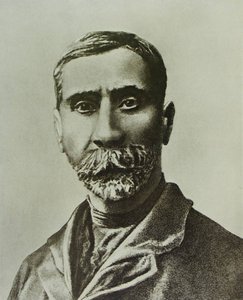
Niko Pirosmani
1862 - 1918 , Georgien
Kurzinfos
- Andere Namen: Nikoláy Aslánovich Pirosmanashvíli
- Bemerkenswerte Werke:
- Muscha mit einem Weinkrug
- Georgische Hochzeit
- Porträt von Zhdanevich
- Geburtsdatum: 1862
- Geburtsort (Stadt, Land): Mtskheta, Georgien
- Künstlerische Bewegung Oder Stil: Primitivismus, Naive Kunst
- Nationalität: Georgisch
- Sterbedatum: 1918
- Vollständiger Name: Niko Pirosmani
Ähnliche Artikel
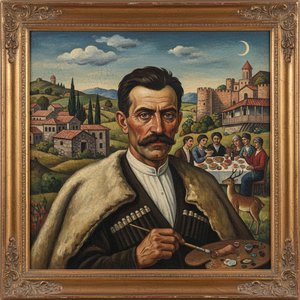
Niko Pirosmani: Leben, Werk und die Poetik eines georgischen Außenseiters
Entdecken Sie das faszinierende Leben und Werk des georgischen Malers Niko Pirosmani! Erfahren Sie mehr über seinen einzigartigen Stil, seine Motive und sein bleibendes Vermächtnis. Jetzt lesen!

The Enduring Legacy of Oil on Canvas: Technique, History & Aesthetic Impact
Explore the rich history & techniques of oil painting – from Renaissance masters to Impressionism. Discover pigments, layering methods, and why this timeless medium endures. Expert insights for artists & art enthusiasts.

Öl auf Leinwand: Eine historische und technische Erkundung eines zeitlosen künstlerischen Mediums
Entdecken Sie die faszinierende Welt der Ölmalerei! Von historischen Techniken bis zur modernen Anwendung – wir bieten Expertenwissen, Restaurierungstipps und hochwertige Reproduktionen. Jetzt informieren!

The Enduring Power of Painting: A Historical & Contemporary Exploration of Form and Emotion
Explore the rich history & enduring techniques of oil painting with OriginalUniqueArt. Discover masterpieces, learn about art collecting, and find authentic handmade reproductions crafted by skilled artists.

Das bleibende Erbe der Ölmalerei: Technik, Geschichte und zeitgenössische Praxis
Entdecken Sie die faszinierende Geschichte der Ölmalerei – von den frühen Techniken bis zur modernen Kunst. Expertenwissen, detaillierte Analysen und Inspiration für Sammler & Kunstliebhaber.



