() ·

Ein Gemälde, von Hand für Sie geschaffen

Apollo

Handgefertigte Ölreproduktion

Handgemaltes Ölgemälde auf Leinwand in Ihrer Wunschgröße und mit Rahmen, auf Bestellung von unseren Künstlern angefertigt. ( Zum Druck wechseln Zum digitalen Bild wechseln)

Beschreibung des Sammlerstücks

Admire Nicolas Coustou's 'Apollo,' a dynamic Baroque sculpture capturing the Greek god’s movement and grace. This exquisite marble masterpiece showcases classical ideals and dramatic artistry, perfect for art enthusiasts.

Künstlerbiografie

Nicolas Coustou (1658-1733): Französischer Barockbildhauer, der für dynamische Werke in Versailles und Notre Dame bekannt ist. Entdecken Sie 'La Seine et la Marne' und seinen klassischen Einfluss.

ab ·

Kapitel 1

Welche Größe soll es haben?

Wischen Sie, um die Größe zu ändern; das Bild auf der linken Seite zeigt den Rahmen in seiner tatsächlichen Breite. Die Proportionen des Originals bleiben erhalten.

Standardformat
individuell anpassbar
CM
INCH

Wählen Sie aus unseren vordefinierten Formaten, die den ursprünglichen Proportionen des Kunstwerks entsprechen.

Breite
Höhe

Geben Sie die Breite und die Höhe an, die Sie für Ihren Rahmen oder Ihre Wand benötigen. Da dieses Werk handgemalt ist, kann der Künstler bei einer anderen Form etwas mehr um das Bild herum malen oder etwas abschneiden – Sie entscheiden. Wir senden Ihnen ein digitales Mockup zur Freigabe, bevor mit dem Malen begonnen wird. Das auf dieser Seite gezeigte Bild stellt nicht das tatsächliche Ergebnis dar – dies tut nur das Mockup.

Kapitel 2

Wie soll es geliefert werden?

Wählen Sie die Kanten der Leinwand aus

Wählen Sie Ihren Rahmen

Corner sample of the WhiteWrap canvas edge finish, stretched on Massivholz bars
Weißer Rand €1
Corner sample of the BlurSideWrap canvas edge finish, stretched on Massivholz bars
verlaufende Kanten €1
Corner sample of the ExtendedWrap canvas edge finish, stretched on Massivholz bars
Umrandung €1
Corner sample of the P118B picture frame: formgepresstes Polystyrol, 5 cm wide and 3 cm thick
P118B €10
Corner sample of the P118H picture frame: formgepresstes Polystyrol, 5 cm wide and 3 cm thick
P118H €10
Corner sample of the P118W picture frame: formgepresstes Polystyrol, 5 cm wide and 3 cm thick
P118W €10
Corner sample of the P438Z picture frame: formgepresstes Polystyrol, 5.5 cm wide and 3.5 cm thick
P438Z €10
Corner sample of the P508JH picture frame: formgepresstes Polystyrol, 7 cm wide and 3.5 cm thick
P508JH €12
Corner sample of the P508YH picture frame: formgepresstes Polystyrol, 7 cm wide and 3.5 cm thick
P508YH €12
Corner sample of the P805H picture frame: formgepresstes Polystyrol, 5 cm wide and 3.5 cm thick
P805H €10
Corner sample of the P805Z picture frame: formgepresstes Polystyrol, 5 cm wide and 3.5 cm thick
P805Z €10
Corner sample of the P919BZ picture frame: formgepresstes Polystyrol, 7 cm wide and 3.5 cm thick
P919BZ €10
Corner sample of the P919G picture frame: formgepresstes Polystyrol, 7 cm wide and 3.5 cm thick
P919G €10
Corner sample of the P919XJ picture frame: formgepresstes Polystyrol, 7 cm wide and 3.5 cm thick
P919XJ €10
Corner sample of the P959ZH picture frame: formgepresstes Polystyrol, 5 cm wide and 3 cm thick
P959ZH €10
Corner sample of the P968JZ picture frame: formgepresstes Polystyrol, 6 cm wide and 4 cm thick
P968JZ €12
Corner sample of the W106C picture frame: Massivholz, 5 cm wide and 3 cm thick
W106C €8
Corner sample of the W218G picture frame: Massivholz, 5 cm wide and 3 cm thick
W218G €10
Corner sample of the W218JH picture frame: Massivholz, 5 cm wide and 3 cm thick
W218JH €8
Corner sample of the W218Y picture frame: Massivholz, 5 cm wide and 3 cm thick
W218Y €10
Corner sample of the W307PJ picture frame: Massivholz, 6 cm wide and 3 cm thick
W307PJ €10
Corner sample of the W316G picture frame: Massivholz, 6 cm wide and 3 cm thick
W316G €10
Corner sample of the W316PJ picture frame: Massivholz, 6 cm wide and 3 cm thick
W316PJ €8
Corner sample of the W316Y picture frame: Massivholz, 6 cm wide and 3 cm thick
W316Y €10
Corner sample of the W398PJ picture frame: Massivholz, 5 cm wide and 3 cm thick
W398PJ €8
Corner sample of the W4111J picture frame: Massivholz, 6.5 cm wide and 3.5 cm thick
W4111J €10
Corner sample of the W500HY picture frame: Massivholz, 7 cm wide and 5 cm thick
W500HY €15
Corner sample of the W500JH picture frame: Massivholz, 7 cm wide and 5 cm thick
W500JH €15
Corner sample of the W692G picture frame: Massivholz, 8 cm wide and 4 cm thick
W692G €12
Corner sample of the W849H picture frame: Massivholz, 5 cm wide and 3 cm thick
W849H €8
Corner sample of the W940BG picture frame: Massivholz, 7.5 cm wide and 4.5 cm thick
W940BG €15
Corner sample of the W953PJ picture frame: Massivholz, 6 cm wide and 3.5 cm thick
W953PJ €8
Corner sample of the H24-GOLD picture frame: geschnitztes Holz mit Gesso, 10 cm wide and 6 cm thick
H24-GOLD €30
Corner sample of the H24-SILVER picture frame: geschnitztes Holz mit Gesso, 10 cm wide and 6 cm thick
H24-SILVER €30
Corner sample of the H36-GOLD picture frame: geschnitztes Holz mit Gesso, 15 cm wide and 6.5 cm thick
H36-GOLD €45
Corner sample of the H36-SILVER picture frame: geschnitztes Holz mit Gesso, 15 cm wide and 6.5 cm thick
H36-SILVER €45

Profil: . Gesamtgröße mit Rahmen: .

Kapitel 3

Wer malt es, und sollte etwas geändert werden?

Beispiele für Anpassungsmöglichkeiten: Gesicht durch Kundenfoto ersetzen; Haustier hinzufügen (z. B. Katze durch Hund ersetzen); Versteckte Botschaft im Hintergrund einfügen; Hintergrundlandschaft oder Elemente ändern.
Nach der Bestellung wird das Team von OriginalUniqueArt.com den Kunden per E-Mail kontaktieren, um Anweisungen einzuholen und eine Vorschau des Entwurfs bereitzustellen

Weltweiter Versand () in nur 3 bis 4 Wochen statt der üblichen 5 Wochen. (7 November). Keine Kompromisse bei der Qualität.

Kapitel 4

Der letzte Schliff

Ein Namensschild, wie im Museum?

Details der gravierten Bronzetafel

This elegant plaque features the artist's name and the title of the artwork, finely engraved for a timeless presentation.

It is made from bronze with a refined, elegant finish. The text is precisely laser-engraved for a sharp and permanent result. Measuring 9x2 cm, the plaque is compact yet easy to read. It's built to be durable and scratch-resistant, offering a professional, museum-quality look. Mounting is simple thanks to the included adhesive backing.

Details zur Acrylglas-Plakette (transparent)

The plaque includes essential engraved details such as the artist's name, the title of the artwork, the date it was created, the type of media used-like oil on canvas or watercolor-a brief description of the piece, and a QR code that links to the complete artwork information.

It is crafted from clear acrylic, offering a sleek, modern appearance. The text is UV-engraved in black to ensure strong visual contrast. With a size of 10x15 cm, it ensures optimal readability. It comes equipped with two metal hooks for secure wall mounting. The plaque is designed to be weather-resistant, making it suitable for various environments, and it includes interactive features that work seamlessly with smartphone scanning.

Details zur schwarzen Acryltafel

This elegant plaque includes engraved information such as the artist's name, the title of the artwork, the date it was created, the type of media used (like oil on canvas or watercolor), a short description of the artwork, and a QR code for quick access to more information.

The plaque itself is made from refined black acrylic with a premium finish. The text is laser-engraved in white for high contrast and readability. Its size is 10x15 cm, designed to be easy to read. It comes with two metal hooks for professional mounting. The design is sleek and fits any interior style. It is also weather-resistant and durable, with built-in digital integration for mobile compatibility.

Ein Schutzlack?

Bis wann benötigen Sie es?

Kapitel 5

Ihr Gemälde, wie von Ihnen bestellt

Apollo

Art der Reproduktion

Format der Reproduktion

-

Erstklassige Meisterkünstler

Mehr Detailtiefe, Raffinesse und zusätzliche Produktionszeit

-

Rahmen für Reproduktionen

-

-

Bei Kunstwerken oder Reproduktionen, die an einer Seite größer als 105 cm (ca. 41 Zoll) sind, wird der Rahmen zerlegt als Bausatz geliefert. Diese Methode gewährleistet eine sichere Zustellung und verhindert Schäden während des Transports.

Professionelle Montage erforderlich – dies ist kein DIY-Produkt.
Der Bausatz muss von einem erfahrenen professionellen Rahmenmacher zusammengebaut und die Leinwand gespannt werden. Hierfür werden Holzleim (nicht im Lieferumfang enthalten), eine Leinwandspannzange sowie Klemmen benötigt, um die Keilleisten während des Trocknungsvorgangs rechtwinklig zu halten. Eine unsachgemäße Montage oder eine ungleichmäßige Spannung der Leinwand kann das Kunstwerk dauerhaft beschädigen und ist nicht durch unsere Garantie abgedeckt.

  • Alle Vollholzkomponenten sind enthalten, präzise auf Maß zugeschnitten.

  • Der Zusammenbau erfolgt mit den mitgelieferten Schrauben sowie Holzkleber für die Eckverbindungen, der nicht im Lieferumfang enthalten ist und vom Rahmenbauer selbst beschafft werden muss.

  • Professionelles Werkzeug ist erforderlich und nicht im Lieferumfang enthalten: eine Keilrahmenzange (Spannwerkzeug) sowie Klammern, um die Leisten während der Trocknungszeit des Klebers rechtwinklig zu fixieren.

Wichtiger Hinweis:
Für die Eckverbindungen wird Holzleim benötigt, die Leisten müssen mit Zwingen fixiert werden, bis der Leim vollständig getrocknet ist, und das Spannen der Leinwand auf dem fertigen Rahmen erfordert eine Keilrahmen-Zange. Keines dieser Utensilien ist im Set enthalten. Bitte stellen Sie sicher, dass ein erfahrener Rahmenmacher zur Verfügung steht, bevor Sie diese Größe bestellen.

Beschriftung

-

-

Schutzlackierung

Glanzlack (verstärkt die Farben, schützt vor Licht und Feuchtigkeit)

-

Mein Kunstwerk personalisieren

Beispiele für Anpassungsmöglichkeiten: Gesicht durch Kundenfoto ersetzen; Haustier hinzufügen (z. B. Katze durch Hund ersetzen); Versteckte Nachricht im Hintergrund einfügen; Hintergrundlandschaft oder -elemente ändern.

-

Eilt sehr

Weltweiter Versand () in nur 3 bis 4 Wochen statt der üblichen 5 Wochen. (7 November). Keine Kompromisse bei der Qualität.

-

Expressversand

Weltweiter Versand () innerhalb von 5 Wochen. (14 November).

Inklusive Versand

Endpreis

€ 268

Gesamtpreis € 268

Die Glasoption ist nur für Größen unter 110 cm verfügbar.

In jeder Bestellung enthalten

  • Kostenloser weltweiter Expressversand
  • Hochwertige Leinenleinwand
  • Umfassender Versicherungsschutz beim Versand
  • Zollgebühren-Rückerstattungsgarantie
  • Garantie für exakte Farbtreue
  • 100 Tage Rückgaberecht (nur bei Mängeln)
  • 100% Geld-zurück-Garantie
  • Mengenrabatt verfügbar

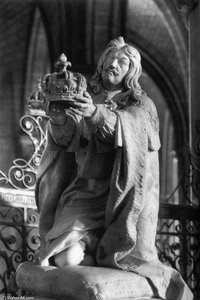
The Dynamic Apollo: A Baroque Masterpiece by Nicolas Coustou

Nicolas Coustou’s “Apollo,” crafted in 1711, is more than just a sculpture; it's a vibrant embodiment of the dynamism and theatricality characteristic of French Baroque art. This remarkable piece, currently housed within the esteemed collections of the Louvre Museum in Paris, captures the Greek god Apollo in a moment of arresting movement – seemingly mid-stride, poised for action, yet radiating an almost serene power. The photograph itself offers a compelling glimpse into Coustou’s meticulous technique and his profound understanding of classical form.

Coustou, born in Lyon in 1658 and tragically passing away in Paris in 1733, was deeply rooted in the artistic traditions of his family. His lineage included woodcarvers and sculptors, providing him with an invaluable foundation in craftsmanship. He honed his skills under Charles Antoine Coysevox, a pivotal figure in establishing the Académie Royale de Peinture et de Sculpture, immersing himself within the heart of Parisian artistic innovation. This environment fostered a deep appreciation for idealized human anatomy, flowing drapery, and dramatic composition – elements that are exquisitely realized in “Apollo.”

A Study in Classical Idealism and Baroque Drama

The sculpture immediately draws the eye with its masterful depiction of Apollo’s physique. Coustou adheres to the classical ideal, rendering the god's musculature with a remarkable degree of realism while simultaneously imbuing him with an almost superhuman grace. The short tunic clings to his form, subtly revealing the strength and power beneath, while the flowing drapery cascades around him, suggesting both movement and the weightlessness of divine presence. Note the deliberate contrapposto stance – a subtle shift in weight that creates a sense of balance and dynamism, crucial for conveying motion within a static medium.

However, “Apollo” is far from a mere revival of classical forms. Coustou infuses the sculpture with the hallmarks of Baroque art: a heightened sense of drama, theatrical lighting (though simulated in the photograph), and an emphasis on emotional expression. The raised arm, though not explicitly holding a lyre or bow – details often associated with Apollo – suggests a gesture of command, a declaration of his authority over the arts and the heavens. The overall effect is one of intense energy and captivating presence.

Technique and Materials: A Bronze Revelation

While the photograph presents a monochrome view, it’s widely believed that “Apollo” was originally executed in bronze or terracotta – materials favored by Coustou for their ability to capture detail and texture. The subtle gradations of tone visible in the image highlight the sculptor's skillful modeling, revealing the three-dimensionality of the form with remarkable precision. The surface treatment is particularly noteworthy; it’s not a polished, reflective finish but rather a slightly rougher texture that lends a sense of immediacy and vitality to the sculpture.

Coustou’s technique demonstrates a deep understanding of material properties. He expertly manipulated the clay or bronze to create subtle variations in surface – wrinkles in the drapery, the contours of muscles, and the play of light and shadow – all contributing to the sculpture's remarkable realism and expressive power. The photograph provides a valuable insight into how this artistry was achieved, revealing the sculptor’s dedication to capturing not just the form but also the *feeling* of Apollo’s movement.

Symbolism and Legacy

Beyond its technical brilliance, “Apollo” is rich in symbolic meaning. As the god of music, poetry, and light, Apollo represents intellectual and artistic pursuits. His dynamic pose suggests his active role in inspiring creativity and illuminating the world. Furthermore, Apollo’s association with prophecy and divination links him to a deeper understanding of fate and destiny – themes that resonated powerfully within Baroque art.

Nicolas Coustou's “Apollo” stands as a testament to the enduring power of classical ideals combined with the dramatic flair of the Baroque period. A reproduction captures not only the sculpture’s visual beauty but also its historical significance and artistic merit, offering a captivating glimpse into the world of 18th-century French art.

Fragen & Antworten

Wo finde ich Statistiken zu "Apollo" von Nicolas Coustou?

Auf der Besucherzahlen-Seite des Kunstwerks finden Sie Statistiken zu "Apollo" von Nicolas Coustou: monatliche Aufrufe des Kunstwerks, Aufrufe der Werke des Künstlers sowie eine Aufschlüsselung der jüngsten Besucher nach Land und Sprache.

Sind die Farben von "Apollo" von Nicolas Coustou gesättigt oder gedämpft?

Die Farbpalette von "Apollo" weist eine Sättigung von Muted auf.

Wie lässt sich der urheberrechtliche Status von "Apollo" von Nicolas Coustou erklären?

"Apollo" von Nicolas Coustou ist gemeinfrei – das Urheberrecht ist abgelaufen. Die Schutzfrist des Urheberrechts beginnt mit dem Tod des Künstlers im Jahr 1733.

Mehr über dieses Gemälde

Zum Druck wechseln Zum digitalen Bild wechseln Versenden
Details anzeigen Leitfaden Zu Favoriten hinzufügen Herunterladen Ähnliche Objekte Diashow Fragen & Antworten Statistiken

In Zahlen

  • 1711das Jahr der Entstehung
  • 29Rahmen zur Auswahl
  • Standardformate, in ihren eigenen Proportionen
  • 5Wochen für die Bemalung und Lieferung
Nicolas Coustou

Nicolas Coustou

1658 - 1733, Frankreich

Kurzinfos zu Nicolas Coustou

  • Artistic Movement Or Style: Barockkunst
  • Artists Who Influenced This Artist:
    • Michelangelo
    • Algardi
  • Date Of Birth: 9. Januar 1658
  • Date Of Death: 1. Mai 1733
  • Full Name: Nicolas Coustou
  • Nationality: Französisch
  • Notable Artworks:
    • La Seine et la Marne
    • Descent from the Cross
    • Apollo und Daphne
  • Place Of Birth: Lyon, Frankreich

Künstlerbiografie

Ein Erbe aus Stein: Das Leben und Werk von Nicolas Coustou

Nicolas Coustou (1658–1733) war ein bedeutender französischer Barockbildhauer, dessen Werk die Pracht der französischen Kunst des 17. Jahrhunderts widerspiegelt und dessen Einfluss bis heute nachweisbar ist. Geboren in Lyon im Jahr 1658, entwickelte sich sein künstlerisches Talent unter Anleitung seines Vaters, François Coustou, einem erfahrenen Holzbildhauer – eine frühe Verbindung zum Handwerk, die seinen späteren Werken zugrunde lag. Bereits mit achtzehn Jahren zog er nach Paris zurück und ließ sich dort bei seinem Onkel Antoine Coysevox nieder, einem führenden Bildhauer und Präsident der neu gegründeten Académie royale de peinture et de sculpture, wodurch ihm Zugang zu den höchsten künstlerischen Ansprüchen seiner Zeit ermöglicht wurde. Diese familiäre Förderung spielte eine zentrale Rolle in seiner Entwicklung und prägte seinen späteren Stil nachhaltig.

Die Akademie und die römische Ausbildung

Ein entscheidender Wendepunkt in Coustous Leben war sein Gewinn des renommierten Colbert-Preises (Prix de Rome) im Jahr 1681. Dieser Wettbewerb öffnete ihm die Tür zur umfassenden künstlerischen Ausbildung an der französischen Akademie in Rom – einem Erlebnis, das ihn tief mit den Idealen und Praktiken der klassischen Bildhauerei vertraut machte. Unter Anleitung von Meisterwerken wie Michelangelos David und Algardis beeindruckte Coustou nicht nur durch seine technische Fertigkeit, sondern auch durch sein Verständnis für die Prinzipien der griechischen Kunstgeschichte. Er studierte intensiv die Werke dieser großen Künstler und versuchte, ihre Dynamik und ihre Fähigkeit zur Darstellung menschlicher Emotionen in seinen eigenen Arbeiten zu integrieren – eine Aufgabe, die ihn über viele Jahre hinweg prägte. Diese römische Ausbildung beeinflusste ihn nachhaltig und prägte sein künstlerisches Selbstverständnis für den Rest seines Lebens.

Die Zusammenarbeit mit Coysevox und königliche Aufträge

Nach seiner Rückkehr nach Frankreich etablierte sich Coustou schnell als einer der führenden Bildhauer seiner Zeit und arbeitete eng mit seinem Onkel Antoine Coysevox zusammen – einem Mann, dessen Einfluss auf die französische Kunstszene enorm war. Gemeinsam führten sie Projekte durch, insbesondere bei den prächtigen Palästen von Marly und Versailles, wobei Coustou maßgeblich zur Gestaltung dieser königlichen Residenzen beitrug und damit einen wichtigen Beitrag zur französischen Kunstgeschichte leistete. Er wurde Rektor und Kanzler der Akademie für Malerei und Bildhauerei und setzte sich aktiv für die Förderung künstlerischer Bildung und Forschung ein. Seine Zusammenarbeit mit Coysevox ermöglichte ihm nicht nur außergewöhnliche technische Leistungen, sondern auch eine tiefgreifende Verbindung zum politischen und gesellschaftlichen Leben seiner Zeit.

Meisterwerke und stilistische Entwicklung

Coustous Werk umfasst zahlreiche beeindruckende Skulpturen, die verschiedene künstlerische Stile widerspiegeln und dennoch einen gemeinsamen Nenner haben: klassische Elemente und Barockdynamik. Besonders hervorzuheben sind *La Seine et la Marne*, eine monumentale Allegorie des französischen Flussesystems, die für ihre außergewöhnliche Bewegungskraft und Detailtreue gefeiert wird sowie *Die Absetzung des Kreuzes*, ein beeindruckendes Werk religiöser Kunst, das sich hinter dem Choraltar der Kathedrale Notre Dame befindet. Auch seine Darstellung von Julius Caesar und Louis XV im Louvre sind Meisterwerke ihrer Zeit und zeigen Coustou's außergewöhnliche Fähigkeit zur künstlerischen Gestaltung und zum Ausdruck menschlicher Emotionen. Darüber hinaus wird sein Beitrag zur Gestaltung des französischen Barockkunststil besonders geschätzt, insbesondere durch die Synthese klassischer Ideale mit der Leidenschaft und Dramatik des Rococo-Stil hervorzuheben. Seine Werke leben weiterhin und erinnern an eine Zeit großer künstlerischer Kreativität und kultureller Bedeutung.

Eckdaten

  • Artist: Nicolas Coustou
  • Movement: Baroque Sculpture
  • Notable elements: Dynamic pose, idealized anatomy
  • Subject or theme: Greek God Apollo
  • Location: Louvre Museum, Paris

Kunst-Quiz

Jede Frage hat nur eine richtige Antwort.

Frage 1:
What artistic movement is most closely associated with Nicolas Coustou’s sculpture, ‘Apollo’?
Frage 2:
The photograph prominently features a sculpture depicting which Greek deity?
Frage 3:
Based on the image description, what material is most likely used in the sculpture’s construction?
Frage 4:
What element of Apollo's pose is suggested by his raised right arm, though not explicitly visible in the photograph?
Frage 5:
The lighting in the photograph creates a sense of depth. What technique is primarily responsible for this effect?
Entdecken Sie Kunstwerke, die nach Themen, Stilen und Merkmalen sortiert sind.