Vorschau anzeigen
 Versenden
 Teilen
 Details anzeigen
 Leitfaden

 Herunterladen
 Ähnliche Objekte
 Röntgenaufnahme
 Diashow
 Fragen & Antworten
 Statistiken
Snow Maiden


 Weiterlesen
Giclée / Kunstdruck
Giclée- oder Leinwanddruck in Museumsqualität mit schneller Produktion und flexiblen Veredelungsoptionen. ( Handgemalte Reproduktion bestellen Zum digitalen Bild wechseln)




P118B €10

P118H €10

P118W €10

P438Z €10

P508JH €12

P508YH €12

P805H €10

P805Z €10

P919BZ €10

P919G €10

P919XJ €10

P959ZH €10

P968JZ €12

W106C €8

W218G €10

W218JH €8

W218Y €10

W307PJ €10

W316G €10

W316PJ €8

W316Y €10

W398PJ €8

W4111J €10

W500HY €15

W500JH €15

W692G €12

W849H €8

W940BG €15

W953PJ €8




Wählen Sie aus unseren vordefinierten Formaten, die den ursprünglichen Proportionen des Kunstwerks entsprechen.

Geben Sie die benötigte Breite und Höhe an, damit der Druck perfekt in Ihren Rahmen oder an Ihre Wand passt. Ein Druck kann nur beschnitten, aber niemals größer als das Originalbild angefertigt werden; daher verliert ein Format mit anderen Proportionen einen Teil des Bildes. Wir senden Ihnen ein digitales Mockup zur Freigabe, bevor wir den Druck ausführen. Das auf dieser Seite gezeigte Bild zeigt nicht den tatsächlichen Beschnitt – dies ist nur im Mockup ersichtlich.
Weltweiter Versand () innerhalb von 2 Wochen statt der üblichen 4/5 Wochen. (6 November)

Kostenloser weltweiter Expressversand

Hochwertige Leinenleinwand

Umfassender Versicherungsschutz beim Versand

Zollgebühren-Rückerstattungsgarantie

Garantie für exakte Farbtreue

100 Tage Rückgaberecht (nur bei Mängeln)

100% Geld-zurück-Garantie

Mengenrabatt verfügbar
 Die Glasoption ist nur für Größen unter 110 cm verfügbar.

Snow Maiden
Giclée / Kunstdruck
Format der Reproduktion
-


Endpreis
€ 72
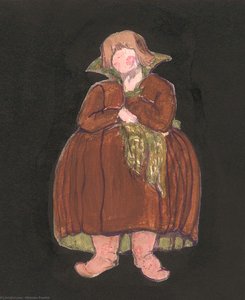
Nicholas Roerich’s “Snow Maiden”: A Frozen Echo of Russian Folklore
Nicholas Roemerich's "Snow Maiden," painted in 1920, is more than just a depiction of a winter scene; it’s a profound meditation on solitude, spirituality, and the enduring power of myth. Created during a pivotal moment in Russian art history – bridging the Symbolist movement with nascent influences of Art Deco – this monochrome masterpiece immediately captivates with its stark beauty and unsettling stillness. The image, likely a photograph of an original illustration, presents a vertically oriented composition dominated by the figure of the Snow Maiden, a central character from Russian folklore deeply intertwined with winter’s magic and the promise of rebirth. The deliberate use of grayscale amplifies the artwork's emotional resonance, stripping away superficial distractions to focus on the core themes of mystery and introspection.
Composition and Technique: A Stylized Narrative
- Geometric Precision, Human Emotion: Roerich masterfully employs geometric shapes – particularly in the simplified architecture of a stylized church or temple – to ground the ethereal figure. The sharp angles and onion domes contribute to a sense of order, yet the Snow Maiden herself is rendered with flowing lines that subtly disrupt this formality, suggesting an inherent tension between the rational and the mystical.
- Monochromatic Mastery: The artist’s skillful manipulation of grayscale creates a dramatic effect through intense tonal contrasts. Deep blacks define shadows, while bright whites highlight forms, generating a palpable sense of depth and volume despite the absence of color. This technique echoes the conventions of Symbolist art, prioritizing mood and atmosphere over realistic representation.
- Line Work as Structure: Strong, defined lines delineate the Snow Maiden’s clothing and facial features, contributing to the artwork's graphic quality. The deliberate use of line not only defines form but also creates a sense of separation, emphasizing the figure’s isolation within the vastness of the winter landscape.
Symbolism and Historical Context: Echoes of Russian Tradition
The Snow Maiden herself is a potent symbol in Russian folklore – representing purity, innocence, and the cyclical nature of life and death. Her presence within this artwork speaks to a deep-seated cultural tradition, one rooted in pagan beliefs and Christian iconography. Roerich’s work reflects the broader artistic currents of his time, grappling with questions of spirituality, national identity, and the search for meaning in a rapidly changing world. The 1920 date places it within a period of significant social and political upheaval in Russia, adding another layer of complexity to its interpretation – a reflection perhaps of the nation’s own frozen state.
Emotional Impact and Artistic Legacy
"Snow Maiden" possesses an undeniable emotional power. The monochromatic palette and the figure's serene yet distant expression evoke a sense of melancholy, solitude, and quiet contemplation. It is a work that invites viewers to confront their own feelings about mortality, faith, and the beauty of the natural world. Roerich’s influence extends far beyond his time; his exploration of symbolism and spirituality continues to resonate with artists and collectors today. This reproduction offers a unique opportunity to experience firsthand the profound artistry and enduring appeal of one of Nicholas Roerich's most iconic works – a timeless testament to the power of myth and the beauty of a frozen landscape.
Fragen & Antworten
Welche nationale Herkunft spiegelt sich in der Symbolist Expressionism von „Snow Maiden“ wider?
"Snow Maiden" verbindet die Symbolist Expressionism-Bewegung durch den Geburtsort ihres Schöpfers mit Russland.
Ist "Snow Maiden" als Kunstdruck erhältlich?
Einen Druck von "Snow Maiden" von Nikolai Konstantinowitsch Roerich können Sie ganz einfach auf der Seite Kunstdruck in Premiumqualität bestellen: ein Fine Art Print auf Baumwollkanvas oder Archiv-Leinwandpapier.
Wie hoch ist der Kontrast von "Snow Maiden" von Nikolai Konstantinowitsch Roerich?
Der Kontrastwert von "Snow Maiden" von Nikolai Konstantinowitsch Roerich ist Statement.
Künstlerbiografie
Nicholas Roerich: Leben, Kunst und Vermächtnis
Frühes Leben und Ausbildung
- Nikolai Konstantinowitsch Roerich wurde am 9. Oktober 1874 in Sankt Petersburg, Russland, geboren.
- Sein Vater, ein baltischer Deutscher Notar, und seine Mutter, eine russische Frau, förderten von frühester Kindheit sein Interesse an den Künsten.
- Roerich studierte sowohl Jura als auch Kunst gleichzeitig und nahm 1893 am St. Petersburger Universität und der Kaiserlichen Akademie der Künste auf.
- Er erhielt 1897 den Titel „Künstler“ und das Jurastudium im Folgejahr.
Künstlerische Bestrebungen und Einflüsse
- Roerichs künstlerische Entwicklung wurde maßgeblich von Russischer Symbolismus, einer Bewegung, die Spiritualität und emotionale Tiefe betonte, beeinflusst.
- Er engagierte sich in der „Weltkunst“-Gesellschaft von Sergei Diaghilew und war von 1910 bis 1916 deren Präsident.
- Seine frühen Arbeiten zeigten eine Faszination für Archäologie und Bühnenbild, was zu Kooperationen bei Produktionen für die Ballets Russes führte.
- Er ließ sich auch von apokryphen und mittelalterlichen sektiererischen Schriften wie dem Dovenbuch beeinflussen.
Zusammenarbeit mit den Ballets Russes
- Roerichs Bühnenbilder für die Ballets Russes wurden hoch gelobt, insbesondere seine Arbeit an Alexander Borodins Fürst Igor (1909) und Igor Strawinskys Das Ritus des Frühlings (1913).
- Seine Bühnenbilder vereinten historische Forschung mit fantasievoller Kunst und schufen visuell beeindruckende Produktionen.
- Diese Zusammenarbeit etablierte ihn als eine führende Figur im Theaterdesign im frühen 20. Jahrhundert.
Künstlerische Entwicklung und Themen
- Roerichs Gemälde entwickelten sich weiter und integrierten zunehmend mystische und spirituelle Themen, die seine wachsende Interesse an der Theosophie und den östlichen Religionen widerspiegelten.
- Seine Serie Architektonische Studien (1904–1905) demonstrierte sein architektonisches Können und sein Engagement für den Erhalt des kulturellen Erbes.
- Wiederkehrende Motive in seiner Arbeit sind majestätische Landschaften, antike Städte und religiöse Figuren wie St. Pantaleimon und Kuan Yin.
- Er stellte oft die Himalaya-Region dar, die für ihn eine tiefe spirituelle Bedeutung hatte.
Wichtige Errungenschaften und Anerkennung
- Roerich war ein engagierter Verfechter des Schutzes von Kunst und Architektur in Kriegszeiten.
- Seine Bemühungen führten zur Schaffung des Roerich-Pakt (1935), eines internationalen Vertrags zum Schutz kultureller Objekte, für die er mehrere Nominierungen für den Friedensnobelpreis erhielt.
- Er reiste weite Teile Zentralasiens ab und führte archäologische Forschungen durch und dokumentierte alte Kulturen.
- Seine Werke sind in bedeutenden Museumssammlungen auf der ganzen Welt zu sehen, darunter die Staatliche Astrakhan-Gemäldegalerie.
Historische Bedeutung und Vermächtnis
- Nicholas Roerichs Einfluss auf die russische Kunst und Kultur ist unermesslich.
- Er schloss die Lücke zwischen künstlerischem Ausdruck und spiritueller Erforschung und beeinflusste Generationen von Künstlern und Denkern.
- Sein Engagement für den Schutz des kulturellen Erbes ist auch heute noch relevant und unterstreicht die Bedeutung des Schutzes unseres gemeinsamen Erbes.
- Roerichs Vermächtnis erstreckt sich über seine Gemälde hinaus; er wird als visionärer Künstler, Gelehrter und Humanitär in Erinnerung behalten.

Nikolai Konstantinowitsch Roerich
1874 - 1947 , Russland
Kurzinfos
- Beeinflusste Künstler: ['Helena Blavatsky']
- Beeinflusste Richtungen:
- Russische Kunst
- Spirituelle Kunst
- Bemerkenswerte Werke:
- St. Pantaleimon der Heiler
- Kuan Yin
- Architektonische Studien
- Ballets Russes (Fürst Igor)
- Geburtsdatum: 9. Oktober 1874
- Geburtsort: Sankt Petersburg, Russland
- Künstlerische Richtung: Symbolismus, Russischer Symbolismus
- Nationalität: Russisch
- Sterbedatum: 13. Dezember 1947
- Vollständiger Name: Nikolai Konstantinowitsch Rerich
Ähnliche Artikel

Victor Vasnetsov: Myth, Nationalism & the Revival of Russian Fairy Tale Painting
Explore the captivating world of Victor Vasnetsov, a co-founder of Russian folklorist painting. Discover his iconic works, influence on national identity, and lasting legacy in this expert guide.

The Enduring Legacy of Fine Art Prints: Technique, History & Aesthetic Impact
Explore the rich history & techniques of fine art prints. Discover investment potential, assess authenticity, and learn how to preserve your collection with expert guidance. Trusted insights for discerning collectors.

Echoes of Time: Exploring the Enduring Appeal & Historical Context of Vintage Art Prints
Explore the captivating world of vintage art prints! Discover their history, collecting tips & enduring appeal. Expert insights on chromolithography and building a legacy collection with OriginalUniqueArt.

Giclée-Prints: Hochwertige Kunstreproduktionen mit Archivqualität für Ihr Zuhause
Erfahren Sie alles über die Archivqualität und Technik echter Giclée-Drucke. Jetzt Expertenwissen für Ihre Kunstsammlung entdecken!

Ivan Bilibin: A Synthesis of Folklore, Modernism & National Identity in Russian Illustration
Explore the enchanting world of Ivan Bilibin, a master Russian illustrator who synthesized folklore, Art Nouveau & national identity. Discover his iconic fairy tale illustrations and legacy with OriginalUniqueArt.