

 Vorschau anzeigen
 Versenden
 Teilen
 Details anzeigen

 Herunterladen
 Ähnliche Objekte
 Röntgenaufnahme
 Diashow
Procopius the Blessed Averts the Stone Cloud from the Great Ustiug


 Weiterlesen
Giclée / Kunstdruck
Giclée- oder Leinwanddruck in Museumsqualität mit schneller Produktion und flexiblen Veredelungsoptionen. ( Handgemalte Reproduktion bestellen Bild kaufen)




P118B $10

P118H $10

P118W $10

P438Z $10

P508JH $12

P508YH $12

P805H $10

P805Z $10

P919BZ $10

P919G $10

P919XJ $10

P959ZH $10

P968JZ $12

W106C $8

W218G $10

W218JH $8

W218Y $10

W307PJ $10

W316G $10

W316PJ $8

W316Y $10

W398PJ $8

W4111J $10

W500HY $15

W500JH $15

W692G $12

W849H $8

W940BG $15

W953PJ $8




Wählen Sie aus unseren vordefinierten Formaten, die den ursprünglichen Proportionen des Kunstwerks entsprechen.

Sie können Ihre eigenen Maße eingeben, um ein bestimmtes Format oder einen speziellen Platz einzupassen. Wenn das von Ihnen gewählte Format nicht den Proportionen des Originalbildes entspricht, werden wir das Kunstwerk entweder beschneiden oder das Bild mit einem gespiegelten oder einfarbigen Rand erweitern. Ein digitaler Entwurf wird Ihnen zur Genehmigung zugesandt, bevor die Produktion beginnt.
Bitte beachten Sie, dass die Vorschau auf dem Bildschirm nicht den tatsächlichen Zuschnitt oder die Erweiterung widerspiegelt. Nur der Entwurf zeigt die endgültige Komposition präzise an.
Obwohl Sondermaße verfügbar sind, empfehlen wir die Auswahl eines Maßes aus der vordefinierten Liste, um die ursprünglichen Proportionen zu bewahren.
Weltweiter Versand () innerhalb von 2 Wochen statt der üblichen 4/5 Wochen. (29 August)

Kostenloser weltweiter Expressversand

Hochwertige Leinenleinwand

Umfassender Versicherungsschutz beim Versand

Zollgebühren-Rückerstattungsgarantie

Garantie für exakte Farbtreue

60 Tage Rückgaberecht (nur bei Mängeln)

100% Geld-zurück-Garantie

Mengenrabatt verfügbar
 Die Glasoption ist nur für Größen unter 110 cm verfügbar.

Procopius the Blessed Averts the Stone Cloud from the Great Ustiug
Giclée / Kunstdruck
Format der Reproduktion
-


Gesamtpreis
$ 80
Nicholas Roerich’s ‘Procopius the Blessed Averts the Stone Cloud from the Great Ustiug’: An Echo of Spiritual Struggle
This arresting sketch by Nicholas Roemerich, titled “Procopius the Blessed Averts the Stone Cloud from the Great Ustiug,” offers a profound meditation on themes of protection, spiritual resilience, and the confrontation with existential dread. Executed in graphite and charcoal on paper, the artwork’s stark simplicity belies its complex symbolic weight, immediately evoking Roerich's signature style – characterized by an intensely personal engagement with mythology, spirituality, and the vast landscapes of Central Asia.
- Subject Matter & Narrative: The scene depicts Procopius the Blessed, a figure revered in Orthodox Christianity, intervening to dispel a menacing stone cloud hovering over a desolate landscape. This narrative thread, rooted in ancient legends and religious iconography, speaks to humanity’s enduring struggle against adversity and the promise of salvation offered through faith and action.
- Style & Technique: Roerich's approach here is distinctly sketch-like, prioritizing atmosphere and emotional resonance over meticulous realism. Loose, gestural lines dominate, creating a sense of immediacy and urgency. The use of hatching and cross-hatching within the cloud formation generates a powerful illusion of depth and texture, suggesting both the immense scale of the threat and the protective force at work.
- Color & Composition: The monochromatic palette – shades of grey, beige, and off-white – amplifies the artwork’s somber mood. The composition is deliberately unbalanced, with the cloud occupying a significant portion of the frame, mirroring the overwhelming nature of the challenge. This imbalance draws the viewer's eye directly to the central figure, emphasizing his role as a beacon of hope amidst darkness.
Symbolism and Spiritual Resonance
Beyond its surface depiction, “Procopius the Blessed Averts the Stone Cloud” is rich in symbolic meaning. The stone cloud itself represents not merely a meteorological phenomenon but rather a potent metaphor for suffering, chaos, and the forces of evil that threaten human existence. Procopius’s outstretched hand, acting as a shield against this looming darkness, embodies faith, courage, and the unwavering belief in a higher power capable of delivering protection. The desolate landscape further reinforces the theme of isolation and vulnerability, highlighting the individual's struggle within a vast and often hostile world.
- Roerich’s Vision: Roerich frequently employed such symbolic imagery to explore universal spiritual themes – the interconnectedness of humanity with nature, the search for inner peace, and the importance of preserving cultural heritage. His work reflects a deep engagement with Eastern mysticism and a belief in a shared human experience transcending geographical boundaries.
- Mythological Roots: The artwork’s narrative draws upon ancient Slavic legends, reflecting Roerich's fascination with folklore and mythology as sources of spiritual wisdom. This connection to the past adds another layer of depth to the piece, suggesting that humanity’s struggles are timeless and recurring.
Historical Context & Artistic Influence
Created in 1913, “Procopius the Blessed Averts the Stone Cloud from the Great Ustiug” reflects a pivotal moment in Roerich's artistic development. Following his early explorations of realism and academic style, he increasingly embraced a more expressive and symbolic approach, influenced by theosophical ideas and his travels throughout Central Asia. This sketch anticipates the grand scale and spiritual intensity that would characterize much of his later work, solidifying his place as one of the 20th century’s most significant artists.
- Roerich's Legacy: Roerich’s unique blend of artistic skill, philosophical inquiry, and humanitarian activism has ensured his enduring legacy. His artwork continues to resonate with viewers seeking meaning and inspiration in a world often characterized by uncertainty and conflict.
- Collecting & Interior Design: This reproduction offers an exceptional opportunity to bring a piece of Roerich’s visionary art into your home or office. Its evocative imagery and powerful symbolism make it a compelling addition to any collection, while its monochromatic palette lends itself beautifully to a variety of interior design schemes – particularly those seeking a touch of contemplative elegance.
Über den Künstler
Nicholas Roerich: Leben, Kunst und Vermächtnis
Frühes Leben und Ausbildung
- Nikolai Konstantinowitsch Roerich wurde am 9. Oktober 1874 in Sankt Petersburg, Russland, geboren.
- Sein Vater, ein baltischer Deutscher Notar, und seine Mutter, eine russische Frau, förderten von frühester Kindheit sein Interesse an den Künsten.
- Roerich studierte sowohl Jura als auch Kunst gleichzeitig und nahm 1893 am St. Petersburger Universität und der Kaiserlichen Akademie der Künste auf.
- Er erhielt 1897 den Titel „Künstler“ und das Jurastudium im Folgejahr.
Künstlerische Bestrebungen und Einflüsse
- Roerichs künstlerische Entwicklung wurde maßgeblich von Russischer Symbolismus, einer Bewegung, die Spiritualität und emotionale Tiefe betonte, beeinflusst.
- Er engagierte sich in der „Weltkunst“-Gesellschaft von Sergei Diaghilew und war von 1910 bis 1916 deren Präsident.
- Seine frühen Arbeiten zeigten eine Faszination für Archäologie und Bühnenbild, was zu Kooperationen bei Produktionen für die Ballets Russes führte.
- Er ließ sich auch von apokryphen und mittelalterlichen sektiererischen Schriften wie dem Dovenbuch beeinflussen.
Zusammenarbeit mit den Ballets Russes
- Roerichs Bühnenbilder für die Ballets Russes wurden hoch gelobt, insbesondere seine Arbeit an Alexander Borodins Fürst Igor (1909) und Igor Strawinskys Das Ritus des Frühlings (1913).
- Seine Bühnenbilder vereinten historische Forschung mit fantasievoller Kunst und schufen visuell beeindruckende Produktionen.
- Diese Zusammenarbeit etablierte ihn als eine führende Figur im Theaterdesign im frühen 20. Jahrhundert.
Künstlerische Entwicklung und Themen
- Roerichs Gemälde entwickelten sich weiter und integrierten zunehmend mystische und spirituelle Themen, die seine wachsende Interesse an der Theosophie und den östlichen Religionen widerspiegelten.
- Seine Serie Architektonische Studien (1904–1905) demonstrierte sein architektonisches Können und sein Engagement für den Erhalt des kulturellen Erbes.
- Wiederkehrende Motive in seiner Arbeit sind majestätische Landschaften, antike Städte und religiöse Figuren wie St. Pantaleimon und Kuan Yin.
- Er stellte oft die Himalaya-Region dar, die für ihn eine tiefe spirituelle Bedeutung hatte.
Wichtige Errungenschaften und Anerkennung
- Roerich war ein engagierter Verfechter des Schutzes von Kunst und Architektur in Kriegszeiten.
- Seine Bemühungen führten zur Schaffung des Roerich-Pakt (1935), eines internationalen Vertrags zum Schutz kultureller Objekte, für die er mehrere Nominierungen für den Friedensnobelpreis erhielt.
- Er reiste weite Teile Zentralasiens ab und führte archäologische Forschungen durch und dokumentierte alte Kulturen.
- Seine Werke sind in bedeutenden Museumssammlungen auf der ganzen Welt zu sehen, darunter die Staatliche Astrakhan-Gemäldegalerie.
Historische Bedeutung und Vermächtnis
- Nicholas Roerichs Einfluss auf die russische Kunst und Kultur ist unermesslich.
- Er schloss die Lücke zwischen künstlerischem Ausdruck und spiritueller Erforschung und beeinflusste Generationen von Künstlern und Denkern.
- Sein Engagement für den Schutz des kulturellen Erbes ist auch heute noch relevant und unterstreicht die Bedeutung des Schutzes unseres gemeinsamen Erbes.
- Roerichs Vermächtnis erstreckt sich über seine Gemälde hinaus; er wird als visionärer Künstler, Gelehrter und Humanitär in Erinnerung behalten.

Nikolai Konstantinowitsch Roerich
1874 - 1947 , Russland
Kurzinfos
- Beeinflusste Künstler: ['Helena Blavatsky']
- Beeinflusste Richtungen:
- Russische Kunst
- Spirituelle Kunst
- Bemerkenswerte Werke:
- St. Pantaleimon der Heiler
- Kuan Yin
- Architektonische Studien
- Ballets Russes (Fürst Igor)
- Geburtsdatum: 9. Oktober 1874
- Geburtsort: Sankt Petersburg, Russland
- Künstlerische Richtung: Symbolismus, Russischer Symbolismus
- Nationalität: Russisch
- Sterbedatum: 13. Dezember 1947
- Vollständiger Name: Nikolai Konstantinowitsch Rerich
Ähnliche Artikel

Nikolai Roerich: Mystik, Berge und die Suche nach zeitloser Weisheit in der Kunst
Entdecken Sie das faszinierende Werk von Nikolai Roerich! Erfahren Sie mehr über seine Himalaya-Gemälde, die Philosophie des Agni Yoga und sein Engagement für kulturellen Schutz. Ein tiefer Einblick in Leben und Kunst eines spirituellen Meisters.

Giclée Prints: Archival Quality & Aesthetic Nuances for the Discerning Collector
Explore the world of giclée prints with OriginalUniqueArt. Learn about archival quality, aesthetic nuances & investment potential. Expert guidance for discerning art collectors seeking museum-quality reproductions and lasting value.

The Enduring Legacy of Fine Art Prints: Technique, History & Aesthetic Impact
Explore the rich history & techniques of fine art prints. Discover investment potential, assess authenticity, and learn how to preserve your collection with expert guidance. Trusted insights for discerning collectors.

Echoes of Time: Exploring the Enduring Appeal & Historical Context of Vintage Art Prints
Explore the captivating world of vintage art prints! Discover their history, collecting tips & enduring appeal. Expert insights on chromolithography and building a legacy collection with OriginalUniqueArt.
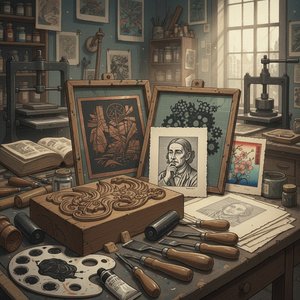
The Enduring Legacy of Printmaking: Techniques, Themes & Artistic Innovation Across Centuries
Explore the rich history of printmaking with OriginalUniqueArt. Discover techniques from intaglio to lithography, learn about collecting valuable prints & find museum-quality reproductions. Expert insights for art enthusiasts and collectors.



