Vorschau anzeigen
 Versenden
 Teilen
 Details anzeigen
 Leitfaden

 Herunterladen
 Ähnliche Objekte
 Röntgenaufnahme
 Diashow
 Fragen & Antworten
 Statistiken
Book of Doves


 Weiterlesen
Giclée / Kunstdruck
Giclée- oder Leinwanddruck in Museumsqualität mit schneller Produktion und flexiblen Veredelungsoptionen. ( Handgemalte Reproduktion bestellen Zum digitalen Bild wechseln)




P118B €10

P118H €10

P118W €10

P438Z €10

P508JH €12

P508YH €12

P805H €10

P805Z €10

P919BZ €10

P919G €10

P919XJ €10

P959ZH €10

P968JZ €12

W106C €8

W218G €10

W218JH €8

W218Y €10

W307PJ €10

W316G €10

W316PJ €8

W316Y €10

W398PJ €8

W4111J €10

W500HY €15

W500JH €15

W692G €12

W849H €8

W940BG €15

W953PJ €8




Wählen Sie aus unseren vordefinierten Formaten, die den ursprünglichen Proportionen des Kunstwerks entsprechen.

Geben Sie die benötigte Breite und Höhe an, damit der Druck perfekt in Ihren Rahmen oder an Ihre Wand passt. Ein Druck kann nur beschnitten, aber niemals größer als das Originalbild angefertigt werden; daher verliert ein Format mit anderen Proportionen einen Teil des Bildes. Wir senden Ihnen ein digitales Mockup zur Freigabe, bevor wir den Druck ausführen. Das auf dieser Seite gezeigte Bild zeigt nicht den tatsächlichen Beschnitt – dies ist nur im Mockup ersichtlich.
Weltweiter Versand () innerhalb von 2 Wochen statt der üblichen 4/5 Wochen. (8 November)

Kostenloser weltweiter Expressversand

Hochwertige Leinenleinwand

Umfassender Versicherungsschutz beim Versand

Zollgebühren-Rückerstattungsgarantie

Garantie für exakte Farbtreue

100 Tage Rückgaberecht (nur bei Mängeln)

100% Geld-zurück-Garantie

Mengenrabatt verfügbar
 Die Glasoption ist nur für Größen unter 110 cm verfügbar.

Book of Doves
Giclée / Kunstdruck
Format der Reproduktion
-


Endpreis
€ 72
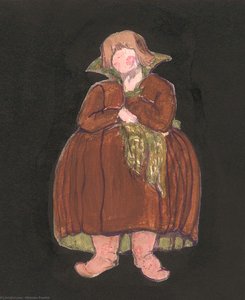
The Book of Doves: A Tapestry of Faith and Mysticism by Nicholas Roerich
Nicholas Roerich’s “Book of Doves,” painted in 1911, isn't merely a depiction of a gathering; it’s an immersive experience—a visual meditation on spirituality, ancient wisdom, and the enduring power of symbolism. Emerging from the vibrant currents of Art Nouveau, this monumental work transcends stylistic categorization, instead embodying Roerich’s deeply personal synthesis of artistic vision, archaeological research, and philosophical inquiry. The painting immediately draws the viewer into a scene brimming with solemnity and profound contemplation, inviting us to decipher its layered meanings.
At first glance, the composition presents a circle of robed figures, their garments rich in intricate embroidery and symbolic motifs—a testament to Roerich’s meticulous attention to detail. These aren't ordinary individuals; they are clearly scholars, perhaps even prophets or enlightened beings, gathered around an open book. The architecture surrounding them – a fortified structure hinting at sacred space – reinforces this sense of reverence. The palette is dominated by deep blues and golds, colors traditionally associated with divinity and the heavens, creating an atmosphere that feels both earthly and ethereal.
A Window into Roerich’s Worldview
To truly appreciate “Book of Doves,” it's crucial to understand Nicholas Roerich’s unique worldview. Born in 1874, he was a polymath—an archaeologist, writer, philosopher, and above all, an artist deeply influenced by theosophy and Eastern mysticism. His life was dedicated to exploring connections between art, spirituality, and the preservation of cultural heritage. Roerich believed that art possessed a profound ability to convey spiritual truths, and he sought to create works that resonated with both intellect and emotion. The “Book of Doves” is a prime example of this philosophy—a visual embodiment of his belief in the interconnectedness of all things.
The painting’s historical context further illuminates its significance. Created during a period of immense social and political upheaval, Roerich's work offered an escape into realms of timeless wisdom and spiritual contemplation. The imagery draws heavily from medieval Russian iconography, particularly the “Dove Book,” a cryptic text steeped in symbolism and considered by some to be a repository of ancient knowledge. Roerich’s interpretation of this enigmatic text—incorporating elements of Slavic mythology and Christian spirituality—is both deeply personal and remarkably evocative.
Symbolism Unveiled: The Language of the Image
The symbolism within “Book of Doves” is extraordinarily rich and layered. The central book, open and illuminated, represents knowledge, wisdom, and divine revelation. The doves themselves—a potent symbol throughout history—are not simply birds; they embody peace, hope, and the spirit. Their presence suggests a moment of grace, a connection to something beyond the material world. The figures surrounding the book are likely engaged in interpreting its message, representing humanity’s ongoing quest for understanding.
Notice also the intricate patterns adorning the robes—they aren't merely decorative; they are visual codes, hinting at esoteric teachings and spiritual practices. The fortress-like structure behind the figures reinforces this sense of sacred space, suggesting a place where knowledge is guarded and preserved. The overall composition creates a powerful visual metaphor for the journey of enlightenment – a process of seeking, understanding, and ultimately, union with the divine.
A Timeless Masterpiece: Reproduction and Beyond
“Book of Doves” remains one of Nicholas Roerich’s most celebrated works, admired for its profound beauty and spiritual depth. OriginalUniqueArt offers meticulously crafted hand-painted reproductions that capture the essence of this iconic painting while retaining its original power and majesty. These reproductions are not simply copies; they are artistic interpretations created by skilled artisans who have dedicated themselves to faithfully recreating Roerich’s vision.
Whether adorning a grand salon or a contemplative study, “Book of Doves” brings a sense of serenity, wisdom, and timeless beauty to any space. It is more than just a painting; it's an invitation to explore the depths of the human spirit and connect with something larger than ourselves.
Fragen & Antworten
Wie kann ich "Book of Doves" von Nikolai Konstantinowitsch Roerich als Diashow ansehen?
"Book of Doves" von Nikolai Konstantinowitsch Roerich kann als Diashow auf der Diashow-Seite des Kunstwerks betrachtet werden.
Welche nationale Herkunft spiegelt sich in der Art Nouveau (Modern) von „Book of Doves“ wider?
"Book of Doves" wurde von Nikolai Konstantinowitsch Roerich geschaffen, der in Russland geboren wurde, und ist der Art Nouveau (Modern)-Bewegung zuzuordnen. Die Herkunft des Künstlers verbindet das Werk mit der Art Nouveau (Modern), wie sie von Künstlern aus Russland praktiziert wird.
Wirken die Farben von "Book of Doves" eher kräftig oder sanft?
"Book of Doves" von Nikolai Konstantinowitsch Roerich besticht durch eine Leuchtend Farbintensität.
Künstlerbiografie
Nicholas Roerich: Leben, Kunst und Vermächtnis
Frühes Leben und Ausbildung
- Nikolai Konstantinowitsch Roerich wurde am 9. Oktober 1874 in Sankt Petersburg, Russland, geboren.
- Sein Vater, ein baltischer Deutscher Notar, und seine Mutter, eine russische Frau, förderten von frühester Kindheit sein Interesse an den Künsten.
- Roerich studierte sowohl Jura als auch Kunst gleichzeitig und nahm 1893 am St. Petersburger Universität und der Kaiserlichen Akademie der Künste auf.
- Er erhielt 1897 den Titel „Künstler“ und das Jurastudium im Folgejahr.
Künstlerische Bestrebungen und Einflüsse
- Roerichs künstlerische Entwicklung wurde maßgeblich von Russischer Symbolismus, einer Bewegung, die Spiritualität und emotionale Tiefe betonte, beeinflusst.
- Er engagierte sich in der „Weltkunst“-Gesellschaft von Sergei Diaghilew und war von 1910 bis 1916 deren Präsident.
- Seine frühen Arbeiten zeigten eine Faszination für Archäologie und Bühnenbild, was zu Kooperationen bei Produktionen für die Ballets Russes führte.
- Er ließ sich auch von apokryphen und mittelalterlichen sektiererischen Schriften wie dem Dovenbuch beeinflussen.
Zusammenarbeit mit den Ballets Russes
- Roerichs Bühnenbilder für die Ballets Russes wurden hoch gelobt, insbesondere seine Arbeit an Alexander Borodins Fürst Igor (1909) und Igor Strawinskys Das Ritus des Frühlings (1913).
- Seine Bühnenbilder vereinten historische Forschung mit fantasievoller Kunst und schufen visuell beeindruckende Produktionen.
- Diese Zusammenarbeit etablierte ihn als eine führende Figur im Theaterdesign im frühen 20. Jahrhundert.
Künstlerische Entwicklung und Themen
- Roerichs Gemälde entwickelten sich weiter und integrierten zunehmend mystische und spirituelle Themen, die seine wachsende Interesse an der Theosophie und den östlichen Religionen widerspiegelten.
- Seine Serie Architektonische Studien (1904–1905) demonstrierte sein architektonisches Können und sein Engagement für den Erhalt des kulturellen Erbes.
- Wiederkehrende Motive in seiner Arbeit sind majestätische Landschaften, antike Städte und religiöse Figuren wie St. Pantaleimon und Kuan Yin.
- Er stellte oft die Himalaya-Region dar, die für ihn eine tiefe spirituelle Bedeutung hatte.
Wichtige Errungenschaften und Anerkennung
- Roerich war ein engagierter Verfechter des Schutzes von Kunst und Architektur in Kriegszeiten.
- Seine Bemühungen führten zur Schaffung des Roerich-Pakt (1935), eines internationalen Vertrags zum Schutz kultureller Objekte, für die er mehrere Nominierungen für den Friedensnobelpreis erhielt.
- Er reiste weite Teile Zentralasiens ab und führte archäologische Forschungen durch und dokumentierte alte Kulturen.
- Seine Werke sind in bedeutenden Museumssammlungen auf der ganzen Welt zu sehen, darunter die Staatliche Astrakhan-Gemäldegalerie.
Historische Bedeutung und Vermächtnis
- Nicholas Roerichs Einfluss auf die russische Kunst und Kultur ist unermesslich.
- Er schloss die Lücke zwischen künstlerischem Ausdruck und spiritueller Erforschung und beeinflusste Generationen von Künstlern und Denkern.
- Sein Engagement für den Schutz des kulturellen Erbes ist auch heute noch relevant und unterstreicht die Bedeutung des Schutzes unseres gemeinsamen Erbes.
- Roerichs Vermächtnis erstreckt sich über seine Gemälde hinaus; er wird als visionärer Künstler, Gelehrter und Humanitär in Erinnerung behalten.

Nikolai Konstantinowitsch Roerich
1874 - 1947 , Russland
Kurzinfos
- Beeinflusste Künstler: ['Helena Blavatsky']
- Beeinflusste Richtungen:
- Russische Kunst
- Spirituelle Kunst
- Bemerkenswerte Werke:
- St. Pantaleimon der Heiler
- Kuan Yin
- Architektonische Studien
- Ballets Russes (Fürst Igor)
- Geburtsdatum: 9. Oktober 1874
- Geburtsort: Sankt Petersburg, Russland
- Künstlerische Richtung: Symbolismus, Russischer Symbolismus
- Nationalität: Russisch
- Sterbedatum: 13. Dezember 1947
- Vollständiger Name: Nikolai Konstantinowitsch Rerich
Ähnliche Artikel

Arthur Dove: Pionier der amerikanischen Abstraktion und die poetische Sprache der Moderne
Entdecken Sie Arthur Dove, den Pionier der amerikanischen Abstraktion! Erfahren Sie mehr über seine künstlerische Entwicklung, Einflüsse und sein bleibendes Vermächtnis. Für Kunstsammler & Kenner.
Art Nouveau Guide: Integrating Elegant Curves and Organic Design into Luxury Hotel Interiors
Master Art Nouveau integration for luxury hotel interiors. Discover expert strategies for utilizing organic curves, whiplash lines, and botanical motifs to create sophisticated, high-end hospitality spaces with scalable, professional art procurement solutions.
Sacred Narratives Embodied: A Comprehensive Exploration of Religious Iconography in Art History
Explore the rich history of religious iconography in art! Discover symbolism, movements & masterpieces from Byzantine to Renaissance periods. Expert insights for collectors and enthusiasts at OriginalUniqueArt.

Nikolai Roerich: Mystik, Berge und die Suche nach zeitloser Weisheit in der Kunst
Entdecken Sie das faszinierende Werk von Nikolai Roerich! Erfahren Sie mehr über seine Himalaya-Gemälde, die Philosophie des Agni Yoga und sein Engagement für kulturellen Schutz. Ein tiefer Einblick in Leben und Kunst eines spirituellen Meisters.
The Elegance of Art Nouveau: Embracing Nature's Fluid Beauty and the Belle Époque Spirit
Discover the enchanting world of Art Nouveau. Explore the organic beauty, flowing lines, and Belle Époque elegance that defined an era of unparalleled craftsmanship and natural inspiration.