In echtem Maßstab anzeigen
 Versenden als Grußkarte
 Teilen
 Details anzeigen
 Leitfaden öffnen

 Herunterladen
 Ähnliche Objekte
 Röntgenaufnahme
 Diashow
 Besucherstatistiken
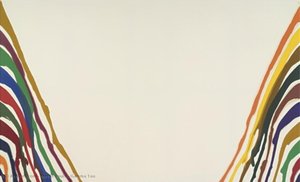
Number 28


 Mehr anzeigen
Die auf dieser Seite dargestellten Kunstwerke sind urheberrechtlich geschützt, was bedeutet, dass wir keine identische Reproduktion rechtmäßig erstellen oder verkaufen dürfen. Dieser Schutz wird durch internationale Abkommen wie die Berner Übereinkunft und durch nationale Gesetze, einschließlich derer, die von den ... festgelegt wurden US-Urheberrecht – Titel 17.
Diese Methode entspricht vollumfänglich den Urheberrechtsbestimmungen, da sie keine Kopie oder Vervielfältigung des geschützten Kunstwerks darstellt. Stattdessen handelt es sich um eine kreative Neuinterpretation – ein neues Gemälde, das vom Original inspiriert, aber nicht identisch mit ihm ist.
Giclée / Kunstdruck
Giclée- oder Leinwanddruck in Museumsqualität mit schneller Produktion und flexiblen Veredelungsoptionen. ( Handgemalte Reproduktion kaufen Zum digitalen Bild wechseln)




P118B €10

P118H €10

P118W €10

P438Z €10

P508JH €12

P508YH €12

P805H €10

P805Z €10

P919BZ €10

P919G €10

P919XJ €10

P959ZH €10

P968JZ €12

W106C €8

W218G €10

W218JH €8

W218Y €10

W307PJ €10

W316G €10

W316PJ €8

W316Y €10

W398PJ €8

W4111J €10

W500HY €15

W500JH €15

W692G €12

W849H €8

W940BG €15

W953PJ €8




Wählen Sie aus unseren vordefinierten Formaten, die den ursprünglichen Proportionen des Kunstwerks entsprechen.

Geben Sie die Breite und die Höhe an, die Sie benötigen, damit der Druck perfekt in Ihren Rahmen oder an Ihre Wand passt. Ein Druck kann nur beschnitten werden und niemals größer als das Originalbild gemacht werden; daher verliert ein Format mit einer anderen Proportion einen Teil des Bildes. Wir senden Ihnen ein digitales Mockup zur Freigabe, bevor wir den Druck ausführen. Das auf dieser Seite gezeigte Bild zeigt nicht den tatsächlichen Beschnitt – dies ist nur im Mockup ersichtlich.
Weltweiter Versand () innerhalb von 2 Wochen statt der üblichen 4/5 Wochen. (18 Oktober)

Kostenloser weltweiter Expressversand

Hochwertige Leinenleinwand

Vollständiger Versicherungsschutz beim Versand

Zollgebühren-Rückerstattungsgarantie

Garantie für exakte Farbtreue

100-tägiges Rückgaberecht (nur bei Mängeln)

100% Geld-zurück-Garantie

Angebot für Mengenrabatt
 Die Glasoption ist nur für Größen unter 110 cm verfügbar.

Number 28
Giclée / Kunstdruck
Format der Reproduktion
-


Gesamtpreis
€ 70
A Symphony of Color and Fluidity
In the realm of mid-century abstraction, few works capture the ethereal essence of movement as profoundly as Morris Louis’s Number 28. Created in 1961, this masterpiece stands as a definitive pillar of the Color Field painting movement, inviting the viewer into a meditative space where boundaries between form and pigment dissolve. At first glance, the composition presents a striking minimalist architecture: two vertical bands of vibrant, saturated color that descend like celestial ribbons against a stark, luminous white void. There is no traditional subject matter here—no figures to anchor the eye or landscapes to ground the soul—only the pure, unadulterated interplay of light and hue.
The brilliance of Number 28 lies in its breathtaking use of color. Within the vertical columns, a kaleidoscopic spectrum unfolds, ranging from deep, oceanic blues and verdant greens to fiery oranges and warm yellows. These colors do not sit static upon the canvas; rather, they appear to breathe and pulse. Through a masterful layering of tones, Louis achieves a sense of translucent depth, as if one is peering through layers of stained glass or watching sunlight filter through tropical waters. This fluidity creates an organic, living quality that transforms the flat surface into a window of infinite, swirling energy.
The Alchemy of Staining and Technique
To understand the emotional resonance of this work, one must appreciate the revolutionary technique employed by Louis. Moving away from the heavy, impasto textures of the Abstract Expressionists who preceded him, Louis embraced the method of "staining." Utilizing thinned acrylic paints—specifically the pioneering Magna paint—he allowed the pigment to soak directly into the unprimed canvas fibers. This process ensures that the color becomes one with the fabric itself, eliminating the distinction between the medium and the support. The result is a surface that possesses a remarkable luminosity, where the edges of the color fields are not defined by harsh lines, but by soft, bleeding transitions that suggest an eternal state of flux.
This technique imbues the painting with a sense of effortless grace. There is no evidence of the artist's brushstroke or physical struggle; instead, there is only the record of gravity and flow. This lack of tactile resistance contributes to the artwork’s profound sense of serenity. For the collector or interior designer, this piece offers a unique aesthetic advantage: it provides a focal point that is both commanding in its presence and soothing in its execution. It does not demand attention through aggression, but rather captivates through a quiet, hypnotic magnetism.
A Legacy of Serenity for Modern Spaces
Beyond its technical mastery, Number 28 serves as an emotional sanctuary. The verticality of the composition evokes a sense of aspiration and monumentality, much like the soaring columns of classical architecture, yet it remains intimately personal and soft. It is a work that celebrates the beauty of simplicity and the power of pure perception. In a modern interior, a high-quality reproduction of this piece acts as a sophisticated anchor, bringing a sense of calm, intellectual depth, and timeless elegance to any room.
Whether placed in a minimalist gallery setting or a richly textured living space, the painting’s ability to harmonize diverse color palettes makes it an invaluable asset for those seeking to curate an atmosphere of refined tranquility. It remains a testament to Morris Louis's vision: a world where color is not merely applied to a surface, but becomes the very soul of the art itself.
Fragen & Antworten
Verwendet "Number 28" von Morris Louis starke Kontraste oder sanfte Harmonien?
Die Farbkomposition von "Number 28" von Morris Louis vereint einen Statement Kontrast mit einer Discordant Palette Harmonie.
Welche Gemeinsamkeiten weist "Number 28" mit dem restlichen Werk von Morris Louis auf?
"Number 28" gehört zu Morris Louiss Werk der Color Field Painting-Epoche, dessen dokumentierte Themen unter anderem color field, abstract expressionism, post-war american art, experimentation, innovation, process, minimalist, serene composition umfassen.
Wie harmonisch sind die Farben von "Number 28" von Morris Louis?
Die Farben von "Number 28" von Morris Louis zeigen eine Discordant Palette Harmonie. Harmonie beschreibt, wie die Farben zueinander in Beziehung stehen.
Biografie des Künstlers
Frühes Leben und Ausbildung
- Geboren: Morris Louis Bernstein, 28. November 1912, Baltimore, Maryland
- Eltern: Louis Bernstein (Möbelhändler) und Cecelia Luckman Bernstein.
- Ausbildung: Besuchte öffentliche Schulen in Baltimore; Maryland Institute of Fine and Applied Arts (heute MICA), 1929-1932. Erlangte keinen Abschluss.
- Frühe Einflüsse waren Eugene Speicher und Paul Cézanne.
- Zeigte früh Interesse an Kunst, ermutigt von seiner Familie trotz begrenzter Möglichkeiten in Baltimore.
Entwicklung als Künstler & Schlüsselinfluenzen
- 1930er Jahre: Arbeitete verschiedene Gelegenheitsjobs, um sich selbst zu unterstützen und gleichzeitig zu malen (Gemüseputzen, Wäschearbeit, Gallup Poll Forschung).
- 1934-1936: Beteiligte sich am Public Works of Art Project Wandgemälde-Projekt unter Sam Swerdloff.
- 1936-1937: Umzug nach New York City; Experimente mit Techniken im Siqueiros Workshop.
- Magna Paint Entdeckung (1948): Ein entscheidender Moment – Louis war Pionier bei der Verwendung von Magna Farbe, einer neu entwickelten ölbasierenden Acrylfarbe, die für ihn von Leonard Bocour und Sam Golden hergestellt wurde. Dies ermöglichte größere Flüssigkeit und Transparenz in seiner Arbeit.
- Einfluss von Helen Frankenthaler: 1953 besuchten Louis und Kenneth Noland Frankenthalers Atelier und waren tief beeindruckt von ihren Stain-Gemälden (insbesondere "Mountains and Sea"). Dies inspirierte ihre Experimente mit Pouring- und Staining-Techniken.
Die Veil Gemälde & Farbflächen Innovationen
- Reife Veil Gemälde (1954): Charakterisiert durch überlappende, übereinanderliegende Farbschichten, die auf und in eine verspannte oder ungespannte Leinwand gegossen und gefärbt werden.
- Technik: Extrem verdünnte Farbe wurde auf eine unbehandelte, ungespannte Leinwand aufgetragen, so dass sie über die geneigte Oberfläche fließen konnte und transparente Farbschleier erzeugte. Dies eliminierte Pinselstriche und betonte die Flachheit.
- Farbflächenmalerei: Louis wurde zu einer zentralen Figur der Farbflächenmalerei, neben Künstlern wie Kenneth Noland und Helen Frankenthaler. Er vereinfachte den räumlichen Bildraum und betonte flache Farbebene. Er war Teil der Washington Color School Bewegung.
- Serien & Stile: Abgesehen von den Veil Gemälden erforschte er Serien wie Florale, Säulen (1960), Unfurleds (1960-61) – mit Rinnsalen opaker Farbe – und Streifenmalereien (1961-62).
Wichtige Errungenschaften & Historische Bedeutung
- Pionierarbeit der Farbflächenmalerei: Louis gilt als wichtiger Innovator in der Farbflächenmalerei, neben Künstlern wie Kenneth Noland und Helen Frankenthaler.
- Einfluss auf den abstrakten Expressionismus: Seine Arbeit erweiterte die Grenzen des abstrakten Expressionismus, indem sie sich auf Farbe und Flachheit statt Geste oder Komposition konzentrierte.
- Washington Color School: Ein bedeutender Beitrag zu dieser einflussreichen Bewegung, die einen reduktionistischen Ansatz in der Malerei betonte.
- Zerstörung von Werken: Bemerkenswert ist, dass Louis zwischen 1955 und 1957 viele seiner Gemälde zerstörte, was eine kritische Selbstbeurteilung seiner Arbeit widerspiegelt.
- Vermächtnis: Sein Fokus auf Farbe, Flachheit und die Materialität der Farbe beeinflusst zeitgenössische Künstler weiterhin.
Spätere Jahre & Tod
- Louis malte bis zu seinem Tod produktiv weiter.
- Tod: Starb am 7. September 1962 in Washington, D.C., im Alter von 49 Jahren.
- Gedenkausstellung (1963): Eine bedeutende Ausstellung fand kurz nach seinem Tod im Solomon R. Guggenheim Museum statt.
- Retrospektive Ausstellungen: Folgten wichtige Retrospektiven im Museum of Fine Arts, Boston (1967), und der National Gallery of Art, Washington, D.C. (1976).

Morris Louis
1912 - 1962 , Vereinigte Staaten von Amerika
Eckdaten zum Künstler
- Beeinflusste Künstler: ['Kenneth Noland']
- Bemerkenswerte Werke:
- High
- Number 1-36
- Wo
- Number 1-68
- Gamma Tau
- Delta Theta
- Einflussreiche Künstler: ['Helen Frankenthaler']
- Geburtsdatum: 28. November 1912
- Geburtsort: Baltimore, USA
- Künstlerische Bewegung: Farbflächenmalerei
- Nationalität: Amerikanisch
- Todatum: 7. September 1962
- Vollständiger Name: Morris Louis
Verwandte Artikel
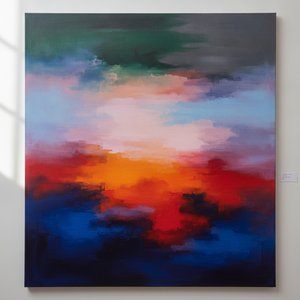
Color Field Painting: The Emotional Power of Pure Abstraction and Chromatic Depth
Explore the profound emotional depth of Color Field painting. Discover the history of mid-century abstraction, from Rothko to Newman, and learn how pure color transforms the viewer's experience through our expert art history guide.

Die Top 10 Gemälde in Schattierungen von 'Slate Blue': Kunst für Ihr Zuhause
Entdecken Sie die Top 10 Gemälde in faszinierenden 'Slate Blue' Tönen! Von Monet bis Manet – erleben Sie Kunstgeschichte und lassen Sie sich von Meisterwerken inspirieren. Hochwertige Kunstdrucke auf
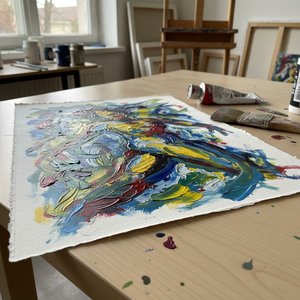
Acryl auf Papier: Zeitgenössischer Ausdruck und die Renaissance einer modernen Leinwand
Entdecken Sie die faszinierende Welt der Acrylmalerei auf Papier! Expertenwissen über Techniken, Künstler und den wachsenden Wert zeitgenössischer Kunst. Jetzt informieren & sammeln.
Serene Blue Backgrounds: Discover Soulful Art to Transform Your Space with Timeless Elegance
Transform your home with soulful blue art. From serene Monet impressions to modern textured sculptures, discover curated masterpieces designed to inspire calm. Explore expert art consultations and bespoke hand-painted reproductions to create your personal sanctuary.

Morris Louis: Pionier der Farbfeldmalerei und das Erbe des Abstrakten Expressionismus
Entdecken Sie Morris Louis, Pionier der Farbfeldmalerei! Erfahren Sie mehr über seine innovative Technik, seinen Einfluss auf die moderne Kunst und hochwertige Reproduktionen bei OriginalUniqueArt.com.