 Vorschau anzeigen
 Versenden
 Teilen
 Details anzeigen

 Herunterladen
 Ähnliche Objekte
 Röntgenaufnahme
 Diashow
Palazzo Senatorio


 Weiterlesen
Giclée / Kunstdruck
Giclée- oder Leinwanddruck in Museumsqualität mit schneller Produktion und flexiblen Veredelungsoptionen. ( Handgemalte Reproduktion bestellen Bild kaufen)




P118B $10

P118H $10

P118W $10

P438Z $10

P508JH $12

P508YH $12

P805H $10

P805Z $10

P919BZ $10

P919G $10

P919XJ $10

P959ZH $10

P968JZ $12

W106C $8

W218G $10

W218JH $8

W218Y $10

W307PJ $10

W316G $10

W316PJ $8

W316Y $10

W398PJ $8

W4111J $10

W500HY $15

W500JH $15

W692G $12

W849H $8

W940BG $15

W953PJ $8




Wählen Sie aus unseren vordefinierten Formaten, die den ursprünglichen Proportionen des Kunstwerks entsprechen.

Sie können Ihre eigenen Maße eingeben, um ein bestimmtes Format oder einen speziellen Platz einzupassen. Wenn das von Ihnen gewählte Format nicht den Proportionen des Originalbildes entspricht, werden wir das Kunstwerk entweder beschneiden oder das Bild mit einem gespiegelten oder einfarbigen Rand erweitern. Ein digitaler Entwurf wird Ihnen zur Genehmigung zugesandt, bevor die Produktion beginnt.
Bitte beachten Sie, dass die Vorschau auf dem Bildschirm nicht den tatsächlichen Zuschnitt oder die Erweiterung widerspiegelt. Nur der Entwurf zeigt die endgültige Komposition präzise an.
Obwohl Sondermaße verfügbar sind, empfehlen wir die Auswahl eines Maßes aus der vordefinierten Liste, um die ursprünglichen Proportionen zu bewahren.
Weltweiter Versand () innerhalb von 2 Wochen statt der üblichen 4/5 Wochen. (14 August)

Kostenloser weltweiter Expressversand

Hochwertige Leinenleinwand

Umfassender Versicherungsschutz beim Versand

Zollgebühren-Rückerstattungsgarantie

Garantie für exakte Farbtreue

60 Tage Rückgaberecht (nur bei Mängeln)

100% Geld-zurück-Garantie

Mengenrabatt verfügbar
 Die Glasoption ist nur für Größen unter 110 cm verfügbar.

Palazzo Senatorio
Giclée / Kunstdruck
Format der Reproduktion
-


Gesamtpreis
$ 80
Sammlerstück-Beschreibung
Michelangelo Buonarroti’s Vision for Rome: Palazzo Senatorio
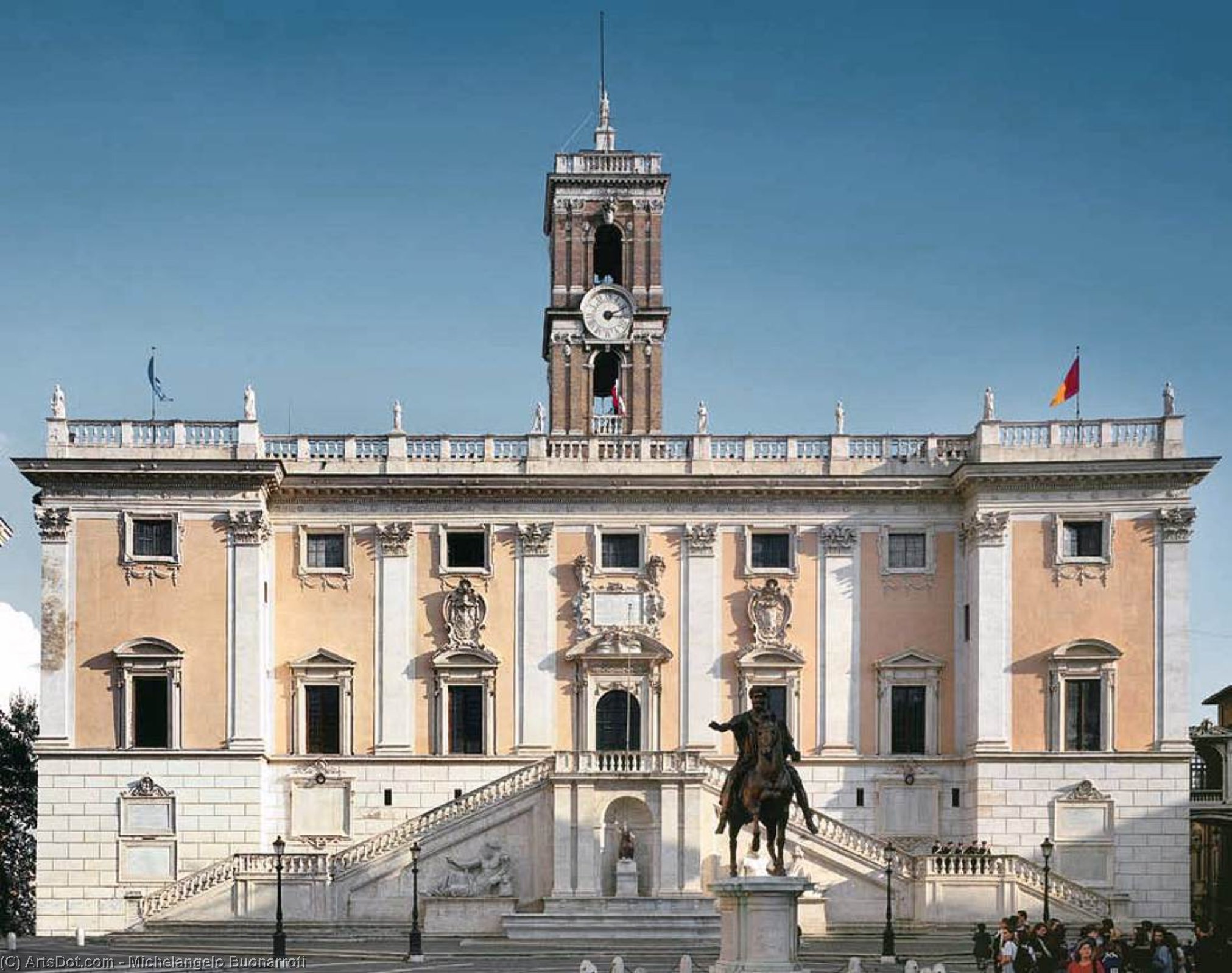
The Piazza Campidoglio, nestled in the heart of Rome, is more than just a historic square; it’s a testament to Michelangelo Buonarroti’s unparalleled ambition and artistic genius. At its center stands Palazzo Senatorio – a monumental building that embodies the spirit of Renaissance urban planning and Michelangelo’s enduring legacy as an architect. This painting captures not merely a structure but a carefully considered statement about beauty, power, and the harmonious blend of antiquity and innovation. It’s a masterpiece designed to inspire awe and contemplation—a reflection of Michelangelo's profound understanding of human potential and his unwavering dedication to artistic excellence.Historical Context: Reimagining Roman Grandeur
Michelangelo was commissioned by Pope Julius II to revitalize Piazza Campidoglio, transforming it from a neglected medieval space into a magnificent Renaissance forum. The task wasn’t simply about constructing a building; it was about honoring Rome's imperial past while elevating its cultural future. Recognizing the influence of classical ideals, Michelangelo envisioned a plaza dominated by Marcus Aurelius’ equestrian statue – a symbol of Roman virtue and authority – framed by architectural masterpieces designed to inspire awe and contemplation. Palazzo Senatorio, alongside Palazzo dei Conservatori and Palazzo Nuovo, forms the Capitoline Museums complex – a deliberate effort to showcase Rome’s artistic heritage and intellectual prowess. The project aimed to recapture the grandeur of ancient Rome and establish it as a beacon of humanist thought—a bold undertaking that cemented Michelangelo’s place in art history.Architectural Significance: A Dialogue Between Eras
The painting skillfully portrays Palazzo Senatorio as a masterful fusion of Roman and Renaissance styles. The building’s foundations hark back to ancient Rome's monumental architecture, while its façade incorporates classical proportions and decorative elements—a conscious nod to the artistic traditions of antiquity. Notably, the towering clock tower with its ornate steeple is adorned by two clocks – a symbol of time and progress – reflecting Michelangelo’s fascination with mathematical precision and humanist ideals. Furthermore, the statue of Marcus Aurelius at the plaza's center serves as a focal point for contemplation and embodies the virtues championed during the Renaissance. The design prioritized visual harmony, creating a balanced composition that draws the eye upward towards the tower and outward toward the piazza—a testament to Michelangelo’s belief in the transformative power of art.Artistic Representation: Detail and Harmony
The artist meticulously renders Palazzo Senatorio with remarkable attention to detail—from the textured stone surfaces to the intricate carvings adorning its walls. The horse statue positioned before the palazzo adds grandeur and symbolizes imperial power. Michelangelo’s design aimed for a profound emotional impact—to inspire awe and convey a sense of timeless beauty. He skillfully utilized perspective and shading techniques to create depth and realism, capturing the essence of Roman architectural splendor. The meticulous craftsmanship speaks volumes about his dedication to artistic perfection and underscores his mastery of sculptural principles applied to architectural form.Relevance Today: An Enduring Legacy
Today, Michelangelo Buonarroti: Palazzo Senatorio continues to captivate visitors from around the globe—a testament to Michelangelo’s visionary design and its enduring influence on urban planning. The Capitoline Museums, housing an unparalleled collection of art and artifacts, stand as a beacon of cultural heritage, inviting contemplation and fostering appreciation for the artistic achievements of the Renaissance. For those seeking inspiration or desiring to own a stunning reproduction of this iconic masterpiece, explore The Museum Piazza Campidoglio (Rome, Italy) at OriginalUniqueArt.com – where you can acquire hand-painted reproductions crafted with the same precision and artistry as Michelangelo’s original vision.Über den Künstler
Michelangelo Buonarroti: Ein Renaissance-Titan
Frühes Leben und Ausbildung (1475–1496)
- Michelangelo di Lodovico Buonarroti Simoni wurde am 6. März 1475 in Caprese Michelangelo, Toskana, geboren.
- Anfangs lehnte sein Vater eine künstlerische Karriere ab, räumte aber seinem Sohn aufgrund seines außergewöhnlichen Talents im Zeichnen nach.
- Mit dreizehn Jahren machte er eine Lehre bei Domenico Ghirlandaio und lernte Freskomalerei und Zeichentechniken.
- Bald zog er sich der Bildhauerei zu, studierte klassische Werke in den Medici-Gärten – ein prägendes Einfluss.
Frühe Periode: Etablierung der Meisterschaft (1490–1505)
- Um 1496 erhielt er seine erste größere Auftragsarbeit: die Skulptur der Pietà, die 1499 fertiggestellt wurde.
- Die Pietà, die im Petersdom ausgestellt ist, zeigte seine Meisterschaft in der Marmorbearbeitung und seine emotionale Tiefe.
- Seine nächste bedeutende Arbeit war der kolossale Statue von David (1501–1504), der florentinischen Republikanismus symbolisierte.
- Der David, über 17 Fuß hoch, demonstrierte sein anatomisches Verständnis und seine Fähigkeit, Stein zum Leben zu erwecken.
Die Hochrenaissance: Fresken der Sixtinischen Kapelle (1505–1520)
- Papst Julius II beauftragte Michelangelo 1508 mit dem Malen der Decke der Sixtinischen Kapelle.
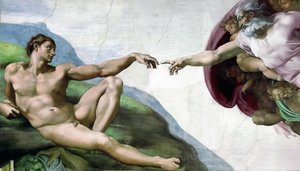
- Über vier Jahre malte er über 300 Figuren, die Szenen aus der Genesis darstellen, darunter Die Schöpfung Adams.
- Diese monumentale Freskenzyklus ist ein Meilenstein in der westlichen Kunst und demonstriert seine kompositorische Begabung und seine Erzählkraft.
- Er begann auch mit der Arbeit an Papst Julius II.s Grab – einem Projekt, das Jahrzehnte dauern sollte, aber ursprünglich nicht wie geplant fertiggestellt wurde.
Spätere Jahre: Architektur und das „Jüngste Gericht“ (1520–1564)
- Im Jahr 1520 wurde Michelangelo Architekt des Petersdoms in Rom und veränderte Bramantes Design erheblich.
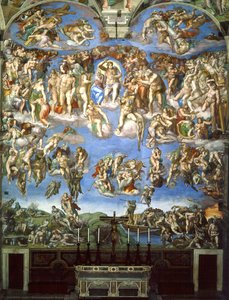
- Zwischen 1536 und 1541 malte er Das Jüngste Gericht an der Wandaltar der Sixtinischen Kapelle.
- Diese riesige Fresko zeigte die Wiederkunft Christi mit dramatischer Komposition und emotionaler Intensität, die eine Verschiebung hin zum Manierismus widerspiegelte.
Einflüsse und künstlerische Entwicklung
- Klassische Antike: Die Beschäftigung mit griechischen und römischen Skulpturen hatte tiefgreifenden Einfluss auf sein Verständnis von Anatomie und Proportionen.
- Renaissance-Humanismus: Der Schwerpunkt auf menschliches Potenzial ist in seiner Feier der menschlichen Form deutlich erkennbar.
- Florentinische Tradition: Er baute auf dem Werk von Künstlern wie Donatello und Masaccio auf.
- Sein Stil entwickelte sich von klassischer Idealität zu einer dynamischeren und ausdrucksstärkeren Manierismus.
Historische Bedeutung und Vermächtnis
- Michelangelo gilt als einer der größten Künstler aller Zeiten, der den „Renaissance-Mann“ verkörpert.
- Seine Skulpturen, Gemälde und Architektur haben Generationen inspiriert und werden die Zuschauer weltweit weiterhin fesseln.
- Er beeinflusste maßgeblich sowohl die Hochrenaissance- als auch die Manierismus-Bewegungen.
- Seine anatomische Genauigkeit, dramatischen Kompositionen und emotionale Tiefe setzten neue Maßstäbe für künstlerische Exzellenz.
Letzte Jahre
- Michelangelo starb am 18. Februar 1564 in Rom und hinterließ ein unvergleichliches Werk.
- Sein Vermächtnis prägt weiterhin unser Verständnis von Schönheit, Macht und menschlichem Potenzial.

Michelangelo Buonarroti
1475 - 1564 , Italien
Kurzinfos
- Beeinflusste Künstler:
- Donatello
- Masaccio
- Bemerkenswerte Werke:
- Pietà
- David
- Sixtinische Kapelle
- Das Jüngste Gericht
- Geburtsdatum: 06. März 1475
- Geburtsort: Caprese Michelangelo, Italien
- Künstlerische Bewegung:
- Hochrenaissance
- Manierismus
- Nationalität: Italienisch
- Todatum: 18. Februar 1564
- Vollständiger Name: Michelangelo Buonarroti
- Von Künstlern Beeinflusst: ['Klassische Antike']
Ähnliche Artikel
Michelangelo Buonarroti: Die 25 Meisterwerke des Renaissance-Genies | OriginalUniqueArt
Entdecken Sie die 25 Meisterwerke von Michelangelo Buonarroti! Von David bis zur Sixtinischen Kapelle – erleben Sie Renaissance Kunst in ihrer ganzen Pracht. Hochwertige Kunstdrucke & Inspiration für Ihr Zuhause auf OriginalUniqueArt.com.
Michelangelo Buonarroti: Leben, Werk und bleibendes Erbe eines Renaissance-Titanen
Entdecken Sie das Leben und Werk von Michelangelo Buonarroti – dem Titanen der Renaissance. Erfahren Sie mehr über seine Skulpturen, Gemälde und seinen bleibenden Einfluss auf die Kunstgeschichte. Expertenanalyse & tiefe Einblicke.

Die 25 Meisterwerke der Uffizien: Kunstgeschichte für Ihr Zuhause | OriginalUniqueArt
Entdecken Sie die 25 berühmtesten Meisterwerke der Uffizien, Florenz! Von Botticelli bis Leonardo da Vinci – Kunstgeschichte erleben. Hochwertige Reproduktionen & Inspiration für Ihr Zuhause auf OriginalUniqueArt.com.

Bartolomeo Pinelli: Neoclassical Linearity & Roman Topography of Memory
Explore the captivating world of Bartolomeo Pinelli, a master Italian engraver renowned for his evocative Roman scenes & historical narratives. Discover his art and legacy with OriginalUniqueArt.

Michelangelo Morlaiter: Venetian Landscapes & the Pursuit of Atmospheric Realism
Explore the captivating landscapes of Michelangelo Morlaiter, a key figure in 18th-century Venetian painting. Discover his mastery of atmospheric perspective and lasting influence on Italian art history. Learn more at OriginalUniqueArt.