In echtem Maßstab anzeigen
 Versenden als Grußkarte
 Teilen
 Details anzeigen
 Leitfaden öffnen

 Herunterladen
 Ähnliche Objekte
 Röntgenaufnahme
 Diashow
 Besucherstatistiken
Last Judgment
 Öl auf Leinwand
- Wandkunst
- Early Netherlandish Painting
 1467
1467- Spätmittelalter
 223.0 x 72.0 cm
 Muzeum Narodowe
 Mehr anzeigen
Die auf dieser Seite dargestellten Kunstwerke sind urheberrechtlich geschützt, was bedeutet, dass wir keine identische Reproduktion rechtmäßig erstellen oder verkaufen dürfen. Dieser Schutz wird durch internationale Abkommen wie die Berner Übereinkunft und durch nationale Gesetze, einschließlich derer, die von den ... festgelegt wurden US-Urheberrecht – Titel 17.
Diese Methode entspricht vollumfänglich den Urheberrechtsbestimmungen, da sie keine Kopie oder Vervielfältigung des geschützten Kunstwerks darstellt. Stattdessen handelt es sich um eine kreative Neuinterpretation – ein neues Gemälde, das vom Original inspiriert, aber nicht identisch mit ihm ist.
Giclée / Kunstdruck
Giclée- oder Leinwanddruck in Museumsqualität mit schneller Produktion und flexiblen Veredelungsoptionen. ( Handgemalte Reproduktion kaufen Zum digitalen Bild wechseln)




P118B €10

P118H €10

P118W €10

P438Z €10

P508JH €12

P508YH €12

P805H €10

P805Z €10

P919BZ €10

P919G €10

P919XJ €10

P959ZH €10

P968JZ €12

W106C €8

W218G €10

W218JH €8

W218Y €10

W307PJ €10

W316G €10

W316PJ €8

W316Y €10

W398PJ €8

W4111J €10

W500HY €15

W500JH €15

W692G €12

W849H €8

W940BG €15

W953PJ €8




Wählen Sie aus unseren vordefinierten Formaten, die den ursprünglichen Proportionen des Kunstwerks entsprechen.

Geben Sie die Breite und die Höhe an, die Sie benötigen, damit der Druck perfekt in Ihren Rahmen oder an Ihre Wand passt. Ein Druck kann nur beschnitten werden und niemals größer als das Originalbild gemacht werden; daher verliert ein Format mit einer anderen Proportion einen Teil des Bildes. Wir senden Ihnen ein digitales Mockup zur Freigabe, bevor wir den Druck ausführen. Das auf dieser Seite gezeigte Bild zeigt nicht den tatsächlichen Beschnitt – dies ist nur im Mockup ersichtlich.
Weltweiter Versand () innerhalb von 2 Wochen statt der üblichen 4/5 Wochen. (22 Oktober)

Kostenloser weltweiter Expressversand

Hochwertige Leinenleinwand

Vollständiger Versicherungsschutz beim Versand

Zollgebühren-Rückerstattungsgarantie

Garantie für exakte Farbtreue

100-tägiges Rückgaberecht (nur bei Mängeln)

100% Geld-zurück-Garantie

Angebot für Mengenrabatt
 Die Glasoption ist nur für Größen unter 110 cm verfügbar.

Last Judgment
Giclée / Kunstdruck
Format der Reproduktion
-


Gesamtpreis
€ 70
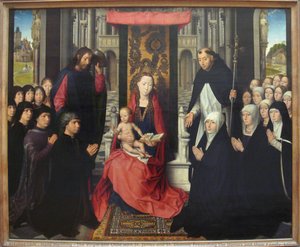
Hans Memling's "Last Judgment": A Descent into Divine Justice
This arresting depiction of the Last Judgment, painted in 1467 by Hans Memling, is more than just a religious scene; it’s a profound meditation on mortality, judgment, and the eternal consequences of human action. Measuring 223 x 72 cm, this work immediately commands attention with its dramatic composition and meticulously rendered figures. Memling, working primarily in Bruges during the High Renaissance, was renowned for his ability to infuse religious subjects with an almost palpable sense of realism and emotional depth – a hallmark that distinguishes his art from earlier, more stylized depictions.
- Subject Matter: The painting’s core is the biblical narrative of the Last Judgment, as described in Revelation. It portrays humanity undergoing divine judgment, with souls ascending to heaven while others are cast into eternal damnation.
- Style & Technique: Memling's style exemplifies the pinnacle of Early Netherlandish painting. He masterfully employs oil paint – a relatively new medium at the time – to achieve astonishing levels of detail and luminosity. Note the subtle gradations of color, the delicate modeling of drapery, and the remarkably lifelike expressions on the faces of the figures. The artist’s training under Rogier van der Weyden is clearly evident in his use of perspective and his ability to convey a sense of three-dimensionality.
A Symphony of Suffering and Salvation
The scene unfolds with a powerful dynamism, drawing the viewer into its emotional core. The composition is dominated by two distinct groups: those ascending towards the radiant figure of Christ at the top left – representing salvation – and those plummeting downwards into a fiery abyss below, symbolizing eternal punishment. The figures themselves are not merely static representations; they embody a spectrum of human emotion—fear, despair, hope, and acceptance. The artist’s attention to detail extends beyond mere physical representation; he captures the psychological weight of this momentous event.
- Symbolism: The rocky cliff upon which many figures stand represents earthly existence, a precarious position between salvation and damnation. The fiery pit below is a direct visual reference to Hell, while the ascending figures embody Heaven. The angel present in the upper left corner serves as a divine messenger, guiding souls towards redemption.
- Color Palette: Memling’s use of color is restrained yet effective. Rich blues and reds dominate, conveying both the majesty of God and the intensity of judgment. The contrast between these colors further emphasizes the dichotomy between salvation and damnation.
Historical Context & Artistic Legacy
Created in 1467, this “Last Judgment” reflects the anxieties and spiritual concerns prevalent during the late medieval period. Bruges at this time was a major center of trade and artistic patronage, attracting artists from across Europe. Memling’s workshop produced numerous works for wealthy patrons – including the Burgundian dukes – contributing significantly to the dissemination of his style throughout the Low Countries and beyond. His influence extended to artists in Germany, France, and Italy.
- Memling's Influence: Memling’s work profoundly influenced subsequent generations of painters, particularly those working in the Northern Renaissance. His meticulous technique and emotional sensitivity set a new standard for religious art, demonstrating the power of painting to evoke profound spiritual experiences.
A Timeless Masterpiece – Recreated with Precision
OriginalUniqueArt offers a meticulously crafted hand-painted reproduction of Hans Memling’s “Last Judgment,” capturing the essence and emotional impact of this iconic work. Each reproduction is created by skilled artisans, employing techniques that closely emulate Memling's original methods. This ensures an authentic representation of this masterpiece, perfect for adorning your home or office – a testament to enduring artistic genius.
Fragen & Antworten
Wofür wird eine Reproduktion von "Last Judgment" von Hans Memling empfohlen?
Eine Reproduktion von "Last Judgment" von Hans Memling wird für Statement-Piece empfohlen. Dieser Vorschlag ergibt sich aus dem Motiv, der Stimmung und den Farben des Werkes.
Welche Emotion vermittelt das Werk der Early Netherlandish Painting „Last Judgment“?
Die Dramatisch Emotion von „Last Judgment“ begleitet seinen Early Netherlandish Painting-Stil.
Darf "Last Judgment" von Hans Memling, das sich im Muzeum Narodowe befindet, rechtmäßig reproduziert werden?
"Last Judgment" von Hans Memling, aufbewahrt im Muzeum Narodowe, ist noch urheberrechtlich geschützt. Dieser Status bestimmt, ob Reproduktionen des Bildes angefertigt werden dürfen.
Biografie des Künstlers
Hans Memling: Der Brüsseler Meister der Detailtreue und des Mäzenatentums
Hans Memling (ca. 1430 – 11. August 1494), geboren in Seligenstadt, Deutschland, gilt als eine zentrale Figur der altniederländischen Malerei – einer Epoche, die durch exquisiten Realismus, akribische Naturbeobachtung und tiefe spirituelle Kontemplation geprägt ist. Obwohl seine prägenden Jahre primär im künstlerischen Milieu des Rheinlands verbracht wurden, führte Memlings Weg ihn letztlich nach Brügge, Belgien. Dort etablierte er sich als einer der bedeutendsten Künstler seiner Zeit und leitete eine produktive Werkstatt, die seinen unverwechselbaren Stil in ganz Europa verbreitete.- Frühes Leben & Ausbildung: Genaue biografische Details zu Memlings Geburt sind schwer fassbar, doch der wissenschaftliche Konsens legt nahe, dass er um 1430 aus Mainz hervorging. Seine künstlerische Ausbildung begann unter der Ägide von Rogier van der Weyden, einem Titanen der flämischen Malerei, dessen Meisterschaft in der Ölmalerei und der skulpturalen Modellierung Memlings Technik tiefgreifend prägte. Diese Lehrzeit festigte in ihm eine unerschütterliche Hingabe an das Detail – ein Markenzeichen, das sein gesamtes Lebenswerk definieren sollte.
- Brügge & die Werkstatt: Bis 1465 erlangte Memling das Bürgerrecht in Brügge, einem aufstrebenden Handelszentrum und künstlerischen Epizentrum. In der Erkenntnis des Potenzials für gemeinschaftliche Kreativität gründete er eine Werkstatt, die von zahlreichen Assistenten besetzt war, wodurch ein Umfeld für Innovation und stilistische Beständigkeit geschaffen wurde. Diese Werkstatt wurde berühende für die Produktion beeindruckender Reproduktionen von Meisterwerken bekannt – ein Zeugnis für Memlings Geschick als Künstler und Pädagoge zugleich.
Ein Stil, definiert durch Präzision und Mäzenatentum
Memlings künstlerischer Stil ist sofort erkennbar: Er zeichnet sich durch leuchtende Farbpaletten, zart ausgearbeitete Faltenwürfe der Gewänder und ein erstaunliches Maß an anatomischer Genauigkeit aus. Er studierte die menschliche Anatomie akribisch – inspiriert von der klassischen Bildhauerei –, um sowohl in seinen Porträts als auch in religiösen Szenen einen unvergleichlichen Realismus zu erreichen. Im Gegensatz zu vielen Zeitgenossen, die expressive Pinselstriche bevorzugten, priorisierte Memling die sorgfältige Beobachtung und eine mühsame Ausführung, was zu Bildern führte, die von stiller Schönheit und tiefer spiritueller Intensität durchdrungen sind.- Religiöse Aufträge: Memlings Ruf wuchs dank lukrativer Aufträge wohlhabender Mäzene – vornehmlich Geistlicher und aristokratischer Familien –, die Darstellungen von Heiligen und biblischen Erzählungen suchten, welche Frömmigkeit und Prestige ausstrahlten. Ein herausragendes Beispiel ist das „Jüngste Gericht“ im Heilig-Geist-Hospital in Brügge, ein monumentales Werk, das Memlings meisterhafte Kompositionsfähigkeit und den dramatischen Einsatz von Farbe zur Schau stellt.
- Porträtmalerei: Memling brillierte als Porträtist, indem er die Ähnlichkeit prominenter Persönlichkeiten mit bemerkenswerter Sensibilität und psychologischem Scharfsinn einfing. Seine Porträts – wie das „Porträt eines Mannes mit einem Pfeil“ – demonstrieren seine Fähigkeit, Charakter durch subtile Gesten und Gesichtsausdrücke zu vermitteln – eine Fertigkeit, die seinen Platz unter den größten Künstlern seiner Ära festigte.
Einfluss & Vermächtnis
Memlings künstlerisches Erbe reicht weit über seine eigene Lebenszeit hinaus. Seine Werkstatt produzierte eine Vielzahl von Gemälden – viele mit stilistischen Ähnlichkeiten zu seinen Originalwerken –, die Memlings besondere Ästhetik in Flandern und darüber hinaus verbreiteten. Darüber hinaus diente Memlings akribische Technik als Inspiration für nachfolgende Generationen von Künstlern – insbesondere für Quentin Massys, der die Antwerpener Schule begründete – und festigte so Memlings Position als Eckpfeiler der flämischen Renaissance-Kunst.Wiederentdeckung & zeitlose Popularität
Die künstlerischen Errungenschaften Memlings blieben weitgehend in Vergessenheit, bis sie im 19. Jahrhundert von Gelehrten wiederentdeckt und sein Genie gewürdigt wurde. Heute ziehen Memlings Werke – allen voran das „Jüngste Gericht“ – weltweit das Publikum in ihren Bann und dienen als bleibende Symbole für künstlerische Exzellenz und spirituelle Besinnung. Seine akribische Liebe zum Detail und sein tiefes Verständnis der menschlichen Psychologie bleiben in unserer zeitgenössischen Wertschätzung der Kunstgeschichte von bemerkenswerter Relevanz.
Hans Memling
Deutschland
Eckdaten zum Künstler
- Artistic Movement Or Style: Frühflämische Malerei
- Artists Who Influenced This Artist: ['Rogier van der Weyden']
- Date Of Birth: c. 1430
- Date Of Death: August 11, 1494
- Full Name: Hans Memling
- Nationality: Deutsch-Flämisch
- Notable Artworks:
- St. Johann Altar
- Die letzte Gerichtsbarkeit
- Das letzte Gericht
- Place Of Birth: Seligenstadt, Deutschland
Verwandte Artikel

Giclée Prints: Archival Quality & Aesthetic Nuances for the Discerning Collector
Explore the world of giclée prints with OriginalUniqueArt. Learn about archival quality, aesthetic nuances & investment potential. Expert guidance for discerning art collectors seeking museum-quality reproductions and lasting value.

Echoes of Time: Exploring the Enduring Appeal & Historical Context of Vintage Art Prints
Explore the captivating world of vintage art prints! Discover their history, collecting tips & enduring appeal. Expert insights on chromolithography and building a legacy collection with OriginalUniqueArt.
The Enduring Legacy of Printmaking: Techniques, Themes & Artistic Innovation Across Centuries
Explore the rich history of printmaking with OriginalUniqueArt. Discover techniques from intaglio to lithography, learn about collecting valuable prints & find museum-quality reproductions. Expert insights for art enthusiasts and collectors.

Frühniederländische Meisterwerke: 10 Gemälde, die eine Epoche prägten | OriginalUniqueArt
Entdecken Sie die 10 prägendsten Meisterwerke der Frühniederländischen Malerei! Von Jan van Eyck bis Rogier van der Weyden – erleben Sie Kunstgeschichte hautnah. Hochwertige Reproduktionen & Inspiration für Ihr Interieur auf OriginalUniqueArt.com.

The Enduring Legacy of Fine Art Prints: Technique, History & Aesthetic Impact
Explore the rich history & techniques of fine art prints. Discover investment potential, assess authenticity, and learn how to preserve your collection with expert guidance. Trusted insights for discerning collectors.