In echtem Maßstab anzeigen
 Versenden als Grußkarte
 Teilen
 Details anzeigen
 Leitfaden öffnen

 Herunterladen
 Ähnliche Objekte
 Röntgenaufnahme
 Diashow
 Besucherstatistiken
Donor
 Oil
Oil- WallArt
- Early Netherlandish Renaissance
 1490
1490- Renaissance
 45.0 x 32.0 cm
 Muzeul Național de Artă
 Mehr anzeigen
Handgefertigte Ölreproduktion
Handgemaltes Ölgemälde auf Leinwand in Ihrer Wunschgröße und mit Rahmen, auf Bestellung von unseren Künstlern angefertigt. ( Zum Druck wechseln Zum digitalen Bild wechseln)




P118B $10

P118H $10

P118W $10

P438Z $10

P508JH $12

P508YH $12

P805H $10

P805Z $10

P919BZ $10

P919G $10

P919XJ $10

P959ZH $10

P968JZ $12

W106C $8

W218G $10

W218JH $8

W218Y $10

W307PJ $10

W316G $10

W316PJ $8

W316Y $10

W398PJ $8

W4111J $10

W500HY $15

W500JH $15

W692G $12

W849H $8

W940BG $15

W953PJ $8




Wählen Sie aus unseren vordefinierten Formaten, die den ursprünglichen Proportionen des Kunstwerks entsprechen.

Sie können Ihre eigenen Maße eingeben, um einen bestimmten Rahmen oder Platz auszufüllen. Wenn die gewählte Größe nicht den Proportionen des Originalbildes entspricht, werden wir das Kunstwerk entweder beschneiden oder das Gemälde durch zusätzliche, handgemalte Elemente erweitern. Ein digitales Mockup wird Ihnen zur Genehmigung zugesandt, bevor die Produktion beginnt.
Bitte beachten Sie, dass die Bildschirmvorschau nicht die tatsächliche Beschneidung oder Erweiterung widerspiegelt. Nur das Mockup zeigt die endgültige Komposition exakt an.
Obwohl Sondermaße verfügbar sind, empfehlen wir, eine Größe aus der vordefinierten Liste zu wählen, um die ursprünglichen Proportionen beizubehalten.
Nach der Bestellung wird das OriginalUniqueArt.com-Team dem Kunden Anweisungen per E-Mail zusenden und eine Mockup-Vorschau bereitstellen.
Weltweiter Versand () in nur 3 bis 4 Wochen statt der üblichen 5 Wochen. (26 September). Keine Kompromisse bei der Qualität.

Kostenloser weltweiter Expressversand

Hochwertige Leinenleinwand

Vollständiger Versicherungsschutz beim Versand

Zollgebühren-Rückerstattungsgarantie

Garantie für exakte Farbtreue

100-tägiges Rückgaberecht (nur bei Mängeln)

100% Geld-zurück-Garantie

Angebot für Mengenrabatt
 Die Glasoption ist nur für Größen unter 110 cm verfügbar.

Donor
Reproduktionsmedium
Format der Reproduktion
-


Gesamtpreis
$ 300
A Window into the Soul: The Devotion of Hans Memling’s Donor
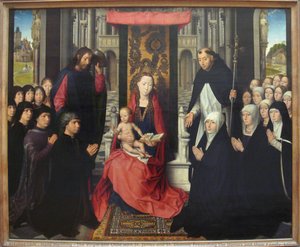
In the quiet, luminous world of the Northern Renaissance, few works capture the intersection of earthly dignity and spiritual yearning as poignantly as Hans Memling’s “Donor.” Created around 1490, this masterpiece serves as more than a mere portrait; it is an intimate encounter with a soul in contemplation. The painting presents a dignified man seated with a profound sense of presence against a muted, atmospheric backdrop. He holds an open book—a gesture that transcends simple literacy to suggest a deep engagement with divine wisdom. Flanked by two figures who lend a sense of communal sanctity to the scene, the composition draws the viewer into a sacred circle, where the boundaries between the observer and the observed begin to dissolve.
The technical brilliance of Memling, often celebrated as the master of Bruges, is on full display through his command of the Early Netherlandish style. This period was defined by an unparalleled realism, achieved through the painstaking application of oil glazes. In “Donor,” one can almost feel the texture of the man’s dark robes and the subtle, shimmering light that dances across the pages of his book. Memling utilized a meticulous process of layering and blending to create surfaces that possess a jewel-like luminosity. This technique does not merely replicate physical likeness; it imbues the subject with an inner radiance, making the skin appear supple and the atmosphere feel heavy with the stillness of prayer.
Symbolism and the Spirit of the Burgundian Renaissance
To gaze upon this work is to read a silent sermon. Every element within the frame is steeped in the symbolic language of the late 15th century. The open book held by the donor is a powerful emblem of divine illumination, representing the humanist pursuit of knowledge intertwined with Christian piety. It suggests an intellect that is open to the light of God, a theme central to the burgeoning Renaissance spirit. The flanking figures act as silent guardians, perhaps representing the intercession of saints or the support of a community of faith, reinforcing the donor's moral virtue and his place within the cosmic order.
Historically, this piece emerged from the cosmopolitan splendor of Bruges, a hub of trade and artistic patronage during the Burgundian Renaissance. This was an era where art served as a bridge between the material wealth of the merchant class and the eternal promises of the Church. For the modern collector or interior designer, bringing a reproduction of “Donor” into a space offers more than just aesthetic beauty; it introduces an aura of serenity, intellectual depth, and timeless reverence. It is a piece that commands attention not through loud colors, but through a quiet, commanding grace that invites long periods of reflection and provides a sophisticated focal point for any curated collection.
Biografie des Künstlers
Hans Memling: Der Brüsseler Meister der Detailtreue und des Mäzenatentums
Hans Memling (ca. 1430 – 11. August 1494), geboren in Seligenstadt, Deutschland, gilt als eine zentrale Figur der altniederländischen Malerei – einer Epoche, die durch exquisiten Realismus, akribische Naturbeobachtung und tiefe spirituelle Kontemplation geprägt ist. Obwohl seine prägenden Jahre primär im künstlerischen Milieu des Rheinlands verbracht wurden, führte Memlings Weg ihn letztlich nach Brügge, Belgien. Dort etablierte er sich als einer der bedeutendsten Künstler seiner Zeit und leitete eine produktive Werkstatt, die seinen unverwechselbaren Stil in ganz Europa verbreitete.- Frühes Leben & Ausbildung: Genaue biografische Details zu Memlings Geburt sind schwer fassbar, doch der wissenschaftliche Konsens legt nahe, dass er um 1430 aus Mainz hervorging. Seine künstlerische Ausbildung begann unter der Ägide von Rogier van der Weyden, einem Titanen der flämischen Malerei, dessen Meisterschaft in der Ölmalerei und der skulpturalen Modellierung Memlings Technik tiefgreifend prägte. Diese Lehrzeit festigte in ihm eine unerschütterliche Hingabe an das Detail – ein Markenzeichen, das sein gesamtes Lebenswerk definieren sollte.
- Brügge & die Werkstatt: Bis 1465 erlangte Memling das Bürgerrecht in Brügge, einem aufstrebenden Handelszentrum und künstlerischen Epizentrum. In der Erkenntnis des Potenzials für gemeinschaftliche Kreativität gründete er eine Werkstatt, die von zahlreichen Assistenten besetzt war, wodurch ein Umfeld für Innovation und stilistische Beständigkeit geschaffen wurde. Diese Werkstatt wurde berühende für die Produktion beeindruckender Reproduktionen von Meisterwerken bekannt – ein Zeugnis für Memlings Geschick als Künstler und Pädagoge zugleich.
Ein Stil, definiert durch Präzision und Mäzenatentum
Memlings künstlerischer Stil ist sofort erkennbar: Er zeichnet sich durch leuchtende Farbpaletten, zart ausgearbeitete Faltenwürfe der Gewänder und ein erstaunliches Maß an anatomischer Genauigkeit aus. Er studierte die menschliche Anatomie akribisch – inspiriert von der klassischen Bildhauerei –, um sowohl in seinen Porträts als auch in religiösen Szenen einen unvergleichlichen Realismus zu erreichen. Im Gegensatz zu vielen Zeitgenossen, die expressive Pinselstriche bevorzugten, priorisierte Memling die sorgfältige Beobachtung und eine mühsame Ausführung, was zu Bildern führte, die von stiller Schönheit und tiefer spiritueller Intensität durchdrungen sind.- Religiöse Aufträge: Memlings Ruf wuchs dank lukrativer Aufträge wohlhabender Mäzene – vornehmlich Geistlicher und aristokratischer Familien –, die Darstellungen von Heiligen und biblischen Erzählungen suchten, welche Frömmigkeit und Prestige ausstrahlten. Ein herausragendes Beispiel ist das „Jüngste Gericht“ im Heilig-Geist-Hospital in Brügge, ein monumentales Werk, das Memlings meisterhafte Kompositionsfähigkeit und den dramatischen Einsatz von Farbe zur Schau stellt.
- Porträtmalerei: Memling brillierte als Porträtist, indem er die Ähnlichkeit prominenter Persönlichkeiten mit bemerkenswerter Sensibilität und psychologischem Scharfsinn einfing. Seine Porträts – wie das „Porträt eines Mannes mit einem Pfeil“ – demonstrieren seine Fähigkeit, Charakter durch subtile Gesten und Gesichtsausdrücke zu vermitteln – eine Fertigkeit, die seinen Platz unter den größten Künstlern seiner Ära festigte.
Einfluss & Vermächtnis
Memlings künstlerisches Erbe reicht weit über seine eigene Lebenszeit hinaus. Seine Werkstatt produzierte eine Vielzahl von Gemälden – viele mit stilistischen Ähnlichkeiten zu seinen Originalwerken –, die Memlings besondere Ästhetik in Flandern und darüber hinaus verbreiteten. Darüber hinaus diente Memlings akribische Technik als Inspiration für nachfolgende Generationen von Künstlern – insbesondere für Quentin Massys, der die Antwerpener Schule begründete – und festigte so Memlings Position als Eckpfeiler der flämischen Renaissance-Kunst.Wiederentdeckung & zeitlose Popularität
Die künstlerischen Errungenschaften Memlings blieben weitgehend in Vergessenheit, bis sie im 19. Jahrhundert von Gelehrten wiederentdeckt und sein Genie gewürdigt wurde. Heute ziehen Memlings Werke – allen voran das „Jüngste Gericht“ – weltweit das Publikum in ihren Bann und dienen als bleibende Symbole für künstlerische Exzellenz und spirituelle Besinnung. Seine akribische Liebe zum Detail und sein tiefes Verständnis der menschlichen Psychologie bleiben in unserer zeitgenössischen Wertschätzung der Kunstgeschichte von bemerkenswerter Relevanz.
Hans Memling
Deutschland
Eckdaten zum Künstler
- Artistic Movement Or Style: Frühflämische Malerei
- Artists Who Influenced This Artist: ['Rogier van der Weyden']
- Date Of Birth: c. 1430
- Date Of Death: August 11, 1494
- Full Name: Hans Memling
- Nationality: Deutsch-Flämisch
- Notable Artworks:
- St. Johann Altar
- Die letzte Gerichtsbarkeit
- Das letzte Gericht
- Place Of Birth: Seligenstadt, Deutschland
Verwandte Artikel

Illuminating Realism: Early Netherlandish Painting (15th-16th Centuries)
Explore the captivating world of Early Netherlandish painting (15th-16th centuries). Discover Jan van Eyck, Hans Memling & more. Uncover revolutionary techniques and hidden symbolism in this definitive guide.

Öl auf Leinwand: Eine historische und technische Erkundung eines zeitlosen künstlerischen Mediums
Entdecken Sie die faszinierende Welt der Ölmalerei! Von historischen Techniken bis zur modernen Anwendung – wir bieten Expertenwissen, Restaurierungstipps und hochwertige Reproduktionen. Jetzt informieren!

The Enduring Legacy of Oil on Canvas: Technique, History & Aesthetic Impact
Explore the rich history & techniques of oil painting – from Renaissance masters to Impressionism. Discover pigments, layering methods, and why this timeless medium endures. Expert insights for artists & art enthusiasts.

Illuminating Realism: A Comprehensive Exploration of the Early Netherlandish Renaissance Movement
Explore the captivating world of Early Netherlandish painting! Discover Jan van Eyck & other Flemish masters, their revolutionary techniques, hidden symbolism, and lasting legacy. A comprehensive guide for art enthusiasts.
Illuminating Realism: Early Netherlandish Painting (15th-16th Centuries)
Explore the captivating world of Early Netherlandish painting! Discover Jan van Eyck, Hans Memling & more. Uncover symbolism, techniques & the legacy of these Flemish masters. A comprehensive guide for art enthusiasts.