

 In echtem Maßstab anzeigen
 Versenden als Grußkarte
 Teilen
 Details anzeigen
 Leitfaden öffnen

 Herunterladen
 Ähnliche Objekte
 Röntgenaufnahme
 Diashow
 Besucherstatistiken
St Sebastian


 Mehr anzeigen
Handgefertigte Ölreproduktion
Handgemaltes Ölgemälde auf Leinwand in Ihrer Wunschgröße und mit Rahmen, auf Bestellung von unseren Künstlern angefertigt. ( Zum Druck wechseln Zum digitalen Bild wechseln)




P118B €10

P118H €10

P118W €10

P438Z €10

P508JH €12

P508YH €12

P805H €10

P805Z €10

P919BZ €10

P919G €10

P919XJ €10

P959ZH €10

P968JZ €12

W106C €8

W218G €10

W218JH €8

W218Y €10

W307PJ €10

W316G €10

W316PJ €8

W316Y €10

W398PJ €8

W4111J €10

W500HY €15

W500JH €15

W692G €12

W849H €8

W940BG €15

W953PJ €8




Wählen Sie aus unseren vordefinierten Formaten, die den ursprünglichen Proportionen des Kunstwerks entsprechen.

Geben Sie die Breite und die Höhe an, die Sie für Ihren Rahmen oder Ihre Wand benötigen. Da dieses Werk handgemalt ist, kann der Künstler bei einer anderen Form etwas mehr um das Bild herum malen oder etwas abschneiden – Sie entscheiden. Wir senden Ihnen ein digitales Mockup zur Freigabe, bevor mit dem Malen begonnen wird. Das auf dieser Seite gezeigte Bild stellt nicht das tatsächliche Ergebnis dar – dies tut nur das Mockup.
Nach der Bestellung wird das OriginalUniqueArt.com-Team dem Kunden Anweisungen per E-Mail zusenden und eine Mockup-Vorschau bereitstellen.
Weltweiter Versand () in nur 3 bis 4 Wochen statt der üblichen 5 Wochen. (23 Oktober). Keine Kompromisse bei der Qualität.

Kostenloser weltweiter Expressversand

Hochwertige Leinenleinwand

Vollständiger Versicherungsschutz beim Versand

Zollgebühren-Rückerstattungsgarantie

Garantie für exakte Farbtreue

100-tägiges Rückgaberecht (nur bei Mängeln)

100% Geld-zurück-Garantie

Angebot für Mengenrabatt
 Die Glasoption ist nur für Größen unter 110 cm verfügbar.

St Sebastian
Reproduktionsmedium
Format der Reproduktion
-


Gesamtpreis
€ 264
A Study in Suffering: Mattia Preti’s St Sebastian
Mattia Preti's "St Sebastian" (c. 1660) is not merely a depiction of a biblical martyr; it’s a profoundly moving exploration of human suffering and faith, rendered with the dramatic intensity characteristic of the Calabrian Knight himself. This painting, showcasing St. Sebastian’s agonizing martyrdom – his imprisonment and self-flagellation after being shot with arrows – immediately draws the viewer into a world of palpable anguish. Preti, deeply influenced by Caravaggio's masterful use of *chiaroscuro*, employs this technique to devastating effect, sculpting the figure’s muscular form from pools of deep shadow while simultaneously illuminating his exposed flesh and contorted expression. The ropes and chains binding him to the post are not simply restraints; they become extensions of his torment, emphasizing his vulnerability against a backdrop of brutal reality.
Baroque Drama and Calabrian Roots
Born in Taverna, Calabria, in 1613, Mattia Preti’s artistic development was inextricably linked to the vibrant Baroque movement sweeping through Italy. His early training under Giovanni Battista Caracciolo provided a crucial foundation, introducing him to the Caravaggist style – a commitment to realism, dramatic lighting, and emotionally charged narratives. This influence is powerfully evident in “St Sebastian,” where Preti doesn’t shy away from depicting the raw physicality of suffering. The subdued color palette—earth tones dominate—contributes significantly to the painting's somber mood, amplifying the sense of despair and isolation. Preti’s time spent in Rome further solidified his artistic vision, allowing him to absorb the lessons of Caravaggio and Guercino before ultimately establishing himself as a leading figure in Malta, where he would spend much of his career.
Symbolism of Pain and Redemption
The iconography surrounding St. Sebastian is rich with symbolic meaning. He was martyred for refusing to worship pagan gods, representing unwavering faith against worldly temptations. The arrows piercing his body are a potent symbol of suffering and sacrifice, while the ropes and chains represent earthly bonds that cannot contain the spirit. Preti’s skillful rendering of these elements elevates the painting beyond a simple historical narrative; it becomes a meditation on human endurance and the promise of redemption. The figure's raised arms, though clearly in agony, also suggest a plea for divine intervention – a desperate reaching out to a higher power amidst unimaginable pain.
Technical Mastery and Emotional Resonance
“St Sebastian” exemplifies Preti’s technical brilliance and his ability to translate complex emotions onto canvas. The meticulous detail of the figure's anatomy, combined with the dramatic use of light and shadow, creates an incredibly realistic and emotionally resonant image. The artist’s attention to texture – from the rough grain of the wood to the tautness of Sebastian’s muscles – adds another layer of depth and intensity. This painting is a testament to Preti's mastery of Baroque technique, resulting in a work that continues to captivate viewers with its raw emotion and enduring power. It remains a cornerstone of his oeuvre, showcasing his profound understanding of human suffering and his ability to evoke powerful responses through masterful artistic execution.
Fragen & Antworten
Wie hell ist "St Sebastian" insgesamt?
Die wahrgenommene Helligkeit von "St Sebastian" von Mattia Preti beträgt deep_shadow. Sie lässt sich optimal an das Licht des vorgesehenen Raumes anpassen.
Welche Stellung nimmt „St Sebastian“ unter den wiederkehrenden Motiven von Mattia Preti ein?
Unter den dokumentierten Themen von Mattia Preti – caravaggist influence, religious fervor, calabrian baroque, malta focus, martyrdom, suffering, redemption themes, preti’s signature dramatic style – legt „St Sebastian“ einen ganz eigenen Fokus auf st sebastian, martyrdom, religious art, baroque painting, mattia preti, chiaroscuro, suffering figure.
Ist "St Sebastian" ein berühmtes Kunstwerk der Baroque Italian Painting-Epoche?
"St Sebastian" wird im Katalog als Recognized unter den Werken der Baroque Italian Painting geführt.
Biografie des Künstlers
Mattia Preti: Ein bedeutender italienischer Barockkünstler
- Geboren: Taverna, Italien (24. Februar 1613)
- Gestorben: 1699
Frühes Leben und Ausbildung
Mattia Preti wurde am 24. Februar 1613 in Taverna, Kalabrien, Italien geboren. Seine frühe künstlerische Ausbildung begann bei Giovanni Battista Caracciolo, einem Maler, der mit der Caravaggisten-Bewegung verbunden war. Diese anfängliche Auseinandersetzung prägte seinen Stil maßgeblich, was in vielen seiner Werke deutlich wird. Vor 1630 trat Preti seinem Bruder Gregorio Preti in Rom bei, wo er sich den Techniken von Caravaggio und anderen bedeutenden Künstlern der Zeit verschrieb. Diese Periode war entscheidend für die Entwicklung seines Verständnisses von dramatischem Licht und realistischen Darstellungen.
Wichtige künstlerische Entwicklungen und Einflüsse
Pretis künstlerischer Weg umfasste ein komplexes Zusammenspiel von Einflüssen. Obwohl er in der Caravaggismus verwurzelt war, absorbierte er auch Elemente verschiedener Meister wie Guercino, Rubens, Guido Reni und Giovanni Lanfranco. Seine Zeit in Neapel führte ihn zur Arbeit von Luca Giordano, was seinen Stil weiter verfeinerte. Eine bemerkenswerte Verschiebung trat auf, als Preti über eine strikte Caravaggeske Imitation hinausging und einen dynamischeren und ausdrucksstärkeren Barockstil entwickelte, der durch Folgendes gekennzeichnet ist:
- Dramatische Kontraste von Licht und Schatten: Ein Kennzeichen, das er von Caravaggio übernahm, um intensive Dramatik zu erzeugen und Schlüsselfiguren hervorzuheben.
- Intensive emotionale Ausdruckskraft: Pretis Werke vermitteln oft kraftvolle Emotionen durch Gesichtsausdrücke und Körpersprache.
- Dynamische Kompositionen: Seine Gemälde zeichnen sich durch energiegeladene Bewegung und komplexe Anordnungen von Figuren aus.
Hauptwerke und Aufträge
Pretis Karriere war geprägt von zahlreichen bedeutenden Aufträgen in ganz Italien und Malta. Zu den bemerkenswertesten Werken gehören:
- Freskzyklen in Rom: Er schuf Freskzyklen für Kirchen wie Sant’Andrea della Valle und San Carlo ai Catinari, was sein Können in großflächiger dekorativer Malerei demonstrierte.
- Fresken in San Biagio, Modena: Seine Arbeit in der Kirche von San Biagio zeigte seine Fähigkeit, seinen Stil an verschiedene Umgebungen anzupassen.
- Neapolitanische Pestfresken: Eine Reihe großer Fresken, die die Jungfrau oder Heilige darstellen, die das Volk vor der Pest retten, wurden auf sieben Stadttoren in Neapel gemalt. Obwohl sie heute verloren sind, zeugen Skizzen von ihrem Umfang und ihrer Wirkung.
- St. John’s Co-Cathedral, Valletta (Malta): Seine bedeutendste Leistung war die Umgestaltung des Innenraums der St. John’s Co-Cathedral mit einer umfangreichen Reihe von Gemälden, die das Leben und den Märtyrertod Johannes des Täufers darstellen. Dieses Projekt festigte seinen Ruf und sicherte ihm zahlreiche Aufträge in ganz Europa.
Vermächtnis und historische Bedeutung
Pretis zunehmender Ruf, der durch seine Arbeit in Malta befeuert wurde, führte zu einem erweiterten Kreis von Mäzenen und Aufträgen aus ganz Europa. Er wird als eine führende Figur in der italienischen Barockkunst in Erinnerung behalten, bekannt für seine dramatischen Kompositionen, die geschickte Verwendung von Licht und Schatten sowie seine Fähigkeit, intensive Emotionen zu vermitteln. Sein Vermächtnis wird weiterhin durch die Bewahrung seiner Werke in Museen wie dem Capodimonte Museum in Neapel und durch Reproduktionen auf OriginalUniqueArt.com geschätzt. Sein Beitrag zur Dekoration der St. John’s Co-Cathedral ist ein Zeugnis seines künstlerischen Talents und seines bleibenden Einflusses auf die Barockkunst.
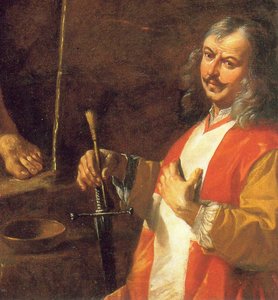
Mattia Preti
1613 - 1699 , Italien
Eckdaten zum Künstler
- Beeinflusste Künstler: ['Giovanni Battista Caracciolo']
- Bemerkenswerte Werke:
- Tribute Money
- Absaloms Festmahl
- Das Konzert
- Heiligendarstellung
- Herodes' Gastmahl
- Einflussreiche Künstler:
- Caravaggio
- Luca Giordano
- Geburtsdatum: 24. Februar 1613
- Geburtsort: Taverna, Italien
- Künstlerischer Stil: Barock
- Nationalität: Italienisch
- Sterbedatum: 1699
- Vollständiger Name: Mattia Preti
Verwandte Artikel

El Greco: Die 25 Meisterwerke – Kunst für Ihr Zuhause | OriginalUniqueArt
Entdecken Sie die 25 bedeutendsten Meisterwerke von El Greco! Erleben Sie die spirituelle Tiefe und den dramatischen Stil des griechischen Malers. Hochwertige Kunstdrucke & Inspiration für Ihr Zuhause auf OriginalUniqueArt.com.

Theatricality & Triumph: Baroque Drama in Painting & Sculpture
Explore the dramatic world of Baroque art! Discover its history, defining characteristics, & lasting influence on painting & sculpture. Expert insights into Caravaggio, Zurbarán, and Bernini – plus high-quality reproductions at OriginalUniqueArt.

The Dramatic Flourish: Exploring the Baroque Movement's Enduring Legacy in Art History
Explore the dramatic world of Baroque art! Discover iconic artists like Caravaggio & Rubens, defining techniques, and its lasting impact on art history. Expert insights for collectors & enthusiasts at OriginalUniqueArt.
The Dramatic Flourish: Exploring Themes of Power, Faith & Emotion in Baroque Artworks
Explore the dramatic world of Baroque art! Discover masters like Zurbarán & the powerful influence of religious zeal on painting techniques. Expert insights for collectors and enthusiasts.

Barocke Pracht: Wie Sie Opulenz und Emotionen in zeitgenössische Innenräume bringen
Entdecken Sie die Pracht des Barock! Expertenratgeber für luxuriöse Innenräume mit barocken Elementen. Inspiration, Tipps & hochwertige Kunst bei .


