In echtem Maßstab anzeigen
 Versenden als Grußkarte
 Teilen
 Details anzeigen
 Leitfaden öffnen

 Herunterladen
 Ähnliche Objekte
 Röntgenaufnahme
 Diashow
 Besucherstatistiken
Longleaf Pine (Pinus palustris)
 Watercolor
- WallArt
- Botanical Realism
 1929
1929- 19th Century
 25.0 x 18.0 cm
 Mehr anzeigen
Giclée / Kunstdruck
Giclée- oder Leinwanddruck in Museumsqualität mit schneller Produktion und flexiblen Veredelungsoptionen. ( Handgemalte Reproduktion kaufen Zum digitalen Bild wechseln)




P118B €10

P118H €10

P118W €10

P438Z €10

P508JH €12

P508YH €12

P805H €10

P805Z €10

P919BZ €10

P919G €10

P919XJ €10

P959ZH €10

P968JZ €12

W106C €8

W218G €10

W218JH €8

W218Y €10

W307PJ €10

W316G €10

W316PJ €8

W316Y €10

W398PJ €8

W4111J €10

W500HY €15

W500JH €15

W692G €12

W849H €8

W940BG €15

W953PJ €8




Wählen Sie aus unseren vordefinierten Formaten, die den ursprünglichen Proportionen des Kunstwerks entsprechen.

Sie können Ihre eigenen Maße eingeben, um ein bestimmtes Format oder einen speziellen Platz einzupassen. Wenn das von Ihnen gewählte Format nicht den Proportionen des Originalbildes entspricht, werden wir das Kunstwerk entweder beschneiden oder das Bild mit einem gespiegelten oder einfarbigen Rand erweitern. Ein digitaler Entwurf wird Ihnen zur Genehmigung zugesandt, bevor die Produktion beginnt.
Bitte beachten Sie, dass die Vorschau auf dem Bildschirm nicht den tatsächlichen Zuschnitt oder die Erweiterung widerspiegelt. Nur der Entwurf zeigt die endgültige Komposition präzise an.
Obwohl Sondermaße verfügbar sind, empfehlen wir die Auswahl eines Maßes aus der vordefinierten Liste, um die ursprünglichen Proportionen zu bewahren.
Weltweiter Versand () innerhalb von 2 Wochen statt der üblichen 4/5 Wochen. (12 Oktober)

Kostenloser weltweiter Expressversand

Hochwertige Leinenleinwand

Vollständiger Versicherungsschutz beim Versand

Zollgebühren-Rückerstattungsgarantie

Garantie für exakte Farbtreue

100-tägiges Rückgaberecht (nur bei Mängeln)

100% Geld-zurück-Garantie

Angebot für Mengenrabatt
 Die Glasoption ist nur für Größen unter 110 cm verfügbar.

Longleaf Pine (Pinus palustris)
Giclée / Kunstdruck
Format der Reproduktion
-


Gesamtpreis
€ 69
A Botanical Symphony in Watercolor
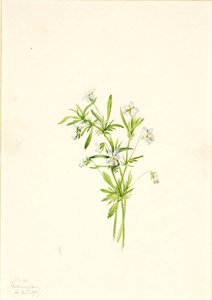
In the delicate dance of light and pigment, Mary Vaux Walcott’s Longleaf Pine (Pinus palustris) emerges as a breathtaking testament to the ephemeral beauty of the natural world. Created in 1929, this exquisite watercolor captures more than just a botanical specimen; it captures a moment of profound stillness. The composition centers on a striking purple flower, its long, elegant petals unfurling with a grace that commands the viewer's immediate attention. Surrounded by a lush tapestry of verdant leaves, the floral subject acts as a vibrant protagonist against a backdrop where the textured silhouette of a pine tree provides a sense of depth and structural permanence. The interplay between the soft, translucent washes of the petals and the more grounded, earthy tones of the greenery creates a visual rhythm that is both soothing and intellectually stimulating.
Walcott, often revered as the “Audubon of Botany,” brings a scientific precision to her work that never sacrifices emotional resonance. Her technique in this piece demonstrates a masterful command of the watercolor medium, utilizing subtle gradations of color to simulate the velvety texture of the flower and the organic complexity of the foliage. There is a rhythmic fluidity to her brushstrokes, where the moisture of the paint allows for soft edges that bleed into one another, mimicking the way light filters through a forest canopy. This mastery of transparency and layering ensures that the artwork possesses an inner luminosity, making the purple hues appear as though they are glowing from within the paper itself.
Historical Resonance and Artistic Legacy
To behold this painting is to step into the golden age of American botanical naturalism. During a period when the documentation of North American flora was vital to both science and art, Walcott stood as a pioneer, bridging the gap between rigorous botanical study and fine art. This particular work, dating from 1929, reflects her mature style—a period where her ability to capture the soul of a plant was at its zenith. The Longleaf Pine is not merely a portrait of a tree; it is a historical record of an ecosystem, rendered with a reverence that honors the delicate balance of nature. For the collector, this piece offers a connection to a bygone era of discovery and a deep appreciation for the meticulous observation that defined Walcott's illustrious career.
Beyond its scientific merit, the painting serves as a powerful decorative element, offering an infusion of organic elegance to any sophisticated interior. The contrast between the regal purple of the bloom and the deep, restorative greens makes it a versatile choice for designers seeking to introduce a focal point of natural serenity. Whether placed in a sunlit study or a contemporary living space, the Longleaf Pine evokes a sense of tranquility and timelessness. It invites the observer to pause, breathe, and reconnect with the quiet wonders of the earth, making it an invaluable acquisition for those who seek art that nourishes both the eye and the spirit.
Fragen & Antworten
Welches Format hat "Longleaf Pine (Pinus palustris)"?
Das Format von „Longleaf Pine (Pinus palustris)“ ist Portrait. Dies ist hilfreich bei der Planung, wo eine Reproduktion platziert werden soll.
Wie alt war Mary Vaux Walcott, als „Longleaf Pine (Pinus palustris)“ im Jahr 1929 geschaffen wurde?
Mary Vaux Walcott war 69 Jahre alt, als Longleaf Pine (Pinus palustris) im Jahr 1929 geschaffen wurde. Das Alter berechnet sich aus dem Geburtsjahr des Künstlers, 1860.
Gibt es eine Diashow für "Longleaf Pine (Pinus palustris)" von Mary Vaux Walcott?
Das Diaporama zu „Longleaf Pine (Pinus palustris)“ kann auf der Diashow-Seite des Kunstwerks angesehen werden.
Aus welcher Epoche stammt "Longleaf Pine (Pinus palustris)"?
"Longleaf Pine (Pinus palustris)" von Mary Vaux Walcott stammt aus der Epoche der 19th Century. Diese Zeitspanne liefert den historischen Kontext des Werkes.
Wirken die Farben von "Longleaf Pine (Pinus palustris)" eher kräftig oder sanft?
Die Farbsättigung von „Longleaf Pine (Pinus palustris)“ ist Vivid. Die Intensität beschreibt, wie kräftig die Farben wirken.
Welche Größe wird für "Longleaf Pine (Pinus palustris)" in einem Wellness Center empfohlen?
Für einen Wellness Center ist die empfohlene Druckgröße von "Longleaf Pine (Pinus palustris)" von Mary Vaux Walcott Small.
Gibt es ein Factsheet zu "Longleaf Pine (Pinus palustris)" von Mary Vaux Walcott für Studierende?
Die Leitfaden-Seite von "Longleaf Pine (Pinus palustris)" von Mary Vaux Walcott bietet ein druckbares, zweiseitiges Infoblatt: das Kunstwerk mit seiner Identifikationstabelle, eine Zeitstrahl-Einordnung in die Lebensspanne des Künstlers, weitere Werke des Künstlers, die gemessene Farbpalette sowie kopierfertige Zitate in vier verschiedenen Stilen.
Welche Stimmung und welche Emotion vermittelt "Longleaf Pine (Pinus palustris)" von Mary Vaux Walcott?
In "Longleaf Pine (Pinus palustris)" begleitet eine Natural-Stimmung eine Tranquil Emotion.
Biografie des Künstlers
Frühes Leben und Ausbildung
Mary Morris Vaux Walcott, eine amerikanische Künstlerin und Naturforscherin, wurde am 31. Juli 1860 in Philadelphia, Pennsylvania, in einer wohlhabenden quakerischen Familie geboren. Nach ihrem Abschluss von der Friends Select School in Philadelphia im Jahr 1879 entwickelte sie ein Interesse an Aquarellmalerei. Sie erhielt keine formale künstlerische Ausbildung, sondern lernte hauptsächlich durch Selbststudium und Beobachtung der Natur.Künstlerisches Schaffen und Beiträge
Mary Vaux Walcott ist vor allem für ihre Aquarellgemälde von Wildblumen bekannt, was ihr den Beinamen „die Audubon der Botanik“ einbrachte. Ihr Werk zeichnet sich durch eine außergewöhnliche Detailgenauigkeit und eine liebevolle Darstellung der Pflanzenwelt aus. Sie widmete sich hauptsächlich der botanischen Illustration und dokumentierte die Schönheit und Vielfalt nordamerikanischer Flora. Zu ihren bemerkenswertesten Werken gehören:- Untitled (Herbstblätter), ein Aquarellgemälde, das ihre Fähigkeit zeigt, die Essenz der Natur einzufangen, und das sich derzeit im Smithsonian American Art Museum befindet.
- Perennial Gaillardia (Gaillardia aristata), eine weitere Illustration, die ebenfalls im Smithsonian American Art Museum zu finden ist.
- Bourgeau Rose (Rosa bourgeauiana), ein Aquarellgemälde, das ihre Liebe zum Detail demonstriert und ebenfalls im Smithsonian American Art Museum ausgestellt ist.
- Bushpoppy (Dendromecon rigidum), ein Beispiel für ihre Arbeit bei der Darstellung der Schönheit von Flora, auch im Smithsonian American Art Museum zu sehen.
- Mexican Fremontia (Fremontodendron mexicanum), ein Aquarellgemälde, das ihr Engagement für die botanische Kunst unterstreicht und ebenfalls im Smithsonian American Art Museum aufbewahrt wird.
Persönliches Leben und Spätere Jahre
Im Jahr 1914 heiratete Mary Vaux Walcott Charles Doolittle Walcott, den Sekretär des Smithsonian Institution. Nach ihrer Heirat setzte sie ihre künstlerische Tätigkeit fort und unterstützte ihren Mann bei seinen Projekten bis zu seinem Tod im Jahr 1927. Ihre Ehe mit einem bedeutenden Wissenschaftler ermöglichte ihr einen direkten Zugang zu wissenschaftlichen Kreisen und förderte ihr Interesse an der botanischen Forschung.Vermächtnis und Bedeutung
Mary Vaux Walcotts Beiträge zur botanischen Kunst sind unbestreitbar. Ihr Werk findet sich in verschiedenen Sammlungen, darunter im Smithsonian American Art Museum. Sie gilt als eine Pionierin der botanischen Illustration und hat mit ihrer detailgetreuen Darstellung die Schönheit und Vielfalt der Pflanzenwelt für kommende Generationen bewahrt. Ihre Arbeit inspiriert weiterhin Künstler und Naturforscher gleichermaßen. Ihr Fokus auf wissenschaftliche Genauigkeit in Kombination mit künstlerischer Sensibilität macht sie zu einer einzigartigen Figur in der Geschichte der amerikanischen Kunst. Sie trug dazu bei, die Wertschätzung für die natürliche Welt durch ihre Gemälde zu fördern und das Verständnis für die Bedeutung botanischer Forschung zu vertiefen.
Mary Vaux Walcott
1860 - 1940 , Vereinigte Staaten von Amerika
Eckdaten zum Künstler
- Bemerkenswerte Werke:
- Untitled (Herbstblätter)
- Perennial Gaillardia
- Bourgeau Rose
- Bushpoppy
- Mexican Fremontia
- Geburtsdatum: 31. Juli 1860
- Geburtsort: Philadelphia, USA
- Künstlerische Richtung: Botanische Illustration
- Nationalität: Amerikanerin
- Sterbedatum: 1940
- Vollständiger Name: Mary Vaux Walcott
Verwandte Artikel

Ephemeral Visions: Exploring the Artistic Legacy & Nuances of Watercolor Painting
Explore the captivating world of watercolor painting! Discover its rich history, essential techniques, influential artists & collecting tips from art experts. A comprehensive guide for enthusiasts.

Ephemeral Visions: Exploring the Artistic Legacy & Contemporary Practice of Watercolor Painting
Explore the captivating world of watercolor painting! Discover its rich history, essential techniques, influential artists & collecting tips. A comprehensive guide for art enthusiasts from OriginalUniqueArt.

Die 10 legendärsten Aquarellwerke der Kunstgeschichte – Meisterwerke für Ihr Zuhause
Entdecken Sie die 10 legendärsten Aquarellwerke der Kunstgeschichte! Von Turner bis Monet – erleben Sie die Geschichten, Techniken & Farben dieser Meisterwerke. Finden Sie hochwertige Kunstdrucke auf OriginalUniqueArt.com und gestalten Sie Ihr Zuhause mit zeitloser Eleganz.
Verdant Visions: Exploring the Symbolism & Aesthetic Impact of Green in Art History
Explore the rich history & symbolism of green in art! Discover iconic paintings, techniques, and how to bring verdant harmony into your home with OriginalUniqueArt's expert guide.

Flüchtige Visionen: Die Geschichte und emotionale Resonanz der Aquarellmalerei
Entdecken Sie die faszinierende Welt der Aquarellmalerei! Von historischen Ursprüngen bis zu modernen Techniken – wir bieten Expertenwissen, Inspiration und Tipps für Anfänger & Fortgeschrittene.