Vorschau anzeigen
 Versenden
 Teilen
 Details anzeigen
 Leitfaden

 Herunterladen
 Ähnliche Objekte
 Röntgenaufnahme
 Diashow
 Statistiken
Dawn


 Weiterlesen
Handgefertigte Ölreproduktion
Handgemaltes Ölgemälde auf Leinwand in Ihrer Wunschgröße und mit Rahmen, auf Bestellung von unseren Künstlern angefertigt. ( Zum Druck wechseln Zum digitalen Bild wechseln)




P118B €10

P118H €10

P118W €10

P438Z €10

P508JH €12

P508YH €12

P805H €10

P805Z €10

P919BZ €10

P919G €10

P919XJ €10

P959ZH €10

P968JZ €12

W106C €8

W218G €10

W218JH €8

W218Y €10

W307PJ €10

W316G €10

W316PJ €8

W316Y €10

W398PJ €8

W4111J €10

W500HY €15

W500JH €15

W692G €12

W849H €8

W940BG €15

W953PJ €8




Wählen Sie aus unseren vordefinierten Formaten, die den ursprünglichen Proportionen des Kunstwerks entsprechen.

Geben Sie die Breite und die Höhe an, die Sie für Ihren Rahmen oder Ihre Wand benötigen. Da dieses Werk handgemalt ist, kann der Künstler bei einer anderen Form etwas mehr um das Bild herum malen oder etwas abschneiden – Sie entscheiden. Wir senden Ihnen ein digitales Mockup zur Freigabe, bevor mit dem Malen begonnen wird. Das auf dieser Seite gezeigte Bild stellt nicht das tatsächliche Ergebnis dar – dies tut nur das Mockup.
Nach der Bestellung wird das OriginalUniqueArt.com-Team dem Kunden Anweisungen per E-Mail zusenden und eine Mockup-Vorschau bereitstellen.
Weltweiter Versand () in nur 3 bis 4 Wochen statt der üblichen 5 Wochen. (26 Oktober). Keine Kompromisse bei der Qualität.

Kostenloser weltweiter Expressversand

Hochwertige Leinenleinwand

Umfassender Versicherungsschutz beim Versand

Zollgebühren-Rückerstattungsgarantie

Garantie für exakte Farbtreue

100 Tage Rückgaberecht (nur bei Mängeln)

100% Geld-zurück-Garantie

Mengenrabatt verfügbar
 Die Glasoption ist nur für Größen unter 110 cm verfügbar.

Dawn
Art der Reproduktion
Format der Reproduktion
-


Endpreis
€ 263
A Luminist’s Quiet Vision: The Life and Art of Martin Johnson Heade
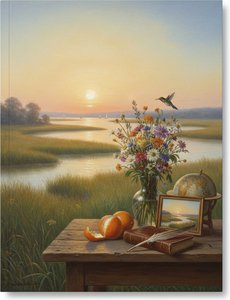
Martin Johnson Heade (1819 – 1904), born in the serene Pennsylvania countryside, stands as a quietly influential figure in American art history—a painter whose luminous landscapes and intimate depictions of nature gradually emerged from relative obscurity to claim their rightful place among the nation’s most significant artistic achievements. His formative years in Lumberville, nestled along the Delaware River, instilled within him an enduring reverence for the natural world, an affection nurtured by initial studies under local artists Edward and possibly Thomas Hicks. These foundational lessons provided Heade with the technical skills that would later coalesce into a distinctive style, though his journey to artistic recognition proved anything but straightforward. Initially drawn to portraiture, his early works demonstrate a proficient hand but lack the singular vision that would ultimately characterize his mature oeuvre. A pivotal period of travel in Europe broadened Heade’s artistic perspective, exposing him to Impressionist influences and fostering experimentation with bolder brushstrokes—a deliberate departure from the restrained palette and meticulous detail favored by Luminism, the movement he championed. Luminism, born in the mid-1850s, represented a reaction against Romantic idealism, prioritizing atmospheric effects and capturing fleeting moments of beauty rather than grand narratives or dramatic compositions. Artists like Heade sought to convey not just what they saw but how they *felt*, immersing viewers in the tranquility and majesty of unspoiled wilderness. Heade’s technique was remarkably consistent throughout his prolific career—primarily employing oil paints on canvas, applying thin layers of pigment mixed with linseed oil to achieve a velvety surface texture. This method allowed for subtle gradations of color and luminosity, mirroring the diffused light characteristic of dawn landscapes. Unlike Impressionists who aimed to capture immediate sensory impressions, Heade meticulously built up his paintings over time, patiently blending colors and reworking sections until he achieved the desired tonal harmony. The resulting images possess an ethereal quality—a palpable stillness that invites contemplation and evokes a profound connection with nature’s rhythms. “Dawn,” painted in 1862, exemplifies this Luminist aesthetic perfectly. The canvas depicts a tranquil beach scene bathed in the nascent glow of sunrise. Gentle waves lap against the shore, reflecting the rosy hues of the rising sun—a masterful orchestration of color and light that captures the essence of early morning serenity. Scattered boats bobbing on the water add to the visual richness of the composition, while two figures stand silhouetted against the horizon, seemingly absorbed in observing this sublime spectacle. The artist’s careful attention to detail—the texture of the sand, the ripples on the water surface, and the subtle variations in color—contributes to an immersive experience for the viewer. Symbolically, “Dawn” speaks to themes of renewal and hope—a visual representation of the promise held within each new day. The luminous light symbolizes enlightenment and spiritual awakening, mirroring the Luminist preoccupation with capturing transcendent beauty. Furthermore, the depiction of nature’s undisturbed grandeur underscores the movement's belief in its restorative power, offering solace and inspiration amidst the complexities of Victorian society. Ultimately, “Dawn” transcends mere representation; it aspires to evoke emotion—a feeling of profound peace and wonder at the majesty of creation. Its enduring appeal lies in its ability to transport viewers back to a time when art sought not just to depict reality but to communicate its deepest truths. Reproductions of this masterpiece continue to captivate collectors and interior designers alike, serving as reminders of Luminism’s legacy—a testament to the power of understated beauty and the importance of preserving the unspoiled splendor of our natural world.Fragen & Antworten
Welche allgemeine Stimmung vermittelt "Dawn" von Martin Johnson Heade?
"Dawn" von Martin Johnson Heade wird in seiner Stimmung als Serene beschrieben. Diese Klassifizierung kann dabei helfen, das Werk passend zu einem Ambiente auszuwählen.
Ist "Dawn" von Martin Johnson Heade ein helles oder ein dunkles Kunstwerk?
Insgesamt wird „Dawn“ mit einer Helligkeit von brilliant erfasst. Die wahrgenommene Helligkeit beschreibt, wie hell oder dunkel das Werk erscheint.
Kann ich "Dawn" von Martin Johnson Heade unter verschiedenen Lichtverhältnissen sehen?
Die Röntgenansicht von "Dawn" von Martin Johnson Heade finden Sie auf der Röntgenblick-Seite des Kunstwerks: eine interaktive Untersuchung des Bildes durch elf optische Schichten.
Künstlerbiografie
Frühes Leben und Ausbildung
Martin Johnson Heade, ein amerikanischer Maler, wurde am 11. August 1819 in Lumberville, Pennsylvania, geboren. Seine frühen Jahre waren von einer starken Neigung zur Kunst geprägt, was ihn dazu veranlasste, unter der Anleitung von Edward Hicks und möglicherweise Thomas Hicks zu studieren. Diese grundlegende Ausbildung legte den Grundstein für seine zukünftigen künstlerischen Bestrebungen.Künstlerische Karriere
Heades künstlerische Karriere lässt sich grob in mehrere Phasen einteilen, die jeweils durch eine deutliche Verschiebung seines Themas und Stils gekennzeichnet sind. Zunächst konzentrierte er sich auf Porträts, wobei sein früheste bekannte Arbeit ein Porträt aus dem Jahr 1839 war. Anschließend reiste er nach Europa, wo er verschiedenen künstlerischen Einflüssen ausgesetzt war.- Heades Werk zeigte zunehmend Interesse an Landschaftsmalerei, insbesondere nachdem er Künstler der Hudson River School wie John Frederick Kensett und Benjamin Champney getroffen hatte.
- Seine Reisen nach Brasilien (1863-1864) und anschließende Reisen nach Nicaragua, Kolumbien, Panama und Jamaika (1866 und 1870) beeinflussten seine Arbeit tiefgreifend und führten zu einer Reihe kleiner Gemälde mit Darstellung von Kolibris.
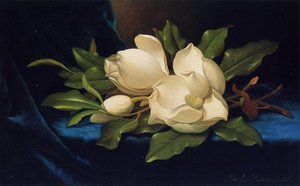
- Heades späte Jahre in St. Augustine, Florida, waren durch einen verstärkten Fokus auf Stillleben gekennzeichnet, insbesondere Magnolienblüten, die auf Samtstoff gelegt wurden.
Stil und Bekannte Werke
Heades Stil ist durch einen romantischen Ansatz zu seinen Motiven gekennzeichnet, wobei oft das Zusammenspiel von Licht und Schatten betont wird. Seine bekanntesten Werke umfassen Darstellungen der Küstenmarschlandschaften Neuenglands, was dazu geführt hat, dass einige Historiker ihn als Luministen-Maler kategorisieren.- Heades Werk ist heute Teil bedeutender Museen und Sammlungen, darunter die Martin Johnson Heade Sammlung auf https://OriginalUniqueArt.com/@/martin-johnson-heide.
- Einige seiner bemerkenswerten Gemälde, wie zum Beispiel "Forked Tailed Woodnymph", sind in der Sammlung auf OriginalUniqueArt zu finden.
- Für weitere Informationen über Heades Leben und Werk besuchen Sie bitte die Wikipedia-Seite über Martin Johnson Heade.
Vermächtnis
Obwohl Martin Johnson Heade zu Lebzeiten nicht weithin bekannt war, hat seine Arbeit seit den 1940er Jahren die Aufmerksamkeit von Gelehrten und Sammlern erregt. Heute gilt er als ein bedeutender amerikanischer Künstler, wobei seine Gemälde gelegentlich an unerwarteten Orten wie auf Flohmärkten oder in Garagenverkäufen entdeckt werden. Wichtige Punkte: * Geboren: 11. August 1819, Lumberville, Pennsylvania * Gestorben: 4. September 1904 * Bekannte Werke: Marschlandschaftsbilder, Meeresblicke, Darstellungen tropischer Vögel, Lotusblüten und Stillleben * Stil: Romantischer Ansatz mit Fokus auf Licht und Schatten, kategorisiert als Luministen-Maler * Sammlungen: Bedeutende Museen und die Martin Johnson Heade Sammlung auf OriginalUniqueArt
Martin Johnson Heade
1819 - 1904 , Vereinigte Staaten von Amerika
Kurzinfos
- Beeinflusste Künstler:
- John Frederick Kensett
- Benjamin Champney
- Bemerkenswerte Werke:
- Forked Tailed Woodnymph
- Salt Marsh Landscapes
- Magnolienblütenstillleben
- Geburtsdatum: 11. August 1819
- Geburtsort: Lumberville, USA
- Künstlerische Bewegung: Luminismus
- Nationalität: Amerikanisch
- Sterbedatum: 4. September 1904
- Vollständiger Name: Martin Johnson Heade
Ähnliche Artikel
Robert Spencer: Luminism, Narrative & the American Landscape Tradition
Explore the captivating world of Luminism & the Hudson River School with our expert analysis. Discover the history, artists, and enduring beauty of 19th-century American landscape painting. Find museum-quality reproductions at OriginalUniqueArt.
Sanford Robinson Gifford und die Luministische Tradition der Amerikanischen Landschaftsmalerei: Licht, Atmosphäre und die Erhabenheit der Natur
Entdecken Sie die faszinierende Welt von Sanford Robinson Gifford und dem Luminismus! Erfahren Sie mehr über Lichtmalerei, Atmosphäre und die Erhabenheit der amerikanischen Landschaftskunst. Expertenwissen & hochwertige Reproduktionen.
William Trost Richards: Luminismus, Spiritualität und die amerikanische Landschaftstradition
Entdecken Sie das Werk von William Trost Richards und die faszinierende Welt des Luminismus! Erfahren Sie mehr über seine einzigartige Aquarelltechnik, spirituelle Tiefe & Einfluss auf die amerikanische Landschaftsmalerei. Jetzt lesen!
Martin Johnson Heade: Luminismus, amerikanische Identität und das poetische Stillleben
Entdecken Sie das Werk von Martin Johnson Heade! Erfahren Sie mehr über den Luminismus, seine Landschaftsmalerei und die poetischen Stillleben dieses amerikanischen Meisters. Kunstexperten-Analyse & hochwertige Reproduktionen.

Luminism: Capturing the Ethereal Glow of Light in American Landscape Painting
Explore the ethereal beauty of Luminism. Discover how 19th-century American masters captured light and atmosphere through profound landscape painting. Learn about this iconic movement and find museum-quality, hand-painted oil reproductions to bring historical brilliance to your home.