

 In echtem Maßstab anzeigen
 Versenden als Grußkarte
 Teilen
 Details anzeigen
 Leitfaden öffnen

 Herunterladen
 Ähnliche Objekte
 Röntgenaufnahme
 Diashow
 Besucherstatistiken
St Norbert
 Oil On Panel
- Baroque
 1637
1637 158.0 x 120.0 cm
 Onze-Lieve Vrouwekathedraal
 Mehr anzeigen
Giclée / Kunstdruck
Giclée- oder Leinwanddruck in Museumsqualität mit schneller Produktion und flexiblen Veredelungsoptionen. ( Handgemalte Reproduktion kaufen Zum digitalen Bild wechseln)




P118B €10

P118H €10

P118W €10

P438Z €10

P508JH €12

P508YH €12

P805H €10

P805Z €10

P919BZ €10

P919G €10

P919XJ €10

P959ZH €10

P968JZ €12

W106C €8

W218G €10

W218JH €8

W218Y €10

W307PJ €10

W316G €10

W316PJ €8

W316Y €10

W398PJ €8

W4111J €10

W500HY €15

W500JH €15

W692G €12

W849H €8

W940BG €15

W953PJ €8




Wählen Sie aus unseren vordefinierten Formaten, die den ursprünglichen Proportionen des Kunstwerks entsprechen.

Geben Sie die Breite und die Höhe an, die Sie benötigen, damit der Druck perfekt in Ihren Rahmen oder an Ihre Wand passt. Ein Druck kann nur beschnitten werden und niemals größer als das Originalbild gemacht werden; daher verliert ein Format mit einer anderen Proportion einen Teil des Bildes. Wir senden Ihnen ein digitales Mockup zur Freigabe, bevor wir den Druck ausführen. Das auf dieser Seite gezeigte Bild zeigt nicht den tatsächlichen Beschnitt – dies ist nur im Mockup ersichtlich.
Weltweiter Versand () innerhalb von 2 Wochen statt der üblichen 4/5 Wochen. (23 Oktober)

Kostenloser weltweiter Expressversand

Hochwertige Leinenleinwand

Vollständiger Versicherungsschutz beim Versand

Zollgebühren-Rückerstattungsgarantie

Garantie für exakte Farbtreue

100-tägiges Rückgaberecht (nur bei Mängeln)

100% Geld-zurück-Garantie

Angebot für Mengenrabatt
 Die Glasoption ist nur für Größen unter 110 cm verfügbar.

St Norbert
Giclée / Kunstdruck
Format der Reproduktion
-


Gesamtpreis
€ 70
St Norbert by Marten Pepijn: A Baroque Meditation on Faith
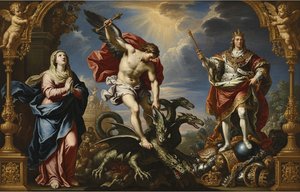
Marten Pepijn’s “St Norbert,” completed in 1637, is more than just a depiction of a saint; it's a meticulously crafted meditation on faith, humility, and the profound stillness of prayer. Executed in oil on panel to a modest size of 158 x 120 cm, this work immediately draws the viewer into its somber yet deeply resonant atmosphere – a hallmark of the Antwerp Baroque style that flourished during Pepijn’s lifetime. Currently residing within the hallowed halls of the Onze-Lieve Vrouwekathedraal in Antwerp, Belgium, “St Norbert” offers a rare glimpse into the devotional practices and artistic sensibilities of 17th-century Europe.
A Masterclass in Baroque Technique
Pepijn’s skill as a painter is immediately apparent through his masterful manipulation of light and shadow, a technique central to the Baroque aesthetic. The dramatic lighting – strong directional beams illuminating St Norbert's form – serves not merely to reveal detail but to imbue the scene with an almost theatrical intensity. Notice how the folds of the white robe are sculpted by the light, creating a tangible sense of volume and texture. This attention to realism is further enhanced by his use of earth tones—ochres, browns, and muted reds—that contribute to the painting’s solemn mood. The artist's brushwork is precise yet fluid, demonstrating a deep understanding of oil paint’s capabilities – layering glazes for depth and luminosity, and impasto in areas like the pectoral cross to create a tactile effect.
Symbolism Within the Scene
The composition itself is laden with symbolic meaning. St Norbert, kneeling in prayer with his hands clasped together, embodies humility and devotion. The white robe, a traditional symbol of purity and holiness, underscores his status as a saint. Crucially, the pectoral cross hanging around his neck – a relic associated with Saint Norbert himself – serves as a potent reminder of his life’s work and spiritual authority. The two lit candles on the table or altar are not simply decorative; they represent divine illumination and the presence of God, further emphasizing the scene's sacred nature. The setting itself, likely a private chapel or devotional space, reinforces this sense of intimacy and reverence.
Historical Context and Artistic Influences
"St Norbert" was created during a period of immense religious and artistic upheaval in Europe. The Counter-Reformation fueled a renewed interest in religious art as a means of reaffirming Catholic doctrine, and Pepijn’s work reflects this trend. He was influenced by the grand narratives and dynamic compositions favored by Peter Paul Rubens and Anthony Van Dyck, both prominent figures of the Antwerp Baroque scene. However, unlike their often expansive historical paintings, “St Norbert” is more intimate in scale, focusing on a single moment of profound spiritual contemplation – a characteristic that aligns it firmly within the genre of religious iconography.
Emotional Impact and Artistic Legacy
Ultimately, "St Norbert" transcends its technical brilliance to evoke a powerful emotional response. The painting’s somber mood, combined with St Norbert's earnest expression, invites viewers to contemplate themes of faith, repentance, and the search for spiritual solace. Pepijn’s ability to capture such profound human emotion through his masterful technique ensures that “St Norbert” remains a significant work of art – a testament to the enduring power of religious imagery and the legacy of the Antwerp Baroque.
Fragen & Antworten
Wie intensiv sind die Farben in "St Norbert" von Marten Pepijn?
"St Norbert" von Marten Pepijn weist eine Monochromatic Farbintensität auf.
In welcher Phase der Karriere von Marten Pepijn lässt sich „St Norbert“ angesichts seines Entstehungsdatums einordnen?
"St Norbert", entstanden im Jahr 1637, stammt aus der Mature Period von Marten Pepijn.
Wie lässt sich die Stimmung von "St Norbert" von Marten Pepijn beschreiben?
"St Norbert" von Marten Pepijn wird in seiner Stimmung als Dramatic beschrieben. Diese Klassifizierung kann dabei helfen, das Werk passend zu einem Ambiente auszuwählen.
Biografie des Künstlers
Ein Vermächtnis flämischer Pracht
Im Herzen des Antwerpener Barocks, einer Epoche, die durch ihr dramatisches Flair und ihre emotionale Tiefe besticht, hallt der Name Marten Pepijn als Zeugnis der beständigen Kraft religiöser und historischer Erzählkunst wider. Geboren 1575 in das geschäftige Handelszentrum von Antwerpen, Belgien, war Pepijn der Sohn von Willem Pepijn – ein Mann, dessen Tätigkeit als Tuchhändler und Kunsthündler dem jungen Künstler eine frühe, intime Verbindung zur Welt des visuellen Glanzes ermöglichte. Während die genauen Details seiner Ausbildung im Nebel der Geschichte verborgen bleiben, war sein beruflicher Aufstieg unverkennbar durch seine Aufnahme in die renommierte Antwerpener St.-Lukas-Gilde im Jahr 1600 geprägt. Als wijnmeester – eine Bezeichnung, die den Söhnen etablierter Meister vorbehalten war – trat er in eine Tradition des Handwerks ein, die seine Karriere definieren und die nächste Generation flämischer Maler beeinflussen sollte.
Pepijns Privatleben war tief mit dem künstlerischen Gefüge seiner Stadt verwoben. Seine Heirat mit Marie Huybrechts im Jahr 1601 begründete einen Haushalt, in dem die Kunst nicht nur ein Beruf, sondern eine familiäre Berufung war. Dieses Erbe des Talents fand seine lebendigste Entfaltung in seiner Tochter, Katharina Pepijn, die als gefeierte Porträtmalerin hervorging und einen Stil meisterte, der an die Größe von Rubens und Van Dyck erinnerte. Durch solche familiären Verbindungen wurden das technische Können und das ästhetische Empfinden von Marten Pepijn in das eigentliche Gewebe der flämischen Kunstszene des 17. Jahrhunderts eingewebt und stellten sicher, dass sein Einfluss über Jahrzehnte hinweg nachhallen würde.
Die Meisterschaft von Licht und Hingabe
Das Œuvre von Marten Pepijn ist eine faszinierende Studie stilistischer Dualität, die vom Monumentalen bis zum Intimen reicht. Er ist vor allem für seine großformatigen religiösen Kompositionen und Altarbilder bekannt – Werke, welche die spirituelle Intensität der Gegenreformation verkörpert. In Meisterwerken wie St. Norbert kann man seine Fähigkeit beobachten, Licht und Schatten – eine Technik, die als Chiaroscuro bekannt ist – zu manipulieren, um ein Gefühl göttlicher Präsenz und tiefer Frömmigkeit heraufzubeschwören. Seine religiösen Szenen zeigen oft kniende Figuren in Momenten ekstatischen Gebets, wobei das dramatische Zusammenspiel von Licht eine spürbare Spannung zwischen dem Irdischen und dem Himmlischen erzeugt.
Doch jenseits der schweren Draperien und muskulösen Formen seiner sakralen Werke existiert eine zartere Seite seiner Kunstfertigkeit. Pepijns kleinere Genreszenen, wie das lebendige Der Ball am Hof (1604), offenbaren eine andere Facette seines Genies. Diese Kabinettmalereien, die oft durch weichere Konturen und zierlichere Figuren gekennzeichnet sind, lassen auf einen engen Dialog mit den Werken von Frans Francken dem Jüngeren schließen. In diesen leichteren Kompositionen fängt der Künstler die Eleganz des höfischen Lebens ein und nutzt reiche Farben sowie komplizierte Details, um den Betrachter in die lebhafte, rhythmische Atmosphäre eines aristokratischen Ballsaals zu entführen. Diese Vielseitigkeit erlaubte es ihm, sowohl die feierlichen Anforderungen der Kirche als auch den anspruchsvollen Geschmack privater Sammler zu bedienen.
Künstlerischer Einfluss und historische Bedeutung
Um Marten Pepijn zu verstehen, muss man das komplexe Geflecht von Einflüsssen begreifen, die die Antwerpener Schule prägten. Während historische Debatten gelegentlich eine Rivalität mit dem legendären Peter Paul Rubens nahelegen, deutet die moderne Forschung auf eine eher harmonische Beziehung hin, belegt durch die tiefen sozialen Bindungen zwischen ihren Familien. Seine Verbindung zu Anthony van Dyck war ebenso tiefgreifend; die Tatsache, dass Van Dyck wählte, Pepijns Ähnlichkeit in einem Porträt festzuhalten, spricht Bände über den Respekt, den man seinem Zeitgenossen entgegenbrachte. Diese Ära des intensiven künstlerischen Austauschs ermöglichte es Pepijn, die aufkeimende barocke Energie aufzusaugen und gleichzeitig eine Verbindung zu den traditionelleren, strukturierten Kompositionen der Spätrenaissance zu bewahren.
Als Pädagoge spielte Pepijn eine entscheidende Rolle bei der Aufrechterhaltung der flämischen Tradition durch sein engagiertes Lehrlingsprogramm. Zwischen 1602 und 1628 leitete er mindestens acht Schüler durch die strengen Anforderungen der Ölmalerei und gab die Geheimnisse von Pigmenten, Komposition und erzählerischer Tiefe weiter. Seine historische Bedeutung liegt nicht nur in der individuellen Schönheit seiner Leinwände, sondern auch in seiner Rolle als eine tragende Säule der Antwerpener Künstlergemeinschaft. Durch seine großformatigen Historienbilder, seine eindringlichen religiösen Altarwerke und seinen Beitrag zur Linie der flämischen Meister bleibt Marten Pepijn eine wesentliche Figur für jeden, der danach strebt, die Seele der Barockära zu verstehen.

Marten Pepijn
1575 - 1643 , Belgien
Eckdaten zum Künstler
- Artistic Movement Or Style: Barock
- Artists Or Movements Influenced By This Artist: ['Dutch Golden Age']
- Artists Who Influenced This Artist:
- Rubens
- Francken
- Date Of Birth: Antwerp Belgien
- Date Of Death: ca. 1643 Antwerpen Belgien
- Full Name: Marten Pepijn
- Nationality: Niederländisch
- Notable Artworks:
- St Norbert
- Marten Pepijn
- Place Of Birth: Antwerpen Belgien
Verwandte Artikel

The Dramatic Flourish: Exploring the Baroque Movement's Enduring Legacy in Art History
Explore the dramatic world of Baroque art! Discover iconic artists like Caravaggio & Rubens, defining techniques, and its lasting impact on art history. Expert insights for collectors & enthusiasts at OriginalUniqueArt.
The Dramatic Flourish: Exploring Themes of Power, Faith & Emotion in Baroque Artworks
Explore the dramatic world of Baroque art! Discover masters like Zurbarán & the powerful influence of religious zeal on painting techniques. Expert insights for collectors and enthusiasts.

Öl auf Leinwand: Eine historische und technische Erkundung eines zeitlosen künstlerischen Mediums
Entdecken Sie die faszinierende Welt der Ölmalerei! Von historischen Techniken bis zur modernen Anwendung – wir bieten Expertenwissen, Restaurierungstipps und hochwertige Reproduktionen. Jetzt informieren!

Barocke Pracht: Wie Sie Opulenz und Emotionen in zeitgenössische Innenräume bringen
Entdecken Sie die Pracht des Barock! Expertenratgeber für luxuriöse Innenräume mit barocken Elementen. Inspiration, Tipps & hochwertige Kunst bei .

The Enduring Power of Painting: A Historical & Contemporary Exploration of Form and Emotion
Explore the rich history & enduring techniques of oil painting with OriginalUniqueArt. Discover masterpieces, learn about art collecting, and find authentic handmade reproductions crafted by skilled artists.
