
 Vorschau anzeigen
 Versenden
 Teilen
 Details anzeigen

 Herunterladen
 Ähnliche Objekte
 Röntgenaufnahme
 Diashow
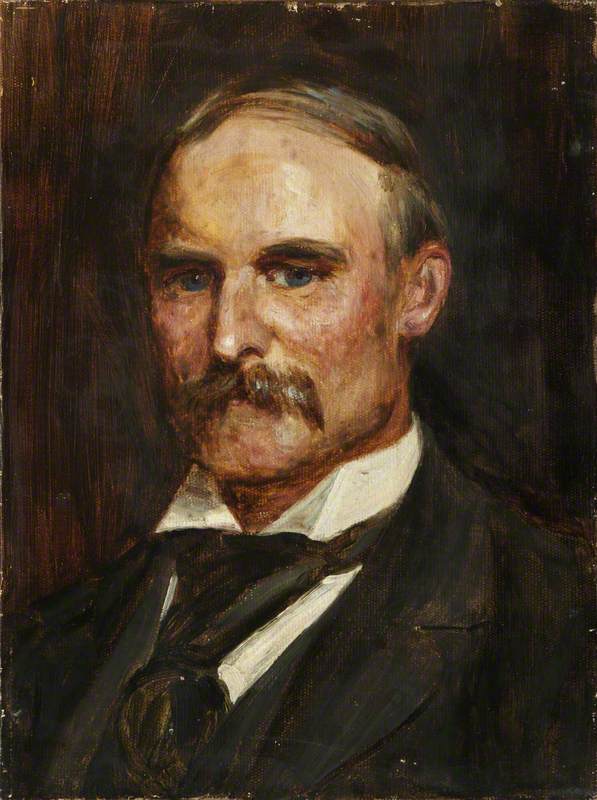
George Wood
 1905
1905 33.0 x 23.0 cm
 Pembroke College
 Weiterlesen
Giclée / Kunstdruck
Giclée- oder Leinwanddruck in Museumsqualität mit schneller Produktion und flexiblen Veredelungsoptionen. ( Handgemalte Reproduktion bestellen Bild kaufen)




































Wählen Sie aus unseren vordefinierten Formaten, die den ursprünglichen Proportionen des Kunstwerks entsprechen.

Sie können Ihre eigenen Maße eingeben, um ein bestimmtes Format oder einen speziellen Platz einzupassen. Wenn das von Ihnen gewählte Format nicht den Proportionen des Originalbildes entspricht, werden wir das Kunstwerk entweder beschneiden oder das Bild mit einem gespiegelten oder einfarbigen Rand erweitern. Ein digitaler Entwurf wird Ihnen zur Genehmigung zugesandt, bevor die Produktion beginnt.
Bitte beachten Sie, dass die Vorschau auf dem Bildschirm nicht den tatsächlichen Zuschnitt oder die Erweiterung widerspiegelt. Nur der Entwurf zeigt die endgültige Komposition präzise an.
Obwohl Sondermaße verfügbar sind, empfehlen wir die Auswahl eines Maßes aus der vordefinierten Liste, um die ursprünglichen Proportionen zu bewahren.
Weltweiter Versand () innerhalb von 2 Wochen statt der üblichen 4/5 Wochen. (25 August)

Kostenloser weltweiter Expressversand

Hochwertige Leinenleinwand

Umfassender Versicherungsschutz beim Versand

Zollgebühren-Rückerstattungsgarantie

Garantie für exakte Farbtreue

60 Tage Rückgaberecht (nur bei Mängeln)

100% Geld-zurück-Garantie

Mengenrabatt verfügbar
 Die Glasoption ist nur für Größen unter 110 cm verfügbar.

George Wood
Giclée / Kunstdruck
Format der Reproduktion
-


Gesamtpreis
$ 80
Über den Künstler
Marmaduke C. William Flower: A Yorkshire Visionary
Marmaduke C. William Flower (c. 1849 – 1910) stands as a singular figure in the annals of Victorian portraiture, an artist whose meticulous observation and masterful technique captured not merely likenesses but also the very essence of his subjects. Primarily focused on the prominent figures of Yorkshire society, Flower possessed a rare ability to translate the dignity of the era onto canvas. Born into a noble lineage, his upbringing instilled within him a profound appreciation for detail and precision—qualities that would become the indelible hallmarks of his artistic endeavors. While biographical records remain somewhat sparse, scholarly research suggests he honed his skills initially in Newcastle upon Tyne before establishing himself as a resident artist in York, where he cultivated lasting connections with the city's intellectual and academic elite.
The breadth of Flower’s work is perhaps best understood through his intimate connection to the academic and industrial leaders of his time. His portfolio serves as a visual record of Victorian progress, featuring portraits of influential figures such as Professor John James Hummel, the first Professor of Dyeing at Yorkshire College, and Obadiah Nussey, a pivotal chairman in the textile industries. Through these commissions, Flower did more than paint faces; he documented the architects of Northern England's industrial and educational landscape. His approach was deeply influenced by a burgeoning fascination with scientific observation and anatomy. Unlike many contemporaries who sought to present an idealized or softened version of beauty, Flower relentlessly pursued anatomical accuracy, painstakingly reconstructing facial features to achieve an unparalleled realism that reflected his deep intellectual curiosity about the human form.
Technique, Style, and the Art of Realism
Flower’s artistic style was profoundly shaped by the prevailing trends of the late 19th century, yet he possessed a distinctive vision that transcended mere imitation. His canvases are celebrated for their subtle gradations of tone and rich textures, achieved through a painstaking layering of oil paints. This meticulous technique allowed him to convey not only the surface appearance of his subjects but also the underlying musculature and bone structure, lending his portraits a lifelike, sculptural quality. This dedication to precision extended beyond the human face into his broader artistic output.
In addition to his celebrated portraiture, Flower demonstrated a profound sensitivity to the natural world through his landscape paintings. His work in this genre mirrored the same meticulous attention to detail found in his portraits, capturing the rugged beauty of the Yorkshire countryside with an observant eye. This duality in his work—the ability to navigate both the structured, formal world of the academic portrait and the organic, sprawling essence of the English landscape—highlights his versatility as a painter. His legacy remains that of a master observer, an artist who used the medium of oil to bridge the gap between scientific accuracy and emotional resonance.
Key aspects of his artistic contribution include:
- Anatomical Precision: A commitment to capturing the true physical structure of his subjects through rigorous observation.
- Social Documentation: Providing a vital historical record of Yorkshire's intellectual, academic, and industrial leaders.
- Mastery of Oil Technique: Utilizing complex layering to create depth, texture, and realistic light effects.
- Landscape Sensitivity: Translating the character of the Yorkshire terrain with the same care applied to his human subjects.

marmaduke c william flower
1849 - 1910
Kurzinfos
- Artistic Movement Or Style: Victorian Portraiture
- Artists Or Movements Influenced By This Artist: ['Romanticism']
- Artists Who Influenced This Artist: ['Sir Thomas Lawrence']
- Date Of Death: 1910
- Full Name: Marmaduke C. William Flower
- Nationality: British
- Notable Artworks: ['Mayor John Atkinson Grimshaw']
- Place Of Birth: Yorkshire

