

 Vorschau anzeigen
 Versenden
 Teilen
 Details anzeigen
 Leitfaden

 Herunterladen
 Ähnliche Objekte
 Röntgenaufnahme
 Diashow
 Statistiken
The student


 Weiterlesen
Die auf dieser Seite dargestellten Kunstwerke sind urheberrechtlich geschützt, was bedeutet, dass wir keine identische Reproduktion rechtmäßig erstellen oder verkaufen dürfen. Dieser Schutz wird durch internationale Abkommen wie die Berner Übereinkunft und durch nationale Gesetze, einschließlich derer, die von den US-Urheberrecht – Titel 17.
Diese Methode entspricht vollumfänglich den Urheberrechtsbestimmungen, da sie keine Kopie oder Vervielfältigung des geschützten Kunstwerks darstellt. Stattdessen handelt es sich um eine kreative Neuinterpretation – ein neues Gemälde, das vom Original inspiriert, aber nicht identisch mit ihm ist.
Giclée / Kunstdruck
Giclée- oder Leinwanddruck in Museumsqualität mit schneller Produktion und flexiblen Veredelungsoptionen. ( Handgemalte Reproduktion bestellen Zum digitalen Bild wechseln)




P118B €10

P118H €10

P118W €10

P438Z €10

P508JH €12

P508YH €12

P805H €10

P805Z €10

P919BZ €10

P919G €10

P919XJ €10

P959ZH €10

P968JZ €12

W106C €8

W218G €10

W218JH €8

W218Y €10

W307PJ €10

W316G €10

W316PJ €8

W316Y €10

W398PJ €8

W4111J €10

W500HY €15

W500JH €15

W692G €12

W849H €8

W940BG €15

W953PJ €8




Wählen Sie aus unseren vordefinierten Formaten, die den ursprünglichen Proportionen des Kunstwerks entsprechen.

Geben Sie die benötigte Breite und Höhe an, damit der Druck perfekt in Ihren Rahmen oder an Ihre Wand passt. Ein Druck kann nur beschnitten, aber niemals größer als das Originalbild angefertigt werden; daher verliert ein Format mit anderen Proportionen einen Teil des Bildes. Wir senden Ihnen ein digitales Mockup zur Freigabe, bevor wir den Druck ausführen. Das auf dieser Seite gezeigte Bild zeigt nicht den tatsächlichen Beschnitt – dies ist nur im Mockup ersichtlich.
Weltweiter Versand () innerhalb von 2 Wochen statt der üblichen 4/5 Wochen. (25 Oktober)

Kostenloser weltweiter Expressversand

Hochwertige Leinenleinwand

Umfassender Versicherungsschutz beim Versand

Zollgebühren-Rückerstattungsgarantie

Garantie für exakte Farbtreue

100 Tage Rückgaberecht (nur bei Mängeln)

100% Geld-zurück-Garantie

Mengenrabatt verfügbar
 Die Glasoption ist nur für Größen unter 110 cm verfügbar.

The student
Giclée / Kunstdruck
Format der Reproduktion
-


Endpreis
€ 70
A Quiet Introspection: The Soul of Mario Sironi’s The Student
In the quiet corners of art history, certain works possess the power to halt time, inviting the viewer into a sanctuary of thought and stillness. The Student, a masterful creation by the Italian maestro Mario Sironi, is one such masterpiece. This evocative portrait captures a woman lost in a moment of profound introspection, seated at a table that serves as an altar to intellect and solitude. Clad in somber black attire, her dark hair framing a face of contemplative depth, she sits before a mirror—a classic symbol of self-reflection and the duality of identity. The scene is not merely a depiction of a person, but an invitation into a private, cerebral world where the boundaries between the physical room and the internal mind begin to blur.
The composition is rich with an atmosphere of scholarly elegance. Surrounding the central figure is a curated landscape of artistic and intellectual artifacts: statues that stand like silent sentin Riens, vases that anchor the space with classical grace, and a single book resting near her hand, suggesting a life dedicated to the pursuit of knowledge. The presence of these objects transforms the setting from a simple room into an atelier of the soul. For the discerning collector or interior designer, this painting offers more than just visual beauty; it provides a focal point of sophisticated gravity, making it an ideal centerpiece for spaces dedicated to study, libraries, or refined living areas where conversation and thought are encouraged.
Technique and the Luminosity of Divisionism
To understand the emotional weight of The Student, one must look closely at Sironi’s early mastery of Divisionism. Before his later shifts toward more monumental and architectural styles, Sironi utilized this technique to breathe life into his subjects through a delicate interplay of light. Rather than blending colors on the palette, he applied small, distinct strokes of pigment that, when viewed from a distance, coalesce in the eye of the beholder to create a shimmering, luminous effect. This method allows the shadows in the woman's black clothing to feel deep and velvety, while simultaneously capturing the subtle glints of light reflecting off the porcelain vases and the smooth surfaces of the surrounding sculptures.
This meticulous approach to color and light creates a sense of vibrating stillness. The technique lends a dreamlike quality to the scene, where the air itself feels heavy with the scent of old paper and the quiet dust of a sunlit studio. For those seeking a high-quality reproduction, this complexity of texture is what makes a hand-painted version so captivating; the physical layering of paint recreates the rhythmic energy of Sironi’s brushwork, ensuring that the light seems to dance across the canvas just as it does in the original work.
A Legacy of Intellectual Elegance
Mario Sironi’s journey from a student of engineering to a titan of modern Italian art is reflected in the structural integrity of this piece. There is an architectural precision to how he places the statues and objects within the frame, creating a balanced, harmonious environment that feels both grounded and ethereal. The Student serves as a bridge between the classical traditions of his heritage and the burgeoning modernism of the early 20th century. It captures a moment of transition—much like the subject herself—between the external world of objects and the internal world of ideas.
Integrating a reproduction of this caliber into a contemporary interior allows for a profound connection to the history of European modernism. It is a piece that speaks to the timelessness of human curiosity and the beauty found in solitude. Whether placed in a sun-drenched gallery or a moody, dark-toned study, The Student brings with it an aura of prestige and a deep, resonant emotional intelligence that continues to inspire art lovers and decorators across the globe.
Fragen & Antworten
Sind die Farben von "The student" von Mario Sironi leuchtend oder eher dezent?
Die Farben von "The student" von Mario Sironi bestechen durch eine Muted Sättigung und eine Monochromatic Intensität.
Wie kann ich das Bild von "The student" von Mario Sironi herunterladen?
Für „The student“ steht ein Download zur Verfügung: Die Download-Seite des Kunstwerks bietet hochauflösender digitaler Bild-Download.
Welches Motiv und welche Atmosphäre vereint "The student" von Mario Sironi?
"The student" zeigt woman, black clothing, mirror, statues, vases, book, table, und die eingefangene Stimmung ist Classic.
Künstlerbiografie
Mario Sironi: Ein Leben in der modernen italienischen Kunst
Frühes Leben und Ausbildung
- Geboren am 12. Mai 1885 in Sassari, Sardinien, Italien.
- Sein Vater war Ingenieur und sein mütterlicher Großvater, Ignazio Villa, ein angesehener Architekt und Bildhauer – was ihm eine frühe künstlerische Auseinandersetzung ermöglichte.
- Er studierte zunächst Ingenieurwesen an der Universität Rom, gab dies aber 1903 nach einem Nervenzusammenbruch auf. Dies markierte einen Wendepunkt in Richtung Kunst.
- Er begann seine formale künstlerische Ausbildung an der Scuola Libera del Nudo der Accademia di Belle Arti di Roma, wo er seinen ersten bedeutenden Lehrer, Giacomo Balla, kennenlernte.
Künstlerische Entwicklung und Einflüsse
- Sein frühes Werk war stark von Divisionismus beeinflusst, einer Technik, die das Hervorheben getrennter Farben zur Erzeugung von Leuchtkraft betonte – wie in Werken wie „Der Student“ zu sehen.
- Er experimentierte um 1914 kurzzeitig mit Futurismus und zeigte im Galleria Sprovieri in Rom. Schnell verließ er jedoch den Fokus auf Geschwindigkeit und Dynamik.
- Nach dem Ersten Weltkrieg ereignete sich eine entscheidende Verschiebung, bei der er einen Stil entwickelte, der durch massive, unbewegliche Formen und geometrische Formen gekennzeichnet ist. Dies wurde von seinen Kriegserfahrungen und einem wachsenden Gefühl der Isolation beeinflusst.
- Zu seinen wichtigsten Einflüssen gehörten Giacomo Balla (frühe Ausbildung), Giorgio de Chirico & Carlo Carrà (der Einfluss des Metierpastellmalerei auf die Form) und Elemente des Neoklassizismus und Primitivklassizismus.
Das Novecento Italiano und der Reife-Stil
- Im Jahr 1922 wurde Sironi Gründungsmitglied des Novecento Italiano – einer Rückkehr zur Ordnung in der postkriegischen europäischen Kunst, die Klarheit und Tradition betonte.
- Sein Reife-Stil ist durch folgende Merkmale gekennzeichnet:
- Betonung geometrischer Formen und vereinfachter Formen.
- Eine absichtlich unbeholfene Ästhetik in späteren Werken.
- Themen der Einsamkeit, Entfremdung und des menschlichen Zustands.
- Erkundung industrieller Landschaften und Arbeiterlebens.
- Bekannte Werke aus dieser Zeit sind „Venus“ (1921-1923) und „Einsamkeit“ (“Einsamkeit”, 1925).
Politische Zugehörigkeiten und spätere Jahre
- Sironi war ein Unterstützer von Benito Mussolini und trug erheblich zur Propaganda des Faschismus bei, indem er über 1700 Karikaturen für faschistische Publikationen lieferte.
- Er glaubte an die Integration von Kunst und Architektur und suchte nach monumentalen Werken für öffentliche Räume – die den Idealen des Faschistischen Regimes entsprachen.
- Nach dem Zweiten Weltkrieg führte seine Verbindung zum Faschismus zu einem Rückgang seiner Popularität und seines Kritischen Ansehens.
- Er zog sich weitgehend aus der Öffentlichkeit zurück und malte weiterhin in relativer Isolation, bis zu seinem Tod.
Wichtige Leistungen und historische Bedeutung
- Sironis Werk leistet einen bedeutenden Beitrag zur italienischen Moderne und schließt die Lücke zwischen Futurismus und späteren künstlerischen Entwicklungen.
- Seine Erforschung von Themen wie Einsamkeit und Entfremdung spiegelte die Ängste des 20. Jahrhunderts wider.
- Trotz der Kontroversen um seine politischen Verbindungen wurde sein Kunstwerk in wichtigen Ausstellungen im Ausland gezeigt, darunter im Centre Georges Pompidou (1981) und der Royal Academy, London (1989).
- Gestorben am 13. August 1961 in Mailand.
- Sein Vermächtnis liegt in seiner einzigartigen stilistischen Synthese und seinen kraftvollen Darstellungen des menschlichen Zustands in einer sich schnell verändernden Welt.

Mario Sironi
1885 - 1961 , Italien
Kurzinfos
- Artistic Movement Or Style: Futurismus und Novecento Italiano
- Artists Or Movements Influenced By This Artist: ['Neoklassizismus']
- Artists Who Influenced This Artist: ['Giacomo Balla']
- Date Of Birth: 12. Mai 1885
- Date Of Death: 13. August 1961
- Full Name: Mario Sironi
- Nationality: Italienisch
- Notable Artworks:
- La Lampada
- Venere
- Solitudine
- Place Of Birth: Sassari, Italien
Ähnliche Artikel
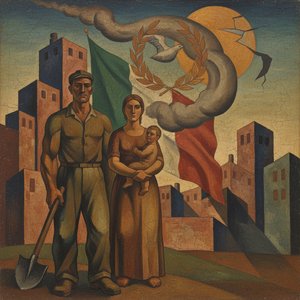
Mario Sironi: Eine Poetik der modernen italienischen Identität zwischen Symbolismus und Gesellschaftskritik
Entdecken Sie Mario Sironis wegweisendes Werk und seine Auseinandersetzung mit der italienischen Identität. Analysen, Biografie, Novecento Italiano & die politische Dimension – Expertenwissen auf OriginalUniqueArt.
Reflections of Reality: Exploring the Metaphysical Power of Mirror Images in Fine Art
Explore the profound symbolism of mirror images in fine art. From Surrealist distortions to classical self-portraits, discover how masters use reflections to explore reality, identity, and the infinite through a sophisticated art-historical lens.
Reflections of Reality: The Metaphysical Power of Mirrors in Fine Art History
Explore the profound symbolism of mirrors in fine art history. From Surrealist distortions to Vanitas themes, discover how masters use reflections to capture reality and the metaphysical soul.
The Mirror Stage of Art History: Exploring Reflection & Identity in Painting
Explore the captivating history of reflection in art! Discover symbolism, technique & psychological depth in masterpieces from Renaissance self-portraits to modern works. Expert insights for discerning collectors.

Mirroring the Soul: A Curated Exploration of Reflection and Self-Perception in Art History
Embark on a sophisticated journey through art history's most captivating masterpieces of reflection. Explore how legendary artists used mirrors to explore identity, surrealism, and the soul through expert art historical analysis.


