Versenden als Grußkarte
 Teilen
 Details anzeigen
 Leitfaden öffnen

 Herunterladen
 Ähnliche Objekte
 Diashow
 Besucherstatistiken
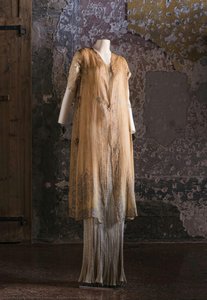
Block for printing textiles
 Textile
- Celtic-inspired design
 1905
1905 14.0 x 11.0 cm
 Palazzo Fortuny
 Mehr anzeigen
Giclée / Kunstdruck
Giclée- oder Leinwanddruck in Museumsqualität mit schneller Produktion und flexiblen Veredelungsoptionen. ( Handgemalte Reproduktion kaufen Zum digitalen Bild wechseln)




































Wählen Sie aus unseren vordefinierten Formaten, die den ursprünglichen Proportionen des Kunstwerks entsprechen.

Geben Sie die Breite und die Höhe an, die Sie benötigen, damit der Druck perfekt in Ihren Rahmen oder an Ihre Wand passt. Ein Druck kann nur beschnitten werden und niemals größer als das Originalbild gemacht werden; daher verliert ein Format mit einer anderen Proportion einen Teil des Bildes. Wir senden Ihnen ein digitales Mockup zur Freigabe, bevor wir den Druck ausführen. Das auf dieser Seite gezeigte Bild zeigt nicht den tatsächlichen Beschnitt – dies ist nur im Mockup ersichtlich.
Weltweiter Versand () innerhalb von 2 Wochen statt der üblichen 4/5 Wochen. (24 Oktober)

Kostenloser weltweiter Expressversand

Hochwertige Leinenleinwand

Vollständiger Versicherungsschutz beim Versand

Zollgebühren-Rückerstattungsgarantie

Garantie für exakte Farbtreue

100-tägiges Rückgaberecht (nur bei Mängeln)

100% Geld-zurück-Garantie

Angebot für Mengenrabatt
 Die Glasoption ist nur für Größen unter 110 cm verfügbar.

Block for printing textiles
Giclée / Kunstdruck
Format der Reproduktion
-


Gesamtpreis
€ 70
A Fragment of Ancient Echoes: Mariano Fortuny’s ‘Block for Printing Textiles’
Within the hushed galleries of art history resides a deceptively simple object – a wooden block, carved with an intricate dance of geometric forms and subtly suggestive Celtic motifs. This is not merely a tool; it's a portal to a bygone era, a tangible link to the artistic ingenuity of Mariano Fortuny y Madrazo, a Spanish polymath whose vision transcended mere decoration. Fortuny’s ‘Block for Printing Textiles’ (1905), now meticulously reproduced in exquisite detail, offers a glimpse into his revolutionary approach to design and theatrical lighting, revealing a mind deeply influenced by both ancient traditions and the burgeoning innovations of the early 20th century.
The block itself is crafted from boxwood, a material prized for its density and ability to retain fine details. Its surface isn’t smooth; rather, it bears the marks of deliberate carving – deep grooves that would have held the inked patterns during the printing process. The design is remarkably restrained yet profoundly evocative. Dominating the block are two opposing faces, each presenting a stylized human form, seemingly caught in an eternal embrace or contemplation. These aren’t literal representations; they're abstracted figures, hinting at themes of duality, balance, and perhaps even the interplay between masculine and feminine energies – a recurring motif throughout Fortuny’s oeuvre.
The Weaver of Light and Shadow: Fortuny’s Theatrical Legacy
To fully appreciate this block, one must understand Fortuny's broader artistic ambitions. Born in Granada in 1871, he inherited his father’s legacy as a painter but quickly developed an insatiable curiosity for diverse crafts – from sculpture and architecture to photography and stage lighting. His fascination with the theatre, particularly the work of Richard Wagner, proved transformative. Fortuny recognized that traditional theatrical design relied on jarring transitions between scenes, disrupting the immersive experience he envisioned. He sought to create a seamless flow, mimicking the natural progression of light and shadow.
This quest led him to develop the “Fortuny cyclorama dome,” a revolutionary device that utilized indirect lighting reflected off various surfaces to eliminate harsh shadows and create a continuous, atmospheric illumination across the stage. His treatise, ‘Eclairage Scenique’ (1904), meticulously documented his discoveries – a radical departure from conventional stage design. The block for printing textiles wasn't simply a decorative element; it was intrinsically linked to this larger project, serving as a visual representation of the geometric principles underpinning his lighting system. The precise patterns carved into the wood mirrored the complex interplay of light and shadow he sought to achieve on stage.
Roots in Ancient Techniques: Woodblock Printing’s Enduring Allure
Fortuny's work is deeply rooted in the rich history of woodblock printing, a technique that stretches back millennia. From its origins in ancient China – where it was used for both textiles and paper – to its flourishing in Japan (ukiyo-e prints), this method has served as a powerful tool for artistic expression. The block itself embodies this legacy: a testament to the skill of artisans who patiently carved intricate designs into wood, preparing them for the application of ink and subsequent transfer onto fabric.
Consider the influence of traditional Japanese ukiyo-e prints, characterized by bold outlines, flat planes of color, and a focus on capturing fleeting moments of beauty. While Fortuny’s style is distinctly his own – incorporating elements of Celtic design and a refined European aesthetic – one can discern echoes of this ancient tradition in the block's composition and its emphasis on geometric abstraction. The careful consideration given to the carving process itself speaks volumes about the dedication and artistry involved.
A Timeless Echo: Reproduction and Artistic Resonance
Today, ‘Block for Printing Textiles’ is brought back to life through meticulous hand-painted reproductions. These aren't mere copies; they are faithful interpretations that capture the essence of Fortuny’s original vision. The subtle variations in color, texture, and detail reflect the inherent imperfections of the handcrafted process – a reminder that each reproduction possesses its own unique character.
Whether adorning a contemporary interior or serving as a focal point in an art collection, this block offers more than just visual appeal. It’s a window into the mind of a visionary artist, a celebration of ancient techniques, and a testament to the enduring power of design to evoke emotion and inspire contemplation. It's a fragment of ancient echoes, brought vividly back to life.
Fragen & Antworten
Welche allgemeine Stimmung vermittelt "Block for printing textiles" von Mariano Fortuny?
Die allgemeine Stimmung von "Block for printing textiles" von Mariano Fortuny ist Calm. Die Stimmung beschreibt die allgemeine Atmosphäre des Werkes.
Welche Größe wird für "Block for printing textiles" in einem Living Room empfohlen?
Die ideale Kombination für "Block for printing textiles" von Mariano Fortuny: ein Druck im Format Medium für einen Living Room.
Wer ist der Künstler hinter "Block for printing textiles"?
"Block for printing textiles" wird Mariano Fortuny zugeschrieben.
Biografie des Künstlers
Frühe Jahre und Inspiration
Mariano Fortuny, ein spanischer Modeschöpfer, wurde am 11. Mai 1871 in Granada, Spanien, geboren. Sein Vater, Mariano Fortuny y Marsal, war ein Maler des Genrebildes, der verstarb, als Mariano erst drei Jahre alt war. Dieses tragische Ereignis führte dazu, dass die Familie nach Paris, Frankreich, zog, wo die Mutter von Mariano ihn mit verschiedensten Textilien und Stoffen vertraut machte, die später seine schöpferische Kraft maßgeblich beeinflussen sollten.Künstlerische Talente und Erfindungen
Schon in jungen Jahren offenbarte Mariano Fortuny sein außergewöhnliches künstlerisches Talent und bewies meisterhafte Fähigkeiten in der Malerei, Fotografie, Bildhauerei, Architektur, Radierung sowie in der theatralischen Bühnenbeleuchtung. Seine Erfindungen, darunter über zwanzig Patente, die zwischen 1901 und 1934 angemeldet wurden, revolutionierten die Welt des Bühnendesigns grundlegend.- Er entwickelte das Fortuny-Cyclorama-Dome, eine halbkuppelförmige Struktur aus Gips oder Stoff, die indirektes Licht nutzte, um einen nahtlosen Übergang zwischen den Szenen zu schaffen.
- In seiner Abhandlung „Eclairage Scénique“ (1904) beschrieb er seine Entdeckung, wie Licht von verschiedenen Oberflächen reflektiert werden kann, wodurch sich dessen Farbe, Intensität und Eigenschaften verändern lassen.
Bemerkenswerte Beiträge und Kollaborationen
Die Arbeit von Mariano Fortuny erlangte in den 1920er Jahren weltweite Anerkennung. Er arbeitete mit bedeutenden Persönlichkeiten zusammen, darunter:- Richard Wagner, ein deutscher Komponist, dessen Opern Mariano dazu inspirierten, ganze Szenen zu malen.
- Das berühmte Opernhaus La Scala in Mailand, in dem er seine Kuppel installierte, wobei er sie für das größere Theater anpasste und einen Saugventilator erfand, um die straffe Struktur aufrechtzuerhalten.
Vermächtnis und spätes Leben
Mariano Fortuny verstarb am 3. Mai 1949 in Venedig, Italien. Sein Werk inspirierte den französischen Schriftsteller Marcel Proust, und sein Leben fand in Pere Gimferrer's Roman „Fortuny“ Niederschlag. Das Erbe von Mariano beeinflusst die Welt des Bühnendesigns bis heute nachhaltig.- Erforschen Sie mehr über die Erfindungen und Entwürfe von Mariano Fortuny in der Sammlung von OriginalUniqueArt.
- Entdecken Sie die Auswirkungen seines Werkes auf die Theaterbeleuchtung in The Museum Destroyed by Fire (USA), einer Erzählung über ein unglückliches Ereignis, das die amerikanische Kunstgeschichte prägte, verfügbar im Blog von OriginalUniqueArt.
Ausgewählte Gemälde von Mariano Fortuny und anderen Künstlern
- Mariano Fortuny: Teagown (Museum of Fine Arts, Boston, USA), verfügbar in der Sammlung von OriginalUniqueArt.
- Marc Chagall: Studie zu 'Hohelied IV' (Naive Kunst / Primitivismus), verfügbar in der Sammlung von OriginalUniqueArt.
- Pablo Picasso: Klarinette (Analytischer Kubismus, Öl auf Leinwand), verfügbar in der Sammlung von OriginalUniqueArt.
- Vincent van Gogh: Baumwurzeln (50 x 100 cm, Post-Impressionismus, Öl auf Leinwand), verfügbar in der Sammlung von OriginalUniqueArt.

Mariano Fortuny
1871 - 1949 , Spanien
Eckdaten zum Künstler
- Artistic Movement Or Style: Orientalism art
- Artists Or Movements Influenced By This Artist: ['Marcel Proust']
- Artists Who Influenced This Artist: ['Richard Wagner']
- Date Of Birth: 11. Juni 1838
- Date Of Death: 21. November 1949
- Full Name: Mariano Fortuny y Marsal
- Nationality: Spanisch
- Notable Artworks:
- Teagown
- Portrait of Henriette Fortuny
- Place Of Birth: Granada, Spanien
Verwandte Artikel

The Art of the Woodblock Print: Mastering Texture, Tradition, and the Legacy of Ukiyo-e
Explore the profound beauty of woodblock printing. From Ukiyo-e masters to intricate textures, discover the history, craftsmanship, and enduring legacy of this timeless art form through our expert art-history lens.

Mariano Fortuny: Ein Synthese aus Kunst, Mode und Design – Das Erbe eines venezianischen Innovators
Entdecken Sie das faszinierende Erbe von Mariano Fortuny, dem venezianischen Künstler und Innovator! Erfahren Sie mehr über seine bahnbrechenden Stoffe, seinen Einfluss auf Mode & Design und die Bewahrung seines Schaffens im Museo Fortuny.
The Enduring Legacy of Woodblock Printmaking: Technique, History & Artistic Expression
Explore the rich history of woodblock printmaking – from ancient techniques to Ukiyo-e masterpieces. Discover expert insights on collecting, preserving & appreciating this enduring art form.

Giclée Prints: Archival Quality & Aesthetic Nuances for the Discerning Collector
Explore the world of giclée prints with OriginalUniqueArt. Learn about archival quality, aesthetic nuances & investment potential. Expert guidance for discerning art collectors seeking museum-quality reproductions and lasting value.
The Soul of the Carved Line: Discovering the Timeless Magic of Japanese Woodblock Prints
Embark on a cultural journey through the delicate beauty of Japanese woodblock prints. Explore the mastery of Ukiyo-e, from Hokusai's dramatic lines to Obata's serene designs, and discover the enduring soul of this timeless art form for the discerning collector.