

 In echtem Maßstab anzeigen
 Versenden als Grußkarte
 Teilen
 Details anzeigen
 Leitfaden öffnen

 Herunterladen
 Ähnliche Objekte
 Röntgenaufnahme
 Diashow
 Besucherstatistiken
Three Acrobates
 Acryl auf Leinwand
- Wandkunst
- Folk Expressionism
 1926
1926- Moderne
 117.0 x 89.0 cm
 Mehr anzeigen
Die auf dieser Seite dargestellten Kunstwerke sind urheberrechtlich geschützt, was bedeutet, dass wir keine identische Reproduktion rechtmäßig erstellen oder verkaufen dürfen. Dieser Schutz wird durch internationale Abkommen wie die Berner Übereinkunft und durch nationale Gesetze, einschließlich derer, die von den ... festgelegt wurden US-Urheberrecht – Titel 17.
Diese Methode entspricht vollumfänglich den Urheberrechtsbestimmungen, da sie keine Kopie oder Vervielfältigung des geschützten Kunstwerks darstellt. Stattdessen handelt es sich um eine kreative Neuinterpretation – ein neues Gemälde, das vom Original inspiriert, aber nicht identisch mit ihm ist.
Giclée / Kunstdruck
Giclée- oder Leinwanddruck in Museumsqualität mit schneller Produktion und flexiblen Veredelungsoptionen. ( Handgemalte Reproduktion kaufen Zum digitalen Bild wechseln)




P118B €10

P118H €10

P118W €10

P438Z €10

P508JH €12

P508YH €12

P805H €10

P805Z €10

P919BZ €10

P919G €10

P919XJ €10

P959ZH €10

P968JZ €12

W106C €8

W218G €10

W218JH €8

W218Y €10

W307PJ €10

W316G €10

W316PJ €8

W316Y €10

W398PJ €8

W4111J €10

W500HY €15

W500JH €15

W692G €12

W849H €8

W940BG €15

W953PJ €8




Wählen Sie aus unseren vordefinierten Formaten, die den ursprünglichen Proportionen des Kunstwerks entsprechen.

Geben Sie die Breite und die Höhe an, die Sie benötigen, damit der Druck perfekt in Ihren Rahmen oder an Ihre Wand passt. Ein Druck kann nur beschnitten werden und niemals größer als das Originalbild gemacht werden; daher verliert ein Format mit einer anderen Proportion einen Teil des Bildes. Wir senden Ihnen ein digitales Mockup zur Freigabe, bevor wir den Druck ausführen. Das auf dieser Seite gezeigte Bild zeigt nicht den tatsächlichen Beschnitt – dies ist nur im Mockup ersichtlich.
Weltweiter Versand () innerhalb von 2 Wochen statt der üblichen 4/5 Wochen. (15 Oktober)

Kostenloser weltweiter Expressversand

Hochwertige Leinenleinwand

Vollständiger Versicherungsschutz beim Versand

Zollgebühren-Rückerstattungsgarantie

Garantie für exakte Farbtreue

100-tägiges Rückgaberecht (nur bei Mängeln)

100% Geld-zurück-Garantie

Angebot für Mengenrabatt
 Die Glasoption ist nur für Größen unter 110 cm verfügbar.

Three Acrobates
Giclée / Kunstdruck
Format der Reproduktion
-


Gesamtpreis
€ 70
Marc Chagall’s “The Acrobats”: A Symphony of Movement and Memory
This exquisite hand-painted reproduction captures Marc Chagall's iconic 1926 painting, "The Acrobats," a work that transcends mere representation to become a deeply evocative exploration of memory, folklore, and the human spirit. Measuring 117 x 89 cm, this piece isn’t simply a depiction; it’s an immersion into Chagall's uniquely personal world – one where reality blends seamlessly with dream and where the everyday is imbued with profound symbolic weight.
Chagall created “The Acrobats” during his time in Vitebsk, Belarus, a city that profoundly shaped his artistic vision. The painting’s genesis lies within the vibrant Jewish community of Liozna, a town steeped in tradition and brimming with stories passed down through generations. This backdrop informs every element of the composition: the acrobats themselves, reminiscent of Hasidic figures known for their daring performances and communal gatherings; the stage, a stylized representation of Vitebsk’s bustling marketplace; and even the pink ground – a color frequently associated with Jewish identity and spirituality.
A Style Defined by Fluidity and Symbolism
Chagall's style at this period is characterized by its loose brushwork, vibrant colors, and an almost dreamlike quality. He rejected academic realism in favor of a highly subjective approach, prioritizing emotional expression over precise detail. Notice the fluidity of the figures – they seem to float rather than stand firmly on the ground, reflecting Chagall’s fascination with movement and his desire to capture fleeting moments of beauty. The use of color is particularly striking; bold reds, blues, and yellows are applied in broad strokes, creating a sense of energy and dynamism that draws the viewer into the scene.
Technically, the reproduction utilizes meticulous hand-painting techniques, employing archival quality pigments to faithfully recreate Chagall’s original palette. Each brushstroke is carefully executed to capture the nuances of light and shadow, ensuring an astonishing level of detail and vibrancy. The texture achieved through this process adds a layer of depth and authenticity that cannot be replicated by digital methods.
Decoding the Symbolism: A Tapestry of Meaning
“The Acrobats” is rich in symbolism, inviting multiple interpretations. The acrobats themselves represent resilience, skill, and the ability to overcome obstacles – qualities deeply valued within the Hasidic tradition. Their poses are not merely athletic; they convey a sense of joyous abandon and spiritual transcendence. The presence of the two onlookers, one on the left and another near the bottom right, suggests a connection between the performers and their audience, highlighting the communal nature of Jewish life. The pink ground, as mentioned earlier, carries significant religious meaning within Judaism, representing both divine grace and the blood of sacrifice.
Furthermore, the recurring motif of flying figures in Chagall’s work symbolizes aspiration, freedom, and a yearning for spiritual elevation. The acrobats' upward movements reinforce this theme, suggesting a desire to break free from earthly constraints and reach towards the heavens.
Emotional Impact and Artistic Legacy
"The Acrobats" is more than just a beautiful painting; it’s an emotional experience. Chagall masterfully evokes a sense of wonder, joy, and nostalgia, transporting the viewer to another time and place. This reproduction offers a unique opportunity to own a piece of art history – a tangible connection to one of the 20th century's most influential artists. Its vibrant colors and dynamic composition make it an ideal addition to any interior space, capable of sparking conversation and inspiring contemplation.
This hand-painted reproduction is not merely a copy; it’s a testament to Chagall’s genius and a window into his soul – a timeless masterpiece that continues to resonate with audiences around the world.
Fragen & Antworten
Wer ist der Urheber von "Three Acrobates" und aus welchem Jahr stammt das Werk?
"Three Acrobates" wurde von Marc Chagall im Jahr 1926 geschaffen.
Welche Größe und Ausrichtung werden für einen Druck von "Three Acrobates" von Marc Chagall empfohlen?
Für „Three Acrobates“ wird ein Druckformat von Großformatig in der Ausrichtung Hochformat empfohlen.
Wann wurde "Three Acrobates" von Marc Chagall geschaffen und welcher Stil liegt ihm zugrunde?
"Three Acrobates" entstand im Jahr 1926 als Werk der Folk Expressionism-Bewegung. Datum und Stilrichtung verankern das Kunstwerk in der Kunstgeschichte.
Biografie des Künstlers
Marc Chagall: Ein Leben in Farbe und Vorstellungskraft
Frühes Leben und Einflüsse
- Geburt und Hintergrund: Marc Zakharowitsch Chagall wurde am 6. Juli 1887 (O.S. 24. Juni) in Liozna, nahe Witebsk, Weißrussland, in einer hasidischen jüdischen Familie geboren.
- Die Wirkung von Witebsk: Seine Kindheit in Witebsk, bekannt als das „Russische Toledo“, prägte seine künstlerische Vision maßgeblich. Die einzigartige Mischung aus Kulturen und die malerische Landschaft – Kirchen, Synagogen, belebte Märkte – wurden wiederkehrende Motive in seinem Werk.
- Frühes künstlerisches Talent: Trotz der bescheidenen Mittel seiner Familie zeigte Chagall schon früh ein Talent für Kunst, lernte zunächst bei einem lokalen Schilderermaler und verfolgte dann eine formale Ausbildung.
Künstlerische Entwicklung und Stil
- Frühe Ausbildung: Er studierte in St. Petersburg bei Léon Bakst und später in Paris an der Académie de la Grande Chaumière, wo er sich mit avantgardistischen Bewegungen auseinandersetzte.
- Stilistische Verschmelzung: Chagalls Stil ist eine einzigartige Synthese verschiedener Einflüsse. Er übernahm Elemente aus dem Kubismus, der Symbolik und dem Fauvismus, aber passte sich nie vollständig einer einzelnen Bewegung an und schmiedete seinen eigenen, unverwechselbaren Weg.
- Wesentliche Merkmale: Sein Werk ist durch lebendige Farben, traumhafte Bilder, fantastische Kreaturen und ein Gefühl der Nostalgie für seine Kindheit in Witebsk gekennzeichnet. Oft sind schwebende Figuren, verzerrte Perspektiven und symbolische Darstellungen zu sehen.
Wichtige Werke und Leistungen
- Frühe Meisterwerke: Gemälde wie „Ich und das Dorf“ (1911) demonstrieren seine frühe Erkundung von Erinnerung, Identität und der Beziehung zwischen dem Einzelnen und der Gemeinschaft.
- Russische Revolution & Rückkehr nach Witebsk: Nach der Russischen Revolution kehrte Chagall nach Witebsk zurück und engagierte sich in kulturellen Initiativen, gründete eine Kunstschule. Bald wurde er jedoch von den Beschränkungen des neuen Regimes enttäuscht.
- Internationale Anerkennung: Er zog schließlich nach Frankreich und etablierte sich dort erfolgreich. Bedeutende Werke dieser Zeit sind „Über Witebsk“ (1920-1922) und zahlreiche Gemälde, die von biblischen Geschichten inspiriert sind, wie z. B. „Jakobs Traum“.
- Spätere Aufträge: Chagall erhielt im späteren Leben bedeutende Aufträge, darunter das Deckenfresko des Pariser Opernhauses (1964), Fensterglasfenster für die Synagoge des Hadassah Hebrew University Medical Center in Jerusalem und die Reims Kathedrale.
Einflüsse und Vermächtnis
- Künstlerische Einflüsse: Er wurde von Künstlern wie Vladimir Lukich Borowikowski, dessen Porträts er bewunderte, sowie den breiteren Strömungen der frühen Moderne beeinflusst.
- Einfluss auf nachfolgende Künstler: Chagalls Werk hat Generationen von Künstlern mit seiner lyrischen Qualität, emotionaler Tiefe und immensen Vorstellungskraft inspiriert. Sein Einfluss ist in Surrealismus und anderen Bewegungen zu sehen, die Fantasie und Symbolik umarmten.
- Historische Bedeutung: Er gilt als eine der wichtigsten Figuren der Kunst des 20. Jahrhunderts, die den Übergang zwischen europäischer Moderne und jüdischer kultureller Identität schloss. Seine Fähigkeit, persönliche Erfahrungen, Folklore und universelle Themen zu synthetisieren, resonnieren weiterhin weltweit bei Publikum.
- Der „Typische jüdische Künstler“: Chagall wird oft als der „typische jüdische Künstler des 20. Jahrhunderts“ bezeichnet, aufgrund seiner wiederholten Auseinandersetzung mit jüdischen Themen, Traditionen und Erfahrungen in seinem Kunstwerk.
Tod und Erinnerung
- Letzte Jahre: Marc Chagall malte und schuf bis zu seinem Tod am 28. März 1985 im Alter von 97 Jahren in Saint-Paul-de-Vence, Frankreich, weiter.
- Nachhaltiges Vermächtnis: Sein Werk wird in wichtigen Museen auf der ganzen Welt ausgestellt und sichert so, dass seine lebendige und fantasievolle Vision auch für zukünftige Generationen Kunstliebhaber inspiriert und fesselt.
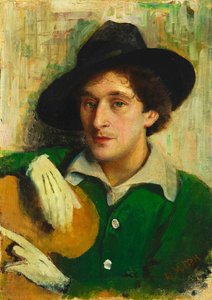
Marc Chagall
1887 - 1985 , Belarus
Eckdaten zum Künstler
- Beeinflusste Künstler: ['Surrealismus']
- Bemerkenswerte Werke:
- Ich und das Dorf
- Über Witebsk
- Jakobs Traum
- Die Schleierkistel
- Freilassung
- Erdbeeren Bella und Ida am Tisch
- Neulich verheiratete Paare mit Paris
- Tschitschikows Abschied von Manilow
- Der Hahn
- Geburtsdatum: 06. Juli 1887
- Geburtsort: Liozna, Belarus
- Künstlerische Einflüsse: ['Vladimir Lukich Borovikovsky']
- Künstlerischer Stil: Kubismus, Symbolismus, Fauvismus
- Nationalität: Russisch, Französisch
- Todatum: 28. März 1985
- Vollständiger Name: Marc Chagall
Verwandte Artikel
Lithographie: Eine historische Untersuchung von Technik, künstlerischem Ausdruck und bleibendem Erbe
Entdecken Sie die faszinierende Geschichte der Lithographie! Von den technischen Grundlagen bis zum künstlerischen Erbe – wir beleuchten diese revolutionäre Drucktechnik und ihre Bedeutung für Kunst und Gesellschaft. Jetzt lesen!

Giclée Prints: Archival Quality & Aesthetic Nuances for the Discerning Collector
Explore the world of giclée prints with OriginalUniqueArt. Learn about archival quality, aesthetic nuances & investment potential. Expert guidance for discerning art collectors seeking museum-quality reproductions and lasting value.
The Enduring Legacy of Printmaking: Techniques, Themes & Artistic Innovation Across Centuries
Explore the rich history of printmaking with OriginalUniqueArt. Discover techniques from intaglio to lithography, learn about collecting valuable prints & find museum-quality reproductions. Expert insights for art enthusiasts and collectors.

Echoes of Time: Exploring the Enduring Appeal & Historical Context of Vintage Art Prints
Explore the captivating world of vintage art prints! Discover their history, collecting tips & enduring appeal. Expert insights on chromolithography and building a legacy collection with OriginalUniqueArt.

The Enduring Legacy of Fine Art Prints: Technique, History & Aesthetic Impact
Explore the rich history & techniques of fine art prints. Discover investment potential, assess authenticity, and learn how to preserve your collection with expert guidance. Trusted insights for discerning collectors.


