Vorschau anzeigen
 Versenden
 Teilen
 Details anzeigen
 Leitfaden

 Herunterladen
 Ähnliche Objekte
 Röntgenaufnahme
 Diashow
 Q&A
Q&A Statistiken
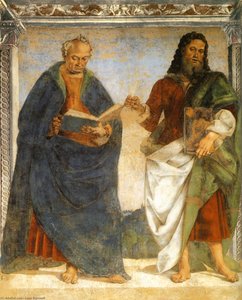
St Augustine Altarpiece (left wing)
 Öl auf Leinwand
- Wandkunst
- High Renaissance
 1498
1498 146.0 x 76.0 cm
 Staatliche Museen zu Berlin
 Weiterlesen
Giclée / Kunstdruck
Giclée- oder Leinwanddruck in Museumsqualität mit schneller Produktion und flexiblen Veredelungsoptionen. ( Handgemalte Reproduktion bestellen Zum digitalen Bild wechseln)




P118B €10

P118H €10

P118W €10

P438Z €10

P508JH €12

P508YH €12

P805H €10

P805Z €10

P919BZ €10

P919G €10

P919XJ €10

P959ZH €10

P968JZ €12

W106C €8

W218G €10

W218JH €8

W218Y €10

W307PJ €10

W316G €10

W316PJ €8

W316Y €10

W398PJ €8

W4111J €10

W500HY €15

W500JH €15

W692G €12

W849H €8

W940BG €15

W953PJ €8




Wählen Sie aus unseren vordefinierten Formaten, die den ursprünglichen Proportionen des Kunstwerks entsprechen.

Geben Sie die benötigte Breite und Höhe an, damit der Druck perfekt in Ihren Rahmen oder an Ihre Wand passt. Ein Druck kann nur beschnitten, aber niemals größer als das Originalbild angefertigt werden; daher verliert ein Format mit anderen Proportionen einen Teil des Bildes. Wir senden Ihnen ein digitales Mockup zur Freigabe, bevor wir den Druck ausführen. Das auf dieser Seite gezeigte Bild zeigt nicht den tatsächlichen Beschnitt – dies ist nur im Mockup ersichtlich.
Weltweiter Versand () innerhalb von 2 Wochen statt der üblichen 4/5 Wochen. (29 Oktober)

Kostenloser weltweiter Expressversand

Hochwertige Leinenleinwand

Umfassender Versicherungsschutz beim Versand

Zollgebühren-Rückerstattungsgarantie

Garantie für exakte Farbtreue

100 Tage Rückgaberecht (nur bei Mängeln)

100% Geld-zurück-Garantie

Mengenrabatt verfügbar
 Die Glasoption ist nur für Größen unter 110 cm verfügbar.

St Augustine Altarpiece (left wing)
Giclée / Kunstdruck
Format der Reproduktion
-


Endpreis
€ 71
Luca Signorelli’s St Augustine Altarpiece (Left Wing): A Window into Renaissance Devotion
The left wing of Luca Signorelli's “St Augustine Altarpiece,” completed in 1498 for the Bichi Chapel within the church of Sant’Agostino in Siena, is more than just a beautiful painting; it’s a profound meditation on faith, charity, and the intertwined destinies of earthly and divine figures. Measuring a modest 146 x 76 centimeters, this panel offers an intimate glimpse into the artistic sensibilities of a master navigating the complexities of late Renaissance Italy. Signorelli, already establishing himself as a draftsman of exceptional skill – evidenced by his early work in Arezzo and Castelli – here demonstrates a remarkable ability to imbue a seemingly simple scene with layers of meaning and emotional resonance.
The composition immediately draws the eye to the central trio: three women draped in rich crimson robes, their gestures conveying both solemnity and profound compassion. The woman on the left cradles a baby, a potent symbol of innocence and new life – a direct reference to Mary holding infant Jesus. Beside her stands another woman, supporting a child, mirroring the Virgin’s protective embrace. The third figure, positioned slightly further back, gazes downwards with an expression of quiet contemplation, perhaps reflecting on the spiritual journey or offering solace to those she observes. These women are not merely decorative elements; they represent key figures in Christian iconography – Mary Magdalene, Saint Catherine of Siena, and Saint Jerome, each embodying a specific virtue and contributing to the altarpiece’s overarching theme of divine grace.
Adding depth to this devotional tableau are two men, subtly integrated into the scene. One stands near the center, engaged in conversation with the women, while the other is positioned on the left side, seemingly observing the proceedings. Their presence suggests a community united by faith and shared devotion – a microcosm of Renaissance society reflecting upon spiritual matters. Signorelli’s masterful use of foreshortening, a technique he honed during his time in Florence under Piero della Francesca, creates a sense of spatial realism, drawing the viewer into this intimate tableau. The figures appear to be caught in a moment of genuine interaction, their expressions conveying a palpable sense of warmth and connection.
Technique and Style: High Renaissance Refinement
Signorelli’s style within this altarpiece is firmly rooted in the High Renaissance, yet it possesses a distinctly Italian character. He skillfully blends classical influences with his own innovative approach to composition and color. The use of *sfumato*, a technique popularized by Leonardo da Vinci, softens the edges of the figures and creates an atmospheric haze that enhances the sense of depth and realism. The rich crimson robes are rendered with meticulous detail, their textures suggesting luxurious fabrics while simultaneously conveying a sense of solemnity. Signorelli’s palette is restrained yet vibrant, dominated by earthy tones – ochres, siennas, and umbers – punctuated by flashes of red and gold.
Signorelli's mastery of drawing is immediately apparent in the precise rendering of the figures’ anatomy and drapery. He demonstrates a deep understanding of human form, capturing both its beauty and vulnerability with remarkable accuracy. The subtle gradations of light and shadow – *chiaroscuro* – further enhance the sense of realism, creating a three-dimensional effect that draws the viewer into the scene. The composition is carefully balanced, with each figure occupying a specific space within the frame, contributing to the overall harmony and visual impact of the work.
Historical Context: Siena and the Renaissance
To fully appreciate the “St Augustine Altarpiece,” it’s crucial to understand its historical context. Siena in the late 15th century was a thriving center of commerce, art, and religious devotion. The Bichi Chapel, where the altarpiece resided, served as a focal point for community life, reflecting the city's wealth and piety. The commission itself underscores the importance of religious patronage during this period – wealthy families like the Piccolominis sought to demonstrate their faith through lavish displays of art and architecture.
Signorelli’s work reflects the broader trends of the High Renaissance, which emphasized humanism, classical learning, and a renewed interest in naturalism. However, unlike some of his contemporaries who embraced Mannerist styles characterized by elongated figures and distorted perspectives, Signorelli maintains a sense of balance and clarity. His altarpiece embodies a harmonious blend of tradition and innovation, reflecting the artistic sensibilities of a master navigating the complexities of his time.
A Timeless Reflection on Faith and Humanity
The “St Augustine Altarpiece (Left Wing)” is more than just a beautiful painting; it’s a poignant meditation on faith, charity, and the enduring power of human connection. Signorelli's masterful composition, skillful technique, and profound understanding of religious iconography combine to create an image that continues to resonate with viewers centuries after its creation. Reproductions capture the essence of this work, allowing us to experience its beauty and emotional depth in our own homes. It serves as a reminder of the enduring legacy of Renaissance art – a testament to the power of human creativity to express profound spiritual truths.
Fragen & Antworten
Welche Leuchtkraft weist "St Augustine Altarpiece (left wing)" von Luca Signorelli auf?
"St Augustine Altarpiece (left wing)" von Luca Signorelli weist eine Luminanz von Sanfter Schatten auf. Die Luminanz beschreibt, wie viel Licht die Farben scheinbar reflektieren.
Gibt es einen Leitfaden für "St Augustine Altarpiece (left wing)" von Luca Signorelli?
Für "St Augustine Altarpiece (left wing)" von Luca Signorelli ist eine Leitfaden-Seite verfügbar: ein druckbares Infoblatt zum Kunstwerk, konzipiert für Schüler und den Einsatz im Unterricht.
Welche Form und Maße hat "St Augustine Altarpiece (left wing)" von Luca Signorelli?
"St Augustine Altarpiece (left wing)" von Luca Signorelli hat die Proportionen eines Hochformatig-Werks mit einer Größe von 146 x 76 cm.
Künstlerbiografie
Frühes Leben und Ausbildung
Luca Signorelli, ein italienischer Renaissancemaler, wurde um 1450 in Cortona, im Toskana, geboren. Sein genaues Geburtsdatum ist ungewiss, wird aber zwischen 1441 und 1445 vermutet. Er war bekannt für seine außergewöhnliche Fähigkeit als Zeichner und seinen Einsatz der Verkürzung.Künstlerische Karriere
Signorellis erste künstlerische Einflüsse scheinen in Perugia entstanden zu sein, wo er von den Stilen von Künstlern wie Benedetto Bonfigli, Fiorenzo di Lorenzo und Pinturicchio beeinflusst wurde. Laut Giorgio Vasari wurde Signorelli von seinem maternalen Onkel Lazzaro Vasari an Piero della Francesca ausgebildet. Signorellis Werke sind in verschiedenen Orten zu finden, darunter Arezzo (1472) und Città di Castello (1474). Eines seiner bemerkenswertesten Werke ist die Malerei „Schule des Pan“, die Lorenzo de' Medici präsentiert wurde. Dieses Gemälde zeigt eine realistische Darstellung der menschlichen Form und demonstriert Signorellis Meisterschaft in Chiaroscuro und linearer Perspektive.Wichtige Werke
- Das Jüngste Gericht (1499-1503), Orvieto-Kathedrale – gilt als sein Meisterwerk und zeigt Signorellis Geschick in der Darstellung des Jüngsten Gerichts und der Apokalypse.
- Das Polyptychon des St. Medard (1507), Museum San Medardo, Arcevia, Italien – ein Paradebeispiel für Signorellis Werk mit einer hochdetaillierten und naturalistischen Darstellung der menschlichen Form.
Kunstbewegung
Signorelli war Teil der italienischen Renaissance-Bewegung, die den Übergang zwischen Mittelalter und früher Neuzeit markierte. Diese Periode sah eine verstärkte Betonung klassischer Traditionen, Naturalismus und Humanismus.- Die frühe Renaissance Kunstbewegung - Eine kurze Einführung in die Kunstbewegung, die den Lauf der Kunstgeschichte prägte.
- Fra Angelico – Der renommierte Künstler, der Signorellis Werk beeinflusste und für seine außergewöhnliche Fähigkeit als Maler bekannt war.
- Luca Signorelli - Eine kurze Biografie des Künstlers mit seinen bemerkenswerten Werken und der Kunstbewegung.
Vermächtnis
Signorrellis Werk hatte einen bedeutenden Einfluss auf die Entwicklung der Renaissancekunst. Sein Einsatz der Verkürzung und sein Geschick als Zeichner beeinflussten viele Künstler, die ihm folgten. Als prominente Figur der italienischen Renaissance wird Signorellis Vermächtnis durch seine Werke gefeiert, die sich in verschiedenen Museen und Kathedralen in ganz Italien finden lassen.Wichtige Daten: * 1450: geboren in Cortona, Toskana * 1499-1503: schuf das Jüngste Gericht, Orvieto-Kathedrale * 1523: verstarb und hinterließ ein Vermächtnis außergewöhnlicher Kunst
Luca Signorelli
1450 - 1523 , Italien
Kurzinfos
- Beeinflusste Künstler:
- Benedetto Bonfigli
- Piero della Francesca
- Bemerkenswerte Werke:
- Das Jüngste Gericht
- Polyptych von St. Medard
- Geburtsdatum: ca. 1450
- Geburtsort: Cortona, Italien
- Künstlerische Bewegung: Italienische Renaissance
- Nationalität: Italiener
- Sterbedatum: 1523
- Vollständiger Name: Luca Signorelli
- Von Künstlern Beeinflusst: ['Fra Angelico']
Ähnliche Artikel

The Enduring Muse: Women as Subject & Symbol in Art History
Explore the rich history of women in art – from iconic muses to groundbreaking artists. Discover feminist movements, global perspectives & reclaim female narratives with OriginalUniqueArt.
Sacred Expressions: A Journey Through Devotional Art Across Cultures & Eras
Explore the rich history of devotional art across cultures & eras with expert insights! Discover iconic masterpieces, symbolism, and artistic techniques. A guide for collectors & enthusiasts.
Sacred Expressions: A Journey Through Devotional Art Across Cultures & Eras
Explore the rich history of devotional art across cultures & eras. Discover iconic masterpieces, symbolism, and artistic techniques. Expert insights for collectors & enthusiasts.
The Enduring Muse: Women as Subject & Symbol in Art History
Explore the rich history of women in art – from archetypal representations to contemporary voices challenging norms. Discover iconic artists & movements, and learn about reclaiming female narratives through painting and beyond.

Sacred Narratives on Canvas: Exploring Devotional Imagery Across Art History
Explore the rich history of devotional art! Discover iconic masterpieces, symbolism & techniques from antiquity to the Renaissance. Expert insights for collectors & enthusiasts at OriginalUniqueArt.