Textgröße

() ·

Ein Gemälde, von Hand für Sie geschaffen

Studie eines Ritters

Handgefertigte Ölreproduktion

Handgemaltes Ölgemälde auf Leinwand in Ihrer Wunschgröße und mit Rahmen, auf Bestellung von unseren Künstlern angefertigt. ( Zum Druck wechseln Zum digitalen Bild wechseln)

Beschreibung des Sammlerstücks

Leonardo da Vinci's "Studie eines Ritters" zeigt einen Reiter auf Pferd mit außergewöhnlicher Detailtreue und Technik – ein ikonisches Werk des Frührenaissance, das heute als hochwertige Reproduktionen erhältlich ist.

Künstlerbiografie

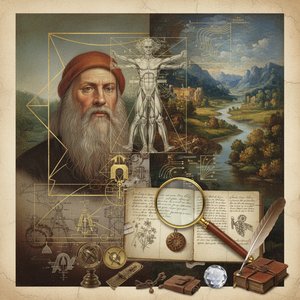
Erkunden Sie Leonardo da Vinci (1452-1519): Den Renaissance-Genie hinter der Mona Lisa & Das letzte Abendmahl! Entdecken Sie seine Sfumato-Technik, anatomische Studien und bahnbrechende Erfindungen. #DaVinci #RenaissanceKunst

ab ·

Kapitel 1

Welche Größe soll es haben?

Wischen Sie, um die Größe zu ändern; das Bild auf der linken Seite zeigt den Rahmen in seiner tatsächlichen Breite. Die Proportionen des Originals bleiben erhalten.

Standardformat
individuell anpassbar
CM
INCH

Wählen Sie aus unseren vordefinierten Formaten, die den ursprünglichen Proportionen des Kunstwerks entsprechen.

Breite
Höhe

Geben Sie die Breite und die Höhe an, die Sie für Ihren Rahmen oder Ihre Wand benötigen. Da dieses Werk handgemalt ist, kann der Künstler bei einer anderen Form etwas mehr um das Bild herum malen oder etwas abschneiden – Sie entscheiden. Wir senden Ihnen ein digitales Mockup zur Freigabe, bevor mit dem Malen begonnen wird. Das auf dieser Seite gezeigte Bild stellt nicht das tatsächliche Ergebnis dar – dies tut nur das Mockup.

Kapitel 2

Wie soll es geliefert werden?

Wählen Sie die Kanten der Leinwand aus

Wählen Sie Ihren Rahmen

Corner sample of the WhiteWrap canvas edge finish, stretched on Massivholz bars
Weißer Rand €1
Corner sample of the BlurSideWrap canvas edge finish, stretched on Massivholz bars
verlaufende Kanten €1
Corner sample of the ExtendedWrap canvas edge finish, stretched on Massivholz bars
Umrandung €1
Corner sample of the P118B picture frame: formgepresstes Polystyrol, 5 cm wide and 3 cm thick
P118B €10
Corner sample of the P118H picture frame: formgepresstes Polystyrol, 5 cm wide and 3 cm thick
P118H €10
Corner sample of the P118W picture frame: formgepresstes Polystyrol, 5 cm wide and 3 cm thick
P118W €10
Corner sample of the P438Z picture frame: formgepresstes Polystyrol, 5.5 cm wide and 3.5 cm thick
P438Z €10
Corner sample of the P508JH picture frame: formgepresstes Polystyrol, 7 cm wide and 3.5 cm thick
P508JH €12
Corner sample of the P508YH picture frame: formgepresstes Polystyrol, 7 cm wide and 3.5 cm thick
P508YH €12
Corner sample of the P805H picture frame: formgepresstes Polystyrol, 5 cm wide and 3.5 cm thick
P805H €10
Corner sample of the P805Z picture frame: formgepresstes Polystyrol, 5 cm wide and 3.5 cm thick
P805Z €10
Corner sample of the P919BZ picture frame: formgepresstes Polystyrol, 7 cm wide and 3.5 cm thick
P919BZ €10
Corner sample of the P919G picture frame: formgepresstes Polystyrol, 7 cm wide and 3.5 cm thick
P919G €10
Corner sample of the P919XJ picture frame: formgepresstes Polystyrol, 7 cm wide and 3.5 cm thick
P919XJ €10
Corner sample of the P959ZH picture frame: formgepresstes Polystyrol, 5 cm wide and 3 cm thick
P959ZH €10
Corner sample of the P968JZ picture frame: formgepresstes Polystyrol, 6 cm wide and 4 cm thick
P968JZ €12
Corner sample of the W106C picture frame: Massivholz, 5 cm wide and 3 cm thick
W106C €8
Corner sample of the W218G picture frame: Massivholz, 5 cm wide and 3 cm thick
W218G €10
Corner sample of the W218JH picture frame: Massivholz, 5 cm wide and 3 cm thick
W218JH €8
Corner sample of the W218Y picture frame: Massivholz, 5 cm wide and 3 cm thick
W218Y €10
Corner sample of the W307PJ picture frame: Massivholz, 6 cm wide and 3 cm thick
W307PJ €10
Corner sample of the W316G picture frame: Massivholz, 6 cm wide and 3 cm thick
W316G €10
Corner sample of the W316PJ picture frame: Massivholz, 6 cm wide and 3 cm thick
W316PJ €8
Corner sample of the W316Y picture frame: Massivholz, 6 cm wide and 3 cm thick
W316Y €10
Corner sample of the W398PJ picture frame: Massivholz, 5 cm wide and 3 cm thick
W398PJ €8
Corner sample of the W4111J picture frame: Massivholz, 6.5 cm wide and 3.5 cm thick
W4111J €10
Corner sample of the W500HY picture frame: Massivholz, 7 cm wide and 5 cm thick
W500HY €15
Corner sample of the W500JH picture frame: Massivholz, 7 cm wide and 5 cm thick
W500JH €15
Corner sample of the W692G picture frame: Massivholz, 8 cm wide and 4 cm thick
W692G €12
Corner sample of the W849H picture frame: Massivholz, 5 cm wide and 3 cm thick
W849H €8
Corner sample of the W940BG picture frame: Massivholz, 7.5 cm wide and 4.5 cm thick
W940BG €15
Corner sample of the W953PJ picture frame: Massivholz, 6 cm wide and 3.5 cm thick
W953PJ €8
Corner sample of the H24-GOLD picture frame: geschnitztes Holz mit Gesso, 10 cm wide and 6 cm thick
H24-GOLD €30
Corner sample of the H24-SILVER picture frame: geschnitztes Holz mit Gesso, 10 cm wide and 6 cm thick
H24-SILVER €30
Corner sample of the H36-GOLD picture frame: geschnitztes Holz mit Gesso, 15 cm wide and 6.5 cm thick
H36-GOLD €45
Corner sample of the H36-SILVER picture frame: geschnitztes Holz mit Gesso, 15 cm wide and 6.5 cm thick
H36-SILVER €45

Profil: . Gesamtgröße mit Rahmen: .

Kapitel 3

Wer malt es, und sollte etwas geändert werden?

Beispiele für Anpassungsmöglichkeiten: Gesicht durch Kundenfoto ersetzen; Haustier hinzufügen (z. B. Katze durch Hund ersetzen); Versteckte Botschaft im Hintergrund einfügen; Hintergrundlandschaft oder Elemente ändern.
Nach der Bestellung wird das Team von OriginalUniqueArt.com den Kunden per E-Mail kontaktieren, um Anweisungen einzuholen und eine Vorschau des Entwurfs bereitzustellen

Weltweiter Versand () in nur 3 bis 4 Wochen statt der üblichen 5 Wochen. (7 November). Keine Kompromisse bei der Qualität.

Kapitel 4

Der letzte Schliff

Ein Namensschild, wie im Museum?

Details der gravierten Bronzetafel

This elegant plaque features the artist's name and the title of the artwork, finely engraved for a timeless presentation.

It is made from bronze with a refined, elegant finish. The text is precisely laser-engraved for a sharp and permanent result. Measuring 9x2 cm, the plaque is compact yet easy to read. It's built to be durable and scratch-resistant, offering a professional, museum-quality look. Mounting is simple thanks to the included adhesive backing.

Details zur Acrylglas-Plakette (transparent)

The plaque includes essential engraved details such as the artist's name, the title of the artwork, the date it was created, the type of media used-like oil on canvas or watercolor-a brief description of the piece, and a QR code that links to the complete artwork information.

It is crafted from clear acrylic, offering a sleek, modern appearance. The text is UV-engraved in black to ensure strong visual contrast. With a size of 10x15 cm, it ensures optimal readability. It comes equipped with two metal hooks for secure wall mounting. The plaque is designed to be weather-resistant, making it suitable for various environments, and it includes interactive features that work seamlessly with smartphone scanning.

Details zur schwarzen Acryltafel

This elegant plaque includes engraved information such as the artist's name, the title of the artwork, the date it was created, the type of media used (like oil on canvas or watercolor), a short description of the artwork, and a QR code for quick access to more information.

The plaque itself is made from refined black acrylic with a premium finish. The text is laser-engraved in white for high contrast and readability. Its size is 10x15 cm, designed to be easy to read. It comes with two metal hooks for professional mounting. The design is sleek and fits any interior style. It is also weather-resistant and durable, with built-in digital integration for mobile compatibility.

Ein Schutzlack?

Bis wann benötigen Sie es?

Kapitel 5

Ihr Gemälde, wie von Ihnen bestellt

Studie eines Ritters

Art der Reproduktion

Format der Reproduktion

-

Erstklassige Meisterkünstler

Mehr Detailtiefe, Raffinesse und zusätzliche Produktionszeit

-

Rahmen für Reproduktionen

-

-

Bei Kunstwerken oder Reproduktionen, die an einer Seite größer als 105 cm (ca. 41 Zoll) sind, wird der Rahmen zerlegt als Bausatz geliefert. Diese Methode gewährleistet eine sichere Zustellung und verhindert Schäden während des Transports.

Professionelle Montage erforderlich – dies ist kein DIY-Produkt.
Der Bausatz muss von einem erfahrenen professionellen Rahmenmacher zusammengebaut und die Leinwand gespannt werden. Hierfür werden Holzleim (nicht im Lieferumfang enthalten), eine Leinwandspannzange sowie Klemmen benötigt, um die Keilleisten während des Trocknungsvorgangs rechtwinklig zu halten. Eine unsachgemäße Montage oder eine ungleichmäßige Spannung der Leinwand kann das Kunstwerk dauerhaft beschädigen und ist nicht durch unsere Garantie abgedeckt.

  • Alle Vollholzkomponenten sind enthalten, präzise auf Maß zugeschnitten.

  • Der Zusammenbau erfolgt mit den mitgelieferten Schrauben sowie Holzkleber für die Eckverbindungen, der nicht im Lieferumfang enthalten ist und vom Rahmenbauer selbst beschafft werden muss.

  • Professionelles Werkzeug ist erforderlich und nicht im Lieferumfang enthalten: eine Keilrahmenzange (Spannwerkzeug) sowie Klammern, um die Leisten während der Trocknungszeit des Klebers rechtwinklig zu fixieren.

Wichtiger Hinweis:
Für die Eckverbindungen wird Holzleim benötigt, die Leisten müssen mit Zwingen fixiert werden, bis der Leim vollständig getrocknet ist, und das Spannen der Leinwand auf dem fertigen Rahmen erfordert eine Keilrahmen-Zange. Keines dieser Utensilien ist im Set enthalten. Bitte stellen Sie sicher, dass ein erfahrener Rahmenmacher zur Verfügung steht, bevor Sie diese Größe bestellen.

Beschriftung

-

-

Schutzlackierung

Glanzlack (verstärkt die Farben, schützt vor Licht und Feuchtigkeit)

-

Mein Kunstwerk personalisieren

Beispiele für Anpassungsmöglichkeiten: Gesicht durch Kundenfoto ersetzen; Haustier hinzufügen (z. B. Katze durch Hund ersetzen); Versteckte Nachricht im Hintergrund einfügen; Hintergrundlandschaft oder -elemente ändern.

-

Eilt sehr

Weltweiter Versand () in nur 3 bis 4 Wochen statt der üblichen 5 Wochen. (7 November). Keine Kompromisse bei der Qualität.

-

Expressversand

Weltweiter Versand () innerhalb von 5 Wochen. (14 November).

Inklusive Versand

Endpreis

€ 268

Gesamtpreis € 268

Die Glasoption ist nur für Größen unter 110 cm verfügbar.

In jeder Bestellung enthalten

  • Kostenloser weltweiter Expressversand
  • Hochwertige Leinenleinwand
  • Umfassender Versicherungsschutz beim Versand
  • Zollgebühren-Rückerstattungsgarantie
  • Garantie für exakte Farbtreue
  • 100 Tage Rückgaberecht (nur bei Mängeln)
  • 100% Geld-zurück-Garantie
  • Mengenrabatt verfügbar

Study for an Equestrian Monument (Recto) – Leonardo da Vinci

Leonardo da Vinci’s “Study for an Equestrian Monument,” created around 1504, stands as a cornerstone of High Renaissance artistic achievement—a testament to Da Vinci's unparalleled dedication to observation and anatomical precision. More than just a preparatory sketch destined for the scrapheap, this chalk drawing embodies the very spirit of *studium*, or careful study, championed by humanist thinkers of the era.

The artwork depicts a lone rider astride a magnificent horse, rendered with astonishing detail. The posture of the rider—slightly bent forward, conveying both strength and vulnerability—immediately suggests a warrior figure, perhaps embodying nobility and courage. Yet, it’s not merely the heroic stance that commands attention; rather, it's Da Vinci’s masterful use of chalk to capture the subtle musculature of the horse’s torso and neck—a feat accomplished with remarkable accuracy.

The drawing’s tonal palette is muted yet luminous, dominated by shades of grey and ochre. Da Vinci employed *sfumato*, a technique pioneered by him that blends colors imperceptibly to create soft transitions and atmospheric depth. This subtle shading imbues the horse with an almost palpable sense of movement—as if it were poised for a decisive leap forward. The artist’s meticulous attention to detail extends beyond mere representation; he sought to convey not just what he saw but also how light interacts with form.

The Genesis of an Icon: Leonardo's Early Sketch

“Study for an Equestrian Monument” emerged during Da Vinci’s tenure in the service of Ludovico Sforza, Duke of Milan—a period marked by significant artistic innovation and political intrigue. The Duke commissioned monumental sculptures and artworks to project power and prestige, reflecting the ambitions of his court. Da Vinci's study served as a crucial step in realizing this vision; it demonstrated his understanding of anatomy, perspective, and the dynamics of human action.

The context of Milan during the early 16th century was characterized by constant warfare between rival factions—a reality that profoundly influenced artistic expression. Da Vinci’s depiction of a rider symbolizes leadership and control—themes central to Sforza’s reign. The drawing isn't merely an aesthetic exercise; it’s a reflection of the broader cultural landscape of its time.

A Window into Renaissance Ideals

Leonardo da Vinci’s artistic philosophy was fundamentally rooted in scientific observation. He believed that true art required a deep comprehension of the natural world—anatomy, perspective, and mechanics—principles he meticulously investigated throughout his life. “Study for an Equestrian Monument” exemplifies this humanist ideal; it underscores Da Vinci's conviction that beauty could be found in understanding the underlying structure of existence.

The artist’s meticulous approach to rendering the horse’s musculature is particularly noteworthy. He dissected cadavers to gain firsthand knowledge of human anatomy—a practice considered radical for its time—and applied this anatomical understanding to his artistic endeavors. Da Vinci's unwavering commitment to observation and accuracy elevated “Study for an Equestrian Monument” beyond a mere sketch; it became a profound meditation on the relationship between man and animal, power and grace.

Symbolism and Artistic Technique

The horse itself represents nobility, strength, and majesty—symbols deeply ingrained in Renaissance iconography. Da Vinci skillfully captures these qualities through his masterful use of chalk and *sfumato*, creating an image that transcends mere visual representation. The drawing’s subdued palette contributes to its contemplative mood—inviting viewers to contemplate the complexities of human experience.

Da Vinci's technique—characterized by delicate shading, precise anatomical detail, and atmospheric perspective—represents a pinnacle of Renaissance artistic achievement. “Study for an Equestrian Monument” stands as a testament to Da Vinci’s genius—a reminder that beauty can be found in both scientific inquiry and artistic expression.

OriginalUniqueArt offers meticulously crafted hand-painted reproductions that capture the essence of this iconic work, allowing you to bring its timeless elegance into your own home. Explore more masterpieces at OriginalUniqueArt.com.

Fragen & Antworten

Ist "Studie eines Ritters" von Leonardo da Vinci ein bekanntes Kunstwerk?

"Studie eines Ritters" wird als Ikonisch eingestuft.

Für welche Verwendung und welchen Raum wird "Studie eines Ritters" von Leonardo da Vinci empfohlen?

"Studie eines Ritters" von Leonardo da Vinci wird für Statement-Piece empfohlen, idealerweise in einem Wohnbereich. Die Verwendung und die Raumgestaltung geben gemeinsam Aufschluss darüber, wo eine Reproduktion am besten zur Geltung kommt.

Ist die Abbildung von "Studie eines Ritters" von Leonardo da Vinci gemeinfrei?

Was das Urheberrecht betrifft, so ist "Studie eines Ritters" gemeinfrei – das Urheberrecht ist abgelaufen.

Mehr über dieses Gemälde

Vorschau anzeigen In AR ansehen Zum Druck wechseln Zum digitalen Bild wechseln Versenden
Details anzeigen Leitfaden Zu Favoriten hinzufügen Herunterladen Ähnliche Objekte Röntgenaufnahme Diashow Fragen & Antworten Statistiken

In Zahlen

  • 1504das Jahr der Entstehung
  • 29Rahmen zur Auswahl
  • Standardformate, in ihren eigenen Proportionen
  • 5Wochen für die Bemalung und Lieferung
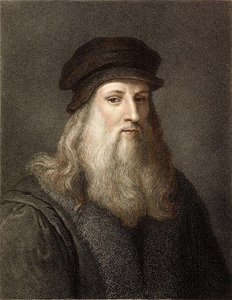
Leonardo da Vinci

Leonardo da Vinci

1452 - 1519, Italien

Kurzinfos zu Leonardo da Vinci

  • Beeinflusste Künstler: ['Andrea del Verrocchio']
  • Bemerkenswerte Werke:
    • Mona Lisa
    • Das letzte Abendmahl
    • Verkündigung
    • Jungfrau mit dem Leuchtstern
  • Geburtsdatum: 15. April 1452
  • Geburtsort: Vicenza, Italien
  • Künstlerische Bewegung: Hochrenaissance
  • Nationalität: Italienisch
  • Todatum: 2. Mai 1519
  • Vollständiger Name: Leonardo da Vinci

Künstlerbiografie

Leonardo da Vinci: Leben und Vermächtnis

Frühes Leben und Ausbildung (1452-1482)

Leonardo di ser Piero da Vinci (geboren am 15. April 1452 – gestorben am 2. Mai 1519) wurde unerwünscht in der Nähe von Vinci, in der Republik Florenz, geboren. Seine frühe Ausbildung umfasste Lesen, Schreiben und Rechnen, obwohl eine formale Lateinschule später erfolgte. Mit vierzehn Jahren begann er eine Lehre bei Andrea del Verrocchio, einem führenden florentinischen Künstler. Diese intensive Ausbildung ließ ihn in die Malerei, Bildhauerei und technische Künste eintauchen – legte den Grundstein für sein vielseitiges Genie.

Erster Mailänder Zeitraum (1482-1499)

Im Jahr 1482 trat Leonardo dem Dienst von Ludovico Sforza, Herzog von Mailand, bei. Er war nicht nur Künstler; er diente als Ingenieur, Architekt und Bildhauer am Hof. In dieser Zeit entwarf er Militärbefestigungen, aufwendige Bühnenbilder und Skulpturen (viele unvollendet). Eine monumentale Beauftragung zu dieser Zeit war Die letzten Tage des Judas I., ein Fresko, das in der Refektorium des Klosters Santa Maria delle Grazie gemalt wurde – ein Werk, das die westliche Kunst nachhaltig beeinflussen sollte.

Rückkehr nach Florenz und Meisterwerke der Hochrenaissance (1500-1506)

Nach der französischen Invasion Mailands im Jahr 1499 kehrte Leonardo während eines Höhepunktes der künstlerischen Entwicklung nach Florenz zurück. Obwohl er weniger Werke produzierte als zuvor, waren ihre Auswirkungen enorm. In dieser Zeit begann die Arbeit an Mona Lisa (La Gioconda), dem berühmtesten Gemälde weltweit, und seine Techniken wurden weiter verfeinert.

Spätere Jahre und französisches Gönnertum (1506-1519)

Leonas späte Jahre waren von Reisen zwischen Florenz, Mailand und Rom geprägt, wo er für seine Expertise begehrt war, aber oft Projekte unvollständig ließ. Im Jahr 1516 nahm er die Einladung von König Franz I. an, um in der Nähe von Amboise in Frankreich im Château du Clos Lucé zu leben und zu arbeiten. Er starb dort im Jahr 1519 und hinterließ ein großes Vermächtnis aus künstlerlicher und wissenschaftlicher Forschung.

Einflüsse und künstlerische Entwicklung

  • Frühe Einflüsse umfassten seinen Lehrer Verrocchio und die breitere florentinische künstlerische Tradition.
  • Ein tiefes Interesse an Beobachtung trieb ihn dazu, die natürliche Welt akribisch zu studieren.
  • Er ging von traditioneller religiöser Ikonographie ab und bevorzugte realistische Darstellungen menschlicher Emotionen und Anatomie.
  • Seine Entwicklung der Sfumato-Technik – einer Methode, die subtile Schattierungen verwendet, um verschwommenen Umrissen und atmosphärischer Perspektive zu erzeugen – revolutionierte die Malerei und trug wesentlich zu seinem charakteristischen Stil bei.

Wichtige Leistungen

  • Malerei: Mona Lisa, Die letzten Tage des Judas I., Jungfrau mit dem Leuchtstern, Verkündigung
  • Zeichnung & Skizzen: Umfangreiche anatomische Studien, Ingenieurdesigns (Flugmaschinen, Waffen), botanische Illustrationen
  • Wissenschaft & Technik: Pionierarbeit in der Anatomie, Optik, Hydraulik, Geologie und Kartographie. Konzipierte Erfindungen, die um Jahrhunderte voraus waren.

Historische Bedeutung

Leonas Einfluss auf die Kunstgeschichte ist unermesslich. Seine Gemälde werden für ihren Realismus, ihre psychologische Tiefe und ihre innovativen Techniken gefeiert. Er erhob den Status von Künstlern von geschickten Handwerkern zu intellektuellen Figuren. Über seine künstlerischen Leistungen hinaus haben seine wissenschaftlichen Untersuchungen und Erfindungen viele moderne Entdeckungen vorweggenommen. Er bleibt ein Symbol menschlicher Neugier, Kreativität und der Suche nach Wissen – eine wahre Verkörperung des Geistes der Renaissance. Sein Vermächtnis inspiriert bis heute Ehrfurcht und Faszination, festigt seinen Platz als eine der bemerkenswertesten Figuren der Geschichte.

Eckdaten

  • Subject or theme: Kämpferische Darstellung
  • Location: Gallerie dell'Accademia, Florenz
  • Title: Studie eines Ritters
  • Influences: Renaissance Humanismus
  • Year: 1504
  • Movement: Hochrenaissance

Kunst-Quiz

Jede Frage hat nur eine richtige Antwort.

Frage 1:
¿Quién fue Leonardo da Vinci?
Frage 2:
¿En qué período artístico floreció Leonardo da Vinci?
Frage 3:
¿Cuál fue el principal objetivo de Da Vinci al crear esta obra?
Frage 4:
¿Qué técnica artística utilizó Da Vinci para lograr efectos de luz y sombra?
Frage 5:
¿Dónde se encuentra actualmente esta obra maestra?