Vorschau anzeigen
 Versenden
 Teilen
 Details anzeigen
 Leitfaden

 Herunterladen
 Ähnliche Objekte
 Röntgenaufnahme
 Diashow
 Statistiken
Leda und der Schwan
 Öl auf Tafel
- Hochrenaissance
 1510
1510- Renaissance
 69.0 x 73.0 cm
 Weiterlesen
Giclée / Kunstdruck
Giclée- oder Leinwanddruck in Museumsqualität mit schneller Produktion und flexiblen Veredelungsoptionen. ( Handgemalte Reproduktion bestellen Zum digitalen Bild wechseln)




P118B €10

P118H €10

P118W €10

P438Z €10

P508JH €12

P508YH €12

P805H €10

P805Z €10

P919BZ €10

P919G €10

P919XJ €10

P959ZH €10

P968JZ €12

W106C €8

W218G €10

W218JH €8

W218Y €10

W307PJ €10

W316G €10

W316PJ €8

W316Y €10

W398PJ €8

W4111J €10

W500HY €15

W500JH €15

W692G €12

W849H €8

W940BG €15

W953PJ €8




Wählen Sie aus unseren vordefinierten Formaten, die den ursprünglichen Proportionen des Kunstwerks entsprechen.

Geben Sie die benötigte Breite und Höhe an, damit der Druck perfekt in Ihren Rahmen oder an Ihre Wand passt. Ein Druck kann nur beschnitten, aber niemals größer als das Originalbild angefertigt werden; daher verliert ein Format mit anderen Proportionen einen Teil des Bildes. Wir senden Ihnen ein digitales Mockup zur Freigabe, bevor wir den Druck ausführen. Das auf dieser Seite gezeigte Bild zeigt nicht den tatsächlichen Beschnitt – dies ist nur im Mockup ersichtlich.
Weltweiter Versand () innerhalb von 2 Wochen statt der üblichen 4/5 Wochen. (27 Oktober)

Kostenloser weltweiter Expressversand

Hochwertige Leinenleinwand

Umfassender Versicherungsschutz beim Versand

Zollgebühren-Rückerstattungsgarantie

Garantie für exakte Farbtreue

100 Tage Rückgaberecht (nur bei Mängeln)

100% Geld-zurück-Garantie

Mengenrabatt verfügbar
 Die Glasoption ist nur für Größen unter 110 cm verfügbar.

Leda und der Schwan
Giclée / Kunstdruck
Format der Reproduktion
-


Endpreis
€ 70
A Myth Made Visible: Exploring Leonardo da Vinci’s *Leda and the Swan*
Leonardo da Vinci's *Leda and the Swan*, created around 1510, remains one of the most captivating and elusive works attributed to the Renaissance master. Though the original painting is lost – tragically destroyed centuries ago – its legacy endures through numerous copies and preparatory drawings, allowing us to glimpse Da Vinci’s genius in depicting a pivotal moment from Greek mythology. This artwork embodies the High Renaissance ideals of beauty, harmony, and intellectual curiosity, inviting viewers into a world where myth and reality intertwine. It's a testament to Da Vinci's unparalleled ability to transform legend into visual splendor.The Story Unveiled: Mythological Context
The painting illustrates the tale of Leda, Queen of Sparta, seduced by Zeus who transformed himself into a magnificent swan to approach her. This union resulted in two sets of offspring: Helen and Polydeuces (Castor and Pollux) – children of Zeus – and Clytemnestra and Castor – children of her husband, Tyndareus. The myth is rich with symbolism relating to power, desire, fate, and the complexities of lineage. Da Vinci doesn’t merely illustrate a story; he delves into its psychological and emotional core. The narrative speaks to universal themes of love, vulnerability, and divine intervention—concepts that resonated deeply within Renaissance thought. Consider the profound influence of Plato's Symposium on artistic representations of mythological subjects during this period.A Masterclass in Renaissance Technique
Da Vinci’s approach to *Leda and the Swan* showcases his unparalleled technical skill. He employed sfumato, a technique characterized by subtle gradations of light and shadow, creating an ethereal softness that blurs lines and evokes a sense of mystery. This masterful blending of colors achieves an unprecedented level of realism—almost as if capturing the very essence of luminescence itself. The composition is meticulously balanced, with figures arranged in a harmonious pyramidal structure – a compositional device favored by artists throughout antiquity and Renaissance Italy. His mastery of *chiaroscuro* – the dramatic contrast between light and dark – lends volume and realism to the forms, emphasizing the sensuality of Leda and the graceful power of the swan. Though only known through copies, these reveal Da Vinci’s layering technique, building depth and luminosity with thin glazes of oil paint—a painstaking process that demanded immense patience and precision.Symbolism & Interpretation
Beyond its narrative, *Leda and the Swan* is laden with symbolic meaning. The swan itself represents both beauty and aggression, embodying Zeus's dual nature as a god capable of both tenderness and force. Leda’s pose – often depicted as slightly yielding yet dignified – suggests a complex emotional response to the encounter. Some interpretations suggest the scene alludes to the inherent duality within human nature—the tension between reason and passion, control and surrender. The presence of eggs, or newly hatched children, symbolizes fertility, renewal, and the unfolding of destiny. Consider how artists like Raphael utilized similar pyramidal compositions to convey moral lessons – a deliberate strategy aimed at elevating the viewer’s intellect alongside their aesthetic appreciation.Historical Significance & Artistic Legacy
*Leda and the Swan* exemplifies the Renaissance fascination with classical antiquity and its humanist themes. Da Vinci’s exploration of mythological subjects reflects a broader cultural shift towards celebrating human potential and intellectual inquiry. The work's influence can be seen in subsequent artistic depictions of the Leda myth, inspiring generations of artists to grapple with its complex themes. It stands as a testament to Da Vinci’s innovative spirit and his ability to elevate traditional narratives through masterful technique and profound psychological insight. Its enduring beauty continues to captivate audiences today—a timeless masterpiece that embodies the pinnacle of Renaissance artistic achievement.- Style: High Renaissance
- Medium: Oil on Panel (original), reproductions available on canvas or panel
- Dimensions: 69 x 73 cm (original)
- Current Location of Copies: Galleria Borghese (Rome), Wilton House (England), Uffizi Gallery (Florence) among others.
The Enigma of Genius: Leonardo da Vinci’s Life and Legacy
Leonardo di ser Piero da Vinci, born in 1452 near the Tuscan village of Vinci, remains arguably the most universally recognized figure of the Renaissance—a true polymath whose insatiable curiosity propelled him across disciplines, leaving an indelible mark on art, science, and engineering. His very name has become synonymous with genius, a testament to his extraordinary breadth of talent and visionary thinking. Born out of wedlock to Piero da Vinci, a notary, and Caterina, a peasant woman, Leonardo’s early life was unconventional, yet provided him with access to both the practical world and an appreciation for nature that would profoundly shape his artistic vision. He received a basic education in reading, writing, and arithmetic, but it was his apprenticeship under Andrea del Verrocchio in Florence that truly ignited his creative spark. Within Verrocchio’s workshop, Leonardo wasn't merely learning to paint or sculpt;
Fragen & Antworten
Welche Farbe prägt die Komposition von "Leda und der Schwan" von Leonardo da Vinci?
Die dominante Farbe von "Leda und der Schwan" von Leonardo da Vinci ist Rosiges Braun (#bf9c78).
In welchem Jahr wurde "Leda und der Schwan" von Leonardo da Vinci geschaffen?
"Leda und der Schwan" stammt aus dem Jahr 1510. Dieses Datum ordnet das Werk in die Schaffensperiode von Leonardo da Vinci sowie in dessen Epoche ein.
Welcher Kunstrichtung lässt sich "Leda und der Schwan" von Leonardo da Vinci zuordnen?
Die mit "Leda und der Schwan" von Leonardo da Vinci verbundene Stilrichtung ist Hochrenaissance. Diese Klassifizierung ordnet das Werk in den Kontext verwandter Künstler und Kunstwerke ein.
Künstlerbiografie
Leonardo da Vinci: Leben und Vermächtnis
Frühes Leben und Ausbildung (1452-1482)
Leonardo di ser Piero da Vinci (geboren am 15. April 1452 – gestorben am 2. Mai 1519) wurde unerwünscht in der Nähe von Vinci, in der Republik Florenz, geboren. Seine frühe Ausbildung umfasste Lesen, Schreiben und Rechnen, obwohl eine formale Lateinschule später erfolgte. Mit vierzehn Jahren begann er eine Lehre bei Andrea del Verrocchio, einem führenden florentinischen Künstler. Diese intensive Ausbildung ließ ihn in die Malerei, Bildhauerei und technische Künste eintauchen – legte den Grundstein für sein vielseitiges Genie.
Erster Mailänder Zeitraum (1482-1499)
Im Jahr 1482 trat Leonardo dem Dienst von Ludovico Sforza, Herzog von Mailand, bei. Er war nicht nur Künstler; er diente als Ingenieur, Architekt und Bildhauer am Hof. In dieser Zeit entwarf er Militärbefestigungen, aufwendige Bühnenbilder und Skulpturen (viele unvollendet). Eine monumentale Beauftragung zu dieser Zeit war Die letzten Tage des Judas I., ein Fresko, das in der Refektorium des Klosters Santa Maria delle Grazie gemalt wurde – ein Werk, das die westliche Kunst nachhaltig beeinflussen sollte.
Rückkehr nach Florenz und Meisterwerke der Hochrenaissance (1500-1506)
Nach der französischen Invasion Mailands im Jahr 1499 kehrte Leonardo während eines Höhepunktes der künstlerischen Entwicklung nach Florenz zurück. Obwohl er weniger Werke produzierte als zuvor, waren ihre Auswirkungen enorm. In dieser Zeit begann die Arbeit an Mona Lisa (La Gioconda), dem berühmtesten Gemälde weltweit, und seine Techniken wurden weiter verfeinert.
Spätere Jahre und französisches Gönnertum (1506-1519)
Leonas späte Jahre waren von Reisen zwischen Florenz, Mailand und Rom geprägt, wo er für seine Expertise begehrt war, aber oft Projekte unvollständig ließ. Im Jahr 1516 nahm er die Einladung von König Franz I. an, um in der Nähe von Amboise in Frankreich im Château du Clos Lucé zu leben und zu arbeiten. Er starb dort im Jahr 1519 und hinterließ ein großes Vermächtnis aus künstlerlicher und wissenschaftlicher Forschung.
Einflüsse und künstlerische Entwicklung
- Frühe Einflüsse umfassten seinen Lehrer Verrocchio und die breitere florentinische künstlerische Tradition.
- Ein tiefes Interesse an Beobachtung trieb ihn dazu, die natürliche Welt akribisch zu studieren.
- Er ging von traditioneller religiöser Ikonographie ab und bevorzugte realistische Darstellungen menschlicher Emotionen und Anatomie.
- Seine Entwicklung der Sfumato-Technik – einer Methode, die subtile Schattierungen verwendet, um verschwommenen Umrissen und atmosphärischer Perspektive zu erzeugen – revolutionierte die Malerei und trug wesentlich zu seinem charakteristischen Stil bei.
Wichtige Leistungen
- Malerei: Mona Lisa, Die letzten Tage des Judas I., Jungfrau mit dem Leuchtstern, Verkündigung
- Zeichnung & Skizzen: Umfangreiche anatomische Studien, Ingenieurdesigns (Flugmaschinen, Waffen), botanische Illustrationen
- Wissenschaft & Technik: Pionierarbeit in der Anatomie, Optik, Hydraulik, Geologie und Kartographie. Konzipierte Erfindungen, die um Jahrhunderte voraus waren.
Historische Bedeutung
Leonas Einfluss auf die Kunstgeschichte ist unermesslich. Seine Gemälde werden für ihren Realismus, ihre psychologische Tiefe und ihre innovativen Techniken gefeiert. Er erhob den Status von Künstlern von geschickten Handwerkern zu intellektuellen Figuren. Über seine künstlerischen Leistungen hinaus haben seine wissenschaftlichen Untersuchungen und Erfindungen viele moderne Entdeckungen vorweggenommen. Er bleibt ein Symbol menschlicher Neugier, Kreativität und der Suche nach Wissen – eine wahre Verkörperung des Geistes der Renaissance. Sein Vermächtnis inspiriert bis heute Ehrfurcht und Faszination, festigt seinen Platz als eine der bemerkenswertesten Figuren der Geschichte.
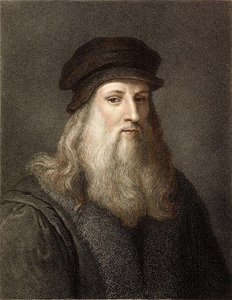
Leonardo da Vinci
1452 - 1519 , Italien
Kurzinfos
- Beeinflusste Künstler: ['Andrea del Verrocchio']
- Bemerkenswerte Werke:
- Mona Lisa
- Das letzte Abendmahl
- Verkündigung
- Jungfrau mit dem Leuchtstern
- Geburtsdatum: 15. April 1452
- Geburtsort: Vicenza, Italien
- Künstlerische Bewegung: Hochrenaissance
- Nationalität: Italienisch
- Todatum: 2. Mai 1519
- Vollständiger Name: Leonardo da Vinci
Ähnliche Artikel
Leonardo da Vinci: Die 25 Meisterwerke für Ihr Zuhause | OriginalUniqueArt
Entdecken Sie die 25 Meisterwerke von Leonardo da Vinci! Erfahren Sie faszinierende Geschichten hinter Gemälden wie der Mona Lisa & Das letzte Abendmahl. Hochwertige Reproduktionen für Ihr Zuhause – jetzt bei OriginalUniqueArt entdecken!
Renaissance Humanismus: Die 10 Meisterwerke, die eine Epoche prägten – Kunst für Ihr Zuhause
Entdecken Sie die 10 Meisterwerke der Renaissance Humanismus! Von Leonardo da Vinci bis Michelangelo – erfahren Sie die Geschichten hinter ikonischen Gemälden & Skulpturen. Finden Sie Ihre perfekte Reproduktion auf OriginalUniqueArt.com.
Die 25 Meisterwerke der Uffizien: Kunstgeschichte für Ihr Zuhause | OriginalUniqueArt
Entdecken Sie die 25 berühmtesten Meisterwerke der Uffizien, Florenz! Von Botticelli bis Leonardo da Vinci – Kunstgeschichte erleben. Hochwertige Reproduktionen & Inspiration für Ihr Zuhause auf OriginalUniqueArt.com.
Leonardo da Vinci: Synthese von Kunst, Wissenschaft und menschlicher Beobachtung – Eine Renaissance-Meisterleistung für den Kenner
Entdecken Sie Leonardo da Vincis revolutionäre Kunst und Wissenschaft! Expertenanalyse seiner Meisterwerke, Techniken wie Sfumato & Chiaroscuro. Für Kenner und Sammler.

Louvre Meisterwerke: Die Top 25 Kunstwerke für Ihr Zuhause | OriginalUniqueArt
Entdecken Sie die Top 25 Kunstwerke des Louvre! Von der Mona Lisa bis zur Venus von Milo – erleben Sie Geschichte, Künstler und Techniken. Hochwertige Reproduktionen für Ihr Zuhause auf OriginalUniqueArt.com.