Zum Druck wechseln
 Weiterlesen







































 Bei Kunstwerken oder Reproduktionen, die an einer Seite größer als 105 cm (ca. 41 Zoll) sind, wird der Rahmen zerlegt als Bausatz geliefert. Diese Methode gewährleistet eine sichere Zustellung und verhindert Schäden während des Transports.


Annunciation by Leonardo da Vinci | Uffizi Galleries
The Annunciation by Leonardo da Vinci – A Masterpiece of Florentine Renaissance Art Leonardo di ser Piero da Vinci, born in Vinci, Italy, on April 15, 1452, stands as one of the most celebrated figures of the High Renaissance. His illegitimate birth to Caterina Cambi and Piero Fruosino didn’t hinder his exceptional education—a blend of humanist scholarship and artistic exploration—laying the groundwork for a career that would redefine art history. At fourteen, he entered the workshop of Andrea del Verrocchio in Florence, immersing himself in painting, sculpting, and engineering, skills honed under Verrocchio's tutelage before establishing himself as an independent master in 1472.- Subject Matter: The Annunciation depicts Gabriel informing Mary about her divine conception—a pivotal moment in Christian theology and a cornerstone of Renaissance artistic representation.
- Style: Leonardo’s approach embodies the humanist ideals of his time, prioritizing observation and naturalism over stylized conventions. It's characterized by serene elegance and profound psychological depth.
- Technique: Employing *sfumato*, Leonardo achieved unparalleled subtlety in blending colors and tones—creating hazy contours that soften forms and imbue the scene with an ethereal glow. This technique, perfected during his Milanese period, remains a testament to his mastery of light and shadow.
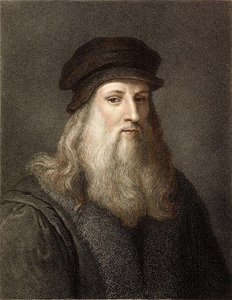
Leonardo da Vinci: Life and Legacy
Leonardo’s relentless pursuit of knowledge extended beyond art into anatomy, engineering, botany, and geology—making him an unparalleled polymath whose discoveries revolutionized scientific understanding. His anatomical studies—detailed drawings based on dissections—challenged prevailing theories about the human body and paved the way for modern medicine. Similarly, his inventions—ranging from flying machines to armored vehicles—anticipated technological advancements centuries ahead of their time.The Painting's Composition
Leonardo’s masterful use of perspective—particularly central vanishing point—creates a convincing illusion of depth and space—drawing the viewer into the serene landscape setting. The subtle gradations of light and color—characteristic of *sfumato*—enhance the painting’s emotional impact—capturing the quiet dignity of Mary and Gabriel's encounter.Light in Painting
Leonardo da Vinci was known for his mastery of light and shadow, as seen in his use of techniques like sfumato and chiaroscuro. These techniques create a sense of depth and three-dimensionality, drawing the viewer’s eye into the painting.Fragen & Antworten
Aus welcher Epoche stammt "Annunciation (detail)"?
"Annunciation (detail)" von Leonardo da Vinci stammt aus der Epoche der Renaissance. Diese Einordnung ordnet das Werk kunsthistorisch ein.
Wo kann ich einen Druck von "Annunciation (detail)" von Leonardo da Vinci kaufen?
Einen Druck von "Annunciation (detail)" von Leonardo da Vinci können Sie direkt auf der entsprechenden Kunstdruck in Premiumqualität-Seite bestellen: ein Fine Art Print auf Baumwollkanvas oder Archiv-Leinwandpapier.
Welchem Künstler wird "Annunciation (detail)" zugeschrieben?
Der Künstler hinter „Annunciation (detail)“ ist Leonardo da Vinci. Das Werk ist unter dem Namen von Leonardo da Vinci katalogisiert.
 Vorschau anzeigen
 Versenden
 Teilen
 Details anzeigen
 Leitfaden

 Herunterladen
 Ähnliche Objekte
 Röntgenaufnahme
 Diashow
 Q&A
Q&A Statistiken