Vorschau anzeigen
 Versenden
 Teilen
 Details anzeigen
 Leitfaden

 Herunterladen
 Ähnliche Objekte
 Röntgenaufnahme
 Diashow
 Fragen & Antworten
 Statistiken
Design for a wall decoration

- 180.0 x 216.0 cm


 Weiterlesen
Giclée / Kunstdruck
Giclée- oder Leinwanddruck in Museumsqualität mit schneller Produktion und flexiblen Veredelungsoptionen. ( Handgemalte Reproduktion bestellen Zum digitalen Bild wechseln)




P118B €10

P118H €10

P118W €10

P438Z €10

P508JH €12

P508YH €12

P805H €10

P805Z €10

P919BZ €10

P919G €10

P919XJ €10

P959ZH €10

P968JZ €12

W106C €8

W218G €10

W218JH €8

W218Y €10

W307PJ €10

W316G €10

W316PJ €8

W316Y €10

W398PJ €8

W4111J €10

W500HY €15

W500JH €15

W692G €12

W849H €8

W940BG €15

W953PJ €8




Wählen Sie aus unseren vordefinierten Formaten, die den ursprünglichen Proportionen des Kunstwerks entsprechen.

Geben Sie die benötigte Breite und Höhe an, damit der Druck perfekt in Ihren Rahmen oder an Ihre Wand passt. Ein Druck kann nur beschnitten, aber niemals größer als das Originalbild angefertigt werden; daher verliert ein Format mit anderen Proportionen einen Teil des Bildes. Wir senden Ihnen ein digitales Mockup zur Freigabe, bevor wir den Druck ausführen. Das auf dieser Seite gezeigte Bild zeigt nicht den tatsächlichen Beschnitt – dies ist nur im Mockup ersichtlich.
Weltweiter Versand () innerhalb von 2 Wochen statt der üblichen 4/5 Wochen. (6 November)

Kostenloser weltweiter Expressversand

Hochwertige Leinenleinwand

Umfassender Versicherungsschutz beim Versand

Zollgebühren-Rückerstattungsgarantie

Garantie für exakte Farbtreue

100 Tage Rückgaberecht (nur bei Mängeln)

100% Geld-zurück-Garantie

Mengenrabatt verfügbar
 Die Glasoption ist nur für Größen unter 110 cm verfügbar.

Design for a wall decoration
Giclée / Kunstdruck
Format der Reproduktion
-


Endpreis
€ 72
Design for a Wall Decoration - Leonaert Bramer
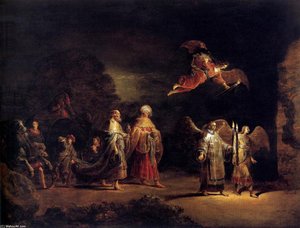
Leonaert Bramer’s “Design for a wall decoration,” created in 1645, stands as a testament to the Baroque fascination with dramatic nocturnal landscapes and intricate storytelling—a style that cemented his reputation as “Leonardo della Notte.” More than just a visual representation, this drawing embodies the spirit of its time, reflecting Delft’s artistic prowess during the Golden Age and offering valuable insights into the creative process of one of Holland's most celebrated painters.Composition and Narrative Depth
The artwork’s composition is deliberately dense, populated with figures arranged in a manner that suggests a theatrical scene unfolding within an architectural framework—likely conceived as inspiration for a monumental decorative panel. A central figure dominates the view, positioned with his back to the viewer, while another gazes forward slightly behind him, establishing a dynamic interplay of perspectives and inviting contemplation. Several seated individuals contribute to the visual tapestry, creating layers of depth and complexity that underscore the narrative intent. The arched doorway framing the scene serves as a focal point, guiding the eye inward and reinforcing the sense of enclosure—a characteristic element of Baroque art designed to immerse the viewer in an emotionally charged experience.Technique: Cross-Hatching and Illusionistic Rendering
Bramer’s masterful technique is evident in the extensive use of cross-hatching and fine lines meticulously applied to render textures and tonal variations with remarkable precision. These lines aren't merely descriptive; they actively sculpt the image, conveying a palpable sense of roughness on clothing surfaces and stone walls alike—a deliberate stylistic choice that contributes to the overall illusionistic effect. The varying density of lines simulates light reflection, creating subtle gradations of color and enhancing the realism of the depiction. This painstaking attention to detail reflects Bramer’s dedication to capturing not just what he saw but also how it felt—a hallmark of Baroque artistry aimed at transporting the viewer into another realm.Symbolism and Contextual Significance
The drawing's symbolism transcends its immediate visual elements, hinting at broader themes of power, piety, and human drama. The central figure’s attire – reminiscent of Middle Eastern influences – speaks to the artistic currents circulating in Europe during Bramer’s era, reflecting a fascination with exotic cultures and traditions. Furthermore, the architectural setting—particularly the archway—represents stability and grandeur, mirroring the aspirations of aristocratic patrons who commissioned such artworks. “Design for a wall decoration” exemplifies the Baroque preoccupation with conveying moral lessons through visual spectacle—a tradition rooted in Renaissance humanist ideals and fueled by religious fervor.Emotional Resonance: A Window into Baroque Aesthetics
Ultimately, Bramer’s drawing transcends mere decorative function; it aspires to evoke emotion and inspire contemplation. The artist's ability to capture the atmosphere of darkness and illumination—characteristic of nocturnal scenes—demonstrates a profound understanding of Baroque aesthetics. Like many artworks from this period, “Design for a wall decoration” seeks to engage the viewer on an intellectual and emotional level, prompting reflection on themes of faith, honor, and human experience. It remains a captivating example of artistic innovation and stylistic mastery—a timeless masterpiece that continues to resonate with audiences today.- Artist: Leonaert Bramer
- Date: 1645
- Medium: Pen on Paper
- Size: 180 x 216 cm
Fragen & Antworten
Für welche Verwendung wird ein Druck von "Design for a wall decoration" empfohlen?
Eine Reproduktion von "Design for a wall decoration" von Leonaert Bramer wird für Accent empfohlen. Dieser Vorschlag ergibt sich aus dem Motiv, der Stimmung und den Farben des Werkes.
Welche Technik und welche Maße hat "Design for a wall decoration" von Leonaert Bramer?
Das Originalwerk "Design for a wall decoration" von Leonaert Bramer ist ein Acrylic On Canvas mit den Maßen 180 x 216 cm. Technik und Größe beziehen sich auf das Originalobjekt.
Welche Farbpalette und welche Stimmung vereint "Design for a wall decoration"?
Die Neutrals-Palette von "Design for a wall decoration" von Leonaert Bramer harmoniert mit seinem Mysterious emotionalen Tonfall. Farbe ist eine der Arten und Weisen, wie ein Werk Gefühle vermittelt.
Künstlerbiografie
Leonaert Bramer: Ein Leben in Kunst und Intrigen
- Geboren: 24. Dezember 1596 in Delft
- Gestorben: 10. Februar 1674 in Delft
Leonaert Bramer, auch bekannt als Leonard, war ein produktiver niederländischer Maler des 17. Jahrhunderts. Er wird für seine Genrebilder, religiösen Werke und historische Gemälde anerkannt, die oft durch ihre nächtlichen Szenen und exotischen Details gekennzeichnet sind. Sein Leben war geprägt von ausgedehnten Reisen, künstlerischer Innovation und der Beteiligung an der lebendigen kulturellen Szene Delfts.
Frühes Leben und Italienische Zeit
- Frühe Reisen: Im Jahr 1614 unternahm Bramer im Alter von 18 Jahren eine bedeutende Reise, die ihn durch verschiedene europäische Städte führte und schließlich 1616 nach Rom brachte.
- Bentvueghels und Römisches Leben: Er wurde Teil der Bentvueghels, einer Gruppe nordischer Künstler, die in Rom lebten, und erlangte den Spitznamen "Nestelghat" (Wirbelwind). Seine Zeit in Italien war nicht ohne Vorfälle, darunter eine Auseinandersetzung mit Claude Lorrain.
- Künstlerische Entwicklung in Italien: Bramer verbrachte beträchtliche Zeit in Rom, Mantua und Venedig, entwickelte seine Fähigkeiten weiter und erwarb den Spitznamen “Leonardo della Notte” oder "Leonardo der Nacht" aufgrund seiner Vorliebe für nächtliche Szenen. Er beherrschte die Freskomalerei während dieser Zeit.
Rückkehr nach Delft und Künstlerischer Stil
- Zunftmitgliedschaft: Nach seiner Rückkehr nach Delft im Jahr 1628 trat Bramer 1629 der Lukasgilde bei.
- Förderung: Er erhielt die Förderung von bedeutenden Persönlichkeiten wie Mitgliedern des Hauses Oranien sowie lokalen Beamten.
- Vielfältige künstlerische Tätigkeiten: Neben dem Malen entwarf Bramer für Teppichwebereien, schuf Wandgemälde und Decken, von denen einige illusionistische Techniken verwendeten. Seine Fresken, die aufgrund der klimatischen Bedingungen verloren gegangen sind, waren ein bemerkenswertes Merkmal der bürgerlichen Gebäude Delfts.
- Einzigartiger Stil: Brams Stil ist durch seine nervöse Energie und die geschickte Darstellung von Lichtreflexionen gekennzeichnet. Er bevorzugte oft italienische Themen gegenüber typischen niederländischen Motiven wie Landschaften oder Stillleben.
Einflüsse und Bemerkenswerte Beziehungen
- Künstlerische Einflüsse: Bramer wurde von Adam Elsheimer und dem Freskenmaler Agostino Tassi beeinflusst.
- Beziehung zu Johannes Vermeer: Er spielte eine bedeutende Rolle bei der Verteidigung von Johannes Vermeer, als seine zukünftige Schwiegermutter versuchte, seine Heirat zu verhindern, was auf eine mögliche Mentorbeziehung zwischen den beiden Künstlern hindeutet. Es wird spekuliert, dass Bramer Vermeers Lehrer gewesen sein könnte.
- Das "Album Bramer": Diese Sammlung von Zeichnungen (1642-1654) bietet wertvolle Einblicke in die Sammlungen und künstlerischen Praktiken Delfts zu dieser Zeit.
Vermächtnis und Historische Bedeutung
- Intrigierende Persönlichkeit: Bramer gilt als faszinierende Figur in der niederländischen Kunst des 17. Jahrhunderts aufgrund seiner Reisen, vielfältigen künstlerischen Tätigkeiten und seiner Beteiligung an verschiedenen Gesellschaftskreisen.
- Einzigartige künstlerische Vision: Seine Vorliebe für italienische Themen und nächtliche Szenen unterschieden ihn von vielen seiner Zeitgenossen.
- Beitrag zur Kunstszene Delfts: Brams Werk trug wesentlich zur lebendigen Kunstszene Delfts bei und beeinflusste spätere Generationen von Künstlern.
- Posthumes Ansehen: Trotz eines Verkaufs seiner Werke nach seinem Tod wurde Brams Vermächtnis in jüngster Zeit neu bewertet, was seine Position als wichtige Figur in der niederländischen Kunstgeschichte festigt.

Leonaert Bramer
1596 - 1674 , Niederlande
Kurzinfos
- Beeinflusste Künstler:
- Adam Elsheimer
- Agostino Tassi
- Geburtsdatum: 24. Dezember 1596
- Geburtsort: Delft, Niederlande
- Künstlerische Richtung: Genre, religiös, Historienmalerei
- Nationalität: Niederländisch
- Sterbedatum: 10. Februar 1674
- Vollständiger Name: Leonaert Bramer
Ähnliche Artikel

Die 10 Meisterwerke der niederländischen Barockmalerei – Kunst für Ihr Zuhause | OriginalUniqueArt
Entdecken Sie die 10 prägendsten Meisterwerke der niederländischen Barockmalerei! Von Rembrandt bis Vermeer – erleben Sie Kunstgeschichte, Techniken & Emotionen. Hochwertige Reproduktionen für Ihr Zuhause auf OriginalUniqueArt.com.

Die 10 Meisterwerke des Goldenen Zeitalters der niederländischen Malerei |
Entdecken Sie die 10 Meisterwerke des Niederländischen Goldenen Zeitalters! Von Rembrandt bis Vermeer – erleben Sie Kunstgeschichte, Techniken & Emotionen. Hochwertige Gemäldereproduktionen für Ihr Zuhause auf .

Golden Light & Dutch Skies: The Timeless Magic of Dutch Golden Age Landscapes
Discover the breathtaking beauty of Dutch Golden Age landscapes. Explore the mastery of light, chiaroscuro, and 17th-century realism through an expert art history lens, celebrating the enduring legacy of the Dutch Masters for discerning collectors and art lovers.

Golden Age Reflections: Dutch Baroque Painting & Cultural Innovation
Explore the Dutch Golden Age of painting! Discover key artists like Vermeer & ter Borch, their innovative techniques, and the rich cultural context behind these Baroque masterpieces. Learn about collecting & appreciating this iconic art period.

Chiaroscuro and Character: A Definitive Guide to Light and Shadow in the Dutch Baroque Era
Explore the dramatic mastery of the Dutch Baroque era. Discover how masters like Rembrandt used chiaroscuro to transform everyday life into timeless art. An expert guide for collectors and enthusiasts seeking to understand the profound interplay of light and shadow.