Menü
Text size

() ·

A painting made for you, by hand

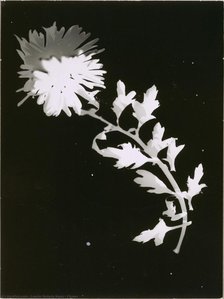
Composition (Cross and Circle)\n\nComposition (Cross and Circle)

Handgefertigte Ölreproduktion

Handgemaltes Ölgemälde auf Leinwand in Ihrer Wunschgröße und mit Rahmen, auf Bestellung von unseren Künstlern angefertigt. ( Zum Druck wechseln Zum digitalen Bild wechseln)

Beschreibung des Sammlerstücks

‘Composition (Cross and Circle)’ by László Moholy- Nagy is a 1923 Constructivist painting featuring intersecting cross and circle shapes alongside scattered dots. Displayed at the Museum of Fine Arts in Boston, it exemplifies Moholy-Nagy’s pioneering approach to art integrating technology and industry.

Künstlerbiografie

László Moholy-Nagy (1895–1946): Ungarischer Bauhaus-Meister, Pionier der Fotografie & 'Neues Sehen'. Verbindung von Kunst und Technologie für moderne Visionen.

from ·

Chapter 1

How large should it be?

Slide to change the size; the picture on the left shows the frame at its real width. The proportions of the original are kept.

Standardformat
individuell anpassbar
CM
INCH

Wählen Sie aus unseren vordefinierten Formaten, die den ursprünglichen Proportionen des Kunstwerks entsprechen.

Breite
Höhe

Geben Sie die Breite und die Höhe an, die Sie für Ihren Rahmen oder Ihre Wand benötigen. Da dieses Werk handgemalt ist, kann der Künstler bei einer anderen Form etwas mehr um das Bild herum malen oder etwas abschneiden – Sie entscheiden. Wir senden Ihnen ein digitales Mockup zur Freigabe, bevor mit dem Malen begonnen wird. Das auf dieser Seite gezeigte Bild stellt nicht das tatsächliche Ergebnis dar – dies tut nur das Mockup.

Chapter 2

How should it arrive?

Choose the edges of the stretched canvas

Choose your frame

Corner sample of the WhiteWrap canvas edge finish, stretched on Massivholz bars
White €1
Corner sample of the BlurSideWrap canvas edge finish, stretched on Massivholz bars
Blurside €1
Corner sample of the ExtendedWrap canvas edge finish, stretched on Massivholz bars
Extended €1
Corner sample of the P118B picture frame: formgepresstes Polystyrol, 5 cm wide and 3 cm thick
P118B €10
Corner sample of the P118H picture frame: formgepresstes Polystyrol, 5 cm wide and 3 cm thick
P118H €10
Corner sample of the P118W picture frame: formgepresstes Polystyrol, 5 cm wide and 3 cm thick
P118W €10
Corner sample of the P438Z picture frame: formgepresstes Polystyrol, 5.5 cm wide and 3.5 cm thick
P438Z €10
Corner sample of the P508JH picture frame: formgepresstes Polystyrol, 7 cm wide and 3.5 cm thick
P508JH €12
Corner sample of the P508YH picture frame: formgepresstes Polystyrol, 7 cm wide and 3.5 cm thick
P508YH €12
Corner sample of the P805H picture frame: formgepresstes Polystyrol, 5 cm wide and 3.5 cm thick
P805H €10
Corner sample of the P805Z picture frame: formgepresstes Polystyrol, 5 cm wide and 3.5 cm thick
P805Z €10
Corner sample of the P919BZ picture frame: formgepresstes Polystyrol, 7 cm wide and 3.5 cm thick
P919BZ €10
Corner sample of the P919G picture frame: formgepresstes Polystyrol, 7 cm wide and 3.5 cm thick
P919G €10
Corner sample of the P919XJ picture frame: formgepresstes Polystyrol, 7 cm wide and 3.5 cm thick
P919XJ €10
Corner sample of the P959ZH picture frame: formgepresstes Polystyrol, 5 cm wide and 3 cm thick
P959ZH €10
Corner sample of the P968JZ picture frame: formgepresstes Polystyrol, 6 cm wide and 4 cm thick
P968JZ €12
Corner sample of the W106C picture frame: Massivholz, 5 cm wide and 3 cm thick
W106C €8
Corner sample of the W218G picture frame: Massivholz, 5 cm wide and 3 cm thick
W218G €10
Corner sample of the W218JH picture frame: Massivholz, 5 cm wide and 3 cm thick
W218JH €8
Corner sample of the W218Y picture frame: Massivholz, 5 cm wide and 3 cm thick
W218Y €10
Corner sample of the W307PJ picture frame: Massivholz, 6 cm wide and 3 cm thick
W307PJ €10
Corner sample of the W316G picture frame: Massivholz, 6 cm wide and 3 cm thick
W316G €10
Corner sample of the W316PJ picture frame: Massivholz, 6 cm wide and 3 cm thick
W316PJ €8
Corner sample of the W316Y picture frame: Massivholz, 6 cm wide and 3 cm thick
W316Y €10
Corner sample of the W398PJ picture frame: Massivholz, 5 cm wide and 3 cm thick
W398PJ €8
Corner sample of the W4111J picture frame: Massivholz, 6.5 cm wide and 3.5 cm thick
W4111J €10
Corner sample of the W500HY picture frame: Massivholz, 7 cm wide and 5 cm thick
W500HY €15
Corner sample of the W500JH picture frame: Massivholz, 7 cm wide and 5 cm thick
W500JH €15
Corner sample of the W692G picture frame: Massivholz, 8 cm wide and 4 cm thick
W692G €12
Corner sample of the W849H picture frame: Massivholz, 5 cm wide and 3 cm thick
W849H €8
Corner sample of the W940BG picture frame: Massivholz, 7.5 cm wide and 4.5 cm thick
W940BG €15
Corner sample of the W953PJ picture frame: Massivholz, 6 cm wide and 3.5 cm thick
W953PJ €8
Corner sample of the H24-GOLD picture frame: geschnitztes Holz mit Gesso, 10 cm wide and 6 cm thick
H24-GOLD €30
Corner sample of the H24-SILVER picture frame: geschnitztes Holz mit Gesso, 10 cm wide and 6 cm thick
H24-SILVER €30
Corner sample of the H36-GOLD picture frame: geschnitztes Holz mit Gesso, 15 cm wide and 6.5 cm thick
H36-GOLD €45
Corner sample of the H36-SILVER picture frame: geschnitztes Holz mit Gesso, 15 cm wide and 6.5 cm thick
H36-SILVER €45

Moulding: . Overall size with the frame: .

Chapter 3

Who paints it, and should anything change?

Examples of what can be changed: Replace face with customer photo; Add pet (e.g., replace cat with dog); Include hidden message in background; Change background landscape or elements.
After order, OriginalUniqueArt.com team will email client for instructions and provide a mockup preview

Weltweiter Versand () in nur 3 bis 4 Wochen statt der üblichen 5 Wochen. (30 Oktober). Keine Kompromisse bei der Qualität.

Chapter 4

The finishing touches

A nameplate, as in a museum?

Details der gravierten Bronzetafel

This elegant plaque features the artist's name and the title of the artwork, finely engraved for a timeless presentation.

It is made from bronze with a refined, elegant finish. The text is precisely laser-engraved for a sharp and permanent result. Measuring 9x2 cm, the plaque is compact yet easy to read. It's built to be durable and scratch-resistant, offering a professional, museum-quality look. Mounting is simple thanks to the included adhesive backing.

Details zur Acrylglas-Plakette (transparent)

The plaque includes essential engraved details such as the artist's name, the title of the artwork, the date it was created, the type of media used-like oil on canvas or watercolor-a brief description of the piece, and a QR code that links to the complete artwork information.

It is crafted from clear acrylic, offering a sleek, modern appearance. The text is UV-engraved in black to ensure strong visual contrast. With a size of 10x15 cm, it ensures optimal readability. It comes equipped with two metal hooks for secure wall mounting. The plaque is designed to be weather-resistant, making it suitable for various environments, and it includes interactive features that work seamlessly with smartphone scanning.

Details zur schwarzen Acryltafel

This elegant plaque includes engraved information such as the artist's name, the title of the artwork, the date it was created, the type of media used (like oil on canvas or watercolor), a short description of the artwork, and a QR code for quick access to more information.

The plaque itself is made from refined black acrylic with a premium finish. The text is laser-engraved in white for high contrast and readability. Its size is 10x15 cm, designed to be easy to read. It comes with two metal hooks for professional mounting. The design is sleek and fits any interior style. It is also weather-resistant and durable, with built-in digital integration for mobile compatibility.

A protective varnish?

When do you need it?

Chapter 5

Your painting, as you ordered it

Composition (Cross and Circle)\n\nComposition (Cross and Circle)

Art der Reproduktion

Format der Reproduktion

-

Erstklassige Meisterkünstler

Mehr Detailtiefe, Raffinesse und zusätzliche Produktionszeit

-

Rahmen für Reproduktionen

-

-

Bei Kunstwerken oder Reproduktionen, die an einer Seite größer als 105 cm (ca. 41 Zoll) sind, wird der Rahmen zerlegt als Bausatz geliefert. Diese Methode gewährleistet eine sichere Zustellung und verhindert Schäden während des Transports.

Professionelle Montage erforderlich – dies ist kein DIY-Produkt.
Der Bausatz muss von einem erfahrenen professionellen Rahmenmacher zusammengebaut und die Leinwand gespannt werden. Hierfür werden Holzleim (nicht im Lieferumfang enthalten), eine Leinwandspannzange sowie Klemmen benötigt, um die Keilleisten während des Trocknungsvorgangs rechtwinklig zu halten. Eine unsachgemäße Montage oder eine ungleichmäßige Spannung der Leinwand kann das Kunstwerk dauerhaft beschädigen und ist nicht durch unsere Garantie abgedeckt.

  • Alle Vollholzkomponenten sind enthalten, präzise auf Maß zugeschnitten.

  • Der Zusammenbau erfolgt mit den mitgelieferten Schrauben sowie Holzkleber für die Eckverbindungen, der nicht im Lieferumfang enthalten ist und vom Rahmenbauer selbst beschafft werden muss.

  • Professionelles Werkzeug ist erforderlich und nicht im Lieferumfang enthalten: eine Keilrahmenzange (Spannwerkzeug) sowie Klammern, um die Leisten während der Trocknungszeit des Klebers rechtwinklig zu fixieren.

Wichtiger Hinweis:
Für die Eckverbindungen wird Holzleim benötigt, die Leisten müssen mit Zwingen fixiert werden, bis der Leim vollständig getrocknet ist, und das Spannen der Leinwand auf dem fertigen Rahmen erfordert eine Keilrahmen-Zange. Keines dieser Utensilien ist im Set enthalten. Bitte stellen Sie sicher, dass ein erfahrener Rahmenmacher zur Verfügung steht, bevor Sie diese Größe bestellen.

Beschriftung

-

-

Schutzlackierung

Glanzlack (verstärkt die Farben, schützt vor Licht und Feuchtigkeit)

-

Mein Kunstwerk personalisieren

Beispiele für Anpassungsmöglichkeiten: Gesicht durch Kundenfoto ersetzen; Haustier hinzufügen (z. B. Katze durch Hund ersetzen); Versteckte Nachricht im Hintergrund einfügen; Hintergrundlandschaft oder -elemente ändern.

-

Eilt sehr

Weltweiter Versand () in nur 3 bis 4 Wochen statt der üblichen 5 Wochen. (30 Oktober). Keine Kompromisse bei der Qualität.

-

Expressversand

Weltweiter Versand () innerhalb von 5 Wochen. (6 November).

Inklusive Versand

Endpreis

€ 266

Gesamtpreis € 266

Die Glasoption ist nur für Größen unter 110 cm verfügbar.

Included with every order

  • Kostenloser weltweiter Expressversand
  • Hochwertige Leinenleinwand
  • Umfassender Versicherungsschutz beim Versand
  • Zollgebühren-Rückerstattungsgarantie
  • Garantie für exakte Farbtreue
  • 100 Tage Rückgaberecht (nur bei Mängeln)
  • 100% Geld-zurück-Garantie
  • Mengenrabatt verfügbar

Composition (Cross and Circle): A Pioneer’s Vision of Geometric Abstraction

László Moholy-Nagy's "Composition (Cross and Circle)" stands as a cornerstone of Constructivism, embodying the movement’s radical embrace of industrial materials and geometric abstraction. Created in 1923 during his pivotal time at the Bauhaus school in Weimar, Germany, this deceptively simple painting—measuring just 7 x 11 cm—commands considerable artistic significance despite its diminutive size. It resides within the Museum of Fine Arts in Boston, a testament to its enduring appeal and scholarly recognition.
  • Style: Constructivism – Rejecting Impressionism’s focus on subjective perception, Constructivism championed objectivity and rationality, prioritizing geometric forms—primarily intersecting lines and circles—to represent reality.
  • Technique: Executed in black ink on white paper, Moholy-Nagy utilized a precise linework technique to delineate the cross and circle shapes. The stark contrast between black and white amplifies the visual impact, emphasizing the purity of form and minimizing any illusionistic depth.
  • Historical Context: Bauhaus emerged as an avant-garde architectural school founded in 1919 with a mission to fuse art, craft, and technology. Moholy-Nagy’s involvement reflected this broader ambition—to reimagine the role of artists within society by exploring new mediums and methodologies.
Symbolism & Conceptual Depth: The intersecting cross and circle motif transcends mere visual representation; it speaks to fundamental concepts underpinning Constructivism. The cross symbolizes stability and hierarchy, while the circle embodies unity and infinite expansion—a deliberate juxtaposition designed to provoke contemplation about opposing forces shaping existence. Moholy-Nagy’s intention was not simply to depict a form but to convey an idea – a “New Vision” as he termed it – mirroring the Bauhaus ethos of experimentation and intellectual rigor.
  • Influence: Moholy-Nagy drew inspiration from Suprematism, pioneered by Kazimir Malevich, which similarly prioritized geometric abstraction as a pathway to spiritual enlightenment.
  • Beyond Aesthetics: The painting’s impact extends beyond its visual qualities. It represents a crucial step in the evolution of art toward embracing technological advancements and questioning traditional artistic conventions.
The artwork's emotional resonance lies in its understated elegance—a deliberate rejection of expressive gestures in favor of intellectual clarity. “Composition (Cross and Circle)” invites viewers to engage in a dialogue with form itself, prompting reflection on the relationship between order and chaos, certainty and ambiguity. It remains an exemplary illustration of Constructivism’s transformative vision for art and design, securing its place as a landmark achievement in 20th-century artistic history. Additional Resources: For further exploration, consider visiting WikiArt () and Yale University Art Gallery (); reproductions are available at OriginalUniqueArt.com () offering high-quality prints and digital mockups.

Fragen & Antworten

Inwiefern spiegelt der Stil von "Composition (Cross and Circle)\n\nComposition (Cross and Circle)" die Epoche seines Schöpfers wider?

"Composition (Cross and Circle)\n\nComposition (Cross and Circle)" von László Moholy-Nagy lässt sich der Strömung des Constructivism innerhalb der Moderne-Ära seines Schöpfers zuordnen.

Kann ich "Composition (Cross and Circle)\n\nComposition (Cross and Circle)" als Vollbild-Diashow ansehen?

Das Diaporama zu „Composition (Cross and Circle)\n\nComposition (Cross and Circle)“ finden Sie auf der Diashow-Seite des Kunstwerks.

Welche Maße hat das Originalwerk "Composition (Cross and Circle)\n\nComposition (Cross and Circle)"?

Das Originalwerk "Composition (Cross and Circle)\n\nComposition (Cross and Circle)" hat die Maße 7 x 11 cm. Die Originalmaße dienen als hilfreiche Orientierungshilfe bei der Wahl der Reproduktionsgröße.

More about this painting

Vorschau anzeigen In AR ansehen Zum Druck wechseln Zum digitalen Bild wechseln Versenden
Details anzeigen Leitfaden Zu Favoriten hinzufügen Herunterladen Ähnliche Objekte Röntgenaufnahme Diashow Q&A Statistiken

In numbers

  • 1923the year it was painted
  • 29frames to choose from
  • standard sizes, in its own proportions
  • 5weeks to paint and deliver it
László Moholy-Nagy

László Moholy-Nagy

1895 - 1946, Ungarn

Quick facts about László Moholy-Nagy

  • Beeinflusste Künstler:
    • Marianne Brandt
    • György Kepes
    • Andor Weininger
  • Bemerkenswerte Werke:
    • Kleine Komposition
    • Blume
    • Massenpsychose
    • Ohne Titel
    • Der Sturm
    • Fotogramm
  • Einflussreiche Künstler: ['Robert Berény']
  • Geburtsdatum: 20. Juli 1895
  • Geburtsort: Bacs-Kajala, Ungarn
  • Künstlerische Bewegung: Konstruktivismus, Bauhaus
  • Nationalität: Ungarisch
  • Sterbedatum: 24. November 1946
  • Vollständiger Name: László Moholy-Nagy

Künstlerbiografie

László Moholy-Nagy: Ein Pionier der modernen Kunst und des Bauhauses

  • Geboren: Bacs-Kajala, Ungarn (1895)
  • Gestorben: 1946

László Moholy-Nagy war ein äußerst einflussreicher ungarischer Maler, Fotograf, Bildhauer und Designer. Er ist vor allem für seine bedeutenden Beiträge zur Bauhausschule und seine Pionierarbeit in Konstruktivismus, Typografie, Fotografie und kinetischer Kunst bekannt. Seine künstlerische Philosophie konzentrierte sich auf die Integration von Technologie und Industrie in die Künste und plädierte für eine neue Vision der Kreativität, die die moderne Welt annahm.

Frühes Leben und Einflüsse

  • Frühe Jahre & Familie: Geboren als László Weisz in Bacsborsód, Ungarn, in einer jüdischen Familie, nahm er später den Nachnamen Moholy-Nagy an. Sein Cousin war der berühmte Dirigent Sir Georg Solti.
  • Ausbildung und Kriegsdienst: Er studierte zunächst Rechtswissenschaften in Budapest, bevor er im Ersten Weltkrieg diente und dabei eine schwere Verletzung erlitt. Diese Zeit machte ihn durch Zeitschriften wie "Jelenkor" und den „aktivistischen“ Kreis um Lajos Kassáks Zeitschrift "Ma" mit der Avantgarde vertraut.
  • Frühe künstlerische Ausbildung: Nach seinem Militärdienst studierte er bei dem ungarischen Fauvisten Róbert Berény, was ein frühes Interesse an modernen Kunsttrends demonstrierte. Er unterstützte kurzzeitig die Ungarische Sowjetrepublik.
  • Wichtige Einflüsse: Moholy-Nagy wurde stark von Konstruktivismus und Suprematismus beeinflusst, Bewegungen, die geometrische Abstraktion und Industriematerialien betonten. Diese Einflüsse sind in seinen späteren Werken deutlich erkennbar.

Die Bauhaus-Jahre und „Neue Vision“

  • Beitritt zum Bauhaus: 1923 trat Moholy-Nagy der Bauhausschule in Weimar, Deutschland, bei, wo er zunächst den Vorbereitungskurs zusammen mit Josef Albers unterrichtete und später Johannes Itten als Leiter der Metallwerkstatt ersetzte.
  • Verschiebung der Richtung des Bauhauses: Seine Ankunft markierte einen Wandel von Expressionismus hin zu einem konstruktivistischen und designorientierten Ansatz, der den ursprünglichen Zielen der Schule entsprach.
  • „Neue Vision“ (Neues Sehen): Moholy-Nagy ist am bekanntesten dafür, den Begriff „Neue Vision“ geprägt zu haben, der die Fähigkeit der Kamera würdigte, Aspekte der Realität aufzudecken, die dem menschlichen Auge unsichtbar waren. Dieses Konzept bildete die Grundlage für seine fotografischen und künstlerischen Experimente.
  • Fotogramme: Er entwickelte die Fotogramm-Technik – das Erstellen von Bildern, indem man Objekte direkt auf lichtempfindliches Papier legt, ohne Kamera – und demonstrierte so innovative Ansätze in der Fotografie.
  • Experimente mit Materialien & Technologie: Moholy-Nagy nahm Industriematerialien wie Metall, Plexiglas und elektrische Beleuchtung in seine Skulpturen und Designs auf und spiegelte damit seinen Glauben an die Integration von Kunst und Technologie wider.

Wichtige Errungenschaften und Innovationen

  • „Lichtrequisit einer elektrischen Bühne“ (Light-Space Modulator): Dieses kinetische Skulptur wurde 1930 fertiggestellt und verwendete bewegliche Teile und projiziertes Licht, um dynamische Muster auf die umliegenden Oberflächen zu erzeugen. Es gilt als Vorläufer sowohl der kinetischen Kunst als auch der Lichtkunst.
  • Fotografie & Film: Seine fotografische Arbeit erforschte Abstraktion, Textur und Bewegung und verwendete oft unkonventionelle Techniken wie Fotomontage und experimentelle Beleuchtung. Er wagte sich auch in den Filmemachen.
  • Lehrerisches Vermächtnis: Als Pädagoge an der Bauhaus und später am New Bauhaus in Chicago (das er gründete), beeinflusste Moholy-Nagy Generationen von Künstlern und Designern tiefgreifend.
  • Bühnenbild & Werbung: Über seine bildkünstlerische Praxis hinaus entwarf er Bühnenbilder für Theaterproduktionen und schuf Werbekampagnen, was eine Vielseitigkeit demonstrierte, die seine Designphilosophie widerspiegelte.

Historische Bedeutung

  • Pionier der modernen Kunst: László Moholy-Nagy steht als ein entscheidender Vertreter der modernen Kunst des 20. Jahrhunderts da und überbrückt die Kluft zwischen Malerei, Bildhauerei, Fotografie und industriellem Design.
  • Einfluss auf das Bauhaus-Design: Seine Beiträge zur Bauhausschule waren maßgeblich bei der Gestaltung ihres Lehrplans und ihrer Ästhetik und hinterließen einen bleibenden Eindruck in der Designtutorenschaft weltweit.
  • Verfechter der technologischen Integration: Moholy-Nagys Betonung der Integration von Technologie in die Kunst leitete viele Entwicklungen in zeitgenössischen Kunstpraktiken voraus.
  • Vermächtnis der „Neuen Vision“: Sein Konzept der „Neuen Vision“ inspiriert weiterhin Künstler und Fotografen, die Möglichkeiten der Wahrnehmung und Darstellung durch innovative Techniken zu erforschen.

Eckdaten

  • Notable elements or techniques: Geometric abstraction; Cross and circle shapes.
  • Location: Museum of Fine Arts Boston
  • Influences: Bauhaus
  • Title: Composition (Cross and Circle)
  • Movement: Constructivism
  • Subject or theme: Composition

Kunst-Quiz

Jede Frage hat nur eine richtige Antwort.

Frage 1:
What artistic movement is László Moholy-Nagy’s ‘Composition (Cross and Circle)’ primarily associated with?
Frage 2:
In what year was ‘Composition (Cross and Circle)’ created?
Frage 3:
Where is ‘Composition (Cross and Circle)’ currently displayed?
Frage 4:
What geometric shapes dominate the visual design of the painting?
Frage 5:
‘Composition (Cross and Circle)’ exemplifies Moholy-Nagy’s belief in the importance of integrating what into artistic practice?