

 In echtem Maßstab anzeigen
 Versenden als Grußkarte
 Teilen
 Details anzeigen
 Leitfaden öffnen

 Herunterladen
 Ähnliche Objekte
 Röntgenaufnahme
 Diashow
 Besucherstatistiken
Revolving
 Acrylic On Canvas
- WallArt
- Dada Merz Collage
 1919
1919 123.0 x 89.0 cm
 Museum of Modern Art
 Mehr anzeigen
Giclée / Kunstdruck
Giclée- oder Leinwanddruck in Museumsqualität mit schneller Produktion und flexiblen Veredelungsoptionen. ( Handgemalte Reproduktion kaufen Zum digitalen Bild wechseln)




P118B $10

P118H $10

P118W $10

P438Z $10

P508JH $12

P508YH $12

P805H $10

P805Z $10

P919BZ $10

P919G $10

P919XJ $10

P959ZH $10

P968JZ $12

W106C $8

W218G $10

W218JH $8

W218Y $10

W307PJ $10

W316G $10

W316PJ $8

W316Y $10

W398PJ $8

W4111J $10

W500HY $15

W500JH $15

W692G $12

W849H $8

W940BG $15

W953PJ $8




Wählen Sie aus unseren vordefinierten Formaten, die den ursprünglichen Proportionen des Kunstwerks entsprechen.

Sie können Ihre eigenen Maße eingeben, um ein bestimmtes Format oder einen speziellen Platz einzupassen. Wenn das von Ihnen gewählte Format nicht den Proportionen des Originalbildes entspricht, werden wir das Kunstwerk entweder beschneiden oder das Bild mit einem gespiegelten oder einfarbigen Rand erweitern. Ein digitaler Entwurf wird Ihnen zur Genehmigung zugesandt, bevor die Produktion beginnt.
Bitte beachten Sie, dass die Vorschau auf dem Bildschirm nicht den tatsächlichen Zuschnitt oder die Erweiterung widerspiegelt. Nur der Entwurf zeigt die endgültige Komposition präzise an.
Obwohl Sondermaße verfügbar sind, empfehlen wir die Auswahl eines Maßes aus der vordefinierten Liste, um die ursprünglichen Proportionen zu bewahren.
Weltweiter Versand () innerhalb von 2 Wochen statt der üblichen 4/5 Wochen. (25 September)

Kostenloser weltweiter Expressversand

Hochwertige Leinenleinwand

Vollständiger Versicherungsschutz beim Versand

Zollgebühren-Rückerstattungsgarantie

Garantie für exakte Farbtreue

100-tägiges Rückgaberecht (nur bei Mängeln)

100% Geld-zurück-Garantie

Angebot für Mengenrabatt
 Die Glasoption ist nur für Größen unter 110 cm verfügbar.

Revolving
Giclée / Kunstdruck
Format der Reproduktion
-


Gesamtpreis
$ 80
A Dance with Chaos: Kurt Schwitters’ “Revolving”
Kurt Schwitters' "Revolving," painted in 1919, isn’t merely a painting; it’s an embodiment of the tumultuous spirit of the post-World War I era. Emerging from the wreckage of established order and grappling with the profound anxieties of a rapidly changing world, Schwitters created a visual language that rejects traditional representation in favor of raw emotion and fragmented experience. This work, executed in oil and mixed media on canvas within a wooden frame, is a cornerstone of his “Merz” project – a lifelong exploration into the possibilities of assemblage and abstraction, born from the debris of war and the desire to forge something new from the remnants of the old.
The painting immediately assaults the senses with its vibrant, almost frenetic energy. Bold circles dominate the composition, swirling and intersecting in a dynamic dance that suggests perpetual motion – hence the title. These aren’t serene, idealized forms; they are rough-hewn, imperfect, and imbued with an unsettling sense of instability. Scattered amongst these central motifs are smaller, more fragmented shapes: triangles, squares, and irregular patches of color—blues, greens, yellows, and oranges—that seem to be caught in a perpetual state of flux. Schwitters deliberately avoids precise lines or defined edges, opting instead for a technique that blends brushstrokes with the application of found materials – cord, wire mesh, cardboard, and even small objects – creating a textured surface that invites tactile exploration.
The Genesis of Merz: A Response to Rupture
To understand “Revolving,” one must delve into the context of Schwitters’ artistic development. Prior to 1918, he worked primarily in an expressionist style, influenced by artists like Kandinsky and Munch. However, the devastation of World War I irrevocably shattered his previous aesthetic sensibilities. He felt that traditional academic training was utterly inadequate for confronting the societal collapse and psychological trauma of the time. As Schwitters himself described it, “Everything had broken down and new things had to be made out of the fragments; and this is Merz.”
The term "Merz" – derived from a fragment of text in the phrase “Commerz und Privatbank” (commerce and private bank) – represents Schwitters’ innovative approach to art-making. He began collecting discarded materials—odds and ends, scraps of paper, broken objects—and incorporating them into his paintings, sculptures, and installations. This process wasn't about creating beautiful objects; it was a deliberate act of dismantling and reassembling the world around him, reflecting the fractured state of society and the artist’s own internal turmoil. “Revolving” exemplifies this perfectly – a chaotic yet strangely compelling composition built from the discarded fragments of modern life.
Symbolism in Motion: Circles and the Wheel
The recurring motif of circles within "Revolving" is particularly significant. Schwitters himself described his fascination with the “wheel,” viewing it as a metaphor for human activity, progress, and even destruction. The large central circle can be interpreted as representing the cyclical nature of time, the relentless turning of events, or perhaps the dizzying speed of modern life. The smaller circles orbiting this dominant form suggest a sense of contained energy, hinting at potential movement and transformation.
Furthermore, the painting’s title – “Revolving” – is not merely descriptive; it carries a profound symbolic weight. It speaks to the constant state of flux, the perpetual motion of ideas and emotions, and the inescapable feeling that everything is in a state of becoming. The work invites us to contemplate our own place within this dynamic system, questioning notions of stability and permanence.
A Legacy of Fragmentation: Schwitters and Modernism
"Revolving" stands as a pivotal work in Kurt Schwitters’ oeuvre and a crucial document in the development of modern art. It foreshadows the principles of Dadaism and Surrealism, emphasizing abstraction, chance, and the exploration of subconscious imagery. Schwitters' embrace of found objects and his rejection of traditional artistic conventions paved the way for later artists working with assemblage and collage, including Max Ernst and Joseph Cornell.
Today, “Revolving” continues to resonate with viewers, offering a powerful meditation on themes of chaos, transformation, and the enduring human need to find meaning in a world perpetually in motion. Its vibrant colors, dynamic composition, and evocative symbolism make it a captivating work of art that invites repeated contemplation and offers a glimpse into the mind of one of the 20th century’s most innovative artists.
Biografie des Künstlers
Kurt Schwitters: Ein Leben im Zeichen von Merz
Frühes Leben und Ausbildung
- Geboren: 20. Juni 1887, in Hannover, Deutschland.
- Schwitters war das einzige Kind von Eduard und Henriette Schwitters. Sein Vater war Miteigentümer eines Damenbekleidungsgeschäfts.
- Die finanzielle Situation der Familie verbesserte sich nach dem Verkauf des Geschäfts im Jahr 1898, was es ihnen ermöglichte, von den Mieteinnahmen erworbener Immobilien zu leben.
- Er studierte Kunst von 1909 bis 1915 an der Dresdner Akademie neben Künstlern wie Otto Dix und George Grosz, obwohl er zu dieser Zeit scheinbar keine Kenntnis von deren Werk hatte.
- Schwitters erlitt 1901 seinen ersten epileptischen Anfall, was ihn später während des Ersten Weltkriegs zeitweise vom Militärdienst entband.
Künstlerische Entwicklung und die Geburtsstunde von Merz
- Anfänglich arbeitete Schwitters in einem postimpressionistischen Stil. Seine frühen Arbeiten spiegelten diesen Einfluss wider.
- Die Verwüstungen des Ersten Weltkriegs hatten tiefgreifende Auswirkungen auf seine künstlerische Ausrichtung. Er empfand die traditionelle akademische Ausbildung angesichts des gesellschaftlichen Zusammenbruchs als bedeutungslos.
- „Im Krieg herrschte schreckliches Chaos… alles war zerbrochen und aus den Fragmenten mussten neue Dinge entstehen; und das ist Merz.“
- Um 1918 begann er, abstrakte Collagen aus Fundstücken zu erstellen – Papierfetzen, Eintrittskarten und andere weggeworfene Materialien.
- Der Begriff „Merz“ selbst entstammt einem Textfragment („Commerz und Privatbank“), das aus einer Anzeige ausgeschnitten und in eines seiner frühen Werke, das *Merzbild* (1918-19), integriert wurde.
Hauptwerke und künstlerische Stile
- Merz-Bilder: Diese Collagen sind zweifellos Schwitters’ bedeutendster Beitrag. Sie stellen einen radikalen Bruch mit der traditionellen Kunst dar, indem sie den Zufall und die Ästhetik des Alltags akzeptieren.
- Merzbau: Eine monumentale architektonische Konstruktion in seinem Haus in Hannover, die sich über Jahrzehnte hinweg ständig weiterentwickelte. Er war die dreidimensionale Verkörperung der Merz-Prinzipien – ein labyrinthartiger Raum voller Nischen, Grotten und Fundstücken.
- Assemblage & Installationskunst: Schwitters war ein Pionier dieser Formen und verwischte die Grenzen zwischen Malerei, Skulptur und Architektur.
- Er arbeitete zudem in den Bereichen Poesie, Klang, Grafikdesign und Typografie und erkundete damit eine breite Palette künstlerischer Medien.
Einflüsse und Verbindungen
- Zu den frühen Einflüssen gehörte der Postimpressionismus, doch er entwickelte sich schnell über diese Konventionen hinaus.
- Durch die Galerie „Der Sturm“ von Herwarth Walden kam er mit Mitgliedern der Berliner Avantgarde in Kontakt – darunter Raoul Hausmann, Hannah Höch und Hans Arp.
- Obwohl er mit dem Dadaismus assoziiert wurde, bewahrte Schwitters eine eigenständige künstlerische Identität. Von einigen Dadaisten wurde er anfangs aufgrund seiner Verbindungen zum Expressionismus abgelehnt.
Späteres Leben und Vermächtnis
- Angesichts der zunehmenden Verfolgung unter dem NS-Regime aufgrund seiner „entarteten Kunst“ floh Schwitters 1937 aus Deutschland.
- Er verbrachte Zeit in Norwegen und England und schuf trotz schwieriger Umstände weiterhin Merz-Werke. Während des Zweiten Weltkriegs wurde er kurzzeitig als feindlicher Ausländer interniert.
- Gestorben: 8. Januar 1948, in Ambleside, England.
- Kurt Schwitters’ Werk beeinflusste nachfolgende Künstlergenerationen zutiefst, insbesondere jene im Bereich der Pop Art, des Minimalismus und der Konzeptkunst.
- Sein innovativer Umgang mit Fundstücken und seine Erforschung der Beziehung zwischen Kunst und Alltag finden auch beim zeitgenössischen Publikum weiterhin Anklang.
Historische Bedeutung
- Die Merz-Ästhetik von Schwitters stellte traditionelle Vorstellungen von künstlerischer Schönheit und Urheberschaft infrage.
- Er erweiterte die Definition von Kunst, indem er nicht-künstlerische Materialien einbezog und die Grenzen zwischen verschiedenen Disziplinen auflöste.
- Sein Werk bleibt ein kraftvolles Zeugnis für das kreative Potenzial von Fragmentierung, Rekonstruktion und der Hingabe an den Zufall.

Kurt Schwitters
1887 - 1948 , Deutschland
Eckdaten zum Künstler
- Bewegung:
- Dadaismus
- Konstruktivismus
- Surtaelismus
- Merz
- Geburtsdatum: 20. Juni 1887
- Geburtsort: Hannover, Deutschland
- Name: Kurt Schwitters
- Nationalität: Deutsch
- Sterbedatum: 1948
- Bedeutende Werke:
- Merzbilder
- Merzbau
Verwandte Artikel

Lyrical Abstraction: The High-Energy Soul of Modern Art’s Most Vibrant Movement
Dive into the high-energy world of Lyrical Abstraction. Explore how bold colors, fluid motion, and emotional depth define this modern masterpiece movement. Discover iconic artists and learn to bring this vibrant, soulful energy into your contemporary space.

Geometrische Abstraktion: Die 10 Meisterwerke, die Kunstgeschichte prägten | OriginalUniqueArt.com
Entdecken Sie die 10 Meisterwerke der geometrischen Abstraktion! Von Kandinsky bis Mondrian – erleben Sie die Geschichte, Farben & Formen dieser revolutionären Kunstrichtung. Hochwertige Kunstreproduktionen auf OriginalUniqueArt.com

Abstrakter Expressionismus: Die 10 Meisterwerke, die eine Kunstbewegung prägten |
Entdecken Sie die 10 Meisterwerke des Abstrakten Expressionismus! Von Jackson Pollock bis Mark Rothko – erfahren Sie die Geschichten hinter ikonischen Gemälde und finden Sie hochwertige Reproduktionen für Ihr Zuhause. Jetzt bei entdecken!

Kandinsky: Die 25 Meisterwerke des Abstrakten – Kunst für Ihr Zuhause | OriginalUniqueArt
Entdecken Sie die 25 bedeutendsten Gemälde von Wassily Kandinsky! Tauchen Sie ein in die Welt der abstrakten Kunst, des Expressionismus und der Farbkomposition. Hochwertige Kunstdrucke & Inspiration für Ihr Zuhause auf OriginalUniqueArt.com.
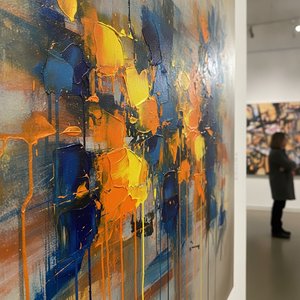
Beyond the Lines: Mastering the High-Impact World of Contemporary Abstraction
Master the high-impact world of contemporary abstraction. Discover how bold colors, textures, and modern movements like Abstract Expressionism can transform your space with premium, high-energy art curated for the design-conscious professional.