

 Versenden
 Teilen
 Details anzeigen
 Leitfaden

 Herunterladen
 Ähnliche Objekte
 Diashow
 Q&A
Q&A Statistiken
Ein Zeitpunkt
 Skulptur
- Skulptur
- Contemporary Minimalism
 1000.0 x 1000.0 cm
 Expo 2020 Dubai
 Weiterlesen
Die auf dieser Seite dargestellten Kunstwerke sind urheberrechtlich geschützt, was bedeutet, dass wir keine identische Reproduktion rechtmäßig erstellen oder verkaufen dürfen. Dieser Schutz wird durch internationale Abkommen wie die Berner Übereinkunft und durch nationale Gesetze, einschließlich derer, die von den US-Urheberrecht – Titel 17.
Diese Methode entspricht vollumfänglich den Urheberrechtsbestimmungen, da sie keine Kopie oder Vervielfältigung des geschützten Kunstwerks darstellt. Stattdessen handelt es sich um eine kreative Neuinterpretation – ein neues Gemälde, das vom Original inspiriert, aber nicht identisch mit ihm ist.
Giclée / Kunstdruck
Giclée- oder Leinwanddruck in Museumsqualität mit schneller Produktion und flexiblen Veredelungsoptionen. ( Handgemalte Reproduktion bestellen Zum digitalen Bild wechseln)




































Wählen Sie aus unseren vordefinierten Formaten, die den ursprünglichen Proportionen des Kunstwerks entsprechen.

Geben Sie die benötigte Breite und Höhe an, damit der Druck perfekt in Ihren Rahmen oder an Ihre Wand passt. Ein Druck kann nur beschnitten, aber niemals größer als das Originalbild angefertigt werden; daher verliert ein Format mit anderen Proportionen einen Teil des Bildes. Wir senden Ihnen ein digitales Mockup zur Freigabe, bevor wir den Druck ausführen. Das auf dieser Seite gezeigte Bild zeigt nicht den tatsächlichen Beschnitt – dies ist nur im Mockup ersichtlich.
Weltweiter Versand () innerhalb von 2 Wochen statt der üblichen 4/5 Wochen. (30 Oktober)

Kostenloser weltweiter Expressversand

Hochwertige Leinenleinwand

Umfassender Versicherungsschutz beim Versand

Zollgebühren-Rückerstattungsgarantie

Garantie für exakte Farbtreue

100 Tage Rückgaberecht (nur bei Mängeln)

100% Geld-zurück-Garantie

Mengenrabatt verfügbar
 Die Glasoption ist nur für Größen unter 110 cm verfügbar.

Ein Zeitpunkt
Giclée / Kunstdruck
Format der Reproduktion
-


Endpreis
€ 71
Ein Blick auf „A point in time“ von Khalil Rabah
Die Kunstinstallation von Khalil Rabah, „A point in time“, ist ein beeindruckendes Werk, das eine tiefgreifende Verbindung zwischen Geschichte und künstlerischer Vision herstellt. Rabah nutzt die Idee eines mittelalterlichen Instrumentes zur Berechnung der Breite – den sogenannten Khwarizmi-Instrument – als Ausgangspunkt für seine Arbeit und präsentiert damit eine intelligente Reflexion über Messung, Ort und Wahrnehmung. Das Kunstwerk befindet sich im öffentlichen Raum und wurde von einer internationalen Ausstellung organisiert und ist somit ein außergewöhnliches Beispiel für zeitgenössische Kunst im Kontext eines historischen Ereignisses.- Konzept und Inspiration: Rabah lässt sich von einem Instrument inspirieren, das im 11. Jahrhundert entwickelt wurde und ohne komplexe Berechnungstabellen funktioniert. Dieser Ansatz bezieht sich auf die Arbeit des muslimischen Wissenschaftlers Al-Biruni und betont damit die Bedeutung einfacher Beobachtung und geometrischer Prinzipien bei der Erforschung der Welt.
- Die Skulptur: Das zentrale Element der Installation ist eine Gruppe von drei großen geometrischen Formen – eine Kuppel, ein Kegel und eine kleinere Hügelstruktur – die auf einer weißen Marmorplatte angeordnet sind. Diese Formen werden nicht nur für ihre ästhetische Wirkung genutzt sondern dienen auch dazu, die Idee des Khwarizmi-Instruments zu verkörpern und somit eine visuelle Darstellung dessen komplexen Funktionsweise zu ermöglichen.
- Materialien und Technik: Rabah verwendet hauptsächlich Marmor für die Kuppel und den Kegel sowie Beton für die Platte. Die Hügelstruktur besteht aus einer Mischung von Materialien, darunter Holz und Erde. Eine präzise Engravierung auf der Platte zeigt eine Karte des Expo 2020-Geländes und betont damit die Verbindung zwischen Kunst und Wissenschaft.
Fragen & Antworten
Wofür wird eine Reproduktion von "Ein Zeitpunkt" von Khalil Rabah empfohlen?
Die empfohlene Verwendung für "Ein Zeitpunkt" von Khalil Rabah ist Akzentuierung. Es kann jedoch auch für andere Zwecke genutzt werden.
Befindet sich "Ein Zeitpunkt" im Land seines Schöpfers?
Nein – das Kunstwerk wird im Ausland aufbewahrt. Khalil Rabah wurde in Palästina geboren, und das Original von „Ein Zeitpunkt“ befindet sich in einem Museum in Vereinigte Arabische Emirate.
Welche Farbe dominiert in "Ein Zeitpunkt" von Khalil Rabah?
Espresso (#36372f) ist die dominierende Farbe von "Ein Zeitpunkt" von Khalil Rabah.
Künstlerbiografie
Die Architektur der Erinnerung: Die konzeptionelle Welt von Khalil Rabah
Das Werk von Khalil Rabah zu begegnen bedeutet, einen Raum zu betreten, in dem die Geschichte kein festgeschriebenes Protokoll ist, sondern eine fluide, formbare Substanz. Geboren 1961 in Jerusalem – einer antiken Stadt, die durch ihre vielschichtigen und oft widersprüchlichen Narrative definiert wird – ist Rabahs Ursprung selbst tief in den Komplexitäten von Identität und Ort verwurzelt. Seine künstlerische Reise, geprägt durch sein palästinensisches Erbe und eine prägende Ausbildung an der University of Texas at Arlington, stellt eine tiefgreifende Schnittstelle zwischen architektonischer Präzision und konzeptioneller Untersuchung dar. Indem er die strukturelle Logik der Architektur mit dem subversiven Geist der bildenden Künste verbindet, hat Rabah eine Praxis entwickelt, die die Realität nicht bloß abbildet, sondern aktiv die Mechanismen hinterfragt, durch die wir sie wahrnehmen.
Rabahs kreative Evolution ist gekennzeichnet durch eine Abkehr von traditioneller Repräsentation hin zu einer anspruchsvollen Mimikry institutioneller Macht. Er strebt nicht danach, Szenen einzufangen; stattdessen konstruiert er imaginäre Institutionen – simulierte Biennalen, Museen und Auktionshäuser –, die als Spiegel der Strukturen der Kunstwelt selbst fungieren. Durch diese performativen Räume erforscht er Themen wie Entfernung, Auslöschung und Vertreibung. Sein Werk agiert als Kritik an der Art und Weise, wie Macht diktiert, welche Geschichten bewahrt werden und welche in den Schatten der Geschichte verbannt werden. Dieser Prozess der Dekonstruktion ist tief von den intellektuellen Strömungen von Denkern wie Jacques Derrida und Giorgio Agamben beeinflusst, was es Rabah ermöglicht, das Konzept des Simulakrums zu nutzen, um die Stabilität der Wahrheit und die Autorität des Archivs herauszufordern.
Dekonstruktion des Instruments: Symbolik und Maßstab
Eine der eindrucksvollsten Manifestationen von Rabahs Fähigkeit, historische wissenschaftliche Forschung mit zeitgenössischer skulpturaler Praxis zu verknüpänfen, findet sich in seiner monumentalen Installation "A Point in Time." In diesem Werk setzt sich der Künstler mit dem Erbe des Gelehrten Al-Biruni aus dem 11. Jahrhundert und dem Khwarizmi-Instrument zur Messung des Breitengrades auseinander. Durch die Dekonstruktion dieses antiken Werkzeugs und die Vergrößerung seiner Bestandteile zu einer massiven, geometrischen Landschaft aus Kuppeln, Kegeln und Hügeln verwandelt Rabah ein mathematisches Gerät in eine emotionale, räumliche Erfahrung. Die Verwendung von texturiertem weißem Marmor, Kupferakzenten und erdigen Tönen schafft einen Dialog zwischen der Beständigkeit geologischer Formen und der Vergänglichkeit menschlicher Navigation.
Diese Technik der Vergrößerung und Veränderung dient einem weitaus tieferen Zweck als bloßem Spektakel. Es ist ein bewusster Versuch, das Empfinden des Betrachters für Maßstab und Ort zu destabilisieren. In Rabahs Händen wird der Akt der Breitengradmessung zu einer Metapher für den umfassenderen menschlichen Kampf, den eigenen Platz in einer sich wandelnden geopolitischen Landschaft zu finden. Die Installation lädt uns ein, neu zu überdenken, wie Wissen durch Beobachtung konstruiert wird und dass die Werkzeuge, mit denen wir unsere Position in der Welt definieren, selbst Gegenstand von Reinterpretation und Neuschöpfung sind.
Ein Vermächtnis institutioneller Neugestaltung
Über seine individuellen Skulpturen und Installationen hinaus hat Khalil Rabah durch seine Arbeit als Kurator, Lehrer und Gründer eine entscheidende Rolle bei der Gestaltung der zeitgenössischen Kunstlandschaft des Nahen Ostens gespielt. Seine Beiträge reichen weit über die Galeriewände hinaus, da er sich aktiv für den Aufbau der Infrastruktur für künstlerischen Ausdruck in Palästina eingesetzt hat. Seine Führungskraft und Vision zeigen sich in mehreren wegweisenden Initiativen:
- Das Projekt des Palästinensischen Museums für Naturgeschichte und Menschheit: Ein visionäres Unterfangen, das darauf abzielt, das natürliche und kulturelle Erbe der Region zu dokumentieren und zu feiern.
- Al Ma’mal Foundation for Contemporary Art: Als Mitbegründer half er dabei, ein wichtiges Zentrum für kreativen Diskurs in Jerusalem zu etablieren.
- ArtSchool Palestine: Seine Rolle bei der Mitbegründung dieser Institution unterstreicht sein Engagement für die Förderung der nächsten Generation palästinensischer Künstler.
- Die Riwaq Biennale: Als Direktor seit 2005 war Rabah maßgeblich daran beteiligt, eine Plattform für den internationalen Dialog in Ramallah zu schaffen.
Die Bedeutung von Rabah liegt in seiner Fähigkeit, die Werkzeuge der Auslöschung in Instrumente der Sichtbarkeit zu verwandeln. Indem er die Geschichte durch Mimikry und Fantasie neu schreibt, stellt er sicher, dass die Erzählungen von Vertreibung und Resilienz nicht der Zeit verloren gehen, sondern stattdessen im Zentrum eines globalen künstlerischen Bewusstseins neu verankert werden. Sein Werk bleibt ein kraftvolles Zeugnis für die Idee, dass Geschichte zwar durch Macht manipuliert werden kann, aber auch durch die transformative Kraft der Kunst zurückerobert werden kann.

Khalil Rabah
1961 - , Palästina
Kurzinfos
- Artistic Movement Or Style: Conceptual art
- Date Of Birth: 1961
- Full Name: Khalil Rabah
- Nationality: Palestinian
- Notable Artworks: ['A Point in Time']
- Place Of Birth: Jerusalem, Palestine
Ähnliche Artikel
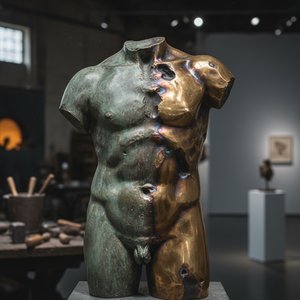
Das bleibende Erbe der Bronzeskulptur: Geschichte, Techniken und zeitgenössische Interpretationen
Entdecken Sie die faszinierende Geschichte der Bronzeskulptur – von den Anfängen bis zur modernen Kunst. Expertenwissen, Techniken & Tipps für Sammler.

The Enduring Form: Sculpture Across History, Technique & Emotional Resonance
Explore the rich history of sculpture with OriginalUniqueArt. Discover key techniques, influential artists & investment potential for discerning collectors. Expert insights into valuing and collecting timeless masterpieces.

Bronze-Meisterwerke: Die 10 Skulpturen, die Kunstgeschichte schrieben | OriginalUniqueArt
Entdecken Sie die 10 legendärsten Bronze Skulpturen der Kunstgeschichte! Von Michelangelo bis Rodin – erfahren Sie die Geschichten hinter den Meisterwerken und lassen Sie sich von Wanddeko-Ideen inspirieren. Hochwertige Kunstdrucke auf OriginalUniqueArt.com.

The Enduring Form: Exploring Themes & Techniques in Sculpture Across Historical Periods
Explore the rich history of sculpture from ancient masterpieces to contemporary innovations. Discover key techniques, influential artists & investment potential for discerning art collectors.

Die 10 legendärsten Bronzestatuen: Meisterwerke, die Kunstgeschichte schrieben | OriginalUniqueArt
Entdecken Sie die 10 legendärsten Bronzestatuen der Kunstgeschichte! Von Rodin bis Michelangelo – erfahren Sie die Geschichten hinter ikonischen Skulpturen und finden Sie hochwertige Reproduktionen für Ihr Zuhause. Jetzt bei OriginalUniqueArt entdecken!