Pop Art · 1990
Icons (Keith Haring, 1990)
Keith Haring (1958–1990) schuf Icons. Es stammt aus dem Jahr 1990. Es gehört zur Pop Art-Strömung. Es ist aus Lithografie gefertigt. Es befindet sich im Nakamura Keith Haring Sammlung in Hokuto, Japan.
- 1990
- Lithografie
- Nakamura Keith Haring Sammlung, Hokuto

 Vorschau anzeigen

 Handgemaltes Ölgemälde
 Versenden
 Teilen
 Datenblatt


 Herunterladen
 Ähnliche Objekte
 Röntgenaufnahme
 Diashow
 Fragen & Antworten

 Statistiken
Icons im Überblick
- Titel
- Icons
- Künstler
- Keith Haring (1958–1990)
- Geburtsjahr des Künstlers
- Reading, Vereinigte Staaten
- Datum
- 1990
- Medium
- Lithografie
- Ausstellungsort
- Nakamura Keith Haring Sammlung, Hokuto, Japan
- Bewegung
- Pop Art
- Epoche
- Moderne
Was stellt Icons dar?
A Chronicle of Innocence and Mystery: Unpacking Keith Haring’s “Icons”
Keith Haring's "Icons," created in 1990 during the final year of his tragically short life, stands as a potent distillation of his revolutionary artistic vision. Published alongside the artist’s passing, this lithograph series – featuring his signature TAG characters – immediately resonates with an urgency born from its historical context: the vibrant, chaotic energy of 1980s New York City and Haring's own fervent engagement with social issues. The image itself, a close-up rendering of the “Radiant Baby,” is deceptively simple yet profoundly layered with meaning, inviting endless interpretation and reflecting the artist’s deeply personal reflections on life, death, and the human condition.
- The Radiant Baby: Haring's most iconic figure, the crawling baby, embodies youthful innocence, purity, and potential. Initially conceived as a symbol of hope amidst the AIDS crisis, its open-mouthed expression – rendered in unsettling shades of purple and teeth – subtly shifts this interpretation. The wide eyes suggest not just naiveté but also a disconcerting awareness, perhaps even a premonition of the complexities and dangers that lie ahead.
- Symbolic Gestures: Beyond the immediate visual impact, "Icons" is replete with symbolic gestures. The ‘x’ on the “Winged Man”’s chest, a recurring motif, represents both death and mystery, acting as a marker of transition or a signpost to the unknown.
- The Smiley Face: Haring's enigmatic "Smiley Face," often depicted with an unsettlingly wide grin, presents a fascinating paradox. Initially intended as a symbol of joy and connection, it quickly became associated with greed, excess, and the darker aspects of consumer culture – a reflection of the anxieties prevalent in late 20th-century society.
Technique and Style: A Bold Fusion
Created as a lithograph, “Icons” showcases Haring’s masterful manipulation of printmaking techniques. His signature black outlines are rendered with remarkable precision, creating a graphic intensity that is both immediate and enduring. The use of flat color fields – particularly the vibrant yellow of the smiling face – contributes to the work's iconic status, echoing the bold, almost cartoonish aesthetic he developed throughout his career. Haring’s technique was deliberately accessible, rejecting traditional academic approaches in favor of direct communication with a broad audience, reflecting his desire to engage with social and political issues through art.
Historical Context and Legacy
"Icons" was produced during a pivotal moment in Haring's artistic trajectory. His work, initially created as spontaneous chalk drawings on the sidewalks of New York City, quickly gained recognition for its raw energy and direct engagement with urban life. The series reflects his growing interest in spirituality and his exploration of themes related to identity, power, and social justice. The fact that it was completed in the same year as Haring’s death adds a poignant layer to the work, transforming it into a memorial to a brilliant and tragically short-lived talent.
Emotional Impact and Collectible Value
More than just a visually striking image, “Icons” evokes a powerful emotional response. The unsettling juxtaposition of innocence and menace within the "Radiant Baby" forces viewers to confront uncomfortable truths about human nature and societal values. As a key work from Keith Haring’s oeuvre, this lithograph holds significant historical and artistic value, making it a compelling addition to any collection. Its vibrant colors, bold lines, and layered symbolism ensure its continued relevance and appeal for art lovers, collectors, and interior designers alike.
In welchem Museum befindet sich Icons?
Nakamura Keith Haring Sammlung
Hokuto, Japan
Das einzigartige Keith Haring Museum in Japan: Eine Hommage an den Pop-Art-Pionier Versteckt im malerischen Hokuto, eingebettet in die atemberaubende Berglandschaft der Yatsugatake Berge, befindet sich ein außergewöhnliches Juwel – das Nakamura Keith Haring Collection. Dieses private Museum ist nicht nur eine Sammlung von Kunstwerken, sondern ein Erlebnis, eine Reise in die Welt eines der einflussreichsten und unvergesslichsten Künstler des 20. Jahrhunderts: Keith Haring.
Hochauflösende Bilder von Icons

Protected by copyright: these files are for personal reference, not a licence to republish.
Keith Haring, Icons (1990), Nakamura Keith Haring Sammlung.
Fragen zu Icons, beantwortet
Wo kann man "Icons" von Keith Haring heute besichtigen?
Das Original von "Icons" von Keith Haring befindet sich im Nakamura Keith Haring Sammlung, Hokuto, Japan. Eine Reproduktion ermöglicht es, das Werk zu Hause auszustellen.
In welchem Jahr wurde "Icons" von Keith Haring geschaffen?
"Icons" stammt aus dem Jahr 1990. Dieses Datum ordnet das Werk in die Schaffensperiode von Keith Haring sowie in dessen Epoche ein.
In welcher Technik wurde "Icons" von Keith Haring ausgeführt?
"Icons" wurde in Lithografie ausgeführt.
Ist "Icons" gemeinfrei?
Die urheberrechtliche Situation für "Icons" von Keith Haring: Das Werk ist noch urheberrechtlich geschützt. Dies bestimmt, ob Reproduktionen des Bildes frei erstellt werden dürfen.
Wer ist der Künstler hinter "Icons"?
"Icons" wurde von Keith Haring geschaffen. Die Informationen auf dieser Seite beschreiben das Originalwerk von Keith Haring.
Zu welcher Stilrichtung gehört "Icons"?
Die mit "Icons" von Keith Haring verbundene Stilrichtung ist Pop Art. Diese Klassifizierung ordnet das Werk in den Kontext verwandter Künstler und Kunstwerke ein.
Welcher Phase in der künstlerischen Entwicklung von Keith Haring lässt sich "Icons" zuordnen?
"Icons" repräsentiert die Late Period von Keith Haring.
In welchem Alter schuf Keith Haring „Icons"?
Als "Icons" im Jahr 1990 entstand, war Keith Haring – geboren 1958 – 32 Jahre alt.
Ist "Icons" von Keith Haring gemeinfrei, und warum?
"Icons" von Keith Haring ist noch urheberrechtlich geschützt. Die Schutzfrist des Urheberrechts beginnt mit dem Tod des Künstlers im Jahr 1990.
Über den Künstler, Keith Haring

1958–1990, Vereinigte Staaten
Keith Haring
Frühe Jahre und Einflüsse Keith Allen Haring, ein amerikanischer Künstler und sozialer Aktivist, wurde am 4. Mai 1958 in Reading, Pennsylvania, geboren. Seine frühen Jahre waren geprägt von einem ausgeprägten Interesse an der Kunst, beeinflusst von seinem Vater, Allan Haring, einem Ingenieur und Amateurzeichner. Der junge Harings Faszination für die Kunst wurde durch Walt Disney-Cartoons, Dr.
Ebenfalls von Keith Haring
 Montreux
 Untitled (235)
 Altarbild: Das Leben Christi1990
 Andy Mouse1986
Essays zu Icons
 Meister der Realität: Die 25 besten Kunstwerke von Hans Holbein dem JüngerenEntdecken Sie die Meisterwerke von Hans Holbein d. J. und die Nordische Renaissance. Alle Ikonen auf OriginalUniqueArt.com erleben.
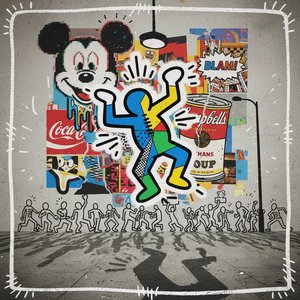 Keith Haring: Die Subversion der Popkultur – Eine Untersuchung von sozialem Kommentar und künstlerischer InnovationEntdecken Sie die revolutionäre Kunst von Keith Haring! Analysieren Sie seinen Einfluss auf Pop Art, sozialen Kommentar und die New Yorker …
 Bold & Iconic: Reimagining the Feminine Figure Through Modern Pop and Street ArtExplore the electric fusion of Pop Art and Street Art through the reimagined feminine figure. Discover how bold icons like Lichtenstein and…