Zum Druck wechseln
 Weiterlesen







































 Bei Kunstwerken oder Reproduktionen, die an einer Seite größer als 105 cm (ca. 41 Zoll) sind, wird der Rahmen zerlegt als Bausatz geliefert. Diese Methode gewährleistet eine sichere Zustellung und verhindert Schäden während des Transports.


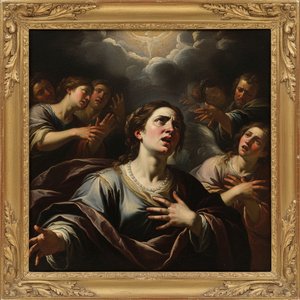
Magdalene (detail): A Masterpiece of Baroque Drama
Caravaggio’s Magdalene (detail) is a poignant and powerful painting that showcases the artist's mastery of light, emotion, and composition. Created in 1596, this oil on canvas work is housed at the Galleria Doria Pamphilj in Rome, Italy.The Painting's Context
The subject of the painting is Mary Magdalene, a figure from Christian tradition known for her repentance and devotion. Caravaggio’s depiction of Magdalene is unique in its realism and emotional depth, setting it apart from traditional representations of the time. The painting captures a moment of introspection and sorrow, as Magdalene sits on the floor surrounded by symbols of her former life: jewelry, pearls, and a vase. This scene was conceived during a period marked by intense religious fervor and artistic experimentation—the Baroque era—where artists sought to evoke profound feelings in their viewers through dramatic visual narratives. Caravaggio’s intention wasn't merely to depict Magdalene; he aimed to convey the very essence of spiritual transformation and remorse.Artistic Techniques
Caravaggio’s use of chiaroscuro, a technique that emphasizes contrasts between light and dark, creates a dramatic effect. The light source is positioned to highlight Magdalene’s face and hands, drawing the viewer's attention to her emotional state. This innovative lighting technique was characteristic of Caravaggio’s style and influenced many subsequent artists. He achieved this breathtaking illusionism through meticulous layering of glazes—thin coats of translucent paint—allowing for subtle gradations of color and texture that contribute to the painting’s palpable atmosphere. The artist skillfully rendered the folds of Magdalene's garment, conveying a sense of weightlessness and vulnerability.Symbolism and Interpretation
The scattered jewelry and pearls symbolize Magdalene’s renunciation of worldly possessions and her embrace of a more spiritual path. They represent not merely material wealth but also the shedding of ego and attachment—elements crucial to achieving redemption. The vase, often interpreted as a symbol of purity, underscores the theme of repentance. Caravaggio's attention to detail in depicting these objects adds depth to the narrative, inviting contemplation on themes of faith, sorrow, and divine grace.Caravaggio’s Influence
Caravaggio was a pivotal figure in the Baroque period, and his works had a profound impact on the development of Western art. His realistic and emotionally charged paintings influenced artists such as Rembrandt and Diego Velázquez. The Magdalene (detail) is a testament to Caravaggio’s innovative approach to storytelling through art—a legacy that continues to inspire artists and captivate audiences today.Relevance in Modern Times
Despite being created over four centuries ago, the themes of repentance, self-reflection, and spiritual transformation remain relevant today. The painting continues to resonate with viewers who grapple with questions of morality and faith, reminding us of the enduring power of art to communicate profound human emotions. Its masterful execution serves as a benchmark for artistic excellence—a timeless masterpiece that deserves to be appreciated anew.Conclusion
The Magdalene by Caravaggio is a cornerstone of Baroque art, demonstrating unparalleled skill in capturing human emotion and utilizing dramatic lighting to heighten the impact of its narrative. For exceptional reproductions of Caravaggio’s oeuvre, explore OriginalUniqueArt: OriginalUniqueArt. To delve deeper into Caravaggio's life and artistic legacy, consult these resources: - Caravaggio - List of paintings by Caravaggio Explore more artworks and artists at OriginalUniqueArt: OriginalUniqueArtFragen & Antworten
Welche nationale Herkunft spiegelt sich in der Baroque von „Magdalena (Detail)“ wider?
"Magdalena (Detail)" wurde von Karavaggio geschaffen, der in Spanien geboren wurde, und ist der Baroque-Bewegung zuzuordnen. Die Herkunft des Künstlers verbindet das Werk mit der Baroque, wie sie von Künstlern aus Spanien praktiziert wird.
Unter welchen Pseudonymen oder Alternativnamen ist Karavaggio bekannt?
Karavaggio ist auch unter den Namen Michelangelo Merisi da Caravaggio, Michele Angelo Merigi, Amerighi da Caravaggio bekannt.
Kann ich Augmented Reality nutzen, um "Magdalena (Detail)" von Karavaggio in meinem Raum zu sehen?
„Magdalena (Detail)“ verfügt über eine Augmented-Reality-Vorschau: Die AR-Vorschau-Seite des Kunstwerks zeigt es auf einem kompatiblen Gerät in Ihrem eigenen Raum.
 Vorschau anzeigen
 Versenden
 Teilen
 Details anzeigen
 Leitfaden

 Herunterladen
 Ähnliche Objekte
 Röntgenaufnahme
 Diashow
 Fragen & Antworten
 Statistiken