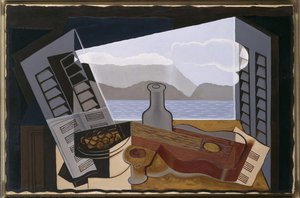
Vorschau anzeigen
 Versenden
 Teilen
 Details anzeigen
 Leitfaden

 Herunterladen
 Ähnliche Objekte
 Röntgenaufnahme
 Diashow
 Fragen & Antworten
 Statistiken
The Smoker

- 130.0 x 96.0 cm


 Weiterlesen
Giclée / Kunstdruck
Giclée- oder Leinwanddruck in Museumsqualität mit schneller Produktion und flexiblen Veredelungsoptionen. ( Handgemalte Reproduktion bestellen Zum digitalen Bild wechseln)




P118B €10

P118H €10

P118W €10

P438Z €10

P508JH €12

P508YH €12

P805H €10

P805Z €10

P919BZ €10

P919G €10

P919XJ €10

P959ZH €10

P968JZ €12

W106C €8

W218G €10

W218JH €8

W218Y €10

W307PJ €10

W316G €10

W316PJ €8

W316Y €10

W398PJ €8

W4111J €10

W500HY €15

W500JH €15

W692G €12

W849H €8

W940BG €15

W953PJ €8




Wählen Sie aus unseren vordefinierten Formaten, die den ursprünglichen Proportionen des Kunstwerks entsprechen.

Geben Sie die benötigte Breite und Höhe an, damit der Druck perfekt in Ihren Rahmen oder an Ihre Wand passt. Ein Druck kann nur beschnitten, aber niemals größer als das Originalbild angefertigt werden; daher verliert ein Format mit anderen Proportionen einen Teil des Bildes. Wir senden Ihnen ein digitales Mockup zur Freigabe, bevor wir den Druck ausführen. Das auf dieser Seite gezeigte Bild zeigt nicht den tatsächlichen Beschnitt – dies ist nur im Mockup ersichtlich.
Weltweiter Versand () innerhalb von 2 Wochen statt der üblichen 4/5 Wochen. (7 November)

Kostenloser weltweiter Expressversand

Hochwertige Leinenleinwand

Umfassender Versicherungsschutz beim Versand

Zollgebühren-Rückerstattungsgarantie

Garantie für exakte Farbtreue

100 Tage Rückgaberecht (nur bei Mängeln)

100% Geld-zurück-Garantie

Mengenrabatt verfügbar
 Die Glasoption ist nur für Größen unter 110 cm verfügbar.

The Smoker
Giclée / Kunstdruck
Format der Reproduktion
-


Endpreis
€ 72
The Smoker: A Fragmented Portrait of Modern Life
Juan Gris’s “The Smoker,” painted in 1913, isn't merely a depiction of a man enjoying a cigarette; it’s a meticulously constructed meditation on perception, fragmentation, and the burgeoning anxieties of early 20th-century modernity. Created during his pivotal period as a pioneer of Synthetic Cubism alongside Pablo Picasso, this work embodies the movement’s radical departure from traditional representation, offering instead a fractured, multi-faceted view of its subject – a Spanish painter and sculptor named Juan Gris himself.
The painting immediately draws the eye with its dynamic composition. A man, identified through preparatory sketches as Frank Haviland, an American patron of the arts, is presented in a series of interlocking planes and geometric shapes. He’s captured mid-action, puffing on a cigarette, yet his form is simultaneously broken down into its constituent parts – a sharp nose, a tilted head, a fragmented shirt collar – all arranged within a vibrant, almost chaotic, space. This deliberate fragmentation reflects the Cubist principle of depicting objects from multiple viewpoints at once, challenging the viewer’s ability to grasp a single, unified image. The use of *papier collé*, or collage elements—newspaper clippings and other fragments—further enhances this sense of deconstruction, layering textures and visual information onto the canvas.
A Symphony of Color and Technique
Gris masterfully employs a carefully calibrated palette of greens, blues, reds, and oranges to create a visually arresting effect. These bold colors aren’t simply decorative; they contribute significantly to the painting's dynamism and sense of movement. Notice how the smoke itself is rendered in swirling bands of color, adding another layer of complexity to the composition. The technique is equally sophisticated: Gris utilizes short, broken brushstrokes—a hallmark of Synthetic Cubism—to build up the forms and create a palpable sense of depth. The interplay between hard-edged geometric shapes and softer, more organic elements generates a fascinating tension within the painting.
Historical Context and Artistic Significance
“The Smoker” was created during a period of intense artistic experimentation and intellectual ferment in Paris. The rise of Cubism—and its subsequent iterations like Synthetic Cubism—represented a fundamental shift away from traditional representational art, reflecting a broader cultural questioning of established norms and values. Gris’s work stands as a crucial bridge between the analytical rigor of early Cubism (exemplified by Picasso and Braque) and the more expressive, collage-based approach that would characterize the movement's later stages. It was painted during a period when Gris was deeply engaged with his circle of artistic friends—Picasso, Matisse, Apollinaire—and exploring new ways to represent reality through abstraction.
Symbolism and Emotional Resonance
Beyond its formal innovations, “The Smoker” is rich in symbolic meaning. The act of smoking itself can be interpreted as a metaphor for contemplation, introspection, or even the anxieties associated with modern life. The fragmented figure suggests a sense of alienation and detachment—a feeling that resonates powerfully within the context of an increasingly complex and rapidly changing world. The inclusion of Haviland’s attire – a bow tie and top hat – adds a touch of social commentary, hinting at the formality and conventions of the era while simultaneously undermining them through the painting's fractured perspective. Ultimately, “The Smoker” is not simply a portrait; it’s a poignant exploration of human experience in the face of modernity.
This captivating artwork is now housed at the Thyssen-Bornemisza Museum in Madrid, Spain, offering art enthusiasts a chance to witness firsthand this seminal piece of modern art. Reproductions are available through OriginalUniqueArt.com and other reputable sources, allowing you to bring this iconic image into your own space.
Fragen & Antworten
Wie alt war Juan Gris, als „The Smoker“ im Jahr 1913 geschaffen wurde?
Juan Gris war 26 Jahre alt, als The Smoker im Jahr 1913 geschaffen wurde. Das Alter berechnet sich aus dem Geburtsjahr des Künstlers, 1887.
Kann "The Smoker" in Augmented Reality vorab betrachtet werden?
"The Smoker" von Juan Gris kann mithilfe der AR-Vorschau-Seite des Kunstwerks mit Augmented Reality auf einem kompatiblen Gerät direkt an Ihrer eigenen Wand vorab betrachtet werden.
Welche Farbpalette wird in "The Smoker" verwendet?
Die Farben von "The Smoker" bilden eine Dunkle Farbtöne-Palette. Diese Klassifizierung beschreibt die dominierenden Farbfamilien.
Künstlerbiografie
Juan Gris: Ein Pionier des Kubismus
- Geboren: 23. März 1887, Madrid, Spanien
- Gestorben: 11. Mai 1927
Frühes Leben und künstlerische Entwicklung
José Victoriano González-Pérez, besser bekannt als Juan Gris, wurde in Madrid, Spanien, geboren. Sein frühes Leben umfasste ein Studium der Ingenieurwissenschaften an der School of Arts and Sciences von 1902 bis 1904. Während dieser Zeit trug er Zeichnungen zu lokalen Periodika bei und demonstrierte so eine frühe Begabung für die visuelle Darstellung. Von 1904 bis 1905 studierte Gris Malerei bei José Moreno Carbonero und entwickelte seine künstlerischen Fähigkeiten weiter. Im Jahr 1905 nahm er den Pseudonym Juan Gris an, einen Namen, der mit seinem unverwechselbaren Stil in Verbindung gebracht werden sollte.
Pariser Einflüsse und die Entstehung des Kubismus
Ein entscheidender Moment in Gris’ Karriere kam im Jahr 1906, als er nach Paris zog. Diese Umsiedlung führte ihn in eine lebendige Kunstgemeinschaft, wo er Freundschaften mit einflussreichen Persönlichkeiten wie Henri Matisse, Georges Braque und Fernand Léger schloss. Er wurde tiefgreifend von Pablo Picasso beeinflusst und reichte zunächst humorvolle Illustrationen an Zeitschriften wie *L'Assiette au Beurre*, *Le Rire*, *Le Charivari* und *Le Cri de Paris* ein. Um 1910 begann Gris ernsthaft zu malen und widmete sich der Entwicklung eines persönlichen kubistischen Stils. Er löste sich von der satirischen Illustration hin zu abstrakteren Kompositionen.
Wichtige Werke und künstlerischer Stil
Juan Gris’ künstlerisches Schaffen ist durch mehrere Schlüsselfeatures gekennzeichnet:
- Klarheit und Ordnung: Seine Arbeit betonte Klarheit und Ordnung, was den Puristenstil beeinflusste, der von Amédée Ozenfant und Charles Edouard Jeanneret (Le Corbusier) vertreten wurde.
- Geometrische Struktur: Gris’ „Kristallperiode“, wie sie in Werken wie *Stillleben vor einem offenen Fenster* und *Place Ravignan* (1915) gezeigt wird, präsentierte eine starke geometrische Struktur.
- Synthetischer Kubismus: Nach 1913 nahm Gris den synthetischen Kubismus an und verwendete Techniken wie Papier collé oder Collage ausgiebig. Dies beinhaltete die Einbeziehung von Materialien aus der realen Welt in seine Gemälde, wodurch Textur und Tiefe hinzugefügt wurden.
Bemerkenswerte Werke sind:
- Gitarre vor dem Meer (1925): Demonstriert seine Einfachheit und sein Festhalten an kubistischen Prinzipien.
- Hommage à Pablo Picasso (1912): Seine erste Ausstellung im Salon des Indépendants, ein Beweis für seine wachsende Anerkennung in der Kunstwelt.
Vermächtnis und historische Bedeutung
Juan Gris’ Beitrag zum Kubismus ist von großer Bedeutung. Er ging über die frühere analytische Phase der Bewegung hinaus zu einem strukturierteren und synthetischeren Ansatz. Sein Fokus auf Klarheit, geometrische Formen und die Einbeziehung alltäglicher Objekte in seine Kompositionen etablierten ihn als eine führende Figur in der Kunst des 20. Jahrhunderts. Seine Arbeit wird weiterhin für ihre intellektuelle Strenge und ästhetische Schönheit gefeiert und beeinflusst nachfolgende Generationen von Künstlern.

Juan Gris
1887 - 1927 , Spanien
Kurzinfos
- Beeinflusste Künstler/Bewegungen:
- Amédée Ozenfant
- Charles Edouard Jeanneret
- Bemerkenswerte Werke:
- Gitarre vor dem Meer
- Hommage à Pablo Picasso
- Stillleben vor Fenster
- Place Ravignan
- Fruchtkorb mit Zeitung
- Geburtsdatum: 23. März 1887
- Geburtsort: Madrid, Spanien
- Künstlerische Bewegung: Kubismus, Synthetischer Kubismus
- Künstlerische Einflüsse:
- Pablo Picasso
- Georges Braque
- Henri Matisse
- Nationalität: Spanisch
- Sterbedatum: 11. Mai 1927
- Vollständiger Name: Juan Gris
Ähnliche Artikel
Cubism Unveiled: How Picasso and Braque Redefined Reality Through Geometric Abstraction
Explore the revolutionary world of Cubism. Discover how masters Pablo Picasso and Georges Braque dismantled reality through geometric abstraction to redefine modern art history.
Deconstructing Reality: Cubism's Revolutionary Impact on 20th-Century Art
Explore the revolutionary world of Cubism with OriginalUniqueArt. Discover Picasso & Braque's groundbreaking techniques, its philosophical roots, and lasting impact on modern art. Expert insights for collectors.
Die 10 Meisterwerke des Kubismus: Kunst für Ihr Zuhause | OriginalUniqueArt
Entdecken Sie die 10 bedeutendsten Meisterwerke des Kubismus von Picasso, Braque & Gris! Erfahren Sie mehr über Kunstgeschichte, Techniken und Farben. Hochwertige Kunstdrucke auf OriginalUniqueArt.com – für stilvolle Wandgestaltung.
Juan Gris: Dekonstruktion und Synthese im Kubismus – Eine umfassende Erkundung
Entdecken Sie die faszinierende Welt von Juan Gris und dem Kubismus! Unsere umfassende Analyse beleuchtet seine künstlerische Entwicklung, Techniken und seinen bleibenden Einfluss auf die moderne Kunst. Für Kenner und Sammler.
Deconstructing Reality: A Comprehensive Exploration of Synthetic Cubism's Evolution & Impact
Explore the revolutionary world of Synthetic Cubism! Discover its origins, key artists like Picasso & Braque, techniques, and lasting impact on modern art. A comprehensive guide for enthusiasts.