

 In echtem Maßstab anzeigen
 Versenden als Grußkarte
 Teilen
 Details anzeigen
 Leitfaden öffnen

 Herunterladen
 Ähnliche Objekte
 Röntgenaufnahme
 Diashow
 Besucherstatistiken
Glass and Water Bottle
 Oil On Canvas
- WallArt
- Cubism
 1917
1917- Modern
 32.0 x 54.0 cm
 Ohara Museum of Art
 Mehr anzeigen
Giclée / Kunstdruck
Giclée- oder Leinwanddruck in Museumsqualität mit schneller Produktion und flexiblen Veredelungsoptionen. ( Handgemalte Reproduktion kaufen Zum digitalen Bild wechseln)




P118B $10

P118H $10

P118W $10

P438Z $10

P508JH $12

P508YH $12

P805H $10

P805Z $10

P919BZ $10

P919G $10

P919XJ $10

P959ZH $10

P968JZ $12

W106C $8

W218G $10

W218JH $8

W218Y $10

W307PJ $10

W316G $10

W316PJ $8

W316Y $10

W398PJ $8

W4111J $10

W500HY $15

W500JH $15

W692G $12

W849H $8

W940BG $15

W953PJ $8




Wählen Sie aus unseren vordefinierten Formaten, die den ursprünglichen Proportionen des Kunstwerks entsprechen.

Sie können Ihre eigenen Maße eingeben, um ein bestimmtes Format oder einen speziellen Platz einzupassen. Wenn das von Ihnen gewählte Format nicht den Proportionen des Originalbildes entspricht, werden wir das Kunstwerk entweder beschneiden oder das Bild mit einem gespiegelten oder einfarbigen Rand erweitern. Ein digitaler Entwurf wird Ihnen zur Genehmigung zugesandt, bevor die Produktion beginnt.
Bitte beachten Sie, dass die Vorschau auf dem Bildschirm nicht den tatsächlichen Zuschnitt oder die Erweiterung widerspiegelt. Nur der Entwurf zeigt die endgültige Komposition präzise an.
Obwohl Sondermaße verfügbar sind, empfehlen wir die Auswahl eines Maßes aus der vordefinierten Liste, um die ursprünglichen Proportionen zu bewahren.
Weltweiter Versand () innerhalb von 2 Wochen statt der üblichen 4/5 Wochen. (26 September)

Kostenloser weltweiter Expressversand

Hochwertige Leinenleinwand

Vollständiger Versicherungsschutz beim Versand

Zollgebühren-Rückerstattungsgarantie

Garantie für exakte Farbtreue

100-tägiges Rückgaberecht (nur bei Mängeln)

100% Geld-zurück-Garantie

Angebot für Mengenrabatt
 Die Glasoption ist nur für Größen unter 110 cm verfügbar.

Glass and Water Bottle
Giclée / Kunstdruck
Format der Reproduktion
-


Gesamtpreis
$ 80
A Fragmented Reflection of Modernity
In the quiet intersection of geometry and light, Juan Gris’s 1917 masterpiece, "Glass and Water Bottle," invites the viewer into a world where reality is not merely observed, but meticulously reconstructed. As a cornerstone of Cubist aesthetics, this work transcends the simple depiction of everyday objects to offer a profound meditation on form and space. To gaze upon this canvas is to enter a rhythmic dance of planes and facets, where the boundaries between object and atmosphere dissolve into a singular, cohesive vision. It is an invitation to contemplate the complexities inherent in capturing the essence of our physical world through multiple viewpoints simultaneously, making it a captivating centerpiece for any collection that values intellectual depth and visual intrigue.
The painting serves as a window into the radical reimagining of perspective that defined the early 20th century. Moving away from the traditional illusion of depth, Gris employs a flattened perspective that stacks and overlaps elements, creating a sense of structural rigidity and architectural beauty. The composition, though seemingly abstract, retains a soulful connection to the tangible; through the careful arrangement of angular blocks, one can sense the weight of the glass and the presence of the bottle. For the discerning collector or interior designer, this piece offers a sophisticated balance of intellectual rigor and aesthetic harmony, providing a focal point that stimulates thought while anchoring a room with its disciplined structure.
The Alchemy of Technique and Color
Executed with masterful precision in oil on canvas, the technical execution of "Glass and Water Bottle" is nothing short of extraordinary. Gris utilizes the medium to achieve a delicate balance between texture and luminosity. Visible brushstrokes dance across the surface, lending a physical presence to the work that hints at the artist’s deliberate consideration of materiality. The palette is intentionally restrained—a sophisticated symphony of dark browns, deep blacks, and soft off-whites. This muted scheme does not merely depict objects; it creates an atmosphere of quiet contemplation. The subtle interplay of light and shadow within these geometric shapes provides a sense of volume without relying on traditional shading, allowing the sharp, defined lines to delineate each facet with crystalline clarity.
This mastery of color and form allows the artwork to function beautifully in diverse interior settings. Whether placed in a minimalist modern gallery or a richly textured classical study, the painting’s subdued tones act as a versatile anchor. The lack of a singular, dramatic light source creates an even, diffused glow that feels timeless, ensuring that the piece remains visually engaging regardless of the surrounding environment. It is this very technical excellence—the ability to convey subtle tonal variations through a limited spectrum—that makes a high-quality reproduction of this work such a prestigious addition to a curated space.
A Legacy of Cubist Innovation
To understand the emotional resonance of this piece, one must look back to the vibrant intellectual ferment of Paris during the height of the Cubist movement. While pioneers like Picasso and Braque laid the groundwork for breaking down reality, Juan Gris brought a unique, analytical precision to the genre. His background in engineering is subtly whispered through the mathematical harmony of his compositions. Unlike the more expressive or chaotic interpretations of Cubism, Gris’s work possesses a synthetic elegance—a way of pulling disparate fragments together into a unified, beautiful whole. This sense of "deconstruction and synthesis" is what gives the painting its enduring emotional impact; it represents the human desire to find order within complexity.
Ultimately, "Glass and Water Bottle" is more than a still life; it is a symbol of the modern era's search for truth through structure. The fragmented forms represent an attempt to capture the multifaceted nature of perception, reflecting a world that was rapidly changing and becoming increasingly interconnected. For those seeking to surround themselves with art that embodies both historical significance and timeless beauty, this work stands as a testament to the power of the analytical mind to transform the mundane into the magnificent. Owning a reproduction of such a pivotal moment in art history allows one to bring the spirit of Cubist revolution into the contemporary home.
Biografie des Künstlers
Juan Gris: Ein Pionier des Kubismus
- Geboren: 23. März 1887, Madrid, Spanien
- Gestorben: 11. Mai 1927
Frühes Leben und künstlerische Entwicklung
José Victoriano González-Pérez, besser bekannt als Juan Gris, wurde in Madrid, Spanien, geboren. Sein frühes Leben umfasste ein Studium der Ingenieurwissenschaften an der School of Arts and Sciences von 1902 bis 1904. Während dieser Zeit trug er Zeichnungen zu lokalen Periodika bei und demonstrierte so eine frühe Begabung für die visuelle Darstellung. Von 1904 bis 1905 studierte Gris Malerei bei José Moreno Carbonero und entwickelte seine künstlerischen Fähigkeiten weiter. Im Jahr 1905 nahm er den Pseudonym Juan Gris an, einen Namen, der mit seinem unverwechselbaren Stil in Verbindung gebracht werden sollte.
Pariser Einflüsse und die Entstehung des Kubismus
Ein entscheidender Moment in Gris’ Karriere kam im Jahr 1906, als er nach Paris zog. Diese Umsiedlung führte ihn in eine lebendige Kunstgemeinschaft, wo er Freundschaften mit einflussreichen Persönlichkeiten wie Henri Matisse, Georges Braque und Fernand Léger schloss. Er wurde tiefgreifend von Pablo Picasso beeinflusst und reichte zunächst humorvolle Illustrationen an Zeitschriften wie *L'Assiette au Beurre*, *Le Rire*, *Le Charivari* und *Le Cri de Paris* ein. Um 1910 begann Gris ernsthaft zu malen und widmete sich der Entwicklung eines persönlichen kubistischen Stils. Er löste sich von der satirischen Illustration hin zu abstrakteren Kompositionen.
Wichtige Werke und künstlerischer Stil
Juan Gris’ künstlerisches Schaffen ist durch mehrere Schlüsselfeatures gekennzeichnet:
- Klarheit und Ordnung: Seine Arbeit betonte Klarheit und Ordnung, was den Puristenstil beeinflusste, der von Amédée Ozenfant und Charles Edouard Jeanneret (Le Corbusier) vertreten wurde.
- Geometrische Struktur: Gris’ „Kristallperiode“, wie sie in Werken wie *Stillleben vor einem offenen Fenster* und *Place Ravignan* (1915) gezeigt wird, präsentierte eine starke geometrische Struktur.
- Synthetischer Kubismus: Nach 1913 nahm Gris den synthetischen Kubismus an und verwendete Techniken wie Papier collé oder Collage ausgiebig. Dies beinhaltete die Einbeziehung von Materialien aus der realen Welt in seine Gemälde, wodurch Textur und Tiefe hinzugefügt wurden.
Bemerkenswerte Werke sind:
- Gitarre vor dem Meer (1925): Demonstriert seine Einfachheit und sein Festhalten an kubistischen Prinzipien.
- Hommage à Pablo Picasso (1912): Seine erste Ausstellung im Salon des Indépendants, ein Beweis für seine wachsende Anerkennung in der Kunstwelt.
Vermächtnis und historische Bedeutung
Juan Gris’ Beitrag zum Kubismus ist von großer Bedeutung. Er ging über die frühere analytische Phase der Bewegung hinaus zu einem strukturierteren und synthetischeren Ansatz. Sein Fokus auf Klarheit, geometrische Formen und die Einbeziehung alltäglicher Objekte in seine Kompositionen etablierten ihn als eine führende Figur in der Kunst des 20. Jahrhunderts. Seine Arbeit wird weiterhin für ihre intellektuelle Strenge und ästhetische Schönheit gefeiert und beeinflusst nachfolgende Generationen von Künstlern.

Juan Gris
1887 - 1927 , Spanien
Eckdaten zum Künstler
- Beeinflusste Künstler/Bewegungen:
- Amédée Ozenfant
- Charles Edouard Jeanneret
- Bemerkenswerte Werke:
- Gitarre vor dem Meer
- Hommage à Pablo Picasso
- Stillleben vor Fenster
- Place Ravignan
- Fruchtkorb mit Zeitung
- Geburtsdatum: 23. März 1887
- Geburtsort: Madrid, Spanien
- Künstlerische Bewegung: Kubismus, Synthetischer Kubismus
- Künstlerische Einflüsse:
- Pablo Picasso
- Georges Braque
- Henri Matisse
- Nationalität: Spanisch
- Sterbedatum: 11. Mai 1927
- Vollständiger Name: Juan Gris
Verwandte Artikel

Neo-Abstract Art: The High-Impact Evolution of Modern Visual Energy and Geometric Sophistication
Discover the power of Neo-Abstract art. Explore how bold geometric forms and high-impact visual energy are redefining modern design. Learn to curate sophisticated, high-energy spaces with the latest trends in contemporary abstraction and structural color.

Geometrische Abstraktion: Die 10 Meisterwerke, die Kunstgeschichte prägten | OriginalUniqueArt.com
Entdecken Sie die 10 Meisterwerke der geometrischen Abstraktion! Von Kandinsky bis Mondrian – erleben Sie die Geschichte, Farben & Formen dieser revolutionären Kunstrichtung. Hochwertige Kunstreproduktionen auf OriginalUniqueArt.com

Beyond Form & Color: Geometric Abstraction's Evolution in 20th/21st Century Art
Explore the evolution of geometric abstraction from Cubism to contemporary art. Discover key artists like Malevich & Mondrian, investment insights, and expert collecting advice at OriginalUniqueArt.
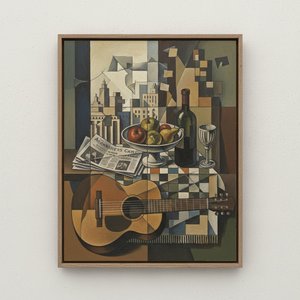
Juan Gris: Dekonstruktion und Synthese im Kubismus – Eine umfassende Erkundung
Entdecken Sie die faszinierende Welt von Juan Gris und dem Kubismus! Unsere umfassende Analyse beleuchtet seine künstlerische Entwicklung, Techniken und seinen bleibenden Einfluss auf die moderne Kunst. Für Kenner und Sammler.
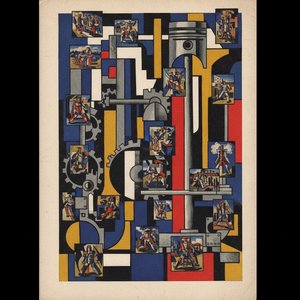
Fernand Léger: Die 25 Meisterwerke des Kubismus für Ihr Zuhause | OriginalUniqueArt
Entdecken Sie die 25 Meisterwerke von Fernand Léger! Tauchen Sie ein in die Welt des Kubismus, Tubismus & der Avantgarde. Hochwertige Kunstreproduktionen für Ihr Zuhause – jetzt auf OriginalUniqueArt.com!


