

 Versenden
 Teilen
 Details anzeigen
 Leitfaden

 Herunterladen
 Ähnliche Objekte
 Diashow
 Statistiken
Brooch


 Weiterlesen
Giclée / Kunstdruck
Giclée- oder Leinwanddruck in Museumsqualität mit schneller Produktion und flexiblen Veredelungsoptionen. ( Handgemalte Reproduktion bestellen Zum digitalen Bild wechseln)




































Wählen Sie aus unseren vordefinierten Formaten, die den ursprünglichen Proportionen des Kunstwerks entsprechen.

Geben Sie die benötigte Breite und Höhe an, damit der Druck perfekt in Ihren Rahmen oder an Ihre Wand passt. Ein Druck kann nur beschnitten, aber niemals größer als das Originalbild angefertigt werden; daher verliert ein Format mit anderen Proportionen einen Teil des Bildes. Wir senden Ihnen ein digitales Mockup zur Freigabe, bevor wir den Druck ausführen. Das auf dieser Seite gezeigte Bild zeigt nicht den tatsächlichen Beschnitt – dies ist nur im Mockup ersichtlich.
Weltweiter Versand () innerhalb von 2 Wochen statt der üblichen 4/5 Wochen. (25 Oktober)

Kostenloser weltweiter Expressversand

Hochwertige Leinenleinwand

Umfassender Versicherungsschutz beim Versand

Zollgebühren-Rückerstattungsgarantie

Garantie für exakte Farbtreue

100 Tage Rückgaberecht (nur bei Mängeln)

100% Geld-zurück-Garantie

Mengenrabatt verfügbar
 Die Glasoption ist nur für Größen unter 110 cm verfügbar.

Brooch
Giclée / Kunstdruck
Format der Reproduktion
-


Endpreis
€ 70
A Jewel of the Vienna Secession
In the delicate interplay of light and color, the Brooch by Josef Hoffmann emerges as a breathtaking testament to the dawn of modern design. Created around 1910, this exquisite piece serves as more than mere ornamentation; it is a window into the soul of the Wiener Werkstätte era. The artwork presents a mesmerizing close-up of stained glass artistry, where deep, velvety blues collide with vibrant, pulsating reds. At its heart, a pristine white letter 'M' stands as a focal point of geometric clarity, anchored within an intricate web of design that speaks to the precision and elegance of the early 20th-century avant-garde.
The technique employed in this piece reflects the mastery of Hoffmann, a man who redefined the boundaries between architecture and decorative arts. The use of stained glass creates a luminous effect, where light does not simply hit the surface but seems to emanate from within the very fibers of the composition. This translucency allows the bold red border to frame the central motif with a rhythmic intensity, drawing the eye inward toward the delicate white calligraphy. For the discerning collector or interior designer, this piece offers a sophisticated way to introduce a sense of historical grandeur and structural beauty into a contemporary space.
The Legacy of Geometric Elegance
To understand the emotional resonance of this work, one must look to the historical context of its creator. As a founding member of the Vienna Secession, Hoffmann sought to break free from the suffocating traditions of academic art, favoring instead a language of functionalism and geometric purity. This brooch embodies that revolution. The stark contrast between the primary colors and the sharp, clean lines of the central letter evokes a sense of organized passion—a controlled explosion of color that feels both ancient in its glasswork tradition and strikingly modern in its minimalist execution.
Integrating such a piece into a curated collection or a high-end interior provides an immediate touchpoint of intellectual luxury. It invites conversation about the transition from the flowing, organic curves of Art Nouveau to the structured, rhythmic patterns of Art Deco. Whether displayed as a focal point in a gallery setting or used as inspiration for textile and glass decor, the Brooch remains a timeless symbol of an era when every small object was treated with the reverence of a masterpiece. It is an invitation to experience the brilliance of Hoffmann’s vision, where every fragment of color tells a story of architectural precision and artistic liberation.
Fragen & Antworten
Wie intensiv sind die Farben von "Brooch"?
"Brooch" von Josef Hoffmann zeichnet sich durch eine Sättigung von Subtle Color und eine Intensität von Balanced aus.
Wer ist der Urheber von "Brooch" und aus welchem Jahr stammt das Werk?
Josef Hoffmann schuf „Brooch“ im Jahr 1910.
Welches Format hat "Brooch"?
Das Format von „Brooch“ ist Square. Dies ist hilfreich bei der Planung, wo eine Reproduktion platziert werden soll.
Künstlerbiografie
Josef Hoffmann war ein österreichisch-mährischer Architekt und Designer. Er gehörte zu den Gründern der Wiener Secession und war Mitbegründer der Wiener Werkstätte. Sein berühmtestes architektonisches Werk ist der Palais Stoclet in Brüssel (1905–1911), ein wegweisendes Werk der modernen Architektur, des Art déco und der Höhepunkt der Architektur der Wiener Secession.

Josef Hoffmann
1870 - 1956 , Kroatien
Kurzinfos
- Bedeutende Kunstwerke: ['Palais Stoclet']
- Geburtsdatum: 1870
- Geburtsort: Příbor, Kroatien
- Künstlerische Bewegung Oder Stil: Wiener Secession, Art Déco, Moderne
- Nationalität: Österreichisch-Mährisch
- Sterbedatum: 1956
- Vollständiger Name: Josef Maria Gustav Hoffmann
- Von Diesem Künstler Beeinflusste Künstler Oder Bewegungen: ['Wiener Werkstätte']
Ähnliche Artikel
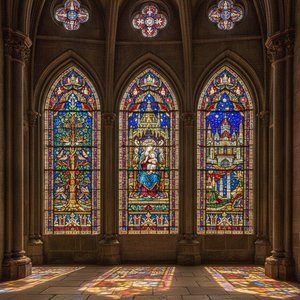
Luminous Masterpieces: The Captivating Beauty and Timeless Elegance of Stained Glass Artworks
Embark on a visual journey through the luminous world of stained glass art. Discover the exquisite craftsmanship, historical significance, and captivating beauty of masterworks from Art Nouveau to the Gothic era, curated for the discerning fine art enthusiast.

Crimson Threads of Narrative: Exploring Symbolism & Representation in Artworks Featuring the Red Dress
Explore the rich symbolism of the red dress in art history! From ancient power displays to iconic portraits like Cézanne’s 'Madame Cezanne', discover the cultural and artistic significance behind this captivating color. Expert analysis & insights.

Weiße Meisterwerke: Die Top 10 berühmtesten Gemälde und ihre zeitlose Eleganz
Entdecken Sie die Top 10 berühmter Gemälde, dominiert von Weiß! Von Malewitsch bis Rothko – erfahren Sie Geschichten hinter ikonischen Kunstwerke und lassen Sie sich für Ihre Wohnraumgestaltung inspirieren. Kunstreproduktionen in Museumsqualiät auf

Die Top 10 Gemälde in Schattierungen von 'Slate Blue': Kunst für Ihr Zuhause
Entdecken Sie die Top 10 Gemälde in faszinierenden 'Slate Blue' Tönen! Von Monet bis Manet – erleben Sie Kunstgeschichte und lassen Sie sich von Meisterwerken inspirieren. Hochwertige Kunstdrucke auf

The Allure of Azure: Exploring the Symbolic & Aesthetic Depths of Blue in Art History
Explore the rich history of blue in art! Discover its symbolism, from ancient pigments to modern masterpieces by Kandinsky & Seurat. Uncover the psychological impact and cultural meanings behind this captivating hue.