
 Vorschau anzeigen
 Versenden
 Teilen
 Details anzeigen
 Leitfaden

 Herunterladen
 Ähnliche Objekte
 Röntgenaufnahme
 Diashow
 Q&A
Q&A Statistiken
Flirt

- 34.0 x 49.0 cm


 Weiterlesen
Die auf dieser Seite dargestellten Kunstwerke sind urheberrechtlich geschützt, was bedeutet, dass wir keine identische Reproduktion rechtmäßig erstellen oder verkaufen dürfen. Dieser Schutz wird durch internationale Abkommen wie die Berner Übereinkunft und durch nationale Gesetze, einschließlich derer, die von den US-Urheberrecht – Titel 17.
Diese Methode entspricht vollumfänglich den Urheberrechtsbestimmungen, da sie keine Kopie oder Vervielfältigung des geschützten Kunstwerks darstellt. Stattdessen handelt es sich um eine kreative Neuinterpretation – ein neues Gemälde, das vom Original inspiriert, aber nicht identisch mit ihm ist.
Giclée / Kunstdruck
Giclée- oder Leinwanddruck in Museumsqualität mit schneller Produktion und flexiblen Veredelungsoptionen. ( Handgemalte Reproduktion bestellen Zum digitalen Bild wechseln)




P118B €10

P118H €10

P118W €10

P438Z €10

P508JH €12

P508YH €12

P805H €10

P805Z €10

P919BZ €10

P919G €10

P919XJ €10

P959ZH €10

P968JZ €12

W106C €8

W218G €10

W218JH €8

W218Y €10

W307PJ €10

W316G €10

W316PJ €8

W316Y €10

W398PJ €8

W4111J €10

W500HY €15

W500JH €15

W692G €12

W849H €8

W940BG €15

W953PJ €8




Wählen Sie aus unseren vordefinierten Formaten, die den ursprünglichen Proportionen des Kunstwerks entsprechen.

Geben Sie die benötigte Breite und Höhe an, damit der Druck perfekt in Ihren Rahmen oder an Ihre Wand passt. Ein Druck kann nur beschnitten, aber niemals größer als das Originalbild angefertigt werden; daher verliert ein Format mit anderen Proportionen einen Teil des Bildes. Wir senden Ihnen ein digitales Mockup zur Freigabe, bevor wir den Druck ausführen. Das auf dieser Seite gezeigte Bild zeigt nicht den tatsächlichen Beschnitt – dies ist nur im Mockup ersichtlich.
Weltweiter Versand () innerhalb von 2 Wochen statt der üblichen 4/5 Wochen. (2 November)

Kostenloser weltweiter Expressversand

Hochwertige Leinenleinwand

Umfassender Versicherungsschutz beim Versand

Zollgebühren-Rückerstattungsgarantie

Garantie für exakte Farbtreue

100 Tage Rückgaberecht (nur bei Mängeln)

100% Geld-zurück-Garantie

Mengenrabatt verfügbar
 Die Glasoption ist nur für Größen unter 110 cm verfügbar.

Flirt
Giclée / Kunstdruck
Format der Reproduktion
-


Endpreis
€ 71
A Dance of Desire and Distortion
In the vibrant, restless landscape of late 1960s Latin American art, few works capture the electric tension of human interaction as vividly as Jorge de la Vega’s "Flirt." Created in 1968, this masterpiece serves as a window into a world where the boundaries between reality and surrealist distortion begin to blur. The painting centers on a captivating scene of social interplay, featuring two women in bikinis who command the viewer's gaze through their poised yet suggestive stances. One figure rests upon the ground, grounded and earthy, while her companion stands nearby, creating a dynamic compositional tension that pulls the eye across the canvas. As the title suggests, there is an undeniable sense of playfulness—a rhythmic, almost musical quality to their movements that hints at the unspoken dialogues of attraction and social performance.
Beyond the central duo, de la Vega weaves a complex tapestry of secondary figures, including a man kneeling in close proximity to the women. This layering of bodies creates a sense of a crowded, bustling environment, perhaps a sun-drenched social gathering where glances are exchanged and secrets are whispered. The composition is far from static; it breathes with a kinetic energy that reflects the artist's ability to capture the "seismographic" shifts of his era. For the collector or interior designer, this piece offers more than just a visual focal point; it provides a narrative depth that invites long periods of contemplation, making it an ideal centerpiece for spaces that value intellectual stimulation and avant-garde flair.
The Mastery of Neo-Figurative Expression
Technically, "Flirt" is a testament to de la Vega’s departure from the rigid constraints of his early architectural training. Moving away from geometric abstraction, he embraced a more fluid, neo-figurative style that allowed for greater emotional expression. The brushwork in this piece possesses a certain urgency, where colors and forms are applied with a confidence that mirrors the spontaneity of the subject matter itself. The artist utilizes a palette that balances the warmth of human skin tones with the vibrant, sometimes jarring accents characteristic of his mid-career evolution. This technique does not merely depict a scene; it reconstructs it, using texture and form to evoke the heat and the psychological weight of the moment.
The symbolism within "Flirt" operates on multiple levels. While at first glance it appears to be a celebration of leisure and summer vitality, there is an underlying layer of social commentary typical of de la Vega’s work. The way the figures are integrated into the background—sometimes merging with the environment or appearing slightly fragmented—suggests the instability of identity in a rapidly changing modern world. It captures the essence of 1968: a year of global upheaval, where the surface-level "flirtation" of society often masked deeper, more profound transformations. To possess a reproduction of this work is to hold a fragment of history, a piece that resonates with the spirit of rebellion and the beauty of metamorphosis.
An Essential Addition to the Sophisticated Interior
For those looking to curate an art collection or design a sophisticated living space, "Flirt" offers a unique opportunity to introduce a sense of movement and historical gravity. Its medium-sized format (34 x 49 cm) makes it incredibly versatile, capable of anchoring a gallery wall or serving as a singular, powerful statement in a minimalist study. The painting’s ability to evoke both nostalgia for the late sixties and a timeless fascination with human connection ensures that it remains relevant across changing decor trends.
Investing in a high-quality hand-painted reproduction of this work allows the admirer to experience the tactile soul of de la Vega's vision. The interplay of light, the deliberate distortion of form, and the evocative subject matter provide an emotional resonance that mass-produced prints simply cannot replicate. Whether you are drawn to its bold aesthetic or its complex psychological layers, "Flirt" stands as a profound testament to the enduring power of Argentine modernism, promising to inspire anyone who encounters its captivating, rhythmic beauty.
Fragen & Antworten
Wer ist der Urheber von "Flirt" und welcher Stilrichtung ist das Werk zuzuordnen?
"Flirt" ist das Werk von Jorge De La Vega aus der Epoche des Pop Art.
Aus welcher Epoche stammt "Flirt" von Jorge De La Vega?
"Flirt" von Jorge De La Vega stammt aus der Epoche der Modern. Diese Zeitspanne liefert den historischen Kontext des Werkes.
Ist "Flirt" insgesamt eher hell oder eher dunkel?
"Flirt" von Jorge De La Vega weist eine Helligkeit von brilliant mit einer Luminanz von Bright Balance auf.
Künstlerbiografie
Jorge de la Vega: Leben und Kunst
Frühes Leben und Ausbildung
Jorge de la Vega (geboren am 27. März 1930 in Buenos Aires, Argentinien – gestorben am 26. August 1971) war ein vielseitiger Künstler – Maler, Grafiker, Zeichner, Sänger und Songwriter. Er begann von 1948 bis 1952 mit einem Studium der Architektur an der Universidad de Buenos Aires. Verließ diesen Weg jedoch schließlich, um sich ganz der Malerei zu widmen und wurde größtenteils als Autodidakt zum Künstler.
Künstlerische Entwicklung und Strömungen
De la Vegas frühe künstlerische Erkundungen umfassten in den 1950er Jahren sowohl gegenständliche als auch abstrakte geometrische Stile. Ein entscheidender Moment seiner Karriere war die Gründung der Otra Figuración (Andere Figuration) Gruppe im Jahr 1961, zusammen mit Luis Felipe Noé, Rómulo Macció und Ernesto Diera. Diese Bewegung, auch bekannt als Nueva Figuración (Neue Figuration), stellte eine Reaktion auf die vorherrschende geometrische Abstraktion in der argentinischen Kunst dar.
- Die Gruppe zielte darauf ab, die menschliche Figur wieder in ihre Werke einzuführen und über bloße Nachahmung hinauszugehen, um individuelle existenzielle Ängste zu erforschen.
- Eine Reise nach Europa mit der *Otra Figuración* Gruppe erwies sich als einflussreich und inspirierte eine neue künstlerische Richtung.
- Später führte ihn ein Aufenthalt in den Vereinigten Staaten dem aufstrebenden Pop Art-Moment in New York City näher, was seinen Stil maßgeblich beeinflusste.
Schlüsselthemen und Einflüsse
De la Vegas Werk ist geprägt von seinem kritischen Umgang mit der zeitgenössischen Gesellschaft. Er thematisierte häufig Konsumismus, soziale Kritik und die Komplexität des menschlichen Daseins. Seine Kunst präsentierte oft eine düster-humorvolle Perspektive auf das moderne Leben.
- Einfluss von Pop Art: Die kühne Bildsprache und der Kommentar, die in der Pop Art zu finden sind, beeinflussten stark seine visuelle Sprache.
- Soziales Kommentar: Er nutzte seine Kunst, um gesellschaftliche Normen zu hinterfragen und die Absurditäten der Konsumkultur aufzudecken.
- Existenzielle Anliegen: Viele seiner Werke erforschen Identität, Entfremdung und die menschliche Verfassung.
Wichtige Errungenschaften und künstlerischer Stil
De la Vega entwickelte einen unverwechselbaren Stil, der Abstraktion mit figurativen Elementen verband und oft verstörende Bilder und kühne Linien verwendete. Seine Gemälde zeigen häufig verzerrte Figuren, fragmentierte Formen und symbolische Objekte. Er war bekannt für seine digital wirkende Ästhetik, noch bevor digitale Kunst Mainstream wurde.
- Bemerkenswerte Werke: Zu seinen bekanntesten Werken gehören „Lobpreisung“, „Versuch es erneut“, „Flirten“, „Liebes- und Glücksspiele“, „Inkubation“ und die Werkreihe mit dem Titel "Puzzle".
- Lehrauftrag: Er war 1965 dank eines Fulbright-Stipendiums als Gastdozent/Künstler an der Cornell University tätig.
Übergang zur Musik und Späteres Leben
In den letzten Jahren seines Lebens vollzog De la Vega einen bedeutenden Wandel von der visuellen Kunst hin zur Musik. Er wurde ein populärer Singer-Songwriter und schuf Protestsongs, die seine satirische Weltsicht und sein soziales Bewusstsein widerspiegelten.
Historische Bedeutung und Vermächtnis
Jorge de la Vega ist eine wichtige Figur in der lateinamerikanischen Kunstgeschichte. Seine Beteiligung an der *Nueva Figuración* Bewegung trug dazu bei, den argentinischen künstlerischen Ausdruck während einer Zeit bedeutender politischer und sozialer Veränderungen neu zu definieren. Seine Arbeit findet bis heute Anklang für ihren aufschlussreichen Kommentar zur modernen Gesellschaft und ihren einzigartigen visuellen Stil.
- Seine Werke werden in Museen in ganz Argentinien sowie international ausgestellt – darunter das Phoenix Art Museum, das Museum of Modern Art in Rio de Janeiro, Brasilien, und das Art Museum of the Americas bei der OAS in Washington, DC.
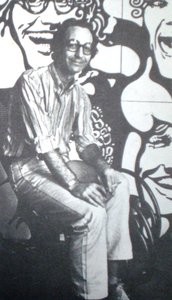
Jorge De La Vega
1930 - 1971 , Argentinien
Kurzinfos
- Bemerkenswerte Werke:
- Praise
- Try Again
- Flirt
- Geburtsdatum: 27. März 1930
- Geburtsort: Buenos Aires, Argentinien
- Künstler Die Diesen Künstler Beeinflussten: ['Pop Art Künstler']
- Künstler/Bewegungen Beeinflusst Von Diesem Künstler: ['Nueva Figuración']
- Künstlerische Bewegung Oder Stil: Nueva Figuración, Pop Art
- Nationalität: Argentinisch
- Sterbedatum: 26. August 1971
- Vollständiger Name: Jorge de la Vega
Ähnliche Artikel

Verspielte Meisterwerke: Top 10 Kunstwerke für ein lebendiges Zuhause | OriginalUniqueArt.com
Entdecken Sie die Top 10 Kunstwerke, die Lebensfreude und spielerische Energie ausstrahlen! Von Monet bis Picasso – erfahren Sie die Geschichten berühmter Künstler & Meisterwerke. Finden Sie Inspiration für Ihr Zuhause mit OriginalUniqueArt.com.

The Enduring Muse: Women as Subject & Symbol in Art History
Explore the rich history of women in art – from iconic muses to groundbreaking artists. Discover feminist movements, global perspectives & reclaim female narratives with OriginalUniqueArt.
Portrayals of Power & Perception: A Historical Survey of Women in Art
Explore the rich history of women in art – from iconic muses to groundbreaking artists. Discover feminist movements & reclaim female narratives with OriginalUniqueArt. Expert insights for discerning collectors.
The Enduring Muse: Women as Subject & Symbol in Art History
Explore the rich history of women in art – from archetypal representations to contemporary voices challenging norms. Discover iconic artists & movements, and learn about reclaiming female narratives through painting and beyond.
The Eloquence of Arrangement: Compositional Strategies in Western Art from the Renaissance to Modernism
Explore the evolution of compositional strategies in Western art! Discover how masters like Raphael & Zurbaran used perspective, proportion, and dynamic arrangement to create timeless masterpieces. Enhance your art appreciation today!