

 In echtem Maßstab anzeigen
 Versenden als Grußkarte
 Teilen
 Details anzeigen
 Leitfaden öffnen

 Herunterladen
 Ähnliche Objekte
 Röntgenaufnahme
 Diashow
 Besucherstatistiken
Self-Portrait
 Oil On Canvas
- WallArt
- Northern Renaissance
 1519
1519 38.0 x 27.0 cm
 Thyssen-Bornemisza Museum
 Mehr anzeigen
Giclée / Kunstdruck
Giclée- oder Leinwanddruck in Museumsqualität mit schneller Produktion und flexiblen Veredelungsoptionen. ( Handgemalte Reproduktion kaufen Zum digitalen Bild wechseln)




P118B €10

P118H €10

P118W €10

P438Z €10

P508JH €12

P508YH €12

P805H €10

P805Z €10

P919BZ €10

P919G €10

P919XJ €10

P959ZH €10

P968JZ €12

W106C €8

W218G €10

W218JH €8

W218Y €10

W307PJ €10

W316G €10

W316PJ €8

W316Y €10

W398PJ €8

W4111J €10

W500HY €15

W500JH €15

W692G €12

W849H €8

W940BG €15

W953PJ €8




Wählen Sie aus unseren vordefinierten Formaten, die den ursprünglichen Proportionen des Kunstwerks entsprechen.

Geben Sie die Breite und die Höhe an, die Sie benötigen, damit der Druck perfekt in Ihren Rahmen oder an Ihre Wand passt. Ein Druck kann nur beschnitten werden und niemals größer als das Originalbild gemacht werden; daher verliert ein Format mit einer anderen Proportion einen Teil des Bildes. Wir senden Ihnen ein digitales Mockup zur Freigabe, bevor wir den Druck ausführen. Das auf dieser Seite gezeigte Bild zeigt nicht den tatsächlichen Beschnitt – dies ist nur im Mockup ersichtlich.
Weltweiter Versand () innerhalb von 2 Wochen statt der üblichen 4/5 Wochen. (24 Oktober)

Kostenloser weltweiter Expressversand

Hochwertige Leinenleinwand

Vollständiger Versicherungsschutz beim Versand

Zollgebühren-Rückerstattungsgarantie

Garantie für exakte Farbtreue

100-tägiges Rückgaberecht (nur bei Mängeln)

100% Geld-zurück-Garantie

Angebot für Mengenrabatt
 Die Glasoption ist nur für Größen unter 110 cm verfügbar.

Self-Portrait
Giclée / Kunstdruck
Format der Reproduktion
-


Gesamtpreis
€ 70
A Window into the Soul: Exploring Joos van Cleve’s Self-Portrait
Joos van Cleve's 1519 “Self-Portrait” isn’t merely a depiction of an individual; it’s a carefully constructed invitation into the artist’s world, a moment captured with remarkable intimacy and a subtle yet profound sense of contemplation. Housed within the Museo Thyssen-Bornemisza in Madrid, this oil on panel painting stands as a pivotal example of Northern Renaissance art, bridging the gap between the formality of early Netherlandish portraiture and the burgeoning individualism of the era. More than just a likeness, it’s a testament to van Cleve's skill in capturing not only physical appearance but also an underlying emotional state – a quiet introspection that draws the viewer into a silent dialogue.

The Renaissance in Miniature: Style and Technique
Van Cleve’s approach is a masterful synthesis of established traditions and emerging influences. The painting adheres to the conventions of his time – a relatively formal pose, a focus on detail, and an emphasis on achieving a believable likeness. However, within this framework, he introduces subtle innovations that elevate the work beyond mere representation. Note the careful modeling of the face, achieved through masterful use of light and shadow; the folds in his dark robe are rendered with remarkable precision, suggesting both texture and volume. The background, a solid field of muted blue, serves to isolate the figure, intensifying the focus on his expression and posture. This deliberate simplicity is characteristic of van Cleve’s style – he prioritized clarity and directness over elaborate ornamentation.
The use of oil paint itself was revolutionary at this time, allowing for a greater level of detail and luminosity than previous mediums. Van Cleve expertly exploited the medium's capabilities, creating subtle gradations of tone and color that contribute to the painting’s overall depth and realism. The palette is restrained – primarily dark browns, blues, and whites – but skillfully deployed to create a harmonious and balanced composition.
Symbolism and Introspection: Decoding the Portrait
The most striking element of the Self-Portrait is undoubtedly the small pink flower held delicately in van Cleve’s right hand. While its precise meaning remains open to interpretation, it's widely believed to symbolize innocence, purity, and perhaps even a quiet contemplation of life itself. This gesture—a simple offering—suggests a moment of reflection, inviting the viewer to share in the artist’s inner world. The neutral expression on his face – neither overtly joyful nor sorrowful – further enhances this sense of introspection. He isn't presenting himself as a triumphant figure or a celebrated personality; instead, he offers a glimpse into his private thoughts and feelings.
A Legacy of Innovation: Context and Influence
Joos van Cleve’s Self-Portrait is not an isolated work but rather part of a broader artistic movement—the rise of self-portraiture in the Renaissance. Artists like Raphael and Hans Holbein had already begun to explore this genre, recognizing its potential for revealing both personal identity and artistic skill. Van Cleve's painting stands as a crucial link between these early experiments and the more elaborate and psychologically complex self-portraits that would emerge in subsequent centuries. His work demonstrates a willingness to experiment with new techniques and approaches, solidifying his place as a key figure in the development of Renaissance art. The Museo Thyssen-Bornemisza provides an exceptional setting for viewing this important piece, allowing visitors to appreciate its historical significance and artistic merit within a broader context of European painting.
Fragen & Antworten
Wo kann ich eine digitale Abbildung von "Self-Portrait" von Joos Van Cleve kaufen?
"Self-Portrait" ist als ein hochauflösender digitaler Bild-Download erhältlich, direkt über die Seite Digitales Bild.
Darf "Self-Portrait" von Joos Van Cleve, das sich im Thyssen-Bornemisza Museum befindet, rechtmäßig reproduziert werden?
Das Original "Self-Portrait" befindet sich im Thyssen-Bornemisza Museum, und das Werk ist gemeinfrei – das Urheberrecht ist abgelaufen.
Welches Format hat "Self-Portrait" von Joos Van Cleve?
"Self-Portrait" von Joos Van Cleve ist eine Komposition im Portrait-Format. Die Proportionen sollten vor der Wahl der Druckgröße überprüft werden.
Biografie des Künstlers
Der Meister von Antwerpen: Das Leben und das Erbe von Joos van Cleve
Im geschäftigen, merkantilen Herzen des Antwerpens des sechzehnten Jahrhunderts entfaltete sich eine neue Ära des visuellen Geschichtenerzählens, angetrieben durch den Pinsel von Joos van Clelev. Geboren um 1485 in Krefeld, Deutschland, trat dieser Meister der flämischen Renaissance nicht nur als ein Maler von großem Geschick hervor, sondern als eine visionäre Brücke zwischen zwei Welten. Seine Karriere, die von etwa 1511 bis zu seinem Tod im Jahr 1540 florierte, repräsentiert einen tiefgreifenden Moment der Kunstgeschichte, in dem die akribischen, detailreichen Traditionen der niederländischen Meister auf die weitreichenden, atmosphärischen Innovationen trafen, die aus der italienischen Renaissance strömten. Ein Werk von van Cleve zu betrachten bedeutet, Zeuge eines zarten Tanzes zwischen der taktilen Realität Nordeuropas und der idealisierten Anmut des Südens zu werden.
Die Grundlagen seines Genies wurden während seiner prägenden Jahre unter der Anleitung von Jan Joest gelegt. Diese strenge Lehrzeit verlieh ihm mehr als nur technische Versiertheit; sie tauchte ihn in die monumentalen Traditionen der spätgotischen Kunst ein. Eine seiner bedeutendenschaftlichsten frühen Erfahrungen war die Unterstützung von Joest beim Hochaltar der Kalkarer Nikolaikirche – ein Projekt, das ein Verständnis für monumentale Dimensionen und spirituelle Schwere erforderte. Durch diese Arbeit meisterte van Cleve die komplexe Alchemie der Pigmentherstellung und das mühsame Schichten von Lasuren – Techniken, die es ihm später ermöglichen sollten, seinen Porträts eine lebensnahe Leuchtkraft und seinen religiösen Szenen ein spürbares Gefühl von Göttlichkeit einzuhauchen.
Eine Synthese aus nordischer Detailtreue und italienischer Anmut
Was Joos van Cleve wahrhaftig von seinen Zeitgenossen unterschied, war sein rastloser, experimenteller Geist. Während viele Künstler der Epoche an den starren stilistischen Dogmen ihrer lokalen Zünfte festhielten, blickte van Cleve zum Horizont. Er wurde zu einem Pionier des flämischen Manierismus, eines Stils, der durch eine außergewöhnliche Sensibilität für Farbe und eine bemerkenswerte Einheit der Figuren innerhalb einer Komposition gekennzeichnet ist. Vielleicht war sein dauerhaftster Beitrag zur Nordischen Renaissance seine revolutionäre Nutzung der Landschaft. Anstatt statische oder symbolische Hintergründe zu verwenden, führte er weite, atmosphärische Ausblicke ein, die seinen Motiven Leben einhauchten und ein Gefühl von Tiefe und Kontinuität zwischen der menschlichen Figur und der natürlichen Welt schufen.
Diese stilistische Entwicklung war tief von den aufstrebenden Trends in Italien beeinflusst. Durch die Integration italienischer Perspektivelemente und eines flüssigeren, rhythmischen Ansatzes zur Anatomie verwandelte er das traditionelle flämische Porträt in etwas psychologisch weitaus Komplexeres. Seine Dargestellten waren nicht länger bloße Symbole des Status; sie besaßen ein Innenleben, eine emotionale Resonanz, die den Betrachter zu einem stillen Dialog einlud. Diese Fähigkeit, tiefe menschliche Emotionen durch subtile Gesichtsausdrücke und feine Handgesten zu vermitteln, bleibt eine seiner am meisten gefeierten Leistungen.
Historische Bedeutung und künstlerischer Triumph
Das Erbe von Joos van Cleve ist in das Gefüge des goldenen Zeitalters von Antwerpen eingraviert. Als zentrale Figur der künstlerischen Gemeinschaft der Stadt wurde seine Werkstatt zu einem Leuchtfeuer der Innovation, das Generationen nachfolgender Maler beeinflusste. Seine Fähigkeit, die folgenden Elemente zu verschmelzen, sicherte ihm einen bleibenden Einfluss auf die Geschichte der europäischen Kunst:
- Technische Meisterschaft: Die nahtlose Anwendung niederländischer Lasurtechniken, um eine unvergleichliche Textur und Lichtwirkung zu erzielen.
- Kompositorische Innovation: Die Integration weitläufiger Panoramalandschaften, die den narrativen Umfang religiöser und weltlicher Malerei erweiterten.
- Psychologische Tiefe: Ein Wandel von der rein symbolischen Darstellung hin zu einer humanistischeren, emotionaleren Porträtierung seiner Motive.
- Kulturelle Synthese: Die erfolgreiche Verbindung nordeuropäischer Präzision mit der Anmut und Bewegung der italienischen Renaissance.
Obwohl sein Leben im Jahr 1540 endete, hallen die Echos seiner Kunst bis heute nach. Joos van Cleve folgte nicht einfach den Trends seiner Zeit; er half dabei, sie zu definieren, und hinterließ ein Werk, das als Zeugnis für die transformative Kraft künstlerischer Synthese dient. Seine Gemälde bleiben beständige Fenster in eine Ära immenser kultureller Übergänge und fangen jenen Moment ein, in dem die mittelalterliche Welt begann, im Licht der Moderne zu zerfließen.

Joos Van Cleve
1485 - 1540 , Deutschland
Eckdaten zum Künstler
- Artistic Movement Or Style: Renaissance Mannerismus
- Artists Or Movements Influenced By This Artist: ['Italienische Renaissance']
- Artists Who Influenced This Artist: ['Jan Joest']
- Date Of Birth: c. 1485
- Date Of Death: 1540/1541
- Full Name: Joos van Cleve
- Nationality: Niederländisch
- Notable Artworks: ['Die Verehrung des Heiligen Mariä Geburt']
- Place Of Birth: Krefeld, Deutschland
Verwandte Artikel

Frühniederländische Meisterwerke: 10 Gemälde, die eine Epoche prägten | OriginalUniqueArt
Entdecken Sie die 10 prägendsten Meisterwerke der Frühniederländischen Malerei! Von Jan van Eyck bis Rogier van der Weyden – erleben Sie Kunstgeschichte hautnah. Hochwertige Reproduktionen & Inspiration für Ihr Interieur auf OriginalUniqueArt.com.

Rembrandts Meisterwerke: Die Top 25 Kunstwerke für Ihr Zuhause | OriginalUniqueArt
Entdecken Sie Rembrandts 25 berühmteste Kunstwerke! Tauchen Sie ein in die Welt des Barock, Licht und Schatten & historischer Porträts. Hochwertige Reproduktionen für Ihr Zuhause – jetzt auf OriginalUniqueArt.com!

Öl auf Leinwand: Eine historische und technische Erkundung eines zeitlosen künstlerischen Mediums
Entdecken Sie die faszinierende Welt der Ölmalerei! Von historischen Techniken bis zur modernen Anwendung – wir bieten Expertenwissen, Restaurierungstipps und hochwertige Reproduktionen. Jetzt informieren!

The Enduring Legacy of Oil on Canvas: Technique, History & Aesthetic Impact
Explore the rich history & techniques of oil painting – from Renaissance masters to Impressionism. Discover pigments, layering methods, and why this timeless medium endures. Expert insights for artists & art enthusiasts.
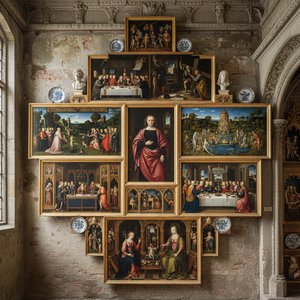
Frühniederländische Renaissance: 10 Meisterwerke für Ihr Zuhause | OriginalUniqueArt
Entdecken Sie die 10 prägendsten Meisterwerke der Frühniederländischen Renaissance! Erfahren Sie mehr über Jan van Eyck, Rogier van der Weyden & Co. und ihre ikonischen Gemälde. Hochwertige Reproduktionen für Ihr Zuhause – jetzt auf OriginalUniqueArt.com!


