In echtem Maßstab anzeigen
 Versenden als Grußkarte
 Teilen
 Details anzeigen
 Leitfaden öffnen

 Herunterladen
 Ähnliche Objekte
 Röntgenaufnahme
 Diashow
 Besucherstatistiken
Cleopatra


 Mehr anzeigen
Giclée / Kunstdruck
Giclée- oder Leinwanddruck in Museumsqualität mit schneller Produktion und flexiblen Veredelungsoptionen. ( Handgemalte Reproduktion kaufen Zum digitalen Bild wechseln)




P118B €10

P118H €10

P118W €10

P438Z €10

P508JH €12

P508YH €12

P805H €10

P805Z €10

P919BZ €10

P919G €10

P919XJ €10

P959ZH €10

P968JZ €12

W106C €8

W218G €10

W218JH €8

W218Y €10

W307PJ €10

W316G €10

W316PJ €8

W316Y €10

W398PJ €8

W4111J €10

W500HY €15

W500JH €15

W692G €12

W849H €8

W940BG €15

W953PJ €8




Wählen Sie aus unseren vordefinierten Formaten, die den ursprünglichen Proportionen des Kunstwerks entsprechen.

Geben Sie die Breite und die Höhe an, die Sie benötigen, damit der Druck perfekt in Ihren Rahmen oder an Ihre Wand passt. Ein Druck kann nur beschnitten werden und niemals größer als das Originalbild gemacht werden; daher verliert ein Format mit einer anderen Proportion einen Teil des Bildes. Wir senden Ihnen ein digitales Mockup zur Freigabe, bevor wir den Druck ausführen. Das auf dieser Seite gezeigte Bild zeigt nicht den tatsächlichen Beschnitt – dies ist nur im Mockup ersichtlich.
Weltweiter Versand () innerhalb von 2 Wochen statt der üblichen 4/5 Wochen. (25 Oktober)

Kostenloser weltweiter Expressversand

Hochwertige Leinenleinwand

Vollständiger Versicherungsschutz beim Versand

Zollgebühren-Rückerstattungsgarantie

Garantie für exakte Farbtreue

100-tägiges Rückgaberecht (nur bei Mängeln)

100% Geld-zurück-Garantie

Angebot für Mengenrabatt
 Die Glasoption ist nur für Größen unter 110 cm verfügbar.

Cleopatra
Giclée / Kunstdruck
Format der Reproduktion
-


Gesamtpreis
€ 70
A Portrait of Regal Contemplation: John William Waterhouse’s Cleopatra
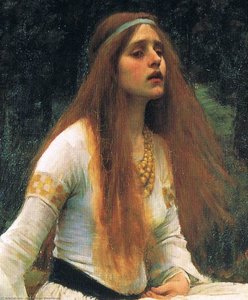
John William Waterhouse's "Cleopatra," painted in 1890, is more than just a depiction of an ancient queen; it’s a meticulously crafted meditation on power, intellect, and the enduring allure of antiquity. This remarkable work, rendered with the characteristic precision and romantic sensibility of the Pre-Raphaelite movement, invites viewers into a moment of profound introspection within the figure of Cleopatra VII Philopator, the last active ruler of the Ptolemaic Kingdom of Egypt. Waterhouse’s skill lies not merely in his technical mastery – evident in the delicate rendering of fabrics, the subtle play of light and shadow, and the remarkably lifelike portrayal of the subject's face – but also in his ability to imbue the scene with a palpable sense of atmosphere and emotional depth.
- Subject & Composition: The central figure, seated on a leopard-print couch, immediately establishes a connection to both the raw power of the animal kingdom and the opulent world of Egyptian royalty. Her posture, slightly reclined and her gaze directed downwards, suggests a deliberate act of contemplation rather than regal authority.
- Style & Technique: Waterhouse’s style is firmly rooted in Pre-Raphaelite principles – an emphasis on meticulous detail, rich color palettes, and a reverence for classical beauty. The brushwork is smooth yet controlled, creating a sense of depth and realism that draws the viewer into the scene.
- Color & Light: The artist employs a muted, earth-toned palette dominated by creams, browns, and golds, contributing to the painting’s serene and contemplative mood. Soft lighting enhances the textures of the fabrics and casts subtle shadows, further emphasizing the three-dimensionality of the figure.
Symbolism & Historical Context
“Cleopatra” is deeply embedded within a rich tapestry of historical and mythological symbolism. The inclusion of elements such as the diadem – a potent symbol of royalty and divine authority – and the reference to Isis, the Egyptian goddess of magic and motherhood, firmly anchors the painting within Cleopatra’s world. Waterhouse deliberately evokes the grandeur of ancient Egypt while simultaneously presenting a portrait of a woman grappling with the complexities of her position. The book or manuscript in her lap suggests intellectual pursuits, aligning Cleopatra not just as a queen but also as a scholar and strategist – a deliberate subversion of traditional portrayals that often reduced her to a purely seductive figure.
- Roman & Egyptian Influences: The draped garment reflects both Roman and Egyptian styles, highlighting the cultural fusion that characterized Cleopatra’s reign.
- Isis' Presence: The depiction of Isis subtly reinforces Cleopatra’s divine connection and her role as a protector of Egypt.
The Artist & His Vision
John William Waterhouse (1849-1917) was a pivotal figure in the Pre-Raphaelite movement, known for his evocative depictions of mythology, literature, and historical subjects. Born in Rome to English parents, he spent his early years immersed in the beauty of Italian art and architecture, an experience that profoundly shaped his artistic sensibilities. “Cleopatra” exemplifies Waterhouse’s ability to seamlessly blend classical influences with a distinctly Romantic vision – a desire to capture not just the outward appearance of a subject but also their inner thoughts and emotions. The painting's meticulous detail and evocative atmosphere are hallmarks of Waterhouse’s oeuvre, solidifying his place as one of the Pre-Raphaelites’ most accomplished artists.
Emotional Impact & Artistic Value
“Cleopatra” transcends a simple portrait; it is an exploration of power, vulnerability, and intellectual curiosity. The woman's contemplative expression invites viewers to share in her moment of reflection, prompting questions about leadership, legacy, and the burdens of responsibility. Waterhouse’s masterful technique and profound understanding of symbolism combine to create a work that continues to resonate with audiences today. A hand-painted reproduction of this iconic image offers an unparalleled opportunity to experience the beauty and intellectual depth of one of John William Waterhouse's most celebrated masterpieces.
Fragen & Antworten
Welche Technik wurde für "Cleopatra" von John William Waterhouse verwendet?
Das Medium von "Cleopatra" von John William Waterhouse ist Acrylic On Canvas. Die Reproduktionen zielen darauf ab, das Erscheinungsbild dieser Technik wiederzugeben.
Welches Gefühl vermittelt "Cleopatra" von John William Waterhouse?
Die festgehaltene Stimmung von "Cleopatra" von John William Waterhouse ist Romantic, und ihr emotionaler Tonfall ist Reflective.
Welche Druckgröße und welches Format werden für „Cleopatra“ empfohlen?
Format Large, Ausrichtung Portrait: Dies ist die empfohlene Druckeinstellung für "Cleopatra" von John William Waterhouse.
Biografie des Künstlers
Frühes Leben und Einflüsse
John William Waterhouse, ein bedeutender englischer Maler, wurde 1849 in Rom zu englischen Eltern geboren. Sein frühes Leben in Italien beeinflusste sein späteres Werk maßgeblich, das oft Szenen aus dem antiken Rom oder der römischen Mythologie darstellte. Im Jahr 1854 kehrten die Waterhouses nach England zurück und ließen sich in South Kensington, London, in der Nähe des neu gegründeten Victoria and Albert Museums nieder.Aufstieg zur Prominenz
Waterhouses künstlerische Reise begann mit klassischen Themen, die an Alma-Tadema und Frederick Leighton erinnerten. Seine frühen Werke wurden in der Dudley Gallery und der Society of British Artists ausgestellt, wobei seine 1874 entstandene Darstellung von Schlaf und seinem Halbbruder Tod auf der Sommerausstellung der Royal Academy gezeigt wurde. Dies markierte den Beginn seiner erfolgreichen Karriere, wobei seine Gemälde bis 1916 häufig in den jährlichen Ausstellungen vertreten waren.Präraffaelitische Wiederbelebung und bemerkenswerte Werke
Waterhouses spätere Arbeit war durch die Annahme des präraffaelitischen Stils gekennzeichnet, wie man in seinen Darstellungen von Frauen aus der griechischen Mythologie und der Artus-Sage erkennen kann. Zu seinen bemerkenswertesten Werken gehören:- The Lady of Shalott, eine Studie von Elaine von Astolat, die er in drei verschiedenen Versionen (1888, 1894 und 1916) malte.
- Ophelia, wobei die bekannteste Version sie kurz vor ihrem Tod zeigt, wie sie Blumen in ihr Haar flechtet, während sie auf einem Baumstamm über einem See sitzt.
- After the Dance (1876), das in der Sommerausstellung dieses Jahres eine herausragende Position einnahm.
Leben und Vermächtnis
Waterhouse heiratete 1883 Esther Kenworthy, die Tochter eines Kunstlehrers. Er wurde 1895 zum ordentlichen Akademiker gewählt und unterrichtete an der St. John's Wood Art School. Waterhouse verstarb am 10. Februar 1917. Sehen Sie mehr von John William Waterhouses Werken auf OriginalUniqueArt: [https://OriginalUniqueArt.com/@/john william waterhouse](https://OriginalUniqueArt.com/@/john-william-waterhouse) | /de/art/show/art-d3c5zp-de/ (Top 5 berühmter Pop Art Gemälde aller Zeiten) [https://OriginalUniqueArt.com/@@/9geqys-john-william-waterhouse-thisbe](https://OriginalUniqueArt.com/@@/9geqys-john-william-waterhouse-thisbe) (Gemälde von John William Waterhouse: Thisbe) Erkunden Sie mehr auf Wikipedia: [https://en.wikipedia.org/wiki/john_william_waterhouse](https://en.wikipedia.org/wiki/john_william_waterhouse) [https://en.wikipedia.org/wiki/art_of_the_united_kingdom](https://en.wikipedia.org/wiki/art_of_the_united_kingdom) [https://en.wikipedia.org/wiki/victorian_painting](https://en.wikipedia.org/wiki/victorian_painting)
John William Waterhouse
1849 - 1917 , Italien
Eckdaten zum Künstler
- Beeinflusste Künstler:
- Alma-Tadema
- Frederic Leighton
- Bemerkenswerte Werke:
- The Lady of Shalott
- Ophelia
- After the Dance
- Ariadne
- Thisbe
- Geburtsdatum: 1849
- Geburtsort: Rom, Italien
- Künstlerische Bewegung: Präraffaeliten
- Nationalität: Englisch
- Sterbedatum: 1917
- Vollständiger Name: John William Waterhouse
Verwandte Artikel

The Pre-Raphaelite Brotherhood: Rediscovering Beauty, Romance, and Medieval Magic in Victorian Art
Embark on a journey through the Pre-Raphaelite Brotherhood. Discover the romantic symbolism, medieval magic, and radical beauty of Rossetti and Burne-Jones in this expert exploration of Victorian art history.

Arthur Hughes: Pre-Raphaelite Visions of Beauty & Melancholy
Explore the captivating world of Arthur Hughes (1832-1915), a leading Pre-Raphaelite painter. Discover his dreamy landscapes, poetic narratives & iconic Victorian artworks. Learn about his life, style & collecting today.

John William Waterhouse: Präraphäelitischer Mythos und poetische Darstellungen weiblicher Identität
Entdecken Sie die faszinierende Welt von John William Waterhouse und den Präraphäeliten! Analysen ikonischer Werke, historische Hintergründe & die poetische Darstellung weiblicher Identität. Jetzt lesen!

Dante Gabriel Rossetti: Die 25 Meisterwerke des Präraffelitismus | OriginalUniqueArt
Entdecken Sie die 25 schönsten Gemälde von Dante Gabriel Rossetti! Tauchen Sie ein in die Welt der Präraffeliten, symbolistischer Kunst & viktorianischer Romantik. Hochwertige Reproduktionen für Ihr Zuhause – jetzt bei OriginalUniqueArt.com!

Sir John Everett Millais: Präraffaelitische Revolution und viktorianische Erzählkunst
Entdecken Sie das Leben und Werk von Sir John Everett Millais, einem Pionier der Präraffaeliten! Detaillierte Analysen seiner Gemälde, Einblicke in die viktorianische Kunstszene und seine bleibende Bedeutung. Jetzt lesen!