Neoklassizismus · 1784
Samuel Blodget (John Trumbull, 1784)
John Trumbull (1756–1843) schuf Samuel Blodget. Es stammt aus dem Jahr 1784. Es gehört zur Neoklassizismus-Strömung. Es ist aus Öl auf Leinwand gefertigt. Es befindet sich im National Portrait Gallery in Washington, D.C., Vereinigte Staaten von Amerika. Die Maße sind 71 × 92 cm.
- 1784
- Öl auf Leinwand
- 71 × 92 cm
- National Portrait Gallery, Washington, D.C.

 Vorschau anzeigen

 Handgemaltes Ölgemälde
 Versenden
 Teilen
 Datenblatt


 Herunterladen
 Ähnliche Objekte
 Röntgenaufnahme
 Diashow
 Fragen & Antworten

 Statistiken
Samuel Blodget im Überblick
- Titel
- Samuel Blodget
- Künstler
- John Trumbull (1756–1843)
- Geburtsjahr des Künstlers
- Lebanon, Vereinigte Staaten
- Datum
- 1784
- Medium
- Öl auf Leinwand
- Maße
- 71 × 92 cm
- Ausstellungsort
- National Portrait Gallery, Washington, D.C., Vereinigte Staaten von Amerika
- Bewegung
- Neoklassizismus
- Epoche
- – Frühe Neuzeit
- Motiv
- porträt, reichtum, status, autorität, neoklassizistisch, formal
Was stellt Samuel Blodget dar?
The Portrait of Samuel Blodget
In this 1784 portrait, John Trumbull captures Samuel Blodget seated within an opulent setting. The subject rests in a draped chair, his presence anchored by the weight of his attire. He wears a gold waistcoat and a brown coat, accented by a white shirt with delicate lace details. A red stocking provides a sharp note of color against the darker tones of the room. He holds a document, a quiet symbol of the authority or legal matters that defined his life.
The man gazes directly at the viewer with a sense of dignified composure. His posture is steady, projecting a quiet confidence. The setting around him is formal and structured, designed to reflect his status and intellect. Light falls from an unseen source to the left, casting shadows that define the folds of his clothing and the contours of his face. He remains a figure of stillness amidst the heavy textures of fabric and wood.
Trumbull renders the subject with a focus on realistic depiction. Every detail, from the lace at the collar to the texture of the waistcoat, is placed with precision. The composition centers entirely on the man, making his direct engagement the focal point of the work. He sits as a man of substance, caught in a moment of profound, silent authority.
Composition and Visual Elements
The figure occupies the center of the frame, anchored by a draped chair. He sits in a formal posture, his gaze fixed directly upon the viewer. A document rests in his hands, a pale weight against the darker tones of his attire. He wears a brown coat over a gold waistcoat, the fabric catching the light. Below, red stockings provide a sharp punctuation of color against the shadows.
Light enters from an unseen source to the left, carving the subject out of a dark, receding background. This directional glow illuminates the white lace details of his shirt and the texture of his clothing. The composition relies on a steady, linear structure. It defines the folds of the drapery and the sharp edges of the man's features. The arrangement is quiet and controlled. A sense of stillness holds the room.
Technique and Artistic Materials
Oil paints meet the weave of the canvas to build this figure. The artist employs a method of layering paint, applying glazes to develop depth in the shadows and a luminous quality in the highlights. Each layer of pigment settles into the fabric, constructing a sense of weight and presence. This approach allows for a slow accumulation of color and tone, defining the subtle shifts in the subject's skin and the heavy folds of his clothing.
The work adheres to the principles of neoclassical realism. Precision guides the hand, focusing on the meticulous rendering of fine details. Every texture, from the crispness of the lace to the smooth surface of the document, is captured through controlled brushwork. The light falls from the side, creating a sharp interplay between illuminated surfaces and deep, receding darkness. It is a study of form and light held within the structure of the paint.
In welchem Museum befindet sich Samuel Blodget?
National Portrait Gallery
Washington, D.C., Vereinigte Staaten von Amerika
Die National Portrait Gallery in Washington, D.C. Eingebettet im Herzen von Washington, D.C., in den Vereinigten Staaten von Amerika, ist die National Portrait Gallery ein geschätzter Teil der Smithsonian Institution. Seit ihrer Eröffnung im Jahr 1968, die auf die Gründung im Jahr 1962 folgte, fungiert die Institution als ein lebendiges Archiv der visuellen Geschichte des amerikanischen Volkes.


Hochauflösende Bilder von Samuel Blodget
Gemeinfrei: Der Künstler verstarb im Jahr 1843.
John Trumbull, Samuel Blodget (1784), National Portrait Gallery. Gemeinfreiheit
Fragen zu Samuel Blodget, beantwortet
Wo kann man "Samuel Blodget" von John Trumbull heute besichtigen?
Das Original von "Samuel Blodget" von John Trumbull befindet sich im National Portrait Gallery, Washington, D.C., Vereinigte Staaten von Amerika. Eine Reproduktion ermöglicht es, das Werk zu Hause auszustellen.
In welchem Jahr wurde "Samuel Blodget" von John Trumbull geschaffen?
"Samuel Blodget" stammt aus dem Jahr 1784. Dieses Datum ordnet das Werk in die Schaffensperiode von John Trumbull sowie in dessen Epoche ein.
In welcher Technik wurde "Samuel Blodget" von John Trumbull ausgeführt?
John Trumbull verwendete die Technik der Öl auf Leinwand für „Samuel Blodget“. Die Technik bestimmt die materielle Beschaffenheit des Originalwerks.
Welche Maße hat das Originalwerk "Samuel Blodget" von John Trumbull?
Das Originalwerk "Samuel Blodget" hat die Maße 92 x 71 cm. Die Originalmaße dienen als hilfreiche Orientierungshilfe bei der Wahl der Reproduktionsgröße.
Welche Motive sind in "Samuel Blodget" von John Trumbull zu sehen?
Die Motive von "Samuel Blodget" sind porträt, reichtum, status, autorität, neoklassizistisch, formal, dokument, 18. jahrhundert.
Ist "Samuel Blodget" gemeinfrei?
Was das Urheberrecht betrifft, so ist "Samuel Blodget" gemeinfrei – das Urheberrecht ist abgelaufen.
Wer ist der Künstler hinter "Samuel Blodget"?
Der Künstler hinter „Samuel Blodget“ ist John Trumbull. Das Werk ist unter dem Namen von John Trumbull katalogisiert.
Welcher künstlerischen Strömung ist "Samuel Blodget" von John Trumbull zuzuordnen?
"Samuel Blodget" von John Trumbull lässt sich der Strömung des Neoklassizismus zuordnen. Diese Stilrichtung bildet den künstlerischen Kontext des Werkes.
In welche Phase von John Trumbulls Schaffen lässt sich "Samuel Blodget" einordnen?
"Samuel Blodget" repräsentiert die Spätwerk von John Trumbull.
Über den Künstler, John Trumbull

1756–1843, Vereinigte Staaten
John Trumbull
John Trumbull: Der Maler der Revolution Geboren: 23. Juni 1756, Lebanon, Connecticut Gestorben: 1843 John Trumbull war ein gefeierter amerikanischer Künstler, der vor allem für seine historischen Gemälde bekannt ist, die Szenen aus dem Amerikanischen Unabhängigkeitskrieg darstellen. Oft als "der Maler der Revolution" bezeichnet, bieten Trumbulls Werke eine unschätzbare visuelle Dokumentation dieser entscheidenden Periode der amerikanischen Geschichte und fangen wichtige Ereignisse und Figuren mit akribischer Detailgenauigkeit ein. Frühes Leben und Ausbildung Trumbull besuchte 1771 das Harvard College und schloss sein Studium 1773 ab.
Ebenfalls von John Trumbull
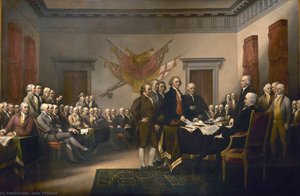 Unabhängigkeitserklärung1817
 Kapitulation von Lord Cornwallis1819
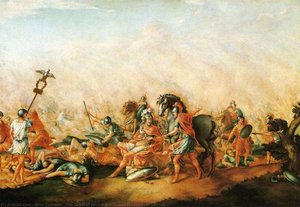 Der Tod des Paulus Aemilius in der Schlacht von Cannae1773
 Die Unabhängigkeitserklärung, 4. Juli 17761787
Essays zu Samuel Blodget
 Das Gewicht der Asymmetrie: Visuelle Spannung und dynamisches Gleichgewicht in der KunstErfahren Sie alles über visuelle Spannung und asymmetrisches Gleichgewicht in der Kunst. Jetzt die Tiefe der Komposition entdecken.
 Amerikanische Kunstwerke der 1810er JahreEntdecken Sie Meisterwerke von John Trumbull und Gilbert Stuart. Erleben Sie die Ära der 1810er auf OriginalUniqueArt.com. Jetzt die Kollek…
 Amerikanische Kunstwerke der 1800er JahreEntdecken Sie Meisterwerke von Gilbert Stuart und John Trumbull. Erleben Sie US-Kunst des 1800er Jahre auf OriginalUniqueArt.com.