

 In echtem Maßstab anzeigen
 Versenden als Grußkarte
 Teilen
 Details anzeigen
 Leitfaden öffnen

 Herunterladen
 Ähnliche Objekte
 Röntgenaufnahme
 Diashow
 Besucherstatistiken
Chamouni, Rocks and Vegetation


 Mehr anzeigen
Giclée / Kunstdruck
Giclée- oder Leinwanddruck in Museumsqualität mit schneller Produktion und flexiblen Veredelungsoptionen. ( Handgemalte Reproduktion kaufen Zum digitalen Bild wechseln)




P118B €10

P118H €10

P118W €10

P438Z €10

P508JH €12

P508YH €12

P805H €10

P805Z €10

P919BZ €10

P919G €10

P919XJ €10

P959ZH €10

P968JZ €12

W106C €8

W218G €10

W218JH €8

W218Y €10

W307PJ €10

W316G €10

W316PJ €8

W316Y €10

W398PJ €8

W4111J €10

W500HY €15

W500JH €15

W692G €12

W849H €8

W940BG €15

W953PJ €8




Wählen Sie aus unseren vordefinierten Formaten, die den ursprünglichen Proportionen des Kunstwerks entsprechen.

Geben Sie die Breite und die Höhe an, die Sie benötigen, damit der Druck perfekt in Ihren Rahmen oder an Ihre Wand passt. Ein Druck kann nur beschnitten werden und niemals größer als das Originalbild gemacht werden; daher verliert ein Format mit einer anderen Proportion einen Teil des Bildes. Wir senden Ihnen ein digitales Mockup zur Freigabe, bevor wir den Druck ausführen. Das auf dieser Seite gezeigte Bild zeigt nicht den tatsächlichen Beschnitt – dies ist nur im Mockup ersichtlich.
Weltweiter Versand () innerhalb von 2 Wochen statt der üblichen 4/5 Wochen. (24 Oktober)

Kostenloser weltweiter Expressversand

Hochwertige Leinenleinwand

Vollständiger Versicherungsschutz beim Versand

Zollgebühren-Rückerstattungsgarantie

Garantie für exakte Farbtreue

100-tägiges Rückgaberecht (nur bei Mängeln)

100% Geld-zurück-Garantie

Angebot für Mengenrabatt
 Die Glasoption ist nur für Größen unter 110 cm verfügbar.

Chamouni, Rocks and Vegetation
Giclée / Kunstdruck
Format der Reproduktion
-


Gesamtpreis
€ 70
Ruskin’s Alpine Reverie: A Study in Texture and Moral Vision
John Ruskin's "Chamouni, Rocks and Vegetation," painted in 1854, stands as a testament to the Pre-Raphaelite movement’s fascination with capturing the sublime beauty of the natural world—a pursuit inextricably linked to ethical contemplation. More than just a landscape depiction, it embodies Ruskin’s profound belief that art should serve as a conduit for moral enlightenment, mirroring his broader philosophical stance on humanity's relationship with God and creation.- Subject Matter: The painting portrays the towering granite peaks of Mont Blanc (Chamouni), bathed in diffused sunlight—a quintessential Alpine vista meticulously rendered by Ruskin’s hand.
- Style & Technique: Ruskin championed a style characterized by painstaking detail and luminous color, prioritizing observation over idealized representation. He employed watercolor on paper, layering thin washes to build up texture and capturing the subtle nuances of light and shadow. The artist's deliberate brushstrokes convey a sense of immediacy and reverence for the grandeur of the mountain landscape.
- Historical Context: Created during Ruskin’s formative years as an art critic and intellectual, “Chamouni” reflects his burgeoning interest in geology and his conviction that understanding the physical world illuminates spiritual truths. It aligns perfectly with Millais's ambitious portrait of Ruskin at Glenfinlas, commissioned shortly after—a visual embodiment of Ruskin’s commitment to portraying nature with uncompromising honesty.
- Symbolism: The jagged rocks symbolize resilience and permanence against the relentless forces of time and decay – mirroring Ruskin’s broader moral concerns about confronting mortality and embracing virtue. The sparse vegetation represents the delicate balance between beauty and fragility, prompting viewers to consider humanity's responsibility for safeguarding the natural environment.
- Emotional Impact: Viewing “Chamouni” evokes a feeling of awe and contemplation—a desire to reconnect with the sublime grandeur of God’s creation. Ruskin aimed not merely to depict a mountain scene but to inspire a deeper appreciation for beauty, truth, and moral integrity—goals that continue to resonate powerfully with audiences today.
Detailed Examination: Texture and Color Palette
Ruskin's masterful watercolor technique is evident in the meticulous layering of washes that create an astonishingly realistic depiction of rock formations. The artist painstakingly captures the variations in tone and texture—from the rough granite surfaces to the smoother patches where lichen clings to the stone—demonstrating a dedication to observation unparalleled for his time. Furthermore, the color palette—dominated by muted blues, greens, and yellows—reflects the atmospheric conditions prevalent during Mont Blanc’s summers—a subtle yet crucial element in conveying Ruskin's vision of natural beauty.Connections to Millais’ Glenfinlas Portrait
The painting shares a striking stylistic kinship with Millais’ celebrated portrait of Ruskin at Glenfinlas, completed the following year. Both artists prioritized capturing the essence of their subject—Ruskin himself—within a landscape setting that served as a backdrop for intellectual and spiritual reflection. This deliberate juxtaposition underscores Ruskin's conviction that art should illuminate moral truths alongside aesthetic splendor—a principle that continues to inform artistic endeavors across disciplines.Legacy & Enduring Relevance
“Chamouni, Rocks and Vegetation” remains an influential work of art, anticipating the burgeoning interest in environmentalism and sustainability that would characterize the latter half of the 19th century. Ruskin’s insistence on portraying nature with uncompromising honesty—a stance rooted in his profound moral sensibility—continues to inspire artists and thinkers today—serving as a timeless reminder of the transformative power of beauty and contemplation.Fragen & Antworten
Wie kann ich das Bild von "Chamouni, Rocks and Vegetation" von John Ruskin herunterladen?
Für „Chamouni, Rocks and Vegetation“ steht ein Download zur Verfügung: Die Download-Seite des Kunstwerks bietet ein hochauflösender digitaler Bild-Download.
Wie hell ist "Chamouni, Rocks and Vegetation" insgesamt?
Insgesamt wird „Chamouni, Rocks and Vegetation“ mit einer Helligkeit von bright erfasst. Die wahrgenommene Helligkeit beschreibt, wie hell oder dunkel das Werk erscheint.
Welche Druckgröße wird für "Chamouni, Rocks and Vegetation" von John Ruskin empfohlen?
Für "Chamouni, Rocks and Vegetation" von John Ruskin wird eine Reproduktion im Format Large empfohlen. Die Größe kann angepasst werden, wobei die Proportionen erhalten bleiben.
Biografie des Künstlers
Frühes Leben und Ausbildung
John Ruskin, ein renommierter englischer Universalgelehrter, wurde am 8. Februar 1819 in London, Großbritannien, geboren. Seine Kindheit war geprägt von den gegensätzlichen Einflüssen seines Vaters, John James Ruskin, und seiner Mutter, Margaret Cock. Diese Dualität spiegelte sich später in seinen vielfältigen Interessen und Schreibstilen wider. Ruskins frühe Ausbildung fand zu Hause statt, unter der Anleitung seiner Eltern und Privatlehrer. Später besuchte er das King's College in London, wo er sich auf die Universität Oxford vorbereitete. Dieses akademische Fundament legte den Grundstein für seine zukünftigen Unternehmungen.Künstlerische und Literarische Tätigkeiten
John Ruskins Schreibstile und literarische Formen waren so vielfältig wie seine Interessen. Er verfasste Essays, Abhandlungen, Gedichte, Vorträge, Reiseführer und sogar ein Märchen. Seine detaillierten Skizzen und Gemälde von Gesteinen, Pflanzen, Vögeln, Landschaften und architektonischen Strukturen zeigten sein künstlerisches Können. Ruskins erstes Hauptwerk, *Moderne Maler* (1843), verteidigte die Arbeit von J.M.W. Turner und betonte die Bedeutung der "Wahrheit zur Natur". Dies markierte den Beginn seiner weiten Anerkennung und seines Einflusses auf Kunst und Literatur des 19. Jahrhunderts.Bedeutende Werke und Vermächtnis
- Morgenröte, Coniston (Abbot Hall Art Gallery, Kendal, Großbritannien) – ein Aquarellgemälde, das Ruskins Fähigkeit zeigt, die Schönheit der Natur einzufangen.
- Fors Clavigera (1871-1884) – eine Reihe von Briefen an die Arbeiter und Tagelöhner Großbritanniens, die seine sozialen und politischen Anliegen hervorheben.
Entwicklung und Historische Bedeutung
Ruskin entwickelte seine Ideen im Laufe seines Lebens weiter. Anfangs konzentrierte er sich stark auf die Schönheit der Natur und die Bedeutung der Wahrheit in der Kunst. Später wandte er sich zunehmend sozialen und politischen Fragen zu, wobei er sich für eine gerechtere Gesellschaft einsetzte und die Auswirkungen der Industrialisierung kritisierte. Seine Schriften über Architektur, insbesondere *Die Steine von Venedig*, hatten einen tiefgreifenden Einfluss auf die Denkweise über den Erhalt historischer Gebäude und Stadtlandschaften. Ruskin gilt als einer der wichtigsten Kunstkritiker des 19. Jahrhunderts. Sein Werk trug dazu bei, das Verständnis von Kunstgeschichte zu prägen und neue Wege für die Kunstkritik zu eröffnen.Relevante Links
Schlussfolgerung
John Ruskins Leben war ein Beweis für seine facettenreiche Natur, die sich in seiner Kunst, seinen Schriften und seinen philanthropischen Unternehmungen widerspiegelte. Sein Einfluss auf das viktorianische Zeitalter und darüber hinaus ist unbestreitbar, was ihn zu einem Universalgelehrten von Weltrang macht.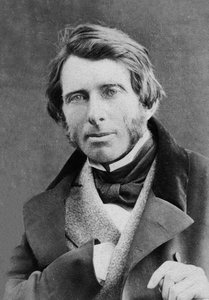
John Ruskin
1819 - 1900 , Vereinigtes Königreich
Eckdaten zum Künstler
- Bemerkenswerte Werke:
- Morgenröte, Coniston
- Fors Clavigera
- Geburtsdatum: 8. Februar 1819
- Geburtsort (Stadt Und Land): London, Vereinigtes Königreich
- Künstler Oder Bewegungen, Die Von Diesem Künstler Beeinflusst Wurden:
- Präraffaeliten
- Viktorianische Kunstkritik
- Künstler, Die Diesen Künstler Beeinflussten: ['J. M. W. Turner']
- Künstlerische Bewegung Oder Stil: Viktorianisch, Präraffaeliten
- Nationalität: Britisch
- Sterbedatum: 1900
- Vollständiger Name: John Ruskin
Verwandte Artikel

Dante Gabriel Rossetti: Die 25 Meisterwerke des Präraffelitismus | OriginalUniqueArt
Entdecken Sie die 25 schönsten Gemälde von Dante Gabriel Rossetti! Tauchen Sie ein in die Welt der Präraffeliten, symbolistischer Kunst & viktorianischer Romantik. Hochwertige Reproduktionen für Ihr Zuhause – jetzt bei OriginalUniqueArt.com!

John Constable: Die 25 Meisterwerke des englischen Landschaftsgenies – OriginalUniqueArt
Entdecken Sie die 25 Meisterwerke von John Constable! Erleben Sie englische Landschaftsmalerei vom Hay Wain bis zur Stour Valley. Hochwertige Reproduktionen & Kunst für Ihr Zuhause auf OriginalUniqueArt.com.

John Singer Sargent: Die 25 Meisterwerke des Porträts – Kunst für Ihr Zuhause | OriginalUniqueArt
Entdecken Sie die 25 Meisterwerke von John Singer Sargent! Tauchen Sie ein in die Welt der Porträtmalerei, des Impressionismus & der Belle Époque. Hochwertige Kunstdrucke & Reproduktionen für Ihr Zuhause – jetzt auf OriginalUniqueArt.com!

Ephemeral Visions: Exploring the Artistic Legacy & Contemporary Practice of Watercolor Painting
Explore the captivating world of watercolor painting! Discover its rich history, essential techniques, influential artists & collecting tips. A comprehensive guide for art enthusiasts from OriginalUniqueArt.

Die 10 legendärsten Aquarellwerke der Kunstgeschichte – Meisterwerke für Ihr Zuhause
Entdecken Sie die 10 legendärsten Aquarellwerke der Kunstgeschichte! Von Turner bis Monet – erleben Sie die Geschichten, Techniken & Farben dieser Meisterwerke. Finden Sie hochwertige Kunstdrucke auf OriginalUniqueArt.com und gestalten Sie Ihr Zuhause mit zeitloser Eleganz.