Vorschau anzeigen
 Versenden
 Teilen
 Details anzeigen
 Leitfaden

 Herunterladen
 Ähnliche Objekte
 Röntgenaufnahme
 Diashow
 Q&A
Q&A Statistiken
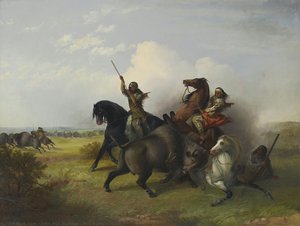
Mountain Landscape with Indians


 Weiterlesen
Giclée / Kunstdruck
Giclée- oder Leinwanddruck in Museumsqualität mit schneller Produktion und flexiblen Veredelungsoptionen. ( Handgemalte Reproduktion bestellen Zum digitalen Bild wechseln)




P118B €10

P118H €10

P118W €10

P438Z €10

P508JH €12

P508YH €12

P805H €10

P805Z €10

P919BZ €10

P919G €10

P919XJ €10

P959ZH €10

P968JZ €12

W106C €8

W218G €10

W218JH €8

W218Y €10

W307PJ €10

W316G €10

W316PJ €8

W316Y €10

W398PJ €8

W4111J €10

W500HY €15

W500JH €15

W692G €12

W849H €8

W940BG €15

W953PJ €8




Wählen Sie aus unseren vordefinierten Formaten, die den ursprünglichen Proportionen des Kunstwerks entsprechen.

Geben Sie die benötigte Breite und Höhe an, damit der Druck perfekt in Ihren Rahmen oder an Ihre Wand passt. Ein Druck kann nur beschnitten, aber niemals größer als das Originalbild angefertigt werden; daher verliert ein Format mit anderen Proportionen einen Teil des Bildes. Wir senden Ihnen ein digitales Mockup zur Freigabe, bevor wir den Druck ausführen. Das auf dieser Seite gezeigte Bild zeigt nicht den tatsächlichen Beschnitt – dies ist nur im Mockup ersichtlich.
Weltweiter Versand () innerhalb von 2 Wochen statt der üblichen 4/5 Wochen. (2 November)

Kostenloser weltweiter Expressversand

Hochwertige Leinenleinwand

Umfassender Versicherungsschutz beim Versand

Zollgebühren-Rückerstattungsgarantie

Garantie für exakte Farbtreue

100 Tage Rückgaberecht (nur bei Mängeln)

100% Geld-zurück-Garantie

Mengenrabatt verfügbar
 Die Glasoption ist nur für Größen unter 110 cm verfügbar.

Mountain Landscape with Indians
Giclée / Kunstdruck
Format der Reproduktion
-


Endpreis
€ 71
A Pioneer’s Vision: John Mix Stanley's “Mountain Landscape with Indians”
John Mix Stanley’s “Mountain Landscape with Indians,” painted circa 1870-75, isn’t merely a depiction of the American West; it’s a carefully constructed narrative of exploration, cultural encounter, and the burgeoning romanticism of the era. This oil on canvas, now housed within the Detroit Institute of Arts, offers a glimpse into a pivotal moment in American art history – a time when artists were actively seeking to document and interpret the vast, untamed territories of the nation. Stanley’s work stands as a testament to his dedication to capturing both the grandeur of the landscape and the dignity of its indigenous inhabitants, a perspective increasingly rare for the period.
The painting immediately draws the eye with its dramatic composition. A towering mountain range dominates the background, its snow-capped peaks piercing a hazy blue sky – a classic Romantic motif emphasizing the sublime power of nature. Below, a verdant valley unfolds, bisected by a winding river and dotted with small settlements nestled amongst the trees. Yet, it’s not just the landscape that commands attention; several canoes glide across the lake, carrying figures who suggest both peaceful coexistence and the subtle tension inherent in interactions between settlers and Native American tribes. The inclusion of these boats subtly hints at the burgeoning trade and interaction between cultures, a complex dynamic often overlooked in simpler portrayals of westward expansion.
The Artist’s Journey: Stanley's Western Odyssey
Understanding “Mountain Landscape with Indians” requires appreciating John Mix Stanley’s extraordinary life. Born in upstate New York, he was orphaned at twelve and apprenticed as a coach maker – experiences that instilled within him a remarkable self-reliance and an acute observational skill. Stanley’s artistic journey began humbly, painting signs and portraits to make ends meet before embarking on his ambitious project: to document the lives of Native Americans in the American West. This wasn't a casual undertaking; it was driven by a genuine desire to understand and represent these cultures with respect and accuracy – a radical stance for an artist of that time.
His travels took him across vast distances, from the Cherokee Council at Tahlequah to the plains inhabited by the Comanche. He meticulously observed tribal customs, documented their clothing, weaponry, and social structures, translating these observations onto canvas with remarkable detail. Stanley’s decision to accompany Colonel Stephen Watts Kearney's expedition further cemented his role as a chronicler of the West, capturing not only landscapes but also the realities of military campaigns and the challenges faced by both soldiers and indigenous peoples.
Symbolism and Romantic Ideals
The painting is deeply rooted in the tenets of Romanticism. The dramatic lighting, the emphasis on emotional response to nature’s grandeur, and the portrayal of Native Americans as noble figures embodying a connection to the land all align with this artistic movement. Stanley wasn't simply recording what he saw; he was imbuing his work with a sense of awe, wonder, and a romanticized vision of the West – a vision that often idealized both the wilderness and its inhabitants.
The presence of the canoes and the figures within them carries symbolic weight. They represent not just trade or interaction but also a potential for harmony between cultures, albeit one fraught with historical complexities. The mountains themselves can be interpreted as guardians of ancient wisdom, while the river symbolizes the flow of time and the interconnectedness of all things. Stanley’s deliberate use of color – the vibrant greens of the valley contrasting with the stark blues and whites of the mountains – further enhances this symbolic richness.
A Legacy in Reproduction: Bringing Stanley's Vision to Life
Today, “Mountain Landscape with Indians” stands as a significant work of American art, offering a valuable window into the 19th century. OriginalUniqueArt’s meticulously crafted reproductions aim to faithfully capture the essence of Stanley’s original vision, preserving the painting’s dramatic composition, evocative colors, and profound sense of place. By reproducing this iconic artwork with such care, we honor Stanley's legacy as a pioneering artist who sought to document and celebrate the beauty and complexity of the American West – a journey that continues to resonate with viewers today.
Fragen & Antworten
Ist "Mountain Landscape with Indians" typisch für das Werk von John Mix Stanley?
Zu den wiederkehrenden Themen von John Mix Stanley gehören catlin’s native american portraits, westward exploration, settlement themes, cherokee, creek tribal depictions, stanley’s documented west journey, documenting frontier life, culture; „Mountain Landscape with Indians“ konzentriert sich auf landscape, indians, mountains, west, exploration, stanley, native americans, 1870.
Welches Motiv und welche Atmosphäre vereint "Mountain Landscape with Indians" von John Mix Stanley?
"Mountain Landscape with Indians" von John Mix Stanley zeigt landscape, indians, mountains, west, exploration, stanley, native americans, 1870 in einer Calm Stimmung. Motiv und Atmosphäre beschreiben gemeinsam das Werk.
Kann ich "Mountain Landscape with Indians" von John Mix Stanley vor der Bestellung in einer Vorschau ansehen?
Eine Vorschau von "Mountain Landscape with Indians" von John Mix Stanley finden Sie auf der Vorschau im Raum-Seite des Kunstwerks.
Künstlerbiografie
Frühes Leben und Hintergrund
- Geboren: 17. Januar 1814 in Canandaigua, New York
- Eltern: Seth und Sally (McKinney) Stanley
- Wurde im Alter von 12 Jahren verwaist.
- Mit 14 Jahren an einen Karrenbauer ausgelernt.
- Selbststudium der Malfähigkeiten.
- Zog 1832 nach Detroit, Michigan und wurde dort ein wandernder Maler von Schildern und Porträts.
Karriere und künstlerische Entwicklung
- Frühe Karriere (1830er-1840er): Begann als Schilder- und Porträtmaler in Detroit und Umgebung. Reisen nach Fort Snelling, Galena und Chicago.
- Südwestliche Erkundung (1842-1845): Begleitete Sumner Dickerman in den amerikanischen Südwesten, um speziell Native Americans zu malen. Siedelte am Fort Gibson im Indian Territory (heute Oklahoma). Dokumentierte das Stammesleben, einschließlich der Teilnahme an einem Rat zwischen Cherokee und Texasern in Tahlequah.
- Dienst im Mexikanisch-Amerikanischen Krieg (1846): Ernannte zum Zeichner für die Expedition von Colonel Stephen Watts Kearney nach Kalifornien und Oregon Territory. Erstellte Skizzen und Gemälde der Kampagne.
- Hawaiianische Porträts (1847-1848): Reise nach Hawaii, wo er König Kamehameha III. und seine Familie porträtierte.
- Ausstellungen und Anerkennung (1850er): Organisierte und stellte große Galerien mit Indianerporträts in verschiedenen Städten aus. Präsentierte 1852 eine Hauptausstellung im Smithsonian Institution, die fast 200 Werke von 43 Stämmen zeigte. Erhielt positive Kritiken, konnte seine Sammlung aber weder an die Regierung noch an das Smithsonian verkaufen.
- Panorama (1854): Präsentierte ein 42-Szenen-Panorama westlicher Szenen in Washington, D.C., Baltimore, New York und London; diese Arbeit ist heute verloren.
- Verluste und Niedergang: Ein erheblicher Teil seiner Werke wurde bei einem Brand im Smithsonian Institution im Jahr 1865 zerstört. Dieses Ereignis trug dazu bei, dass Stanleys Ruf lange Zeit sank.
Künstlerischer Stil und Einflüsse
- Themen: Konzentrierte sich hauptsächlich auf Landschaften, Native American Porträts und Darstellungen des Stammeslebens im amerikanischen Westen und Hawaii.
- Einflüsse: Inspiriert von der Arbeit von George Catlin, einem Pionier beim Malen von Native Americans.
- Stil: Obwohl er seine Motive mit Kamera und Bleistift dokumentierte, bevor er sie ausführte, waren Stanleys Gemälde oft in akademischer Weise angeordnet. Einige Kritiker wiesen auf einen Mangel an tiefer Empathie für die Kulturen der Native Americans im Vergleich zu Catlin hin.
- Dokumentation: Seine Werke werden als historische Dokumente geschätzt, die Einblicke in Begegnungen zwischen europäischen Amerikanern und Native American Stämmen im 19. Jahrhundert geben.
Wichtige Errungenschaften und historische Bedeutung
- Pionierische Darstellung des Lebens der Native Americans: Stanley war einer der ersten Künstler, der die Kulturen der Native Americans systematisch durch Malerei dokumentierte und damit einen bedeutenden Beitrag zu visuellen Aufzeichnungen dieser Gesellschaften leistete.
- Umfangreiche Reisen und Dokumentation: Seine Reisen durch den amerikanischen Westen und Hawaii führten zu einem umfangreichen Werk, das verschiedene Landschaften und Völker darstellt.
- Historisches Zeugnis: Trotz des Verlusts vieler seiner Kunstwerke geben die erhaltenen Gemälde wertvolle Einblicke in das Leben an der Grenze und die Kulturen der Native Americans im 19. Jahrhundert.
- Wiederentdeckung und Wertschätzung: Stanleys Beiträge zur amerikanischen Kunst wurden in den letzten Jahrzehnten neu bewertet, wobei seine Werke nun von nationalen und regionalen Museen aufbewahrt werden.
Späteres Leben und Tod
- Kehrte 1863 nach Detroit zurück.
- Starb am 10. April 1872 in Detroit, Michigan.
- Sein Vermächtnis wurde zunächst durch den Verlust seiner Kunstwerke überschattet, wird aber seitdem für seinen historischen und künstlerischen Wert anerkannt.

John Mix Stanley
1814 - 1872 , Vereinigte Staaten von Amerika
Kurzinfos
- Artistic Movement Or Style: Landschaft & Native American Kunst
- Artists Who Influenced This Artist: ['George Catlin']
- Date Of Birth: 17. Januar 1814
- Date Of Death: 10. April 1872
- Full Name: John Mix Stanley
- Nationality: Amerikanisch
- Notable Artworks: ['Der Flussbiegung']
- Place Of Birth (City And Country): Canandaigua, USA
Ähnliche Artikel

Grant Wood und der amerikanische Regionalismus: Identität, Mythos und die ländliche Landschaft
Entdecken Sie Grant Wood und den amerikanischen Regionalismus! Erfahren Sie mehr über 'American Gothic', Woods Leben, Einflüsse und sein Vermächtnis in der Kunstgeschichte. Expertenwissen & hochwertige Reproduktionen.

Romantische Landschaften: Die 10 Meisterwerke, die eine Epoche prägten | OriginalUniqueArt
Entdecken Sie die 10 Meisterwerke der Romantischen Landschaftsmalerei! Von Caspar David Friedrich bis Turner – erleben Sie die Kunst, Emotion & Natur. Hochwertige Reproduktionen auf OriginalUniqueArt.com

John Singer Sargent: Die 25 Meisterwerke des Porträts – Kunst für Ihr Zuhause | OriginalUniqueArt
Entdecken Sie die 25 Meisterwerke von John Singer Sargent! Tauchen Sie ein in die Welt der Porträtmalerei, des Impressionismus & der Belle Époque. Hochwertige Kunstdrucke & Reproduktionen für Ihr Zuhause – jetzt auf OriginalUniqueArt.com!

Die 25 besten Kunstwerke von John Constable: Meisterwerke der englischen Landschaft
Entdecken Sie die 25 besten Werke von John Constable. Erleben Sie englische Romantik auf OriginalUniqueArt.com. Jetzt Meisterwerke online entdecken!

John Frederick Kensett: Luministische Ästhetik und nationale Identität in der amerikanischen Landschaftsmalerei
Entdecken Sie das Werk von John Frederick Kensett und die Ästhetik des Luminismus! Erfahren Sie mehr über seine Bedeutung für die amerikanische Landschaftsmalerei und die Suche nach nationaler Identität. Expertenanalyse & Hintergrundinformationen.