Neoclassicism
Wesley (John Jackson)
John Jackson (1778–1831) schuf Wesley. Es gehört zur Neoclassicism-Strömung. Es ist aus Oil On Canvas gefertigt.
- Oil On Canvas

 Vorschau anzeigen

 Handgemaltes Ölgemälde
 Versenden
 Teilen
 Datenblatt


 Herunterladen
 Ähnliche Objekte
 Röntgenaufnahme
 Diashow
 Fragen & Antworten

 Statistiken
Wesley im Überblick
- Titel
- Wesley
- Künstler
- John Jackson (1778–1831)
- Geburtsjahr des Künstlers
- Lastingham, Vereinigtes Königreich
- Medium
- Oil On Canvas
- Bewegung
- Neoclassicism
- Epoche
- Early Modern
- Motiv
- portrait, clergy, dignified, formal, neoclassical, authority
Was stellt Wesley dar?
Identification of the Portrait of Wesley
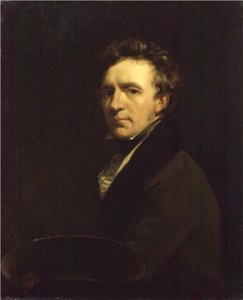
In this portrait, titled Wesley, the artist John Jackson presents a formal and dignified depiction of his subject. The work focuses on an elderly man, whose presence suggests the weight of a significant role, likely that of a clergyman or a judge. There is a quiet authority in his steady, contemplative expression, which meets the viewer with a sense of seasoned wisdom. The portrait captures a moment of stillness, focusing on the character and intellect of the sitter through a direct and serious gaze.
The subject is rendered in traditional clerical attire, which provides immediate insight into his social standing and professional life. He wears a long white wig and a black robe, accented by a stole that emphasizes his religious or judicial vocation. This specific choice of clothing, combined with the formal composition, establishes the sitter as a man of importance and discipline. The dark, indistinct background ensures that the viewer's attention remains fixed entirely upon the man and the textures of his garments.
Composition and Visual Elements
The composition is centered on the subject's head and shoulders, creating an immediate sense of presence. This focused arrangement draws the eye directly to the man's face, where a serious and contemplative expression suggests a life of deep thought. He is dressed in traditional clerical attire, characterized by a long white wig and a black robe that anchors the figure within the frame. The background remains dark and indistinct, a murky expanse that prevents distraction and pushes the subject into the foreground.
Lighting is used with a deliberate, dramatic intent. Strong highlights strike the face and the folds of the robes, carving out the form against the shadows. This chiaroscuro effect provides a sense of volume and weight to the figure. While the portrait feels intimate, the perspective is linear, utilizing subtle converging lines to suggest a sense of depth within the space. The interplay of light and shadow defines the contours of the clothing and the texture of the hair, grounding the figure in a tangible, physical reality.
Technique and Artistic Materials
The work is executed in oil paints on canvas, a choice that allows for a profound sense of depth and presence. Jackson employs a meticulous technique, characterized by careful observation and skillful brushwork that defines the contours of the face and the heavy folds of the clerical attire. There is a deliberate precision in how the light is handled, creating a sense of solidity through the careful application of pigment.
The texture of the piece is notably rich and layered. Through the use of impasto techniques, the artist has built up the surface to create a tangible quality, particularly visible in the rendering of the white wig and the heavy robes. This tactile approach provides a physical weight to the subject, ensuring that the interplay of light and shadow feels grounded and real rather than merely painted.
Related Works by John Jackson
Beyond this portrait, Jackson’s oeuvre reveals a consistent interest in the psychological depth of his subjects. His catalog includes Reginald Macdonald, a work that reflects his ability to handle formal portraiture. He also produced several self-portraits, which offer a more intimate look at the artist himself, providing a glimpse into his own character and the introspective nature of his practice. These works demonstrate his capacity to move between the public persona of a sitter and the private reality of the individual.
The artist’s technical range is further evidenced by his various studies, such as Flaxman. In these pieces, one can observe his command over oil textures and his specific approach to directional lighting. His ability to manipulate light and shadow is a recurring element across his various commissions. Whether working on a formal portrait or a focused study, Jackson maintained a commitment to capturing the essential presence of the person before him.
Hochauflösende Bilder von Wesley
Gemeinfrei: Der Künstler verstarb im Jahr 1831.
John Jackson, Wesley. Gemeinfreiheit
Fragen zu Wesley, beantwortet
In welcher Technik wurde "Wesley" von John Jackson ausgeführt?
Das Medium von "Wesley" von John Jackson ist Oil On Canvas. Die Reproduktionen zielen darauf ab, die Optik dieser Technik wiederzugeben.
Was stellt "Wesley" dar?
Die Themen in "Wesley" von John Jackson umfassen portrait, clergy, dignified, formal, neoclassical, authority, wisdom, religious und fassen gemeinsam den Gegenstand des Kunstwerks zusammen.
Ist die Abbildung von "Wesley" von John Jackson gemeinfrei?
"Wesley" von John Jackson ist gemeinfrei – das Urheberrecht ist abgelaufen. Dieser Status bestimmt, wie das Bild des Werkes vervielfältigt werden darf.
Wer ist der Künstler hinter "Wesley"?
Der Künstler hinter „Wesley“ ist John Jackson. Das Werk ist unter dem Namen von John Jackson katalogisiert.
Welcher Kunstrichtung lässt sich "Wesley" von John Jackson zuordnen?
Die mit "Wesley" von John Jackson verbundene Stilrichtung ist Neoclassicism. Diese Klassifizierung ordnet das Werk in den Kontext verwandter Künstler und Kunstwerke ein.
Welcher Phase in der künstlerischen Entwicklung von John Jackson lässt sich "Wesley" zuordnen?
Innerhalb der Schaffensperiode von John Jackson lässt sich „Wesley“ der Mature Period zuordnen. Diese Phase ermöglicht einen Vergleich mit anderen Werken des Künstlers.
Ist "Wesley" von John Jackson gemeinfrei, und warum?
"Wesley" von John Jackson ist gemeinfrei – das Urheberrecht ist abgelaufen. Die Schutzfrist des Urheberrechts beginnt mit dem Tod des Künstlers im Jahr 1831.
Welche Gemeinsamkeiten weist "Wesley" mit dem restlichen Werk von John Jackson auf?
"Wesley" teilt mit anderen Werken von John Jackson den Stil der Neoclassicism sowie die wiederkehrenden Themen: reflects jackson's skill, demonstrates mastery, typical of his portraits, established style, classical ideals, roman portraiture, neoclassical style, formal composition.
Inwiefern steht das Sujet von „Wesley“ in Beziehung zu den üblichen Themen von John Jackson?
Zu den wiederkehrenden Themen von John Jackson gehören reflects jackson's skill, demonstrates mastery, typical of his portraits, established style, classical ideals, roman portraiture, neoclassical style, formal composition; „Wesley“ konzentriert sich auf portrait, clergy, dignified, formal, neoclassical, authority, wisdom, religious.
Über den Künstler, John Jackson
1778–1831, Vereinigtes Königreich
John Jackson
Frühes Leben und Lehrjahre: Ein widerwilliger Anfang John Jackson, geboren im malerischen Yorkshire-Dorf Lastingham am 31. Mai 1778, begann einen Weg, der weit von seinem anfänglichen Schicksal entfernt lag. Sein Vater, ein praktischer Schneider, erwartete für seinen Sohn einen ähnlichen Beruf, und der junge John wurde entsprechend ausgebildet. Doch selbst inmitten von Stoffen und Nähten blühte in ihm eine unbestreitbare künstlerische Neigung auf.
Ebenfalls von John Jackson
 Porträt eines Mannes1822
 Reverend William Holwell Carr1827
 Porträt eines Gentlemans1810
 Frederick, Herzog von York (1763-1827)1822
Essays zu Wesley
 Die Kunst und der Prozess maßgeschneiderter Ölmalerei: Vom Konzept zur LeinwandErfahren Sie alles über die Kunst der Ölmalerei von der Imprimatura bis zum Impasto. Tauchen Sie jetzt in die Welt des Handwerks ein.
 25 bedeutende Porträts von François Clouet: Ein Leitfaden zu seinen wichtigsten WerkenEntdecken Sie 25 bedeutende Werke von François Clouet der Renaissance. Erforschen Sie die gesamte Sammlung auf OriginalUniqueArt.com.
 John Collier: 25 bedeutende Porträts und mythologische BilderEntdecken Sie 25 ikonische Werke von John Collier im Pre-Raphaelite-Stil. Jetzt die gesamte Sammlung auf OriginalUniqueArt.com erkunden.