

 Vorschau anzeigen
 Versenden
 Teilen
 Details anzeigen

 Herunterladen
 Ähnliche Objekte
 Röntgenaufnahme
 Diashow
 Statistiken
Arab School


 Weiterlesen
Handgefertigte Ölreproduktion
Handgemaltes Ölgemälde auf Leinwand in Ihrer Wunschgröße und mit Rahmen, auf Bestellung von unseren Künstlern angefertigt. ( Zu Druck wechseln Zum digitalen Bild wechseln)




P118B $10

P118H $10

P118W $10

P438Z $10

P508JH $12

P508YH $12

P805H $10

P805Z $10

P919BZ $10

P919G $10

P919XJ $10

P959ZH $10

P968JZ $12

W106C $8

W218G $10

W218JH $8

W218Y $10

W307PJ $10

W316G $10

W316PJ $8

W316Y $10

W398PJ $8

W4111J $10

W500HY $15

W500JH $15

W692G $12

W849H $8

W940BG $15

W953PJ $8




Wählen Sie aus unseren vordefinierten Formaten, die den ursprünglichen Proportionen des Kunstwerks entsprechen.

Sie können Ihre eigenen Maße eingeben, um einen bestimmten Rahmen oder Platz auszufüllen. Wenn die gewählte Größe nicht den Proportionen des Originalbildes entspricht, werden wir das Kunstwerk entweder beschneiden oder das Gemälde durch zusätzliche, handgemalte Elemente erweitern. Ein digitales Mockup wird Ihnen zur Genehmigung zugesandt, bevor die Produktion beginnt.
Bitte beachten Sie, dass die Bildschirmvorschau nicht die tatsächliche Beschneidung oder Erweiterung widerspiegelt. Nur das Mockup zeigt die endgültige Komposition exakt an.
Obwohl Sondermaße verfügbar sind, empfehlen wir, eine Größe aus der vordefinierten Liste zu wählen, um die ursprünglichen Proportionen beizubehalten.
Nach der Bestellung wird das OriginalUniqueArt.com-Team dem Kunden Anweisungen per E-Mail zusenden und eine Mockup-Vorschau bereitstellen.
Weltweiter Versand () in nur 3 bis 4 Wochen statt der üblichen 5 Wochen. (11 September). Keine Kompromisse bei der Qualität.

Kostenloser weltweiter Expressversand

Hochwertige Leinenleinwand

Umfassender Versicherungsschutz beim Versand

Zollgebühren-Rückerstattungsgarantie

Garantie für exakte Farbtreue

100-Tage-Rückgaberecht (nur bei Mängeln)

100% Geld-zurück-Garantie

Mengenrabatt verfügbar
 Die Glasoption ist nur für Größen unter 110 cm verfügbar.

Arab School
Art der Reproduktion
Format der Reproduktion
-


Gesamtpreis
$ 300
A Window Into a World of Grace: John Frederick Lewis’s “Arab School”
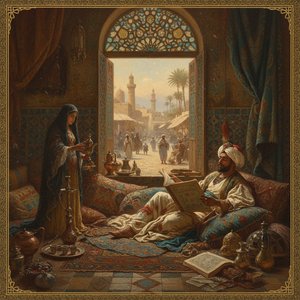
John Frederick Lewis's "Arab School," painted circa 1841-51, isn’t merely a depiction of a classroom; it’s a meticulously crafted portal into the heart of 19th-century Ottoman society. This watercolor and gouache masterpiece, now housed within the Metropolitan Museum of Art in New York City, offers a rare glimpse beyond the often sensationalized portrayals of the Middle East prevalent at the time, revealing instead a scene of quiet learning, dignified respect, and subtle social dynamics. Lewis, an English Orientalist painter who spent over a decade immersed in Cairo’s vibrant culture, possessed a remarkable ability to capture not just the outward appearance but also the underlying atmosphere of his subjects – a skill evident in every brushstroke of “Arab School.”
The painting immediately draws the eye toward the central figure: a man distinguished by his flowing white beard and traditional attire. He’s not a flamboyant scholar, nor is he presented as an exotic spectacle; rather, he embodies authority and wisdom – a respected teacher guiding a young student. His posture, upright and attentive, suggests a dedication to his role, while the boy's focused gaze speaks volumes about the value placed on education within this community. To his right, another individual, seated on the floor, demonstrates a profound respect for the teacher’s words, mirroring the reverence of the central figure. The composition isn’t static; it pulses with an unspoken conversation, a shared moment of intellectual engagement.
Orientalism and the Pursuit of Authenticity
Lewis's work firmly resides within the realm of Orientalist painting – a genre that flourished during the 19th century, fueled by European fascination with the East. However, unlike many of his contemporaries who often relied on stereotypes and romanticized depictions, Lewis sought to portray Middle Eastern life with a remarkable degree of accuracy and sensitivity. His extended sojourn in Cairo allowed him to observe local customs firsthand, master Arabic script, and adopt traditional dress – elements that profoundly influenced his artistic approach. He meticulously documented the architecture, furnishings, and clothing of the region, striving for an authentic representation that moved beyond superficial exoticism.
The inclusion of Arabic calligraphy on the walls of the schoolhouse is a crucial detail, underscoring the importance of literacy and religious learning within this setting. These intricate inscriptions aren’t merely decorative; they serve as a constant reminder of the cultural heritage being imparted to the students. The simple yet elegant design of the room – the worn wooden benches, the muted color palette, the single window framed by dark bars – speaks volumes about the practical realities of life in an Ottoman schoolhouse. It's a scene stripped of grandiosity, focusing instead on the quiet dignity of everyday learning.
Symbolism and Emotional Resonance
Beyond its realistic depiction of daily life, “Arab School” is rich with symbolic meaning. The window, framed by dark bars, subtly hints at the constraints imposed upon Ottoman society – a reminder of the political realities that shaped the lives of its inhabitants. Yet, within this seemingly restrictive environment, there’s an undeniable sense of hope and potential embodied in the faces of the students and teacher. The painting evokes a feeling of serenity and intellectual curiosity, suggesting a space where knowledge is valued and nurtured.
Lewis's masterful use of watercolor – its delicate washes, subtle gradations of color, and luminous effects – perfectly captures the atmosphere of the scene. The light filtering through the window creates a soft, diffused glow, illuminating the faces of the individuals within the room. This careful attention to detail, combined with Lewis’s profound understanding of his subject matter, results in a work that is both visually stunning and emotionally resonant. “Arab School” isn't just a painting; it’s a testament to the power of observation, empathy, and artistic skill – a timeless reminder of the enduring value of education and human connection.
Collecting a Legacy: Reproductions and Beyond
Reproductions of "Arab School" are available through various reputable art dealers and online platforms. When selecting a reproduction, consider the medium (canvas or print) and framing options to ensure it complements your interior design aesthetic. The original’s delicate watercolor technique is best replicated with high-quality archival materials that preserve color accuracy and prevent fading over time. Investing in a faithful reproduction allows you to bring this remarkable work of art into your home, celebrating Lewis's legacy and the rich cultural heritage he so beautifully captured.
Über den Künstler
John Frederick Lewis: Ein Leben in der Orientalistenmalerei
Frühes Leben und Ausbildung
John Frederick Lewis, ein bedeutender englischer Orientalist maler, wurde am 14. Juli 1804 in London geboren. Er war der Sohn von Frederick Christian Lewis, einem Graveur und Landschaftsmaler. Diese familiäre künstlerische Herkunft hat sich zweifellos auf seine frühe Entwicklung ausgewirkt. Seine formale Ausbildung begann unter der Anleitung von Sir Thomas Lawrence, wo er zusammen mit anderen Künstlern wie Edwin Landseer seine Fähigkeiten verfeinerte. Dieser grundlegende Zeitraum vermittelte ihm ein solides Verständnis von Technik und Komposition.
Künstlerische Karriere & Entwicklung
Lewis’s künstlerische Karriere entfaltete sich in mehreren, unterschiedlichen Phasen, die jeweils durch sich entwickelnde Stile und thematische Schwerpunkte gekennzeichnet waren:
- Orientalist-Periode: Lewis unternahm umfangreiche Reisen quer durch das Mittelmeergebiet und erfasste dessen Wesenheit in detaillierten Aquarellen und Ölgemälden. Er besuchte Kompositionen oft wiederholt und fertigte sie in verschiedenen Medien an.
- Spanische & Marokkanische Einflüsse (1832-1834): Eine Reise nach Spanien und Marokko erwies sich als entscheidend. Er produzierte zahlreiche Lithographien, die später unter dem Titel „Sketches and Drawings of the Alhambra“ (1835) und „Lewis’s Sketches of Spain and Spanish Character“ (1836) veröffentlicht wurden.
- Ägyptische Periode (1841-1851): Seine Stationierung in Kairo war zweifellos seine produktivste Zeit. Hier vollendete er seinen Orientalist-Stil und schuf detaillierte Werke, die sowohl realistische Genreszenen als auch idealisierte Darstellungen von oberen Gesellschaftsschichten in ägyptischen Innenräumen zeigten.
Bekannte Werke
Lewis schuf einen beträchtlichen Bestand an Werken, die für ihren akribischen Detailgrad und ihre suggestive Atmosphäre bekannt sind. Einige seiner bekanntesten Stücke umfassen:
- A Bedouin (Yale Center for British Art, New Haven) – Ein Aquarell, das seinen Orientalist-Stil exemplarisch darstellt.
- The Ramesseum at Thebes (Yale Center for British Art, New Haven) – Zeigt seine bemerkenswerte Aufmerksamkeit für architektonische Details.
- A Young Turkish Woman (Yale Center for British Art, New Haven) – Ein weiteres eindrucksvolles Beispiel seiner Orientalist-Arbeit.
- Harem Life in Constantinople - Ein detailliertes Ölgemälde, das osmanisches häusliches Leben darstellt.
Einflüsse und Künstlerischer Stil
Lewis’s Stil wurde von mehreren Einflüssen geprägt, wobei Sir Thomas Lawrence's Betonung auf Porträtkunst und Komposition eine besondere Rolle spielte. Seine direkte Beobachtung der mittelöstlichen Kulturen ermöglichte es ihm jedoch, einen einzigartigen ästhetischen Ausdruck zu entwickeln, der sich durch folgende Merkmale auszeichnet:
- Akribischer Detailgrad: Ein Engagement für die genaue Darstellung von Texturen, Mustern und architektonischen Elementen.
- Reiche Farbpalette: Die Verwendung lebhafter Farben, inspiriert von den Landschaften und Kostümen, denen er begegnete.
- Genreszenen & Innenansichten: Der Fokus auf alltägliches Leben und intime häusliche Umgebungen.
Vermächtnis und Historische Bedeutung
Lewis’s Beitrag zur Kunstwelt liegt in seiner bedeutenden Rolle bei der Entwicklung der Orientalistenmalerei. Seine akribischen Darstellungen islamischer Architektur, Möbel und Kostüme setzten neue Maßstäbe für Realismus innerhalb des Genres. Er trug dazu bei, eine romantisierte, aber detaillierte Vision des Nahen Ostens im Westen zu popularisieren. Nach seiner Rückkehr nach England im Jahr 1851 setzte er seine Tätigkeit als Maler bis zu seinem Tod am 15. August 1876 in Walton-on-Thames fort.
Seine Werke werden weiterhin für ihre künstlerische Leistung und ihren historischen Einblick in die Wahrnehmung des Orients im 19. Jahrhundert studiert und bewundert.

John Frederick Lewis
1804 - 1876 , Vereinigtes Königreich
Kurzinfos
- Artistic Movement Or Style: Orientalismus
- Artists Who Influenced This Artist: ['Sir Thomas Lawrence']
- Date Of Birth: 14 Juli 1804
- Full Name: John Frederick Lewis
- Nationality: Britisch
- Notable Artworks:
- Ein Bedouin
- Das Ramesseum zu Thebes
- Eine junge türkische Frau
- Harem Leben Konstantinopel
- Place Of Birth: London, Vereinigtes Königreich
Ähnliche Artikel

Die 10 legendärsten Aquarellwerke der Kunstgeschichte – Meisterwerke für Ihr Zuhause
Entdecken Sie die 10 legendärsten Aquarellwerke der Kunstgeschichte! Von Turner bis Monet – erleben Sie die Geschichten, Techniken & Farben dieser Meisterwerke. Finden Sie hochwertige Kunstdrucke auf OriginalUniqueArt.com und gestalten Sie Ihr Zuhause mit zeitloser Eleganz.
John Frederick Lewis: Orientalismus, Detail und Genremalerei im 19. Jahrhundert der britischen Kunst
Entdecken Sie das faszinierende Werk von John Frederick Lewis! Wir analysieren seinen Orientalismus, Detailreichtum und seine Genremalerei im Kontext des 19. Jahrhunderts. Expertenwissen zur britischen Kunstgeschichte.

John Singer Sargent: Die 25 Meisterwerke des Porträts – Kunst für Ihr Zuhause | OriginalUniqueArt
Entdecken Sie die 25 Meisterwerke von John Singer Sargent! Tauchen Sie ein in die Welt der Porträtmalerei, des Impressionismus & der Belle Époque. Hochwertige Kunstdrucke & Reproduktionen für Ihr Zuhause – jetzt auf OriginalUniqueArt.com!

Ephemeral Visions: Exploring the Artistic Legacy & Contemporary Practice of Watercolor Painting
Explore the captivating world of watercolor painting! Discover its rich history, essential techniques, influential artists & collecting tips. A comprehensive guide for art enthusiasts from OriginalUniqueArt.

Flüchtige Visionen: Die Geschichte und emotionale Resonanz der Aquarellmalerei
Entdecken Sie die faszinierende Welt der Aquarellmalerei! Von historischen Ursprüngen bis zu modernen Techniken – wir bieten Expertenwissen, Inspiration und Tipps für Anfänger & Fortgeschrittene.
