

 In echtem Maßstab anzeigen
 Versenden als Grußkarte
 Teilen
 Details anzeigen
 Leitfaden öffnen

 Herunterladen
 Ähnliche Objekte
 Röntgenaufnahme
 Diashow
 Besucherstatistiken
Hudson River Scene


 Mehr anzeigen
Giclée / Kunstdruck
Giclée- oder Leinwanddruck in Museumsqualität mit schneller Produktion und flexiblen Veredelungsoptionen. ( Handgemalte Reproduktion kaufen Zum digitalen Bild wechseln)




P118B €10

P118H €10

P118W €10

P438Z €10

P508JH €12

P508YH €12

P805H €10

P805Z €10

P919BZ €10

P919G €10

P919XJ €10

P959ZH €10

P968JZ €12

W106C €8

W218G €10

W218JH €8

W218Y €10

W307PJ €10

W316G €10

W316PJ €8

W316Y €10

W398PJ €8

W4111J €10

W500HY €15

W500JH €15

W692G €12

W849H €8

W940BG €15

W953PJ €8




Wählen Sie aus unseren vordefinierten Formaten, die den ursprünglichen Proportionen des Kunstwerks entsprechen.

Sie können Ihre eigenen Maße eingeben, um ein bestimmtes Format oder einen speziellen Platz einzupassen. Wenn das von Ihnen gewählte Format nicht den Proportionen des Originalbildes entspricht, werden wir das Kunstwerk entweder beschneiden oder das Bild mit einem gespiegelten oder einfarbigen Rand erweitern. Ein digitaler Entwurf wird Ihnen zur Genehmigung zugesandt, bevor die Produktion beginnt.
Bitte beachten Sie, dass die Vorschau auf dem Bildschirm nicht den tatsächlichen Zuschnitt oder die Erweiterung widerspiegelt. Nur der Entwurf zeigt die endgültige Komposition präzise an.
Obwohl Sondermaße verfügbar sind, empfehlen wir die Auswahl eines Maßes aus der vordefinierten Liste, um die ursprünglichen Proportionen zu bewahren.
Weltweiter Versand () innerhalb von 2 Wochen statt der üblichen 4/5 Wochen. (8 Oktober)

Kostenloser weltweiter Expressversand

Hochwertige Leinenleinwand

Vollständiger Versicherungsschutz beim Versand

Zollgebühren-Rückerstattungsgarantie

Garantie für exakte Farbtreue

100-tägiges Rückgaberecht (nur bei Mängeln)

100% Geld-zurück-Garantie

Angebot für Mengenrabatt
 Die Glasoption ist nur für Größen unter 110 cm verfügbar.

Hudson River Scene
Giclée / Kunstdruck
Format der Reproduktion
-


Gesamtpreis
€ 69
A Serene Vision of the Hudson Valley: John Frederick Kensett’s “Hudson River Scene”
John Frederick Kensett's "Hudson River Scene," painted in 1857, isn’t merely a landscape; it’s a carefully constructed meditation on light, tranquility, and the sublime beauty of the American wilderness. Belonging to the illustrious Hudson River School, a movement that profoundly shaped the course of American art, this painting embodies the core tenets of Luminism – an approach prioritizing atmospheric effects and subtle tonal variations over dramatic detail. Kensett, deeply influenced by the Romantic ideals of his time, sought not to represent nature as it *is*, but rather as it *feels*—a source of profound spiritual resonance.
The scene unfolds along the banks of the Hudson River, a quintessential vista of the New York countryside. Rolling hills, draped in a soft, hazy blue, recede into the distance, their contours softened by atmospheric perspective. A meandering river reflects the muted light of the sky, creating an illusion of infinite depth and mirroring the serenity above. Two figures, rendered with remarkable delicacy, are positioned near the center of the composition, suggesting a quiet moment of contemplation amidst this idyllic setting. Their presence isn’t intrusive; rather, they serve to anchor the viewer in the scene, inviting us to share their peaceful observation.
The Language of Light and Color
Kensett's mastery lies not just in his depiction of the landscape but also in his innovative use of color. He eschewed the bold, vibrant hues favored by some of his contemporaries, opting instead for a palette dominated by cool blues, greens, and grays. This restrained approach creates a sense of stillness and quietude, emphasizing the subtle shifts in light and shadow. The artist’s brushwork is remarkably delicate—almost invisible—allowing the colors to blend seamlessly into one another, mimicking the hazy atmosphere of a summer afternoon. He employed a technique known as “broken color,” applying thin layers of paint that refract light and create shimmering effects, particularly noticeable in the water and sky.
The painting’s luminosity – its ability to seem to glow from within – is a hallmark of Luminism. Kensett meticulously studied the way light interacts with different surfaces, capturing the ephemeral quality of sunlight filtering through trees or reflecting off the river's surface. This pursuit of atmospheric effects was deeply influenced by his travels in Europe, particularly his admiration for the Dutch Masters who excelled at depicting light and shadow.
A Reflection of Transcendentalist Ideals
"Hudson River Scene" is inextricably linked to the broader philosophical currents of the mid-19th century. The Hudson River School artists, including Kensett, were deeply influenced by the Transcendentalist movement, which emphasized the inherent goodness of humanity and the importance of connecting with nature. For these artists, the landscape wasn’t simply a picturesque backdrop; it was a conduit to spiritual truth. Kensett's paintings, like this one, aim to evoke a sense of awe and wonder, prompting viewers to contemplate their place within the vastness of the natural world.
The inclusion of the two figures adds another layer of meaning. They represent humanity’s ability to find solace and connection in nature—a theme central to Transcendentalist thought. Their quiet contemplation suggests a harmonious relationship between humans and the environment, reflecting an ideal of balance and serenity.
Collecting a Legacy: Reproduction and Beyond
Reproductions of “Hudson River Scene” offer a remarkable opportunity to bring this timeless masterpiece into your home or office. OriginalUniqueArt’s hand-painted reproductions meticulously recreate Kensett's delicate brushwork and nuanced color palette, capturing the essence of his original vision. Whether you seek an authentic work of art or a high-quality reproduction that evokes the spirit of the Hudson River School, this painting remains a powerful symbol of American landscape artistry and its enduring appeal.
Consider how this serene scene can complement your interior design—bringing a touch of tranquility and natural beauty to any space. The subtle colors and atmospheric effects create a calming atmosphere, perfect for relaxation or contemplation. “Hudson River Scene” is more than just a painting; it’s an invitation to connect with the timeless allure of the American wilderness.
Fragen & Antworten
In welchem Jahr wurde "Hudson River Scene" geschaffen?
"Hudson River Scene" von John Frederick Kensett entstand im Jahr 1857.
Wie ist die Farbkomposition von "Hudson River Scene" von John Frederick Kensett aufgebaut?
In "Hudson River Scene" wird ein Statement Kontrast mit einer Unified Palette Harmonie gepaart.
Wie alt war John Frederick Kensett, als „Hudson River Scene“ im Jahr 1857 geschaffen wurde?
Als "Hudson River Scene" im Jahr 1857 entstand, war John Frederick Kensett – geboren 1816 – 41 Jahre alt.
Welchem Künstler wird "Hudson River Scene" zugeschrieben?
"Hudson River Scene" wird John Frederick Kensett zugeschrieben.
Welche Sättigung und Intensität weist "Hudson River Scene" von John Frederick Kensett auf?
Die Farben von "Hudson River Scene" von John Frederick Kensett weisen eine Balanced Soft Sättigung mit einer Balanced Intensität auf.
Wie lässt sich "Hudson River Scene" von John Frederick Kensett in der Inneneinrichtung verwenden?
Die Verwendung (Harmony) und der Raum (Living Room) sind die zwei Empfehlungen für "Hudson River Scene" von John Frederick Kensett.
Wie hell ist "Hudson River Scene" insgesamt?
Die wahrgenommene Helligkeit von "Hudson River Scene" von John Frederick Kensett beträgt balanced. Sie lässt sich optimal an das Licht des vorgesehenen Raumes anpassen.
Biografie des Künstlers
Ein Leben in der Hingabe an friedliche Landschaften
John Frederick Kensett wurde am 22. März 1816 in Cheshire, Connecticut, geboren. Als Mitglied der zweiten Generation der Hudson River School Künstler sind Kensetts charakteristische Werke durch ihre friedlichen und leuchtenden Qualitäten gekennzeichnet, die die transzendenten Aspekte der Natur feiern.Frühes Leben und Ausbildung
Kensett besuchte die Cheshire Academy und studierte Gravur bei seinem Vater, Thomas Kensett. Er arbeitete später in New Haven als Graveur, bevor er 1838 nach New York City zog, um dort Banknotengravuren zu fertigen. Im Jahr 1840 reiste Kensett nach Europa, um seine Fähigkeiten im Malen zu verfeinern und lernte dabei Benjamin Champney kennen.Etablierter Stil und Luminismus
Nach der Eröffnung seines Ateliers in New York City bereiste Kensett ausgiebig die nordöstliche Region und die Colorado Rockies und hielt das Wesen dieser Landschaften fest. Sein Stil entwickelte sich von der traditionellen Hudson River School hin zu einem raffinierteren Luminismus, der durch unbefangene Pinselstriche gekennzeichnet ist, die die Qualitäten des atmosphärischen Lichts vermitteln.- Mount Washington from the Valley of Conway (1851), ein ikonisches Gemälde, wurde von der American Art Union erworben und an 13.000 Abonnenten verteilt.
- Eaton's Neck, Long Island (1872), ein Paradebeispiel für Kensetts Luminismus-Stil, befindet sich nun in der Sammlung des Metropolitan Museum of Art in New York.
Vermächtnis und Beiträge
Kensett war Mitbegründer des Metropolitan Museum of Art und Vollmitglied der National Academy of Design. Seine Arbeit, die zu Lebzeiten hoch angesehen war, beeinflusst weiterhin die Landschaftsmalerei. Wichtige Werke:- Sunset Sky (ca. 1870), The Metropolitan Museum of Art, New York
- Three Mile Harbor (ca. 1860), Museum of Fine Arts, Tallahassee

John Frederick Kensett
1816 - 1872 , Vereinigte Staaten von Amerika
Eckdaten zum Künstler
- Beeinflusste Künstler:
- Thomas Cole
- Benjamin Champney
- Bemerkenswerte Werke:
- Mount Washington from the Valley
- Eaton’s Neck, Long Island
- Sunset Sky
- Three Mile Harbor
- Geburtsdatum: 22. März 1816
- Geburtsort: Cheshire, USA
- Künstlerische Richtung: Hudson River School, Luminismus
- Nationalität: Amerikanisch
- Sterbedatum: 14. Dezember 1872
- Vollständiger Name: John Frederick Kensett
Verwandte Artikel

Die 10 Meisterwerke der Hudson River School: Kunst für Ihr Zuhause | OriginalUniqueArt
Entdecken Sie die 10 prägendsten Meisterwerke der Hudson River School! Erfahren Sie mehr über Thomas Cole, Frederic Church & Co. und ihre atemberaubenden Landschaftsbilder. Hochwertige Kunstdrucke für Ihr Zuhause – jetzt auf OriginalUniqueArt.com!

John Frederick Kensett: Luministische Ästhetik und nationale Identität in der amerikanischen Landschaftsmalerei
Entdecken Sie das Werk von John Frederick Kensett und die Ästhetik des Luminismus! Erfahren Sie mehr über seine Bedeutung für die amerikanische Landschaftsmalerei und die Suche nach nationaler Identität. Expertenanalyse & Hintergrundinformationen.
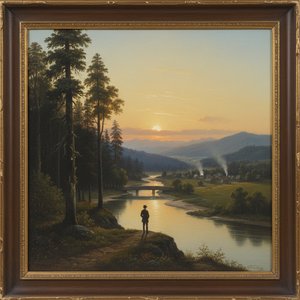
Robert Spencer: Luminism, Narrative & the American Landscape Tradition
Explore the captivating world of Luminism & the Hudson River School with our expert analysis. Discover the history, artists, and enduring beauty of 19th-century American landscape painting. Find museum-quality reproductions at OriginalUniqueArt.
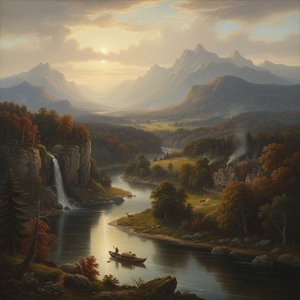
Capturing the American Spirit: A Journey Through Iconic Landscapes and the Legacy of the Hudson River School
Explore the profound beauty of American art history. From the Hudson River School to iconic landscapes, discover a curated journey through the masterpieces that defined a nation's spirit and the enduring legacy of American Romanticism.
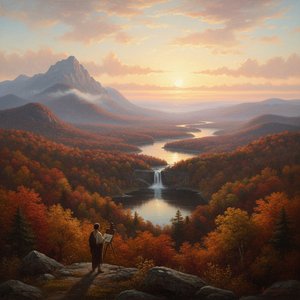
The Sublime Landscape: Exploring the Hudson River School Movement
Explore the captivating world of the Hudson River School! Discover the history, artists, and defining characteristics of this iconic American art movement. Learn about Romanticism's influence & find inspiration for your collection.


