

 In echtem Maßstab anzeigen
 Versenden als Grußkarte
 Teilen
 Details anzeigen

 Herunterladen
 Ähnliche Objekte
 Röntgenaufnahme
 Diashow
 Besucherstatistiken
Fishers' Nets, Loch Fyne
 Contemporary Realism
 68.0 x 106.0 cm
 Mehr anzeigen
Handgefertigte Ölreproduktion
Handgemaltes Ölgemälde auf Leinwand in Ihrer Wunschgröße und mit Rahmen, auf Bestellung von unseren Künstlern angefertigt. ( Zum Druck wechseln Zum digitalen Bild wechseln)




































Wählen Sie aus unseren vordefinierten Formaten, die den ursprünglichen Proportionen des Kunstwerks entsprechen.

Sie können Ihre eigenen Maße eingeben, um einen bestimmten Rahmen oder Platz auszufüllen. Wenn die gewählte Größe nicht den Proportionen des Originalbildes entspricht, werden wir das Kunstwerk entweder beschneiden oder das Gemälde durch zusätzliche, handgemalte Elemente erweitern. Ein digitales Mockup wird Ihnen zur Genehmigung zugesandt, bevor die Produktion beginnt.
Bitte beachten Sie, dass die Bildschirmvorschau nicht die tatsächliche Beschneidung oder Erweiterung widerspiegelt. Nur das Mockup zeigt die endgültige Komposition exakt an.
Obwohl Sondermaße verfügbar sind, empfehlen wir, eine Größe aus der vordefinierten Liste zu wählen, um die ursprünglichen Proportionen beizubehalten.
Nach der Bestellung wird das OriginalUniqueArt.com-Team dem Kunden Anweisungen per E-Mail zusenden und eine Mockup-Vorschau bereitstellen.
Weltweiter Versand () in nur 3 bis 4 Wochen statt der üblichen 5 Wochen. (19 September). Keine Kompromisse bei der Qualität.

Kostenloser weltweiter Expressversand

Hochwertige Leinenleinwand

Vollständiger Versicherungsschutz beim Versand

Zollgebühren-Rückerstattungsgarantie

Garantie für exakte Farbtreue

100-tägiges Rückgaberecht (nur bei Mängeln)

100% Geld-zurück-Garantie

Angebot für Mengenrabatt
 Die Glasoption ist nur für Größen unter 110 cm verfügbar.

Fishers' Nets, Loch Fyne
Reproduktionsmedium
Format der Reproduktion
-


Gesamtpreis
$ 325
Biografie des Künstlers
The Explorer’s Eye: The Dual Legacy of John Chalmers
In the annals of the Heroic Age of Antarctic exploration, few figures possess a legacy as multifaceted as John Chalmers. Born in Melbourne, Victoria, in 1874, Chalmers was a man whose life was defined by the pursuit of the unseen, whether it lay beneath the geological strata of a frozen continent or within the delicate nuances of a watercolor wash. The son of a professor of geology, his intellectual lineage provided him with a scientific rigor that would later serve as the foundation for his most daring adventures. Despite the physical trials imposed by childhood polio, Chalmers possessed an indomitable spirit, navigating the halls of Scotch College Melbourne and eventually earning a doctorate in geology from Oxford University. This unique synthesis of academic precision and adventurous courage allowed him to approach the world not merely as a traveler, but as a chronicler of the earth's most profound mysteries.
His contributions to polar science remain a cornerstone of early 20th-century exploration. As the geologist for the legendary Endurance Expedition led by Ernest Shackleton between 1914 and 1917, Chalmers stood at the precipice of the unknown. Amidst the biting winds and the crushing ice of Ross Island, he meticulously documented geological formations that were, to the scientific community, entirely new. Yet, even as he labored to map the physical realities of Antarctica, a different kind of mapping was occurring within his soul. The stark, ethereal beauty of the polar landscape—the interplay of light on crystalline ice and the deep, silent shadows of the glaciers—found expression through his paintbrush. His work transitioned from the clinical observations of a scientist to the emotive captures of an artist, creating a visual record that breathed life into the cold, desolate landscapes he studied.
A Mastery of Light and Landscape
The artistry of John Chalmers is characterized by a profound sensitivity to atmosphere and a remarkable ability to translate the sublime into medium. While his scientific training demanded accuracy, his watercolor paintings sought something more elusive: the essence of place. His works often evoke a sense of quietude and vastness, utilizing a delicate palette to represent the shifting moods of the natural world. Whether capturing the rugged, verdant textures of the Cadzow Forest or the serene, maritime industry found in Fishers' Nets, Loch Fyne, Chalmers demonstrated an uncanny ability to manipulate light to suggest depth and emotion.
His technique often relied on the fluid nature of watercolor to mirror the organic unpredictability of his subjects. In his landscapes, one can observe:
- Atmospheric Perspective: A masterful use of soft edges and receding tones to create an immense sense of scale and distance.
- Luminous Layering: The careful application of washes to capture the translucent quality of light passing through mist or reflecting off water.
- Textural Contrast: The ability to juxtapose the sharp, detailed rendering of geological or botanical elements against broad, sweeping skies.
This artistic development was not merely a hobby but an extension of his exploratory mission. To paint the Antarctic was to attempt to document its spirit, providing a sensory dimension to the data-driven reports of his scientific peers. His ability to move between the gloaming of a Scottish road and the blinding white of an ice shelf speaks to a universal artistic vision—one that finds beauty in the structural integrity of the earth and the ephemeral beauty of its weather.
Historical Significance and Enduring Inspiration
The historical significance of John Chalmers lies in his ability to bridge two seemingly disparate worlds: the empirical and the aesthetic. He represents a rare breed of polymath who understood that true discovery requires both the measuring tool and the observing eye. His life serves as a testament to the idea that science and art are not opposing forces, but rather complementary lenses through which we can comprehend the complexity of our planet. Through his geological findings, he contributed to our fundamental understanding of polar earth sciences; through his paintings, he preserved the emotional resonance of an era of exploration that has since passed into legend.
Today, the works of Chalmers continue to resonate with collectors and historians alike. They offer a window into a time when the world still held vast, unmapped territories and when the act of discovery was as much about personal endurance as it was about scientific achievement. His legacy remains etched in the icy chronicles of Antarctica and preserved in the vibrant, enduring colors of his canvases, reminding us that to truly see the world, one must be willing to both study its bones and admire its beauty.

Eckdaten zum Künstler
- Artistic Movement Or Style: Early 20th Century Photog
- Artists Or Movements Influenced By This Artist: ['National Geographic']
- Artists Who Influenced This Artist: ['David Chalmers']
- Full Name: John Chalmers
- Nationality: Australian
- Notable Artworks:
- Fishers’ Nets, Loch Fyne
- Sunday morning
- Loch Doon Castle
- THE DAY'S CATCH, OFF THE WEST COAST, AISLA CRAIG
- Place Of Birth: Sydney, Australia
Verwandte Artikel

Romantische Landschaften: Die 10 Meisterwerke, die eine Epoche prägten | OriginalUniqueArt
Entdecken Sie die 10 Meisterwerke der Romantischen Landschaftsmalerei! Von Caspar David Friedrich bis Turner – erleben Sie die Kunst, Emotion & Natur. Hochwertige Reproduktionen auf OriginalUniqueArt.com
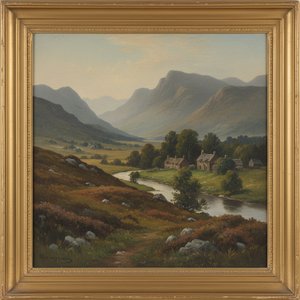
Sir John Watson Gordon: A Study in Scottish Landscape Painting & Tonal Impressionism
Explore the captivating portraits of Sir John Watson Gordon, a leading Scottish master. Discover his evolution from neoclassical style to atmospheric Tonalism and influence on 19th-century British art. Learn about his iconic sitters & legacy.

John Singer Sargent: Die 25 Meisterwerke des Porträts – Kunst für Ihr Zuhause | OriginalUniqueArt
Entdecken Sie die 25 Meisterwerke von John Singer Sargent! Tauchen Sie ein in die Welt der Porträtmalerei, des Impressionismus & der Belle Époque. Hochwertige Kunstdrucke & Reproduktionen für Ihr Zuhause – jetzt auf OriginalUniqueArt.com!
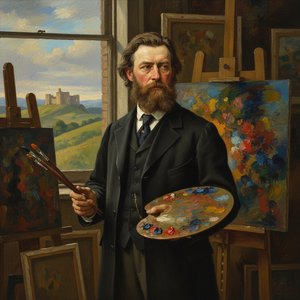
George Paul Chalmers: Rediscovering the Angus Rembrandt & Scottish Colourist Roots
Explore the captivating world of George Paul Chalmers (1833-1878), a pivotal Scottish painter. Discover his landscapes, portraits & connection to the Aesthetic Movement and Colourists. Learn about this 'Angus Rembrandt's' legacy with OriginalUniqueArt.

John Constable: Die 25 Meisterwerke des englischen Landschaftsgenies – OriginalUniqueArt
Entdecken Sie die 25 Meisterwerke von John Constable! Erleben Sie englische Landschaftsmalerei vom Hay Wain bis zur Stour Valley. Hochwertige Reproduktionen & Kunst für Ihr Zuhause auf OriginalUniqueArt.com.