Zum Druck wechseln
 Weiterlesen







































 Bei Kunstwerken oder Reproduktionen, die an einer Seite größer als 105 cm (ca. 41 Zoll) sind, wird der Rahmen zerlegt als Bausatz geliefert. Diese Methode gewährleistet eine sichere Zustellung und verhindert Schäden während des Transports.


A Quiet Masterpiece: Johann Andreas Thelott’s Palace Altarpiece
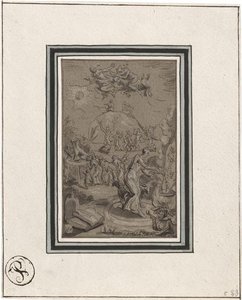
The image depicts an altar, a focal point of religious devotion and visual splendor. Painted in 1725 by Johann Andreas Thelott, this artwork embodies the meticulous craftsmanship characteristic of *fijnschilding*, a style championed by Carel de Moor—a Dutch Master known for his subtle detail and atmospheric realism—and reflects the artistic sensibilities of his time. It’s more than just decoration; it's an encapsulation of Baroque aesthetics aimed at conveying spiritual contemplation.Subject Matter and Composition
At its core, the painting portrays a church altar adorned with a statue positioned prominently atop. The altar itself is framed by gilded carvings—a deliberate choice to elevate its importance and imbue it with regal grandeur. Two statues flank the central figure, representing saints or biblical figures whose expressions convey solemn piety. Beyond these primary elements lie carefully arranged decorative items: three vases strategically placed around the altar contribute to a sense of balance and visual richness, while a clock on the left side serves as a reminder of time’s passage—a common motif in Baroque art symbolizing mortality and divine providence. Books positioned near the base offer an additional layer of symbolism, representing knowledge and faith.Style and Technique
Thelott's masterful technique exemplifies *fijnschilding*. He achieved remarkable luminosity through glazing – applying thin layers of translucent paint over opaque underlayers—creating a captivating interplay of light and shadow that enhances the sculptural quality of the statue and imbues the entire scene with an ethereal glow. The artist’s meticulous attention to detail is evident in every aspect of the composition, from the intricate carvings on the altar frame to the subtle textures of the vases and books. This painstaking approach underscores the Baroque ideal of conveying emotion through precise observation and skillful execution.Historical Context and Artistic Influences
Painted during the High Baroque period in Augsburg, Germany, this altarpiece reflects the artistic fervor of its era—a time marked by papal patronage and a fervent belief in religious iconography. Thelott’s work draws inspiration from artists like Gerrit Dou and Frans van Mieris, who similarly prioritized realism and psychological depth within their paintings. These influences contribute to the painting's understated elegance and its ability to evoke a profound sense of spiritual serenity—a testament to Thelott’s artistic legacy and his contribution to the enduring tradition of Baroque art.Emotional Impact and Decorative Potential
The Palace Altarpiece transcends mere visual representation; it aspires to inspire contemplation and convey a feeling of reverence. Its muted palette, combined with masterful lighting effects, creates an atmosphere conducive to prayer and reflection. For interior designers seeking to infuse their spaces with artistic sophistication, this reproduction offers a beautiful opportunity to introduce Baroque elegance—a timeless style that continues to captivate audiences worldwide.Fragen & Antworten
Wie wird die Farbpalette von "Altarbildnis" von Johann Andreas Thelott beschrieben?
Die Farben von "Altarbildnis" bilden eine Neutrale Töne-Palette. Diese Klassifizierung beschreibt die dominierenden Farbfamilien.
Was für ein Kunstwerk ist "Altarbildnis"?
"Altarbildnis" von Johann Andreas Thelott wird als Wandkunst klassifiziert. Die Kategorie beschreibt die Art des Kunstwerks, um das es sich beim Original handelt.
Wie intensiv sind die Farben von "Altarbildnis" von Johann Andreas Thelott?
Die Farbsättigung von „Altarbildnis“ ist Monochrom. Die Intensität beschreibt, wie kräftig die Farben wirken.
 Vorschau anzeigen
 Versenden
 Teilen
 Details anzeigen
 Leitfaden

 Herunterladen
 Ähnliche Objekte
 Röntgenaufnahme
 Diashow
 Fragen & Antworten
 Statistiken